November 25, 2026:


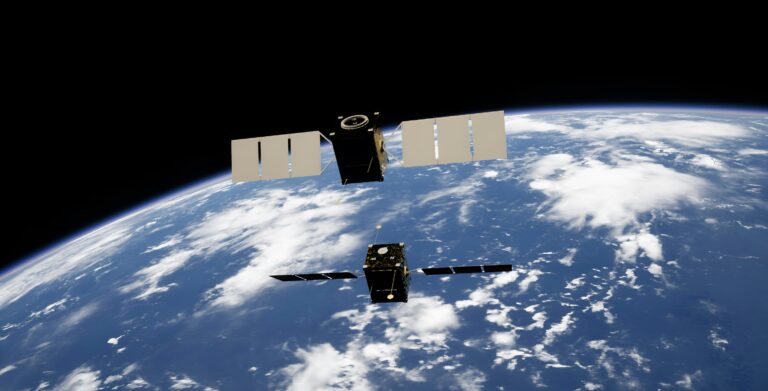
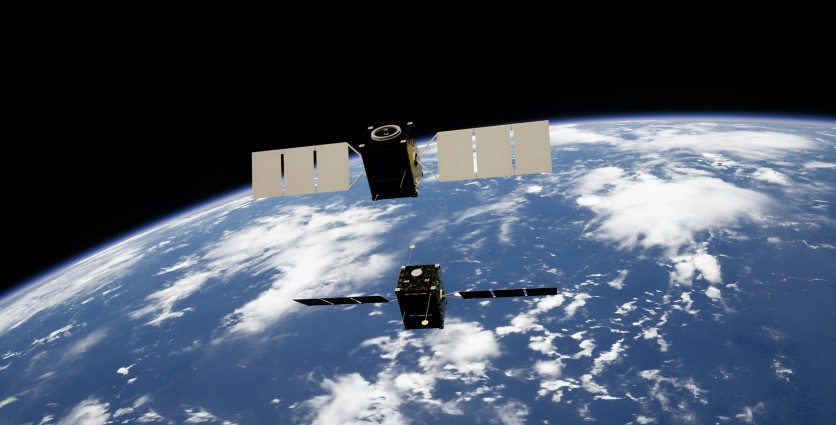
NASA, acting for NOAA, awarded Northrop Grumman Systems Corporation a $290.6 million contract on Nov. 23 to design, develop, produce and test three Sounder for Microwave-Based Applications (SMBA) instruments for NOAA’s Near Earth Orbit Network (NEON), the next generation of the sensors that feed National Weather Service forecast models. NASA’s release says the instruments could improve medium-range forecasts, but it lists no launch schedule and no frequency channels for them.
The award lands as NOAA now anticipates launching QuickSounder in 2027, its first NEON pathfinder, after reporting in early 2024 expected a mid-2026 launch. It also arrives about three months after NOAA awarded $46,482,177 to three companies to build their own commercial microwave sounders.
For anyone who plans around a three- to seven-day forecast, the stake is concrete: NOAA says low-Earth-orbit satellites supply more than 80% of the numerical weather prediction data behind those forecasts. What the $290.6 million buys, and what it does not yet prove, is the subject of this article.
A microwave sounder is a passive instrument that measures natural microwave energy emitted by molecules in the atmosphere. NOAA says it produces vertical profiles of temperature, water vapor and pressure, and that it can see through clouds that block other sensors.
The instrument family SMBA continues is the Advanced Technology Microwave Sounder (ATMS), which Northrop Grumman builds. Northrop describes ATMS as a 22-channel microwave radiometer with receivers covering 23.8 GHz to 183.3 GHz, flying on Suomi NPP, NOAA-20 and NOAA-21. NOAA said in 2016 that, historically, microwave sounders like ATMS “have had the greatest impact on forecast accuracy.”
A satellite measures radiation, not the atmosphere’s state directly, so temperature and moisture have to be inferred from the signal with forward and inverse models. Those inferred profiles then go into data assimilation, the step that corrects a forecast model’s drift away from the real atmosphere. NOAA says most NEON satellites will fly in polar sun-synchronous orbits to give global coverage.
NASA’s release calls the instruments the next generation of low-Earth-orbit microwave sounders and says nothing about their frequencies. NASA’s draft request for proposals placed SMBA in NEON’s Series-1, meant to continue ATMS-class measurements while adding frequency bands, higher-resolution microwave observations and radio-frequency-interference (RFI) detection, without naming the bands. Northrop Grumman’s ATMS page says its SMBA program is expanding capabilities to 325 GHz.
That frequency is not arbitrary. A 2026 study in Earth and Space Science found that 325 GHz radiances are roughly three times more sensitive to frozen water path than 183 GHz radiances, which makes the higher band attractive for tracking ice clouds. Europe’s Arctic Weather Satellite, launched in August 2024, is the first to provide operational sub-millimeter radiances, with four 325 GHz channels. NASA has not said which channels SMBA will carry, so those results are a comparison point, not a forecast of SMBA’s performance.
One evaluation of how much 325 GHz channels help forecasts is simulation-based and concerns a different instrument family. In an April 2024 ECMWF report, Katie Lean and Niels Bormann found that adding 325 GHz channels to 50 GHz channels gave a positive impact similar to adding 183 GHz channels. When 325 GHz channels were added on top of both 50 GHz and 183 GHz channels, the impact was mostly neutral, with some benefit for mid-troposphere humidity in the extratropics and a more neutral result in the tropics.
The authors also had to inflate cloudy-sky observation errors by a factor of 1.5 for the 325 GHz channels to address degradation seen in the tropical troposphere, and they cautioned that the simulations covered only July 2019 and relied on a single assumed ice-particle type. The 2026 Earth and Space Science paper found that current radiative-transfer models handle 325 GHz well enough for operational assimilation but still miss the cores of deep convection.
A newer October 2026 ECMWF report used real Arctic Weather Satellite data, which ECMWF has assimilated operationally since July 2025. In four-month experiments, adding 325 GHz channels improved humidity, temperature and wind forecasts, with the largest gains in humidity and at higher latitudes, and results were best when 325 GHz and 183 GHz channels were combined.
Those results do not say SMBA will fail to help forecasts, and NASA’s release says the instruments could help. They do mean the upgrade is not yet demonstrated for SMBA, and NASA’s release cites no SMBA forecast-impact result. The documented case for the award is therefore continuity of the temperature and moisture sounding that ATMS provides today, plus the added capabilities NASA’s draft solicitation lists. NOAA’s own program page calls SMBA the backbone microwave sounder for NEON.
NASA’s draft request for proposals lists RFI detection among the new capabilities without further detail, and nothing public ties it to any specific transmitter. The concern behind such a feature has a documented history. ATMS measures water vapor in the 23.6 GHz to 24.0 GHz range, next to the 24 GHz band the FCC auctioned for 5G in 2019.
In 2019 testimony, NOAA’s Neil Jacobs, then acting NOAA administrator, said the FCC’s proposed emission limit would cut microwave data collection by 77% and reduce forecast skill by as much as 30%. FCC Chairman Ajit Pai told the Senate the commission’s limits were appropriate and that the assumptions in NOAA’s study were flawed.
NASA’s contract is a hybrid of cost-plus-fixed-fee, firm-fixed-price and time-and-materials elements, with a period of performance from Nov. 23, 2026, through April 1, 2042. The pricing type matters because a cost-plus-fixed-fee contract pays allowable costs plus a fee set up front, which leaves more cost risk with the government, while a fixed-price contract makes the contractor absorb overruns.
NASA’s release does not say which work falls under which type or give a price per instrument. Divided equally, $290.6 million averages about $96.9 million for each of the three instruments, but the contract also pays for mission support across roughly 15 years, so that figure is not a unit price. NASA’s Goddard Space Flight Center in Greenbelt, Maryland, manages the acquisition, and NOAA will own and operate the instruments.
Northrop Grumman was one of four firms that won 12-month SMBA Phase-A study contracts in late August 2023, and its study award was $4,995,327. Ball Aerospace (now part of BAE Systems), Orbital Micro Systems and a Spire Global subsidiary won the other three. The new award is about 58 times larger. NASA said in 2023 that later phases would run on a separate contract vehicle if the government proceeded, and the new release does not say whether this award is that vehicle.
NOAA announced its Temperature and Moisture Advanced Technology Evolution (TMATE) awards on Aug. 26, 2026. The total of $46,482,177 went to Muon Space ($11,000,000), Orbital Micro Systems, doing business as Weather Stream ($7,500,000), and a Spire Global subsidiary ($27,982,177).
Each company will develop, launch and operate its own microwave sounder, NOAA can buy the resulting data commercially, and the 24-month project began Aug. 25 under NOAA’s Other Transaction Authority. NOAA calls TMATE a priority of NEON and calls microwave sounders a national priority because their data are essential to forecast accuracy.
The two tracks are not like for like. NASA’s award buys three instruments that NOAA will own and operate, while TMATE funds companies to own and fly their own sounders and sell data back. The dollar totals therefore cannot be compared as prices for the same product. The structure does match the approach NOAA’s NEON fact sheet describes: buy and partner where it can, and build what it must.
QuickSounder is NEON’s first project, a small satellite carrying a refurbished ATMS instrument, built to show that NOAA can launch a single-instrument satellite within three years. Southwest Research Institute is building it under a contract reported at about $54 million, and early-2024 reporting said it was expected to launch in mid-2026. NASA selected Firefly Aerospace in September 2024 to launch it. NOAA’s program page now says QuickSounder is anticipated to launch in 2027.
SMBA’s own schedule is less clear. NASA said in 2023 that the first SMBA launch was planned for 2030, and the Nov. 23 release gives no new date. NOAA says NEON will supplement and eventually replace the Joint Polar Satellite System (JPSS), which will keep operating through the late 2030s.
QuickSounder’s launch, the end of the 24-month TMATE project in about August 2028, and any release of SMBA’s channel list and forecast-impact studies are the points at which the evidence will move beyond contract language.
For forecast users, the award secures a builder for NOAA’s backbone microwave sounder through 2042. It does not yet show what the new 325 GHz capability will add, when the instruments will fly, or how NOAA will weigh Northrop’s instruments against commercial sounders and their data.
NASA’s release says the instruments could improve medium-range National Weather Service forecasts. NASA’s release cites no SMBA forecast-impact result, and one ECMWF simulation of a different instrument found mostly neutral impact from 325 GHz channels once 50 GHz and 183 GHz channels were already assimilated.
Not immediately. NOAA says NEON will supplement and eventually replace JPSS, which will operate through the late 2030s, with its final launch in 2032.
NASA’s Nov. 23 release gives no launch date, and the contract runs through April 1, 2042. The only public SMBA launch target is the 2030 first launch NASA cited in 2023.
NOAA calls microwave sounders a national priority and says TMATE lets it mature the technology while keeping the option to buy commercial data. TMATE firms build, launch and operate their own instruments, which differs from owning instruments built under the NASA contract.