HomeAuto Moscow Region Mammography Screening Reports 207 Cancers, Up From 10 in 64 Days
Moscow Region Mammography Screening Reports 207 Cancers, Up From 10 in 64 Days
November 27, 2026:
National Cancer Institute/Unsplash.com
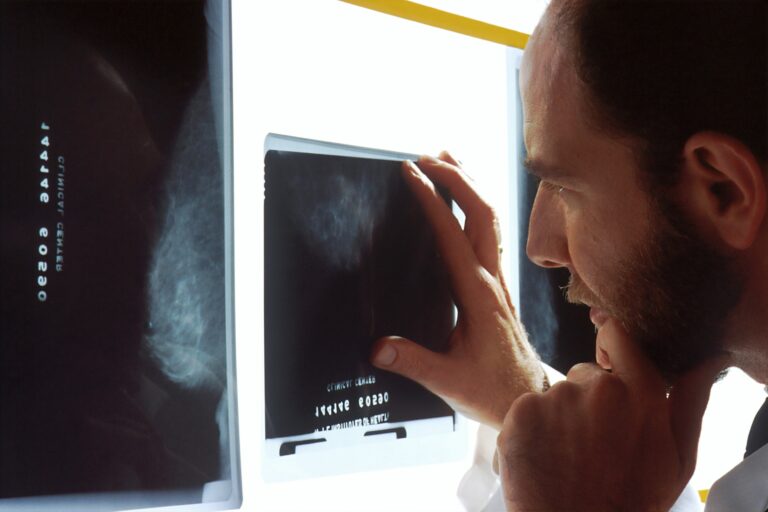
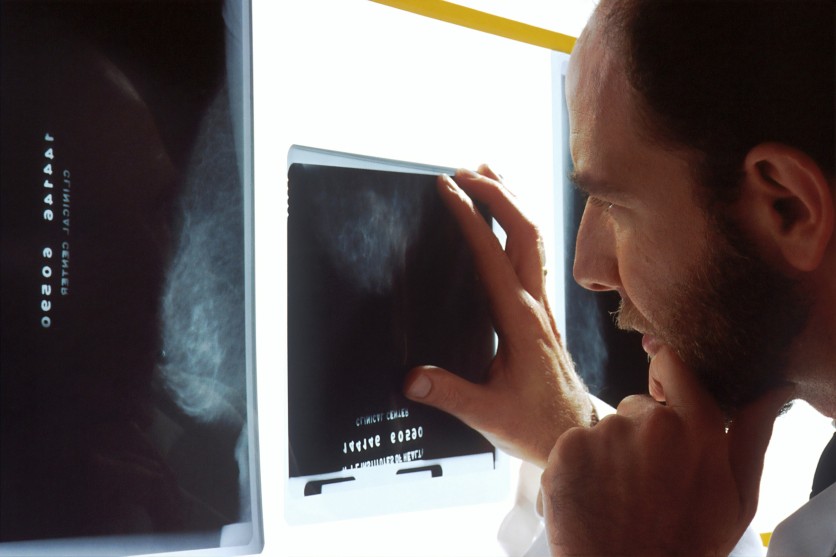
Moscow Region health officials said Friday that more than 42,800 women have booked and completed mammograms on their own since January, and that 207 cancers were found among them, up from 10 in the ministry’s Sept. 24 release, when the self-booked total stood at almost 9,700.
By TechTimes’ arithmetic, that moves the cancer detection rate from about 1.0 to about 4.8 per 1,000 women in roughly nine weeks, while the share of women flagged abnormal stayed near one in ten. None of the ministry statements explains the change. That matters to women over 40 in the region deciding whether to book, and to any reader asked to trust a government screening statistic.
Ministry Reports 42,800 Self-Booked Mammograms and 207 Cancers Since January
Vice-Governor Lyudmila Bolataeva said, in remarks relayed by the press service, that the 2026 total is almost three times the figure for the same period last year, that abnormalities appeared in almost one in ten patients, and that every woman with a finding was referred for further diagnostics and treatment.
The rule is that a woman over 40 whose last mammogram was more than two years ago can book without first seeing a doctor. Earlier releases add that she must be attached to a regional polyclinic, and an August release says other women need a referral from their treating doctor.
The Nov. 27 reports list the regional “Zdorovye” portal and the phone line 122 as booking channels and do not mention cost. Regional outlets have described the exam as free, and an Oct. 15 report says mammography is free under compulsory insurance for women in the region.
Cancer Count Sat at 10 From June Through September, Then Reached 207 by Nov. 27
The ministry has issued cumulative self-booking updates all year. Side by side, they show a series that stayed flat on cancers for three consecutive releases and then jumped.
Release date
Women self-booked
Abnormal findings
Cancers
Cancers per 1,000 (TechTimes calculation)
Source
Sept. 5, 2023
More than 10,000
662
35
3.5
RIAMO Sept. 5 report
Jan. 18, 2026 (all of 2025)
More than 15,000
Not stated
81 (cases confirmed in time for treatment)
5.4
regions.ru Jan. 18 report
May 12, 2026
More than 4,600
450
8
1.7
RIAMO May 12 report
June 15, 2026
Almost 5,700
538
10
1.8
360.ru June 15 report
July 20, 2026
More than 7,000
686
10
1.4
RIAMO July 20 report
Sept. 24, 2026
Almost 9,700
903
10
1.0
mskagency.ru Sept. 24 report
Nov. 27, 2026
More than 42,800
Almost one in ten
207
4.8
RIA Novosti Nov. 27 report
The abnormal-finding share barely moved, staying between about 9% and 11% in every 2026 release that reported it (TechTimes calculation). Cancers did: the count was 10 on June 15 and still 10 on Sept. 24, while abnormal findings rose from 538 to 903. In the 64 days between the Sept. 24 and Nov. 27 releases, the ministry’s totals rose by about 33,100 women and 197 cancers, or about 517 new women a day against about 36 a day from Jan. 1 to Sept. 24 (TechTimes calculation).
Earlier years complicate the comparison. A January release put all of 2025 at more than 15,000 self-booked women and 81 cases the release described as confirmed in time for treatment, a rate of 5.4 per 1,000 (TechTimes calculation). That is close to November’s rate rather than September’s, though the release does not say whether 81 counts every cancer found. The same release described 2025 as up 23% on 2024, implying roughly 12,200 women for all of 2024. Yet the ministry had reported more than 14,000 self-booked women by Oct. 15, 2024. The ministry has not said whether the counting definition changed between those releases. In March, it said the 2026 count was more than 2,000 women, 150 more than at the same point a year earlier. “Almost three times” now implies roughly 14,000 to 15,000 for 2025’s comparable period (TechTimes calculation).
The wider mammography totals moved differently. The ministry counted nearly 290,000 mammograms by Aug. 5, 62% more than a year earlier, and nearly 380,000 by Oct. 15, rose 40% year on year. Total growth slowed while the self-booked tally more than quadrupled between Sept. 24 and Nov. 27. That is consistent with women moving into the self-booking channel, or with a change in how the channel is counted. The ministry has not said which, if either, happened.
A Nov. 26 release put all mammograms at over 440,000 this year, with 36,500 abnormal findings and nearly 1,200 malignant cases. By TechTimes’ calculation, that is about 2.7 cancers per 1,000 exams across all channels, and the 207 self-booked cancers would make up about 17% of the malignant total from about 10% of the exams.
What Cancer Detection Rate Should Screening Mammography Produce?
Large US datasets give a yardstick. The Breast Cancer Surveillance Consortium analyzed 1.68 million digital screening mammograms from 2007 to 2013 and found 5.1 cancers per 1,000 screens, abnormal results on 11.6% of exams, and cancer in 4.4% of abnormal results. An earlier analysis of 2.58 million exams from 1996 to 2002 found 4.7 cancers per 1,000, a 9.8% recall rate and cancer in 4.8% of recalls. In Russia, the Khanty-Mansiysk screening program for women 40 and over averaged 2.5 cancers per 1,000 across 92,576 women, with about 9% referred for further assessment and a two-year interval.
Against those marks, the Nov. 27 figures look like a typical screening program: 4.8 cancers per 1,000, almost one in ten flagged, and roughly 5% of flagged women with a reported cancer (TechTimes calculation). The Sept. 24 figure of 1.0 per 1,000 sat below all three comparators and below the ministry’s own 2023 rate of 3.5.
The comparison is loose. The US benchmark populations ran up to age 80 and beyond, with a mean age of 56.5 in the 2017 dataset, and screening intervals differ. Self-booking attracts a self-selected group, and the ministry does not say whether its cancer count includes only biopsy-confirmed cases. A rate inside the usual range does not prove the count is right. It does show that the November number is the plausible one and the September number is the outlier, or that the two series measure different things.
About 4,000 Women Were Flagged Abnormal; Roughly 19 of 20 Have No Reported Cancer
Almost one in ten of 42,800 women is about 4,000 flagged abnormal. With 207 cancers reported, roughly 19 of every 20 flagged women have no cancer in the ministry’s count so far (TechTimes calculation). That is the ordinary arithmetic of screening and is close to the US benchmark range of 4.4% to 4.8% for the share of abnormal results that turn out to be cancer. The ministry says all flagged women were referred for further diagnostics.
The cost of false alarms is higher for younger women. A 2017 conference abstract from Russian researchers at the Presidential Academy of National Economy and Public Administration estimated about 45 false-positive results per detected case for women aged 40 to 49, against 21 for women aged 50 to 69.
Overdiagnosis is a separate problem. Screening can find cancers that would never have caused symptoms, so a rising count of cancers found does not by itself show lives saved, according to the Wikipedia overdiagnosis entry page.
WHO Backs Screening From Age 50 While USPSTF and Moscow Region Start at 40
Named bodies disagree about women in their 40s. WHO’s 2014 position paper, summarized in a PAHO factsheet on mammography, recommends organized screening for women 50 to 69 every two years and suggests screening at 40 to 49 only inside rigorous research in well-resourced settings. In limited-resource settings with relatively strong health systems, it recommends against screening at 40 to 49. The US Preventive Services Task Force recommended screening every other year from age 40 to 74 in April 2024. The American College of Physicians issued guidance in April 2026 advising screening every two years from 50 to 74 and discussion with a doctor for women 40 to 49.
Russian guidance sits on the early side. A comparison of BRICS cancer-control plans lists mammography every two years for women 40 to 75, and the 2017 abstract describes Russian recommendations as starting at 39. These bodies disagree about benefit and harm in the 40s. None addresses the Moscow Region counts.
Chatbot Booking Sends Insurance Numbers Through State-Backed MAX Under SORM Interception Rules
The Nov. 27 reports list only the portal and the phone line. Earlier ministry releases name more channels: the Dobrodel app in June and July releases, then clinic self-service kiosks and a chatbot called “Denis” inside the MAX messenger in the August ministry release and in October, and the Nov. 26 release lists Denis again. To use the chatbot, a patient consents to personal-data processing and supplies contact details and a health-insurance policy number, and bookings sync with the regional EMIAS records system.
MAX is a messenger developed by Russian social network VK and backed by the state. According to AFP, it does not use end-to-end encryption, and its terms say user data is stored exclusively on servers in Russia. Its privacy policy reportedly allows data to be shared with third parties and state agencies, according to a DFRLab analysis of MAX. Operators in Russia fall under SORM, the lawful-interception system introduced in 1995 to give the FSB access to communications, with requirements extended to social networks, chats and forums in 2014. The Yarovaya law, signed in 2016, requires internet and telecom companies to hand over communications and metadata to authorities without a court order, as described in the same Wikipedia entry. These obligations apply on top of whatever an app’s privacy policy says.
A Carnegie Endowment analysis describes the app’s risks as more concrete and mundane than the horror stories, while noting the state’s sweeping powers to monitor messages. The DFRLab piece mentions no independent security audit. The ministry lists no booking channel outside state-run systems, and none of the reports says what the mammography booking itself stores.
Ministry Under Zabelin Runs Denis Chatbot and AI Image Reading; Bolataeva Led Social Services
Maksim Zabelin, listed on the ministry’s own site as Deputy Chairman of the regional government and health minister, gave the 440,000-mammogram total in the Nov. 26 release. The Denis chatbot, launched at the end of 2025, had nearly 1 million doctor bookings by early August. A Nov. 13 report said AI had helped radiologists review 842,000 images this year across X-rays, mammograms and fluorography, and described it as an auxiliary tool.
Bolataeva has been First Deputy Chairman of the regional government since about March 2024 and previously served as social development minister. Her remarks in the Nov. 27 release address early diagnosis and the ease of preventive checks. None of the reports quotes her on data handling or on how the ministry counts cases.
Counting Rules, 2025 Baseline and Stage Data Are Missing From Ministry Releases
Three items would let outsiders judge the figures: how the self-booking tally is defined and whether earlier releases were restated; the same-period 2025 baseline behind “almost three times”; and the stage at which the 207 cancers were found. Stage matters because earlier diagnosis lengthens measured survival even when death dates do not change, a distortion known as lead-time bias in screening.
Taken together, the picture is mixed. November’s detection rate sits inside published screening ranges, and September’s did not. About 4,000 women were flagged and about 19 of 20 have no reported cancer. Booking runs through state systems, with a state-backed messenger on one route. Until the ministry publishes its counting rule, a same-period 2025 baseline and stage at diagnosis, 207 is a count without a published definition, not a measure of how well the program performs.
Frequently Asked Questions
Can women in Moscow Region get a mammogram without a doctor’s referral?
Yes, if they are over 40 and more than two years have passed since their last mammogram. Earlier releases also say a woman must be attached to a regional polyclinic, and the ministry says other women need a referral from a treating doctor. The ministry lists the portal, a phone line, kiosks and a chatbot as booking routes, according to ministry release coverage and a July ministry report.
Does a rise in cancers found mean the screening program is working?
Not by itself. Detection counts rise when more women are screened, and some cancers found would never have caused harm. Evidence of benefit comes from stage at diagnosis and, over years, from deaths from the disease. The ministry has published neither for the self-booking group. See the entries on overdiagnosis and screening and lead-time bias in screening.
At what age should women start getting mammograms?
Guidance varies. The US task force says every other year from 40, WHO’s 2014 paper favors organized screening from 50, and the American College of Physicians advises discussing screening with a doctor at 40 to 49. A clinician can weigh a woman’s own risk. Sources include the USPSTF breast cancer screening recommendation and the ACP guidance on biennial mammography.
How often is an abnormal mammogram cancer?
Rarely. US benchmark studies put cancer in 4.4% to 4.8% of abnormal screening results, and the Moscow Region figures work out to roughly 5% (TechTimes calculation). Most flagged women are cleared after further tests, according to the 2017 benchmark study and earlier benchmark analysis.