November 10, 2026:


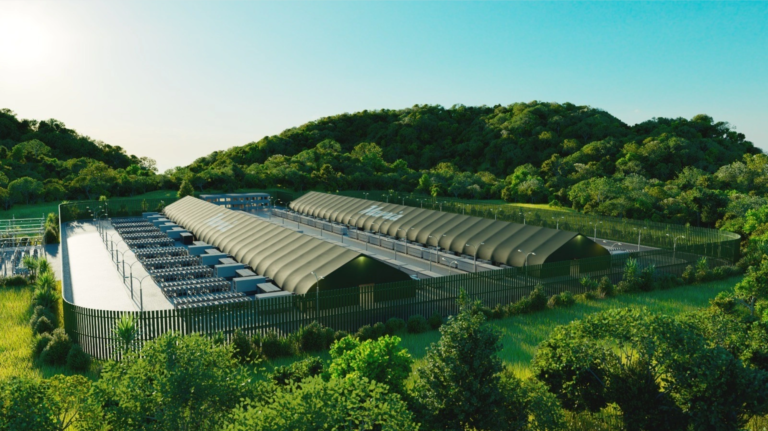
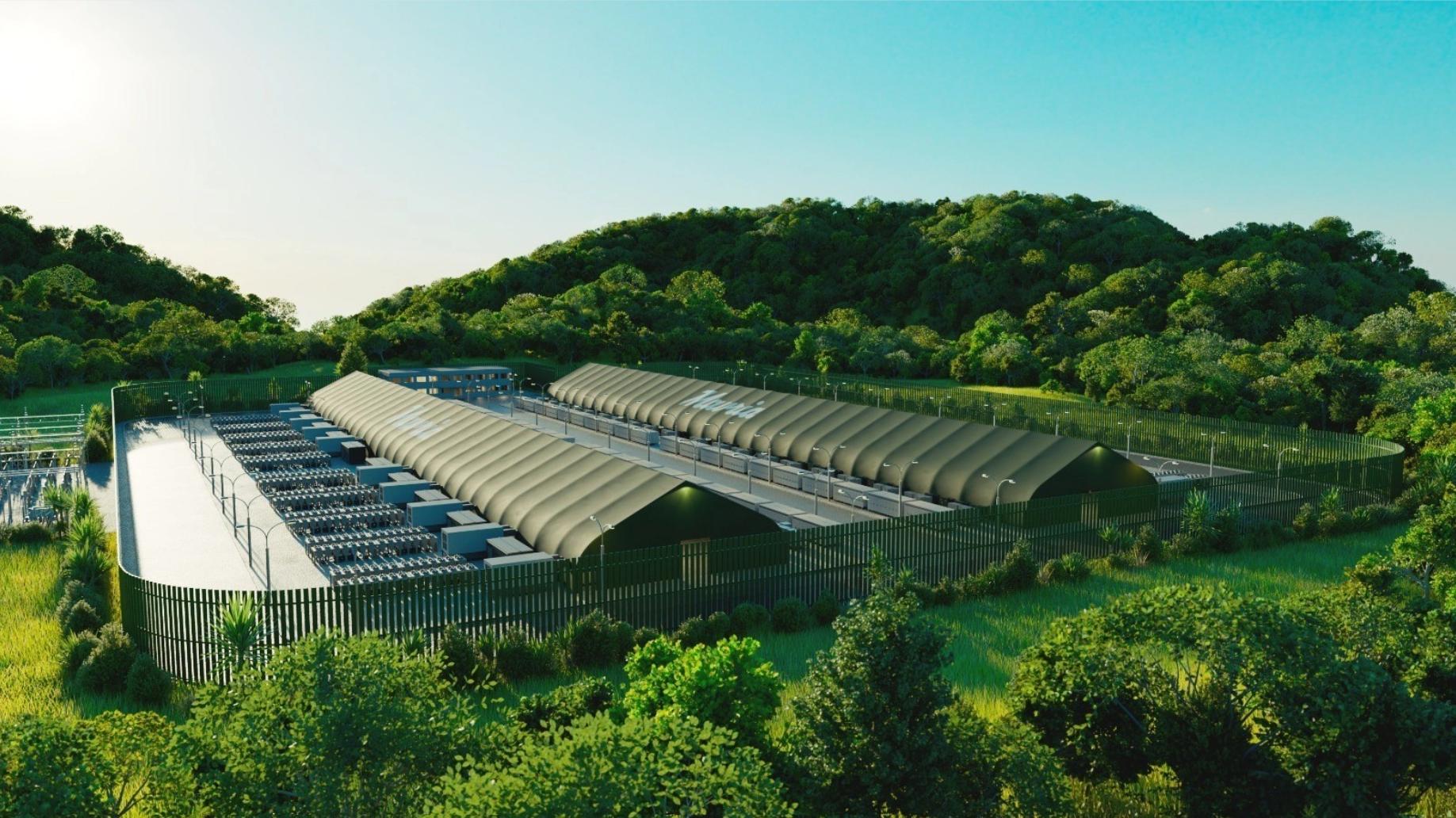
Mavria, a data center startup whose founders include former Energy Department officials, announced Monday that it raised $130 million at a $1 billion valuation to build data centers in a factory. The company was founded in June 2026, according to co-founder Seth Cohen, and its first unit, Terrain 01, is being built in Houston.
Terrain comes in 5 MW units, according to Dealroom, which cites the Wall Street Journal’s reporting. Mavria’s own announcement gives no capacity figure, and the company has not named customers or published capacity, pricing or delivery timelines.
For the frontier AI labs, cloud providers and data center developers that Mavria targets, the open question is power, not factory speed. DatacenterDynamics reported that Mavria says Terrain can bypass grid delays by plugging into local distribution lines to soak up excess capacity, but the company’s announcement makes no grid connection claim. That makes size the number to watch in Texas, where Senate Bill 6 covers loads of at least 75 megawatts at a single site: one 5 MW block is about 7% of that line, while a 100 MW campus would need 20 blocks.
Mavria says Terrain replaces on-site custom construction with factory-based repeatable manufacturing. Customers’ compute runs inside it, and the company says it supplies infrastructure without operating a cloud or selling compute.
HuggingNews reports that the units use direct liquid cooling and integrated power distribution for customer-owned compute. Mavria’s announcement mentions neither the liquid cooling nor the block size.
Liquid cooling matters at this size because AI racks outrun air. Wikipedia’s computer-cooling entry puts air cooling up to 23 kW per rack, while NVIDIA’s Vera Rubin NVL72 rack draws 190 to 230 kW, according to earlier TechTimes reporting. At those figures, 5 MW supports roughly 22 to 26 such racks before cooling and power-conversion overhead, and Mavria has not said which hardware Terrain targets.
Factory integration removes on-site assembly work, not the utility connection. NVIDIA’s DSX POD moves cabling, power distribution and cooling piping into a factory, shortening connection time from roughly six months to 14 days, yet the pod still arrives at a prepared site that must already have high-voltage power, a coolant loop and a network handoff. Dealroom likewise notes that factory production cannot by itself solve power availability or site-connection delays.
The tradeoff is standardization. Mavria says Terrain should bring more predictable delivery and lower costs, but it has published no pricing, so the benefit remains a claim.
Distribution networks step transmission voltage down to primary lines of 4 to 35 kilovolts, with 12.47, 25 and 34.5 kV common in the United States. The utility-consulting firm Logic20/20 says smaller enterprise and colocation sites typically under 20 megawatts connect at the distribution level, a band that includes a 5 MW block.
Spare capacity on a feeder is finite, and high ambient temperatures limit the power ratings of transformers, cables and lines. Mavria’s announcement names no utility, connection voltage or energization schedule for a Terrain block.
The market backdrop is real but disputed. Sightline Climate estimated in February that 30% to 50% of large data centers due online in 2026 would be delayed, citing power constraints, equipment shortages and local opposition, with about 5 GW under construction against at least 16 GW planned. Axios noted that most affected projects were delayed rather than canceled, with nine canceled projects tracked. SemiAnalysis argued in June that the headline claim rests on a flawed denominator and on speculative early-stage announcements.
Senate Bill 6, signed June 20, 2025, directs the PUCT to create interconnection procedures for large loads, and its definition allows the PUCT to lower the 75 MW threshold. The Public Utility Commission of Texas (PUCT) standards are to include a transmission screening study fee of no less than $100,000 for covered loads, and the commission voted March 12 to publish a draft rule implementing them.
On Aug. 3, Gov. Greg Abbott directed a comprehensive audit of data center projects advancing through the interconnection process run by the Electric Reliability Council of Texas (ERCOT), which Foley says effectively pauses approvals. ERCOT is tracking more than 1,800 large-load projects totaling over 474 GW of potential demand, about 90% of it for data centers, though many are preliminary and may never be built.
Block count still matters. A campus of 15 or more blocks would reach the statutory 75 MW line, and the PUCT can lower it. Abbott’s directive applies to data centers in the ERCOT queue regardless of load size, while purely behind-the-meter, on-site-generation projects that do not interconnect through ERCOT may not be subject to it. The legal summaries reviewed do not say whether a small site on a utility’s distribution line would enter the ERCOT queue and fall under the audit, and Mavria has not said where customers will place Terrain.
Politics add uncertainty. Of 45 data center ballot measures tracked across 10 states, 33 had passed by the morning after the Nov. 3 election, according to Data Centers on the Ballot.
Mavria says the $130 million came across pre-seed and seed rounds, with its latest round led by Paradigm and joined by AMP PBC, Liquid 2, Critical Frontier and Dream Ventures. Kirkland & Ellis, which advised on the raise, says proceeds will go toward securing critical supply chains, scaling manufacturing and expanding the team. Paradigm is a crypto-focused investment firm with $12.7 billion in assets under management as of April 2025.
Dealroom ranks the round in the top 1% by size among early-stage U.S. energy deals over the past 48 months, within a sample of 351 rounds. Reports differ on how the money is split. Securities.io describes a new $100 million round inside the $130 million total, while an SEC Form D filed Oct. 21 shows $75 million sold from an offering of up to $100 million to 16 investors, with the first sale on Oct. 14.
A Form D captures one offering on one date, so it does not necessarily conflict with the $130 million total, and Mavria has not published a breakdown by round. The $1 billion valuation is about 7.7 times the money raised.
CEO Adam Blake sold a software business to Vista Equity Partners and worked with his co-founders at the Department of Energy before Mavria, according to the company. Cohen started as a Kirkland lawyer and became central to efforts to restart American nuclear power, and Nick Poradek, an engineer, sold his last company to Liberty Energy before helping build its manufacturing platform. Mavria’s homepage says Blake built 1,000+ energy projects and lists him as a former advisor to the Secretary of Energy.
Politico reported that Blake, a DOGE detailee at the Energy Department, described a new approach for the Nuclear Regulatory Commission (NRC) to expedite safety assessments, and two of the three people familiar with a May meeting said he used the term “rubber stamp.” An NRC spokesperson said the agency was working quickly to implement the executive orders reforming it.
ProPublica reported that Cohen entered government through the Department of Government Efficiency (DOGE) and later became the Energy Department’s chief counsel for nuclear policy. Records of an Idaho meeting quote him telling officials to assume the NRC would do whatever the department directed. Cohen did not respond to requests for comment, Blake declined to comment, and the Energy Department told ProPublica it is committed to the highest standards of safety.
The executive orders aim to quadruple U.S. nuclear output and supply power to the data centers behind the AI boom, according to ProPublica’s March 20, 2026, report. Mavria’s announcement does not tie Terrain to nuclear power.
Armada, a San Francisco modular data center company focused on edge computing, raised a $230 million Series B in May, co-led by Overmatch, BlackRock and 8090 Industries at a $2 billion pre-money valuation. It also signed a framework agreement with Johnson Controls for a dedicated Arizona factory, Galleon Forge One, spanning up to 400,000 square feet. Armada said continuous production there would begin in the summer, a start the sources reviewed do not confirm. Armada already ships data centers in ruggedized containers, including multi-megawatt systems.
NVIDIA’s DSX POD, with a Dell variant and delivery partners including Armada, is targeting early-2027 delivery. FluidStack assembles facilities from prefabricated, factory-made modules that can be energized in roughly six months. Mavria is newer than all three and has disclosed less.
For buyers, investors and local officials, the practical test is whether a Terrain block arrives with a signed utility commitment. Until one is disclosed, the $130 million funds a factory that addresses assembly time, while the constraint Mavria says it can sidestep, power access, remains unverified.
Not on its own. A factory shortens on-site assembly, but the unit still needs a utility to deliver power, and even NVIDIA’s pre-integrated DSX POD requires a prepared site with high-voltage power. DatacenterDynamics reported that Mavria says Terrain can use spare capacity on local distribution lines, a claim no named utility has confirmed in the coverage reviewed.
Not to a single block, but the rule counts total load at one site, so a campus of 15 or more blocks would reach the statutory 75 MW threshold, which the PUCT can lower. Mavria has not said where customers will site Terrain or which grid region would serve them.
They measure different things. Mavria’s $130 million is a cumulative total across pre-seed and seed rounds, while the October Form D reports only $75 million sold from a $100 million offering as of its filing date.
Cohen became the department’s chief counsel for nuclear policy, and Blake was detailed there by DOGE, as reported by ProPublica and Politico. The reporting describes their roles in the effort to overhaul the NRC rather than in data center policy.