When Nvidia reported its fiscal second-quarter 2027 earnings on August 26, confirming record revenue of $96.2 billion per the Q2 FY2027 SEC filing, it delivered the clearest possible external validation of Micron Technology’s pricing power — and the stock market spent the next two trading sessions almost entirely ignoring the implication for Micron shareholders.
Nvidia CFO Colette Kress disclosed, without spin, that memory prices had blown past what the company had modeled, were still climbing, and would compress gross margins from 75% in the second quarter to a trough of 71% to 72% by the fourth quarter of fiscal 2027, before a recovery to 72% to 73% when Nvidia’s own price increases take effect in fiscal 2028. The supply commitments figure is striking: Nvidia’s procurement obligations grew to $279 billion, up from $119 billion the prior quarter, primarily to lock in memory at current prices. That margin does not simply evaporate — it relocates. On a quarter guided to $108 billion in revenue, a single percentage point of gross margin represents roughly $1.1 billion, and exactly three companies on earth manufacture the high-bandwidth memory that is absorbing it: Samsung, SK Hynix, and Micron Technology (NASDAQ: MU).
Against this backdrop, Micron stock currently trades at approximately six times its fiscal 2027 consensus earnings estimate. The semiconductor industry forward P/E median is 29.18 — a gap of 80%. That divergence, and what it reveals about the market’s cyclical assumptions, is the actual story Nvidia’s earnings produced for Micron investors.
Gross Margin Doesn’t Disappear — Where Does It Go?
High bandwidth memory now accounts for an estimated 30% to 40% of the total build cost of an AI accelerator, up from under 20% two generations ago, according to Motley Fool analyst Anders Bylund. Every dollar Nvidia is now paying above its prior expectations for HBM is a dollar landing on the income statements of one of those three suppliers. All three stocks gained 3% to 5% in the immediate aftermath of Nvidia’s report, per Bylund’s August 28 analysis.
Bylund offered a framing worth internalizing: the honest read of Nvidia’s disclosure is “a timing story, not a pricing-power question.” Kress confirmed that Nvidia has already negotiated price increases slated to take effect in the first quarter of fiscal 2028 — meaning the margin compression is the interval between when Nvidia starts paying more for memory and when it starts charging more to its own customers. What investors will be watching closely when Nvidia next reports on November 17 is whether the trough holds at 71% to 72%. A stable range confirms the timing narrative; a deteriorating one would suggest memory makers are capturing more than Nvidia budgeted, turning the fiscal 2028 recovery from a firm plan into a loose forecast.
For Micron specifically, Nvidia has certified the company — alongside Samsung and SK Hynix — to supply HBM4 for Nvidia’s Vera Rubin platform, confirmed when Jensen Huang cleared all three vendors in June 2026, locking Micron into the highest-end AI memory roadmap. That qualification is not trivial. It represents technical parity with the two Korean memory giants that have historically dominated HBM market share.
Why the Valuation Discount Exists
Micron shares sit roughly 29% below their 52-week peak even as the company’s HBM capacity is fully booked for 2026, and the analyst consensus price target stands at approximately $1,295 to $1,318, implying upside of 69% or more from current levels — depending on the reference date.
The reason the discount exists is specific and important to understand: the market is effectively pricing in a repeat of the historical DRAM boom-bust cycle — a pattern in which memory manufacturers all build capacity simultaneously during an upturn, flood the market, and watch prices collapse. In the memory industry’s prior downturn, Micron’s gross margins fell from 45.2% in fiscal 2022 to approximately 2.7% in fiscal 2023. A forward P/E of six on projected earnings implies the market sees a high probability that those earnings projections will not materialize.
The bear case has a credible voice behind it. Michael Burry — the investor who called the 2008 financial crisis — has quietly built a short position against Micron, adding to it at around $924 per share, arguing that AI data-center oversupply could emerge by 2028. He has simultaneously placed shorts against Oracle and Nebius, suggesting his thesis is not Micron-specific but a broader AI infrastructure overcapacity call.
Citi Research analyst Atif Malik, who maintains a Buy rating, trimmed his price target from $1,400 to $1,150 in August 2026, flagging that DRAM and NAND prices may decelerate over the next four quarters. Goldman Sachs, by contrast, has revised its 2027 DRAM shortage forecast sharply upward — to a 5.9% supply deficit — and describes the current situation as the most severe memory shortage in 15 years.
What Makes This Different From Prior Memory Cycles
The bull thesis centers on three structural changes that the cyclical bear argument does not account for.
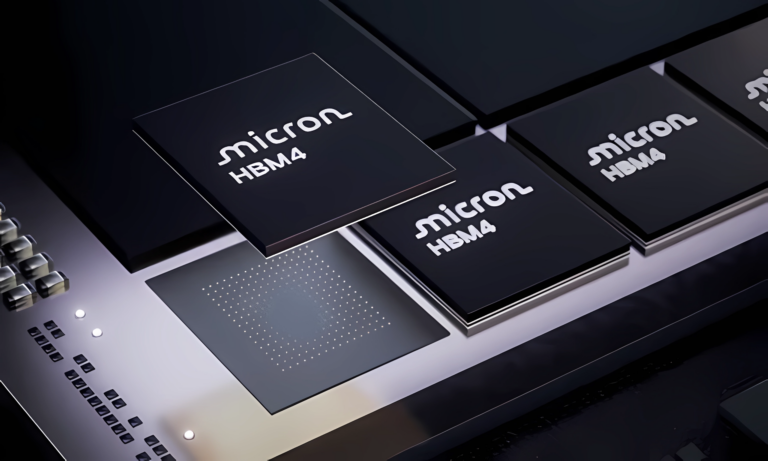
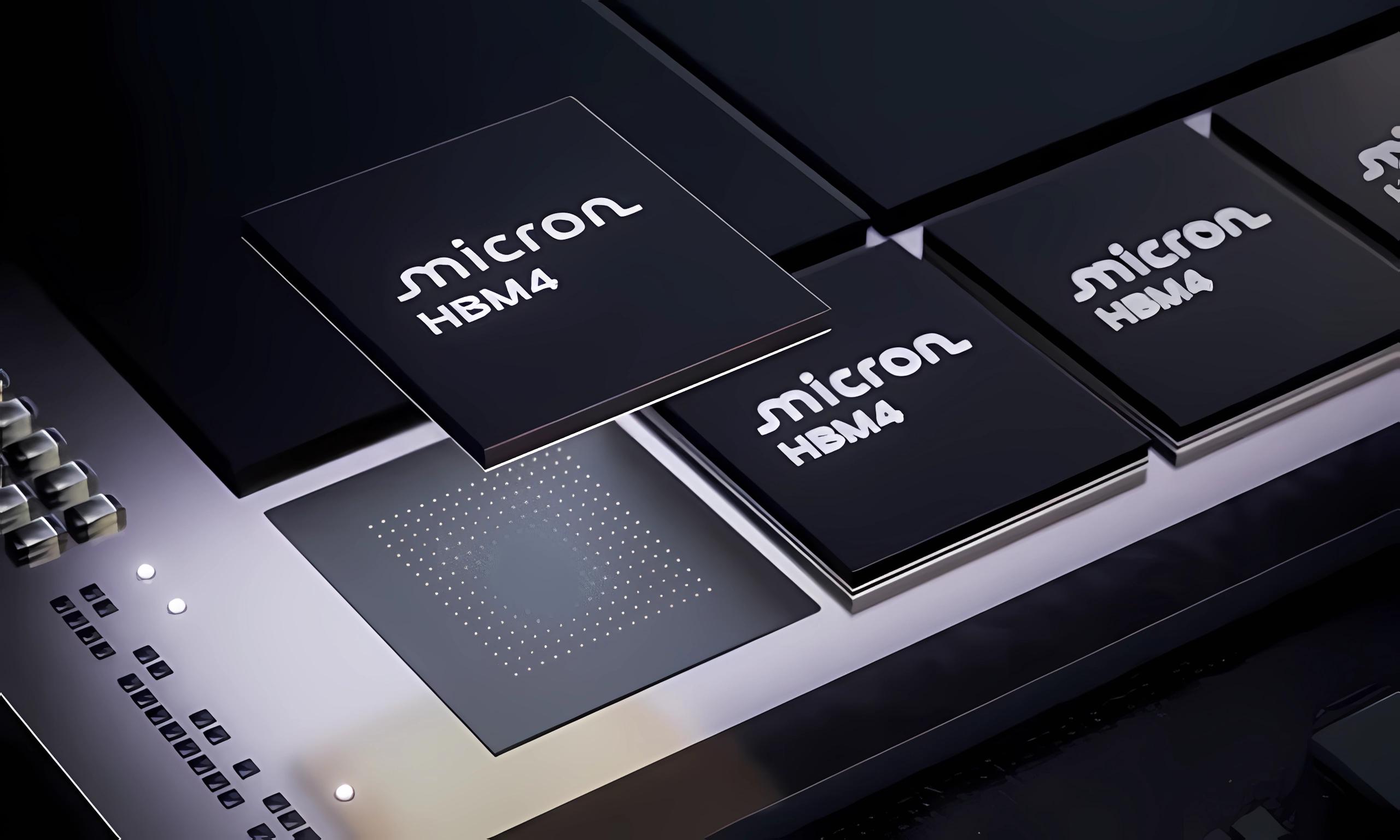
First, the wafer economics of HBM fundamentally alter supply dynamics. High bandwidth memory stacks multiple DRAM dies vertically, connects them through microscopic copper channels called through-silicon vias, and co-packages the resulting stack directly beside a GPU on a silicon interposer. Micron’s HBM4 architecture and specifications — entering high-volume production in 2026 for Nvidia’s Vera Rubin platform — delivers more than 2.8 terabytes per second of bandwidth per 12-high stack. Producing one gigabyte of HBM requires roughly three to four times the silicon wafer capacity of a standard DDR5 chip, as documented when DDR5 floor prices hit $375 as a direct consequence of HBM reallocation. Every wafer reallocated to HBM production removes three to four times as many conventional memory bits from the supply pool as it adds in HBM. This trade-off is structural: adding HBM supply simultaneously tightens commodity DRAM supply, which means the industry cannot flood the market in the usual way without destroying a product line it is also trying to expand.
Second, Micron has moved aggressively to convert the demand environment into durable, long-term contracts. The company reported 16 strategic customer agreements at the end of fiscal third quarter, spanning data center, automotive, and consumer end markets. These agreements carry five-year terms running through 2030, and 14 of the 16 SCAs are structured to generate a combined minimum revenue of $100 billion over their remaining duration. In total, Micron has secured $22 billion in customer commitments and deposits. The take-or-pay structure is significant: customers are obligated to pay for contracted volumes even if they choose not to take delivery, providing revenue visibility that is unusual in a market historically subject to violent commodity cycles. Micron plans to sell 20% of its DRAM volume and one-third of its NAND flash volume through these agreements.
Third, independent research suggests the supply deficit is not a near-term phenomenon. Equity research provider Citrini Research predicts that the supply deficit in DRAM will widen from the current 18% to nearly 25% by 2030, with total DRAM demand projected to reach 157.5 exabytes that year, according to a PC Gamer report on Citrini’s findings — exceeding projected supply by 28.7 exabytes. The firm cites the proliferation of agentic AI and the surging need for high-bandwidth memory as the primary drivers — projecting 75 exabytes of conventional DRAM demand for agentic AI CPUs alone by that year. SK Hynix has separately estimated that wafer supply will be at least 20% below demand over the next four to five years. Even factoring in new Chinese capacity from CXMT, the model projects the shortage persisting through the end of the decade, according to Tom’s Hardware CXMT analysis.
Locked-In Revenue Through the Decade
Micron’s most recent quarterly results illustrated how dramatically the company’s financial profile has changed. For fiscal third quarter 2026, ended May 28, revenue rose 346% year over year to $41.46 billion, while non-GAAP earnings per share surged more than thirteen-fold year over year to $25.11, per the Micron Q3 2026 press release.
Analysts expect the momentum to continue. Micron’s fiscal year 2026, which ends this month, is projected to deliver earnings growth of approximately 785%, with consensus estimates putting EPS at $73.40 for the full year, per Harsh Chauhan’s Motley Fool projection. Looking further out, the consensus analyst EPS forecast places FY2027 EPS at approximately $155 — a figure consistent across multiple analyst estimates.
The stock currently trades at approximately six times that FY2027 consensus earnings estimate — well below the S&P 500’s forward price-to-earnings ratio and a fraction of Nvidia’s own multiple, per GuruFocus forward P/E data.
Motley Fool analyst Harsh Chauhan ran a longer-horizon projection, estimating that if Micron’s earnings grow at even 10% annually in fiscal years 2029 and 2030, its EPS could reach approximately $206.55 by 2030. At a modest 15 times earnings multiple — well below the current semiconductor industry median — that would imply a stock price around $3,098, roughly 3.4 times its current level, per Chauhan’s August 2026 analysis.
New Street Research analyst Pierre Ferragu holds a more ambitious long-range view, projecting that Micron could amass more than $600 billion in cash by 2030 and generate more than $150 billion in annual free cash flow — implying a 14% free cash flow yield even at current market capitalization, per TheStreet’s coverage of Ferragu’s thesis, before assigning any value to that cash balance.
What Nvidia’s Earnings Say About the AI Hardware Picture
Nvidia’s own disclosure frames the scale of what is happening. The company’s revenue opportunity per gigawatt of data center capacity has grown from about $18 billion during the Hopper generation to $25 billion with Grace Blackwell to a projected $40 billion with the Vera Rubin platform, as detailed in TechTimes Nvidia CFO coverage. Against that trajectory, the margin pressure from memory costs is less a headwind than a symptom of how fast the entire AI infrastructure buildout is accelerating.
Nvidia’s supply commitments grew from $119 billion to $279 billion in a single quarter, primarily to lock in memory procurement at current prices before costs climb further into fiscal 2028, confirmed in Nvidia’s Q2 FY2027 10-Q. CEO Jensen Huang stated on the call that unconstrained demand would produce growth “a lot higher” than the 70% Nvidia is guiding for fiscal 2028. That gap — between what buyers want and what the supply chain can deliver — is what makes the memory shortage a structural condition rather than a pricing anomaly.
How Is Micron’s September Earnings Report Likely to Read?
Micron is expected to report its fiscal fourth-quarter 2026 results on or around September 22, 2026. Quarterly guidance issued in June projected revenue of $50 billion, plus or minus $1 billion — more than five times the $9.8 billion the company posted in the same quarter last year — along with non-GAAP gross margin of approximately 86% and adjusted earnings per share near $31, per the Q3 2026 SEC press release.
If those numbers hold — and Nvidia’s explicit disclosure that it is paying even more for memory than previously modeled supports the thesis that they might — the September report will mark the first full fiscal year in which Micron generated triple-digit EPS, contracted $22 billion in customer deposits, and earned gross margins above any level in its 47-year history. The market’s current multiple of six times forward earnings reflects either a confident prediction that those earnings will not persist, or a persistent failure to reprice what has changed.
Nvidia’s August 26 earnings made clear which of those readings is harder to sustain.
Disclosures: This article is for informational purposes only and does not constitute investment advice. TechTimes does not hold positions in any of the securities mentioned.
Frequently Asked Questions
Why does Micron stock trade at only six times forward earnings despite explosive EPS growth?
The discount reflects the market’s historical memory: DRAM has spent 30 years following a boom-bust cycle in which oversupply systematically wiped out the profits that accumulated during upturns. The market is pricing Micron at approximately six times FY2027 consensus EPS of roughly $155 because it assigns significant probability to a 2027–2028 earnings reversal, consistent with that historical pattern. The bull case argues the cycle is structurally different this time — because HBM’s wafer economics prevent simple supply flooding, and because take-or-pay contracts lock in margins regardless of spot prices — but the market has not yet awarded Micron a premium multiple for that structural argument, as shown by the GuruFocus forward PE data placing Micron 80% below the semiconductor industry median.
What does Nvidia’s earnings disclosure specifically mean for Micron investors?
Nvidia CFO Colette Kress explicitly confirmed on the August 26 earnings call that memory prices have exceeded the company’s projections and are still climbing, that the company’s gross margin will trough at 71% to 72% in fiscal Q4 2027, and that a recovery to 72% to 73% is expected in fiscal 2028 as pre-negotiated price increases with Nvidia’s customers take effect. For Micron investors, that disclosure provides independent external confirmation that memory pricing conditions remained elevated through at least July 2026 — the end of Nvidia’s fiscal second quarter — and are expected to remain elevated through fiscal Q1 2028. It does not guarantee Micron’s forward earnings estimates will prove accurate, but it provides the most direct external validation of the pricing environment those estimates depend on.
How long is the AI memory supply deficit expected to last, and who is forecasting it?
Multiple independent sources project the deficit extending through the end of the decade. Citrini Research forecasts total DRAM demand of 157.5 exabytes in 2030 against projected supply of approximately 128.8 exabytes — a gap of 28.7 exabytes, widening from the current 18% shortage to nearly 25% by 2030 even after accounting for new Chinese CXMT capacity additions. SK Hynix’s CEO has separately stated that 2027 will be the worst year for the shortage and that the crunch is expected to extend past 2030. Goldman Sachs revised its own 2027 DRAM shortage estimate to 5.9% in June 2026, calling current conditions the most severe memory shortage in 15 years. None of these projections are guarantees, and the bear case — notably including Michael Burry’s short position — argues that AI data-center oversupply could reverse the demand trajectory by 2028. Investors should weigh both positions against the specific mechanism that makes this cycle structurally different: HBM’s three-to-four-times wafer consumption per gigabyte, which prevents the classic capacity-flooding response even when manufacturers increase investment.
Is it too late to buy Micron stock after its multi-hundred-percent run over the past year?
This article does not constitute investment advice, and TechTimes does not hold positions in securities mentioned. Micron’s 52-week gain is approximately 674% as of late August 2026, per StockAnalysis MU statistics — a run that makes the valuation question genuinely complicated. The case that it is not too late rests on the observation that even after that run, the stock trades at a significant discount to the semiconductor industry’s median forward P/E — suggesting the market has repriced the current earnings cycle but has not yet awarded Micron a structural-shift multiple. The case that it is too late rests on Michael Burry’s counter-thesis: that AI spending could decelerate by 2028, reversing the demand conditions that created today’s pricing power. Motley Fool analyst Harsh Chauhan’s $3,098 by-2030 projection assumes only 10% annual EPS growth in fiscal 2029 and 2030 and a 15 times earnings multiple — conservative inputs by any standard — which illustrates how wide the distance between current price and the bull case remains, per Chauhan’s 2030 stock analysis, even after the multi-year rally.