Mercy Incore Hack-and-Slash Demo Free on Steam: No Potions, Lifesteal Only

September 13, 2026:

Mercy Incore Hack-and-Slash Demo Free on Steam: No Potions, Lifesteal Only
Mercy. Incore
Inspioner.itch.io

A free playable demo of Mercy Incore — a third-person character-action game built entirely by one developer — has been available on Steam since February, and an official Demo Launch Trailer published by IGN on September 11 is bringing the game its widest exposure yet. The demo is available to download right now at no cost, runs approximately 35 to 45 minutes in relaxed playthrough mode, and gives players a complete gameplay loop including exploration, a skills tutorial, three main boss encounters, three mini-bosses, and an endless arena.

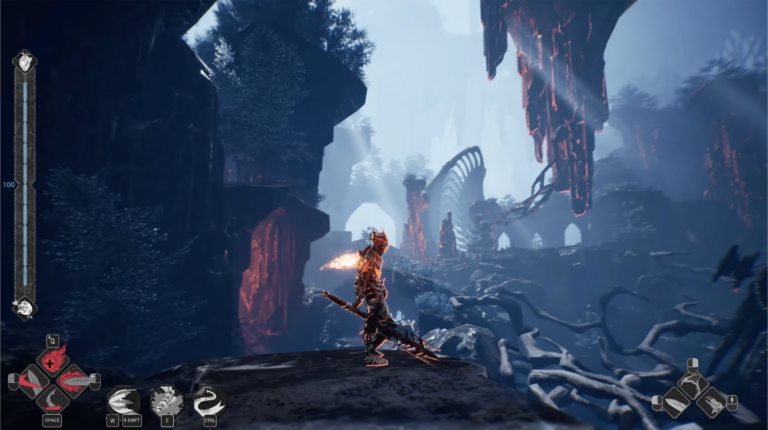
The premise is immediately distinctive: players take the role of Murcielago, a medieval knight from a realm of mystical floating islands who is pulled without warning into the Techno Dimension, a mirrored underworld of steel structures, bizarre futuristic architecture, and hostile mechanical life. His chivalrous armor is useless here. His code of mercy is a liability. To survive, Murcielago must cobble together jury-rigged techno-scrap gear and eventually become what the dimension demands — a jet-boosted vampire who stays alive by draining the health of everything around him. The only guide through this alien world is a full-metal spaniel, a dog rendered entirely in mechanical components, whose loyalty is the game’s single warmest narrative detail in an otherwise harsh and disorienting setting.

The demo is available as a free standalone download on Steam and has been since February 23, 2026. The demo file size is approximately 3 GB, and the full game’s storage requirement rises to 35 GB.

Draincore: Health Regeneration as Combat Philosophy

The mechanical center of Mercy Incore is the Draincore system, and understanding it explains why the game looks and plays the way it does. There are no potions in the game. There are no health drops from enemies. There is no passive regeneration. The only way Murcielago restores health is by dealing damage — specifically through turbine-driven hits called Drains that steal health from enemies on contact.

This single design decision restructures everything. Players who circle enemies cautiously, waiting for a safe moment to attack, slowly lose health with nothing to show for the patience. Players who attack constantly, maintain pressure, and flow from one enemy to the next restore health with every turbine hit. Blocking, dodging, and even sprinting all deal damage in this system — there is no defensive action that costs the player a health-restore opportunity, because even evasion is offensive here.

The design lineage is clear: Doom Eternal (2020) used glory-kill finishers to restore health, forcing players into close-range engagement rather than kiting at a distance. Bloodborne (2015) introduced the rally system, which let players recover health lost to a hit by attacking immediately — stopping to retreat was punished. Metal Gear Rising: Revengeance (2013) restored health through Zandatsu blade-mode cuts. Inspioner has brought that aggressive-survival philosophy into the hack-and-slash character-action genre — the spectacle-fighter tradition of Devil May Cry and Bayonetta — where stylish combo expression and momentum management were already rewarded, but not yet fused with a health economy that makes aggression a survival condition.

In the full game, Inspioner updated this system to add a strategic dimension: regular attacks restore health, while turbine attacks deal double damage but cannot heal. Players will have to choose in real time between recovering health and pressing for faster kills — a tradeoff the demo previews, though the final version’s balance will be shaped by the full weapon roster.

Weapon Morphing: Three Combat Classes on a Single Button

The demo gives players two of the three weapons the full game will include: the Claymore and the Scythe. These are not cosmetically different versions of the same moveset. Each weapon functions as a full combat class with distinct strengths and weaknesses against specific enemy types. The Claymore is a heavy-hitting blunt instrument for single targets. The Scythe, in a recently added update to the combat system, can pull enemies off the ground and into the air, enabling aerial combo extensions. A third weapon — a Dagger — will be available in the full release but is absent from the demo. The Steam demo page confirms each weapon is a full combat class with weaknesses against different enemy types.

Weapon morphing happens on the fly with a single button. The design logic is straightforward: any given enemy encounter has an optimal weapon, and the game rewards players who switch to it rather than grinding through with whatever they started with. Combined with the Draincore health economy, weapon choice becomes a survival decision — the right weapon against a given enemy type drains health faster, which means it also heals more efficiently.

Is Mercy Incore Available on Steam Deck?

The game’s minimum PC requirements include an Intel Core i5-8400 or AMD Ryzen 3 3300X processor, 8 GB of RAM, and an NVIDIA GeForce GTX 1660 6 GB or AMD Radeon RX 5600 XT 6 GB graphics card — midrange hardware that most current gaming PCs can meet. A Steam Deck community note observed that the game struggles on Valve’s handheld; no official Steam Deck compatibility certification has been issued.

Why a Solo Dev Building This Genre Matters

Character-action games — the subgenre that Devil May Cry’s Hideki Kamiya crystallized at Capcom in 2001, later refined by PlatinumGames in Bayonetta and Metal Gear Rising — have historically required large specialized teams. The animation systems alone, which must make fast stylish combat feel kinetic and readable at high frame rates, have typically required dedicated animation programmers, combat designers, and visual effects artists working in parallel. A solo developer building a playable 3D character-action game is doing something structurally different from a solo developer building a 2D pixel-art platformer or a roguelike deckbuilder — both in technical scope and in the complexity of the combat feel they must achieve without dedicated specialists.

Mercy Incore is Inspioner’s solo passion project, described in the developer’s own words as built through “countless sleepless nights full of insights,” with every element — every character model, every piece of environmental geometry — created by hand. Music is the one area where Inspioner brought in an outside collaborator: all original compositions were created by RoarBack studio.

For context on how rare this combination is: the global indie game market reached $4.85 billion in 2025, with independent games accounting for 25% of Steam’s total revenue that year. The odds for solo developers are steep: the median Steam game released in 2025 earned $249 in gross revenue. A solo 3D character-action game clearing even a modest review threshold would represent something genuinely unusual in that landscape. The current demo has 31 user reviews at 83% positive on Steam — a modest signal but a real one, and one achieved without a publisher or a marketing budget.

Enemies as Reluctant Allies

One of the more unexpected design decisions in Mercy Incore involves its bosses. Rather than treating them as setpiece obstacles to be defeated and forgotten, the game frames them as complex, contradictory characters who interact with each other and do not simply disappear after battle. The Steam page describes boss design this way: in a realm that is both alien and hostile, it may be wiser to turn certain foes into allies than to annihilate everything and be left alone with the Draincore’s hunger — a narrative and mechanical framing that punishes total aggression while also demanding it for health restoration. The tension between “attack everything to survive” and “some enemies might be worth keeping alive” is the game’s most unusual design note.

What the Demo Contains and What It Leaves Out

The demo is built from one level with an altered story and altered events, deliberately designed to avoid spoiling the full game’s narrative. Players pilot a pre-upgraded version of Murcielago with two weapons rather than the three available in the full release. The demo’s combat loop, enemy roster (three main bosses, three mini-bosses, an endless arena), and exploration structure represent the core gameplay faithfully — but the story presented in the demo diverges from the full game’s plot.

The full game also features several additions not present in the demo: a Turbo Claws weapon with built-in turbines that transition between melee and ranged attacks, further environmental areas, secrets, and updates to the audio design including reworked impact sound effects. The game supports English, Simplified Chinese, and Russian interfaces. A full release is planned for Q2 2027 on PC via Steam. The Steam Community hub tracks updates and developer posts as the game approaches its planned launch.


Frequently Asked Questions

Is the Mercy Incore demo free to download?

Yes. The demo is available as a free standalone download on Steam and has been since February 23, 2026. No Steam account purchase is required to access it. The demo file size is approximately 3 GB, and a playthrough takes approximately 35 to 45 minutes at a relaxed pace.

What is the Draincore lifesteal system, and why does it matter for how Mercy Incore plays?

The Draincore is both a narrative object — a device Murcielago acquires in the Techno Dimension that sustains his life — and the game’s health regeneration system. There are no health potions or item drops in the game; the only way to restore health is to deal damage, specifically through turbine-driven attack types called Drains. The design consequence is that passive or cautious play is a losing strategy: players who stay at distance or wait for safe openings slowly run out of health, while players who maintain constant offensive pressure stay alive. It places Mercy Incore in a design lineage that includes Doom Eternal’s glory-kill health system and Bloodborne’s rally mechanic — both systems that punish caution and reward aggression. Full details on the Draincore system mechanics are on the Steam demo page.

When does Mercy Incore come out, and will it cost anything?

The full game is targeting Q2 2027 — April through June of next year — on PC via Steam. No price has been announced. The free demo available now is the best way to try the game before any purchase decision, and the developer has been actively updating it based on player feedback since its February 23, 2026 release. The full game Steam page has the latest information on the release window.

Why is a solo developer building a 3D character-action game unusual?

Most successful solo-developed games sit in genres with lower technical barriers: 2D platformers, roguelike deckbuilders, narrative games. The hack-and-slash character-action genre — spectacle fighters in the Devil May Cry and Bayonetta tradition — has historically required specialized teams for its animation systems, combat feel, and visual effects work. Those elements are technically demanding to produce alone, and the genre has seen very few indie entries attempt the full 3D spectacle-fighter form. Mercy Incore is one of a small number of solo efforts attempting to compete in that specific space, which is also underserved by AAA studios following the last major release in the genre years ago.

Source link