Memoirium Launches on Steam: Filipino Soulslike Built on Among Us Revenue

August 19, 2026:

Memoirium Launches on Steam: Filipino Soulslike Built on Among Us Revenue
Memoirium
Goldengratus.com

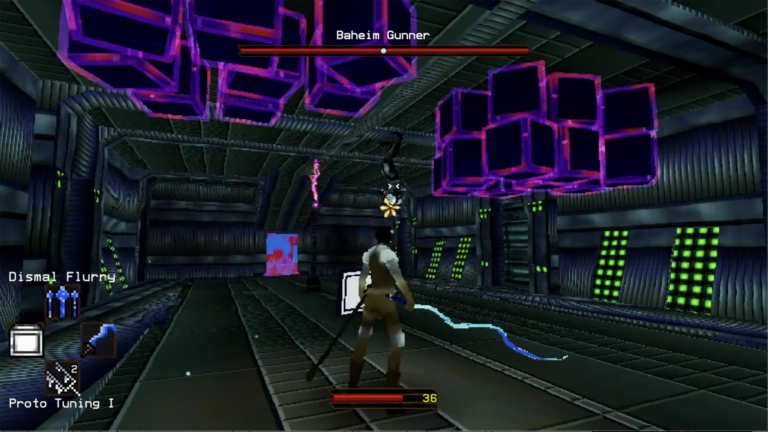
You wake up in a school corridor. The fluorescent lights have the low-polygon shimmer of something that should not be three-dimensional but insists on being anyway. Walk too far and the corridor ends at a castle held together by wax. Walk farther and the castle ends at the ocean floor, rendered in blocky technicolor that looks like it was drawn from memory rather than photographed from life. This is Memoirium, and the incompleteness is the point.

The retro soulslike from Filipino solo developer Paolo Villanueva — funded by Outersloth, the indie game investment initiative built from Among Us revenue — arrived on its Steam launch August 13, 2026 date, and it is currently available for $13.49 with a 10% introductory discount that runs through August 27. A free demo covering the game’s first two areas is available separately; it carries demo progress forward into the full release.

The game has accumulated 35 Steam reviews in its first five days, sitting at 91% positive. The demo has posted 94% positive from 34 reviews over its two-month run. Those numbers are small — Memoirium is not a wide-release game — but they point in a consistent direction, and they come from players who understood what they were getting into.

Why Abstraction Is the Mechanic, Not the Obstacle

Most soulslikes earn their tactile satisfaction through specificity: the heft of a weapon communicated through animation frames and impact audio, the danger of an enemy signaled through a distinctive silhouette readable from across a room. Memoirium abandons all of that. Human figures are faceless forms. Weapons are abstract blobs of pixels. Enemy silhouettes blur into the environment. The color palette swings between overexposed brightness and near darkness without warning.

Early coverage flagged this as a design risk — judging distance between weapon and enemy is harder when both are rendered at their most primitive. That criticism is accurate. But it misses what the abstraction is actually doing.

Dreams do not render detail on demand. You remember the shape of a room but not the number of chairs. You recognize a face but cannot describe it afterward. Memoirium‘s PS1-era pixel caps — no texture exceeds 256×256 pixels, all models handcrafted in Blender by Villanueva alone — create a world that works the same way: you fill in the specificity yourself, which is exactly how a dream works. The abstraction is not a concession to a solo developer’s limited art resources. It is what the game is doing.

Villanueva confirmed as much in an interview with 80.lv, published the day before launch: “I believe what truly makes it cohesive is that I built everything myself.” The visual unity of Memoirium comes not from a consistent art bible but from a single hand’s consistent interpretation of what this particular dreamscape should look like.

What the Safe Room Actually Is

Before discussing the combat, it is worth understanding what Memoirium is structurally trying to do, because the answer changes how you read everything else.

You play as a Dreamer — a figure who awakens inside a fragmented subconscious landscape with no clear identity, no obvious purpose, and no indication of how they arrived. The world wants you to fight: eight distinct dungeons populated by liminal monstrosities and corrupted fellow Dreamers who have been consumed by the landscape, all serving a mysterious overlord controlling the dreamscape. The central dramatic question is not “can you win?” — it is “who are you, and why are you here?”

The answer, when it comes, is delivered not through cutscene or dialogue but through a room.

Every Dreamer has access to a private sanctuary separate from the dungeon world, which can be decorated with mementos collected throughout the journey: computers, chairs, television sets — mundane clutter that feels disproportionately comforting against the chaos outside. There is also a resident kitten, which is not a game mechanic. The room contains a space to write personal reflections.

Villanueva has been explicit about what this room is for. The game’s lore, he told 80.lv, is “layers of metaphor that talk about struggling with loss, pain, conflict, and learning to live with that.” His mother died of colon cancer while he was in college. He started learning to code in 2020 during the COVID lockdowns. The first game he finished, Undying Lantern (2022), was the proof of concept. Memoirium is the thing he actually needed to make.

“My true and honest hope,” he wrote in the interview, “is to encourage others to write and reflect on their own lives.” The safe room serves no mechanical purpose in the game. It exists entirely as an optional space for a player to slow down and think.

How the Stamina System Inverts Genre Convention

Memoirium wears its soulslike influences openly: light attacks, heavy charged strikes, blocking, rolling, stamina management, boss encounters with health-bar-and-title reveals. The controller layout maps to genre conventions immediately recognizable to anyone who has spent time with Elden Ring or Dark Souls.

But the stamina and mana system runs backward.

In most soulslikes, stamina is a depleting resource that limits how aggressively you can play. In Memoirium, both stamina and mana fill with use rather than drain. Aggressive play is actively possible — but overextension has consequences. Casting Lullabies (the game’s 67 spells) while depleted causes direct self-harm. The risk-reward loop is preserved, but the emotional register shifts: the game encourages you to push, then punishes you for pushing too far. It is a dream logic of resource depletion: the game encourages aggression, then punishes overextension in the exact way a dream punishes trying to run.

Enemy attacks were designed for legibility despite the abstract visuals. Villanueva described testing every new enemy attack repeatedly to ensure it was readable: “There is nothing worse in an action game than being hit by an attack with no chance of reacting because it was either too fast or there was zero warning.”

Does the Equipment Actually Change How You Play?

The short answer is yes, and that answer is more interesting than it sounds for a game with only 14 items across its entire equipment roster.

Most RPGs solve build variety through scale: hundreds of items with marginal stat differences create an illusion of choice. Memoirium takes the opposite approach. Villanueva, as a solo developer managing scope, designed each of the 14 armors, masks, and off-hand items to alter the game qualitatively rather than quantitatively.

One armor deals direct damage to enemies whenever you successfully dodge their attacks, turning evasion into offense. Another alters how long negative status effects last. Certain masks change how enemies approach and engage you in combat — not just making them harder or easier, but change enemy combat behavior entirely. The 25 Keepsake consumables replenish at checkpoints and can be upgraded by collecting duplicates, though the game warns that even dream-world equipment has limits.

The 31 weapons include swords and energy blades but also guitars — the dream’s logic extending into the armory. The 67 Lullabies function as both offensive spells and build-defining tools: some destroy enemies outright, others augment the player’s abilities, and the inverted mana system makes each one a Lullaby spell, a calculated risk.

What Outersloth Actually Is, and Why It Matters Here

Outersloth is frequently described as a publisher. It is more precisely a funding initiative — a recoup-and-revenue-share model built from the profits of Among Us and managed by Innersloth, the Redmond, WA studio that created that game. Outersloth does not take creative credit, authority, or IP claims over the games it backs. It does not provide full-service publishing (localization, marketing, QA are separate arrangements). It funds indie games directly.

The terms are transparent: 50% revenue share during recoup, 15% long-term after the investment is returned — terms that have been praised within the industry as developer-friendly. Outersloth has invested $20 million across 24 projects since 2022. Its signing rate runs at approximately 1.4% of submissions. It explicitly prohibits AI-generated game submissions.

Villanueva was backed by Outersloth in November 2024, making GoldenGratus the first Southeast Asian Outersloth partner. Prior to that, he was working on Memoirium during evenings and weekends while holding a day job. The Outersloth funding allowed him to commission music, hire a QA team, and work full-time. The 10% introductory discount currently running through August 27 is part of the standard launch support that partnership enables.

Memoirium is notable as one of Outersloth’s few explicitly statement-making games — the dev’s no-AI pledge was included in the official press release not because anyone asked, but because Villanueva wanted it there.

What Does Memoirium Not Do Well?

Sound design is sparse in a genre where audio carries significant weight. The abstract visuals create genuine spatial challenges: estimating reach and distance between player and enemy is harder when both are reduced to primitive pixel shapes. These are real costs, not editorial hedges.

The world is also designed without a minimap — intentionally, since Villanueva drew inspiration from Dark Souls‘ philosophy that “the experience of being lost is part of the fun.” There is a Lullaby spell that lets players drop breadcrumbs, but players unaccustomed to spatial memory in games will find the first hours disorienting.

Whether these limitations matter depends on what you are looking for. Memoirium is not trying to compete with Elden Ring on production scale. It is asking a different question: how far can you strip a soulslike down before the genre’s essential experience — risk, reward, discovery, the quiet triumph of a boss finally falling — stops working? The current 91% positive rating suggests it has found an answer that clears that bar.

Is Memoirium Worth Buying Before the Discount Ends?

The 10% introductory discount brings Memoirium from $14.99 to $13.49 through August 27, 2026. The free demo, which covers the first two dungeons and carries progress into the full game, remains available indefinitely. For players uncertain about the abstract aesthetic, the demo is the correct entry point — the visual style either resonates within the first twenty minutes or it does not.

For players who find the aesthetic immediately legible — who have played PSX-era games and understand what deliberate lo-fi coherence feels like — Memoirium offers something the current soulslike market rarely delivers: a game that knows exactly what it is trying to say and built its entire visual language, mechanical system, and narrative architecture around saying it.


Frequently Asked Questions

What makes Memoirium different from other soulslikes on Steam?

Most soulslikes compete on production scale — larger worlds, more weapons, higher-fidelity graphics. Memoirium competes on design coherence. Every texture in the game is capped at 256×256 pixels. Every 3D asset was handcrafted in Blender by a single developer. The stamina and mana bars fill rather than deplete, inverting the genre’s risk-reward loop. The result is a soulslike whose visual minimalism is not a limitation but a design thesis: the fragmentary, incomplete imagery is what a dream looks like, and the player’s mind fills in the rest.

Does the abstracted art style actually work for soulslike combat?

It works, with caveats. Enemy attacks are designed to be legible despite the visual abstraction — developer Paolo Villanueva tested every new attack for readability before shipping it. Spatial reasoning (estimating weapon reach, judging distance to enemies) is genuinely harder when both you and your target are rendered as abstract pixel shapes, and the sparse sound design means less compensating audio feedback than the genre typically provides. Players who adapt to the visual language quickly will find the combat satisfying. Players who need higher-fidelity cues for timing and positioning may find the first hour frustrating.

What is Outersloth, and how did it fund this game?

Outersloth is an indie game investment fund created by Innersloth, the studio behind Among Us. It operates on a recoup-and-revenue-share model: 50% of revenue until the investment is returned, then 15% long-term. It does not take creative control, IP rights, or publishing authority over the games it backs. Outersloth signed Memoirium in November 2024, enabling developer Paolo Villanueva to work full-time and commission music, QA, and localization. Memoirium is the first game from a Southeast Asian developer that Outersloth has funded.

Where can I try Memoirium before buying?

A free demo covering the game’s first two dungeon areas is available on Steam. Progress from the demo carries over into the full game, so any time spent in the demo is not wasted. The full game is currently $13.49 (10% introductory discount off the regular $14.99 price) through August 27, 2026.

Source link