Long March 12 Hits 10 Flights. China Needs to Launch Its Guowang Satellites 10 Times Faster to Keep Its ITU Spectrum Rights.

November 9, 2026:

Long March 12 Hits 10 Flights. China Needs to Launch Its Guowang Satellites 10 Times Faster to Keep Its ITU Spectrum Rights.
Long March-2C carrier rocket
spacechina.com

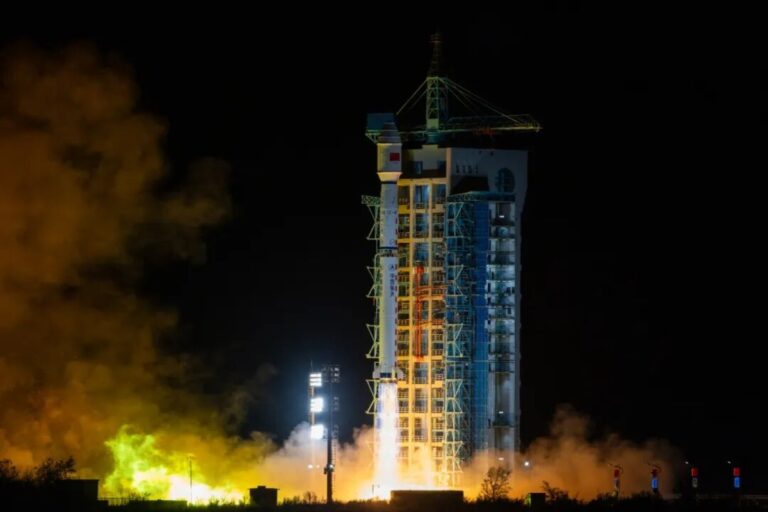
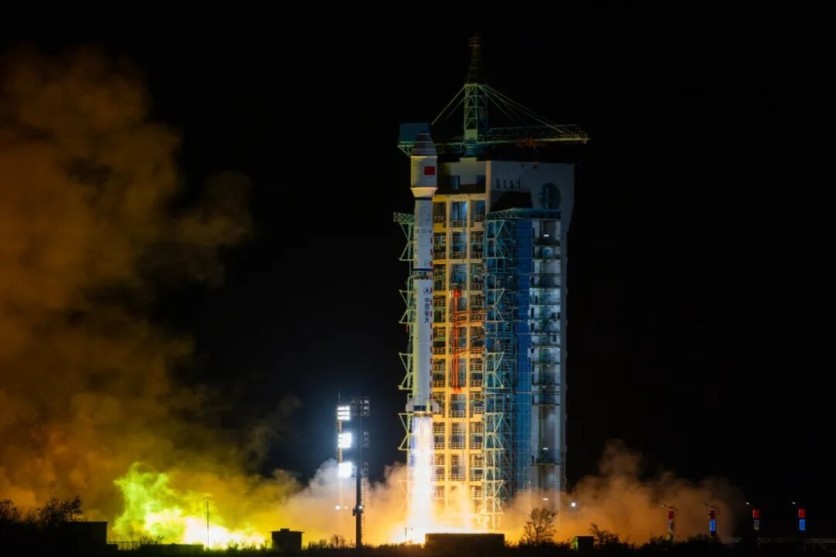
China’s Long March 12 rocket is targeting a 30-minute window between 3:17 PM and 3:47 PM Eastern Time tonight (20:17–20:47 UTC, with a primary aim time of 20:25 UTC) for liftoff from Commercial Launch Complex 2 (LC-2) at the Wenchang Space Launch Site on Hainan Island. The mission, the tenth consecutive successful flight for the vehicle, will place another batch of nine Guowang broadband satellites into low Earth orbit — adding to the approximately 230 that China Satellite Network Group (China SatNet) has deployed since late 2024.

The mission was originally scheduled for November 5 before slipping twice. By Sunday afternoon UTC, the mission status was confirmed Go for Launch on independent orbital tracking services.

The Tenth Time — Not the Eighth

The submitted draft and some tracking databases describe tonight as the eighth Long March 12 mission. Philippine government records tell a different story. The Philippine Space Agency (PhilSA) has issued formal advisories for every launch from Wenchang — and those advisories number at least nine before tonight, stretching from the maiden flight in November 2024 through the most recent prior mission on October 9, 2026. Tonight’s launch is the tenth Long March 12 flight, not the seventh, eighth, or ninth.

The discrepancy matters because accurate mission counting is how launch campaigns are assessed against their goals — and Guowang’s goals are aggressive.

The Rocket

The Long March 12 is a two-stage vehicle standing 62 meters tall (203 feet), with a main body diameter of 3.8 meters (12.5 feet) and a payload fairing 5.2 meters (17.1 feet) in height. It lifts off at 428 metric tonnes (943,740 pounds / 472 US tons) and carries up to 12,000 kilograms (26,460 pounds) to low Earth orbit.

What distinguishes it from earlier Chinese medium-lift vehicles is not mainly its size but its propulsion and assembly architecture.

The YF-100K engine: The Long March 12’s first stage is powered by four YF-100K kerolox engines burning liquid oxygen (LOX) and RP-1 rocket-grade kerosene in an oxidizer-rich staged combustion cycle (ORSC). Each engine produces 1,200 kilonewtons (269,760 pounds-force) of thrust at sea level and 1,340 kN (301,244 lbf) in vacuum, for a combined sea-level first-stage thrust of approximately 5,000 kN (1,124,045 lbf). The second stage uses two YF-115 engines on the same propellant combination.

The oxidizer-rich staged combustion cycle — the same cycle class used in Russian RD-180 and RD-171 engines — is significantly more efficient than the simpler gas-generator cycles found in older Chinese rockets. It achieves this by burning oxidizer-rich pre-stage gas in a preburner to drive the turbopumps at high pressure, then feeding that exhaust into the main combustion chamber rather than dumping it overboard. The result: a vacuum-optimized specific impulse of 335 seconds — meaningfully better than hypergolic engines’ 310–320 seconds — and a chamber pressure of 18 megapascals (2,610 psi). The design traces its lineage to the Academy of Aerospace Liquid Propulsion Technology (AALPT) in Xi’an, with acknowledged derivation from earlier Soviet engine technology.

Crucially, neither the first nor second stage uses nitrogen tetroxide or unsymmetrical dimethylhydrazine (UDMH) — the hypergolic, highly toxic propellants still used by older Long March variants. This makes the Long March 12 cleaner to handle, faster to service, and better suited to the commercial high-cadence mission profile it was designed for.

Three-horizontal assembly: Unlike the vertical integration facilities required by most of China’s earlier rockets, the Long March 12 uses a “three-horizontal” (H3) model — the rocket is assembled horizontally, tested horizontally, and transported to the pad horizontally on a specialized transporter-erector. This approach eliminates the need for a tall vertical assembly building and allows integration work to proceed in parallel with the rocket’s pad preparation time, reducing turnaround between missions. It is the same operational logic behind SpaceX’s integration strategy for Falcon 9, though the mechanical execution differs.

The Constellation — and the Clock

Each Long March 12 mission from LC-2 carries nine Guowang satellites. The constellation being built, formally managed by China SatNet (China Satellite Network Group Co., a state-owned enterprise under SASAC supervision), is planned to eventually comprise 12,992 satellites in ITU-registered altitude bands ranging from roughly 500 to 1,145 kilometers (311 to 711 miles).

That plan has an international regulatory deadline attached to it.

Under Resolution 35 adopted at the International Telecommunication Union’s World Radiocommunication Conference in 2019 (WRC-19), non-geostationary satellite operators must meet deployment milestones to protect their spectrum rights on a “use it or lose it” basis. The operative milestone: 50 percent of the constellation must be deployed — and operating — within roughly five years of the filing’s “bring into use” date. For Guowang, that points to a deadline of approximately 2031–2032 by which China must have roughly 6,496 of 12,992 satellites in orbit, or begin forfeiting priority spectrum rights to other operators.

The math is unforgiving. China SatNet has deployed 230 satellites into orbit. That leaves about 6,266 more needed in six years — roughly 1,044 per year, or close to 87 satellites per month. At tonight’s pace of nine satellites per Long March 12 mission, with missions occurring roughly monthly, the program is currently adding approximately 108 satellites per year from this vehicle alone — about one-tenth of what the ITU timeline requires.

This is not a secret gap. It is the structural reason China is simultaneously accelerating Long March 12 cadence, testing the reusable Long March 12B variant (which debuted June 1, 2026), and deploying other vehicles — including the Long March 6A from Taiyuan and the Long March 8A from Wenchang’s separate Commercial LC-1 — across multiple orbital planes. No single vehicle, at any current cadence, closes the gap alone. What tonight’s mission represents is not a routine resupply run. It is one installment in a legally mandated build-out that China has formally committed to completing under international treaty.

The Military Dimension the Launch Announcements Don’t Mention

Guowang is officially described as a broadband internet constellation for domestic and commercial use. US defense analysts, an independent research institution, and Chinese state documents suggest its design scope is considerably broader.

Brigadier General Anthony Mastalir, commander of US Space Forces Indo-Pacific, has stated publicly that American officials are “watching to see how China integrates satellite networks like Guowang into military exercises.” His framing was not speculative — it described an active monitoring program.

A RAND Corporation report found that “PLA researchers rarely make efforts to distinguish between the satellite internet constellation Starlink and its military derivative Starshield in their publications.” The implication, which RAND made explicit, is that Chinese military planners conceptualize Guowang the same way: as a commercial system that is simultaneously, by design, a potential military communications backbone.

The Mercator Institute for China Studies (MERICS) has found, as reported by Resilience Media, that Guowang “could boost China’s military’s C4ISR architecture” — command, control, communications, computers, intelligence, surveillance, and reconnaissance — “by enabling high-speed, low-latency and high-bandwidth” connectivity. Planned laser inter-satellite links, when implemented, would allow PLA units to route encrypted communications between satellites without routing through Chinese ground stations, eliminating a dependency that makes existing military SATCOM systems potentially detectable and jammable.

Resilience Media cited Taiwanese reports from early 2024 that Chinese coast guard units were testing Guowang connectivity for precision missile strike coordination.

There is also a structural legal dimension that is fixed regardless of how the network is eventually used. Under the National Intelligence Law of the People’s Republic of China (2017), Article 7, all organizations and citizens — including state-owned enterprises — are legally required to “support, assist, and cooperate with national intelligence work.” China SatNet, as a SASAC-supervised state enterprise operating satellite infrastructure, has no legal mechanism to refuse a PLA or MSS request for network access. This obligation is not modified by where the company’s terminals are located or what its stated commercial mission is.

Debris in Philippine Waters — Every Time

There is a consistent, quantifiable consequence of every Long March 12 launch from Wenchang that official Chinese mission announcements do not address: the rocket’s first stage and payload fairing fall through Philippine airspace and into Philippine territorial waters on each mission.

The Philippine Space Agency has issued formal advisories for every Long March 12 launch from LC-2 on record. These advisories document the projected drop zones, which have consistently fallen within Philippine archipelagic waters:

  • November 30, 2024 (maiden flight): Debris search off Palawan confirms a drop zone in Recto Bank, within 28 nautical miles (52 km / 32 miles) of Quezon, Palawan.
  • August 4, 2025: Debris in Philippine waters; Philippines Department of Foreign Affairs issued formal DFA condemnation and called for extended notification periods.
  • January 19, 2026: Drop zone near West Philippine Sea; rocket trail visible over Palawan, with military assets confirming the trajectory.
  • June 2026: Drop zone within Philippine archipelagic waters; PhilSA advisory for June mission issued for coastal waters near Balabac.
  • August 16, 2026: Drop zone 42.6 km from Puerto Princesa; 38.9 km (24.2 miles) from Tubbataha Reef Natural Park, a UNESCO World Heritage Site.
  • September 17, 2026: Residents of Puerto Princesa heard explosions heard near Puerto Princesa at approximately 8:45 AM local time, linked to the Long March 12 launch.
  • October 9/10, 2026: Rocket trail visible over Puerto Princesa; PhilSA warned of debris risks with the Philippine Navy placed on heightened alert.

No injuries have been confirmed in publicly available reports. No Chinese government response to the Philippine DFA condemnation has been reported. The pattern — which now spans seven of nine Long March 12 missions from this pad — is a function of Wenchang’s geographic position on Hainan Island and the azimuth required to reach Guowang’s target orbital inclinations. Modifying that trajectory would require either a different launch site or a different rocket flight path, both of which carry cost and operational implications.

PhilSA has not yet issued a public advisory for tonight’s November 8 launch as of the time of publication. Historically, advisories have been issued before or concurrent with the launch window.

What to Watch Tonight

For observers, the mission has two principal markers:

At or shortly after 20:25 UTC (3:25 PM ET / 12:25 PM PT): Liftoff from LC-2. The Long March 12 ascent to orbit takes approximately 12–15 minutes, after which Chinese state media typically confirms payload deployment within hours.

In coming days: Whether PhilSA issues an advisory confirming the debris drop zone and whether the Philippines raises another formal diplomatic objection. The pattern since August 2025 has been consistent: launch, Philippine advisory, Philippine condemnation, Chinese silence.

The larger trajectory — the one the ITU is tracking, not PhilSA — runs for another six years. At the ITU-mandated pace, China needs to launch roughly as many Guowang satellites in the next six years as it has planned total. How many missions that requires, and how many of those missions cut through Palawan’s skies, will determine whether Guowang becomes the global broadband network Beijing intends — or forfeits its spectrum rights to operators who can sustain the cadence.

Live launch coverage and telemetry tracking are available through Space Launch Now and Next Spaceflight launch listings.

Source link