HomeAuto LG Display and Samsung Invest in Hyperfluorescence OLED: Kyulux Closes $53.7M Series D
LG Display and Samsung Invest in Hyperfluorescence OLED: Kyulux Closes $53.7M Series D
November 8, 2026:
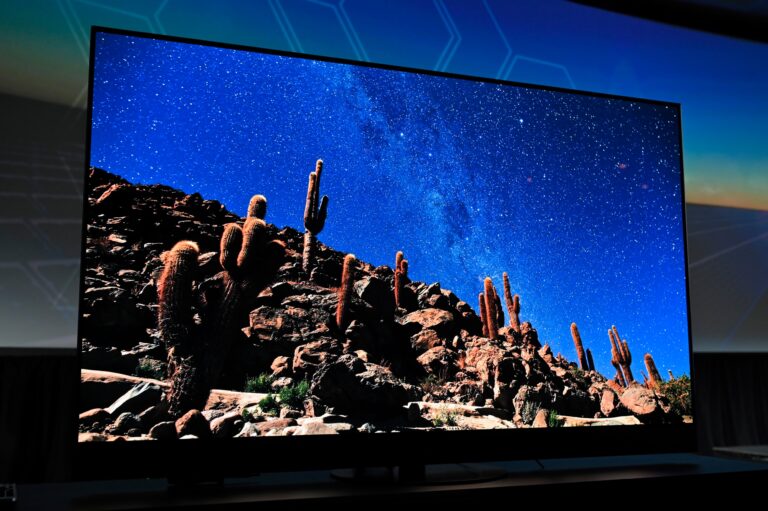
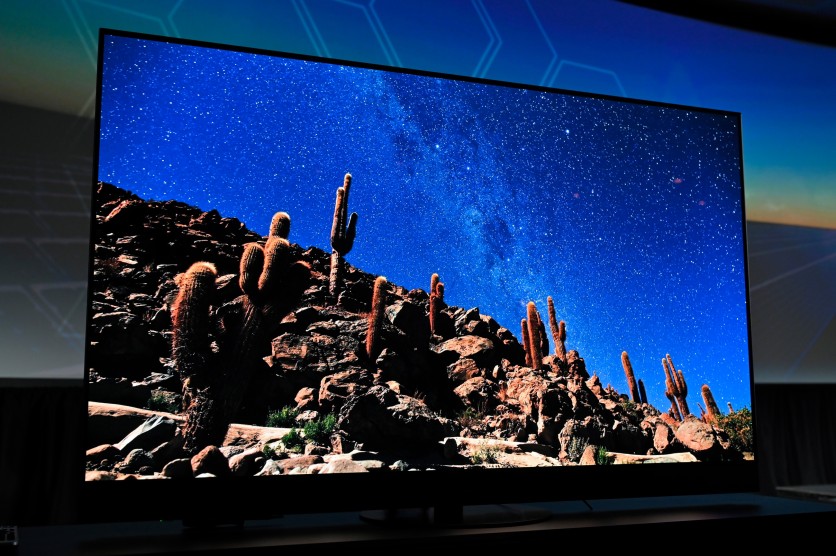
LAS VEGAS, NEVADA – JANUARY 04: A Panasonic MZ 2000 OLED television is displayed during a Panasonic press event at CES 2023 at the Mandalay Bay Convention Center on January 04, 2023 in Las Vegas, Nevada. CES, the world’s largest annual consumer technology trade show, runs from January 5-8 and features about 3,100 exhibitors showing off their latest products and services to more than 100,000 attendees. David Becker/Getty Images
Kyulux Inc., the Fukuoka-based organic materials company spun out of Kyushu University, has raised ¥8.5 billion (approximately $53.7 million) in a Series D funding round that places both of South Korea’s dominant display manufacturers on its cap table simultaneously — an alignment that industry observers say signals Hyperfluorescence OLED emitter technology is approaching a commercial inflection point.
LG Display led the round as a direct investor, alongside Samsung Venture Investment Corporation (the corporate venture arm of Samsung Electronics), Japanese bank-affiliated SMBC Capital Partners, Korean private equity firms H&Q Asia Pacific and BNW, returning strategic investor Nippon Soda, and new entrant Iwatani Corporation, Japan’s largest industrial gases supplier. The round, first reported by oled-info.com, values Kyulux at a post-money $272 million, bringing total capital raised by the company to roughly $184 million across five named funding rounds since 2016.
The funding announcement arrived alongside a Joint Development Agreement (JDA) between Kyulux and LG Display — a formal engineering collaboration to integrate Hyperfluorescence emitters into LGD’s panel manufacturing process. The JDA is the clearest signal yet that LG Display intends to move Hyperfluorescence from materials evaluation into production-line qualification, a process that typically precedes commercial deployment by one to two years.
What makes the investor alignment notable is not merely its scale but its competitive geometry. LG Display and Samsung Display are, by conventional measure, rivals — together they control roughly 60 percent of global OLED panel production. That both have now committed capital to the same upstream materials startup, in the same round, while one of them simultaneously signed a joint development agreement with it, suggests the two companies have independently reached the same conclusion: that Hyperfluorescence represents the next obligatory step in display materials, and that neither can afford to let the other get there first.
What Hyperfluorescence Actually Is — And Why the Exciton Math Has Driven Twenty Years of Materials Research
To understand why LG Display and Samsung are placing this bet, it is necessary to understand a problem baked into the physics of every OLED display manufactured today.
When an organic light-emitting diode generates light, it does so by recombining electrons and holes inside a thin organic film. That recombination produces excitons — bound electron-hole pairs that carry the energy to be released as a photon. The problem is a statistical one: quantum mechanics dictates that electrical excitation generates singlet and triplet excitons in a fixed 1:3 ratio. Singlet excitons decay radiatively in organic materials — they produce light. Triplet excitons, in pure-organic systems, cannot: their decay is quantum-mechanically forbidden through the radiative channel available to singlets. The result is that first-generation fluorescent OLED emitters — the technology that launched the industry — could convert a maximum of roughly 25 percent of injected electrical energy into light. The other 75 percent dissipated as heat.
This is not an engineering imperfection. It is a consequence of spin statistics, and it set the foundational challenge for every generation of emitter chemistry that followed.
Second-generation phosphorescent emitters addressed the problem by introducing heavy-metal atoms — typically iridium or platinum — into the organic emitter molecule. These metals create strong spin-orbit coupling, which relaxes the quantum-mechanical prohibition on triplet decay: triplet excitons can now emit light through phosphorescence. The result was a jump from 25 percent to approximately 100 percent internal quantum efficiency (IQE), and phosphorescent OLED technology — commercialized and patent-protected by Universal Display Corporation (UDC) under the trade name PHOLED — has dominated the premium display materials market for the better part of two decades. Nearly every OLED screen made by Samsung Display and LG Display today runs on UDC’s phosphorescent red and green emitters.
But phosphorescent chemistry carries its own constraints. Iridium is a rare and geopolitically concentrated element, primarily extracted as a byproduct of platinum mining in South Africa and, to a lesser extent, Russia. The emission spectra of phosphorescent emitters are inherently broad, requiring color-filtering that reduces overall efficiency. And the blue phosphorescent emitter — the final piece of a full-color PHOLED display stack — has not achieved reliable commercial deployment at scale despite decades of development effort.
Third-generation TADF emitters attacked the same problem through an entirely different mechanism, one that required no rare metals at all. Thermally Activated Delayed Fluorescence was first demonstrated for OLED applications by Professor Chihaya Adachi and his team at Kyushu University in a landmark 2012 Nature paper. The key insight was molecular design: by engineering organic donor-acceptor molecules with an extremely small energy gap between their triplet and singlet excited states, Adachi’s team showed that ambient thermal energy was sufficient to drive reverse intersystem crossing (RISC) — a quantum process by which triplet excitons are thermally “promoted” back to the emissive singlet state. The result was near-100 percent IQE from pure-organic materials, with no iridium required. The Nature paper has since been cited more than 3,000 times.
Kyulux was founded in 2015 as a direct spinout from Adachi’s laboratory to commercialize this discovery. It holds an exclusive worldwide license to Kyushu University’s TADF and Hyperfluorescence patent portfolio.
Hyperfluorescence — the fourth generation — solves a limitation that TADF itself introduced. Achieving a small singlet-triplet gap in TADF molecules requires molecular geometries that broaden the emission spectrum. High color purity (narrow spectrum) and efficient triplet harvesting (small ΔEST) are, in TADF, structurally opposed. Hyperfluorescence resolves this conflict with an additional step: rather than allowing the TADF molecule to emit light directly, it uses the TADF molecule exclusively as a sensitizer. The sensitizer harvests all excitons at near-100 percent IQE via RISC, then transfers the excited-state energy non-radiatively to a small concentration of conventional narrow-spectrum fluorescent dopant molecules through Förster Resonance Energy Transfer (FRET) — a dipole-dipole coupling mechanism that operates across distances of one to ten nanometers. The fluorescent dopant then emits the light, delivering the narrow-bandwidth, color-pure output that high-resolution displays require.
The engineering outcome is a materials system that achieves near-100 percent IQE without rare metals and without the color-purity penalty that pure TADF chemistry carries. Kyulux says its Hyperfluorescence devices achieve up to 60 percent higher peak electroluminescent intensity than phosphorescent reference devices and can reduce display power consumption by up to 33 percent — figures the company derives from device-level simulation comparisons. Independent panel-level validation at production scale remains part of the work the LG Display JDA is designed to accomplish.
The first commercial display using Hyperfluorescence technology shipped in October 2019 — a 2.7-inch yellow PMOLED module built by WiseChip for industrial and automotive indicator applications. Commercial shipments of TADF emitter materials followed in April 2020. The technology has been advancing toward larger, full-color active-matrix panels — the kind used in smartphones and televisions — ever since.
The Strategic Logic Behind Korea’s Dual Investment
The investment structure of this Series D reflects a competitive dynamic that has been building in the display industry for several years.
LG Display and Samsung Display have both relied on UDC’s phosphorescent emitter chemistry as the foundation of their OLED stacks. That dependency has long given UDC significant pricing and licensing leverage. But UDC’s foundational patents on red and green phosphorescent OLED emitters are expiring in 2026 and 2027 — a transition that is expected to open the materials market to generic phosphorescent chemistry from Asian chemical suppliers and, more significantly, to accelerate the commercial window for alternative emitter platforms like Hyperfluorescence.
LG Display signaled its awareness of this transition directly: on February 26, 2026, just months before the Kyulux Series D, LGD extended its UDC agreement for long-term materials supply and license. The simultaneous execution of a Kyulux JDA and a UDC renewal is not a contradiction — it is a deliberate generational hedge. LGD is securing supply continuity with the incumbent chemistry while co-developing the technology it expects will follow. It is not choosing between UDC and Kyulux; it is ensuring it retains leverage over both.
Samsung’s position through Samsung Venture Investment Corporation mirrors this logic. Samsung Display holds the largest share of any single manufacturer — approximately 40 to 42 percent of global OLED panel output. Its investment in Kyulux — the company that holds the exclusive license to the technology most likely to succeed phosphorescent chemistry in the premium tier — ensures Samsung is positioned at the materials layer of the next generation, not merely as a customer of whoever wins it.
The entry of Iwatani Corporation as a Series D investor adds a supply-chain dimension that the headline figures do not capture. Industrial gases — nitrogen, argon — are essential to the OLED deposition process; organic layers are evaporated under high vacuum and inert atmosphere to prevent contamination. As Kyulux scales toward mass production through partners like Nippon Soda, industrial gases become a material constraint. Iwatani’s investment positions it as a preferred supplier for that production infrastructure.
The Supply Chain Crystallizing Around Mass Production
Kyulux operates a fabless model: it designs emitter materials but licenses synthesis to chemical manufacturing partners rather than building production facilities of its own. Two agreements announced in the past two years define the shape of that supply chain.
In November 2024, Nippon Soda — a large Japanese agrochemical and specialty chemicals company — formalized a capital and business alliance with Kyulux and announced it would construct what the companies describe as the world’s first dedicated TADF materials mass production facility. The facility targets commercial-scale output by fiscal year 2029/2030.
In February 2026, SK Materials JNC — a Korean joint venture focused on electronic materials — signed a license agreement with Kyulux for green dopant OLED emitter materials. SK Materials JNC has committed to supplying evaluation samples to panel makers in 2026, with a mass production target of 2027. The Korean provenance of SK Materials JNC is significant: it places a Kyulux-licensed manufacturing partner within the same industrial ecosystem as LG Display and Samsung Display, reducing the logistics friction of integrating Hyperfluorescence materials into Korean panel production lines.
The two manufacturing partners address different segments of the production ramp: SK Materials JNC is moving faster on green, the color most commercially mature in Hyperfluorescence; Nippon Soda is building the foundational TADF synthesis capacity that will underlie all colors as the technology scales.
Blue remains the unfinished chapter. Full-color Hyperfluorescence panels require a commercially stable blue emitter, and Kyulux has not yet announced one at the same commercial readiness level as green. The company has blue Hyperfluorescence materials in development, and the LG Display JDA likely includes blue emitter qualification as one of its objectives — but the timeline for blue is not yet public.
Leadership Rebuilt for an IPO
Kyulux’s funding history mirrors the lifecycle of a company in late-stage development: a Series A in April 2016 ($13.5 million) to prove the material, a Series B in May 2019 ($31.8 million) around first commercial deployment, a Series B-Prime in February 2021 (~$34.3 million) through COVID-era consolidation, a Series C in December 2023 ($28.6 million) to deepen supply chain development, and now a $53.7 million Series D as commercial scale approaches.
The leadership changes of the past fourteen months read as deliberate IPO preparation.
In October 2025, Junji Adachi — the company’s founder and longtime CEO — transitioned to a Chief Science Officer role, handing the chief executive seat to Jungkil (Jake) Lee. Lee spent 23 years at Samsung Electronics, where his roles included Senior Manager in Samsung Group’s Chairman’s Office in Japan, General Manager of M&A at Samsung Electronics, and Corporate Vice President of its Visual Display Division — the specific business unit whose technology Kyulux is designed to serve. He subsequently held a vice president role at Hanwha Solutions in Japan before joining Kyulux.
The appointment was an unmistakable signal about where Kyulux intends to go. Lee’s Samsung tenure gives him direct relationships with the technical and business leadership at both Samsung Display and LG Display — the companies that are now simultaneously Kyulux investors and development partners. His M&A and display-division experience positions him to manage precisely the negotiations a materials company faces as it moves from evaluation to supply agreement.
Two months after Lee’s appointment, in December 2025, Samjin Kim joined as CFO — Chief Financial Officer. Kim’s background spans investment and corporate strategy at Samsung Electronics and SK Japan — a resume that suggests Kyulux is building the financial and capital-markets infrastructure an IPO requires.
Kyulux has not publicly stated an IPO timeline. The post-money valuation of $272 million and the composition of the Series D investor base — anchored by two of the world’s largest OLED panel makers and a major Japanese bank affiliate — are the kind of signals typically associated with a company within two to four years of a public offering.
A Funding History in Context
Round
Date
Amount (USD)
Key Investors
Series A
April 2016
$13.5M
LG Display, Samsung Display, others
Series B
May 2019
$31.8M
Strategic and financial investors
Series B-Prime
February 2021
~$34.3M
Continuing investors
Series C
December 2023
$28.6M
Nippon Soda among participants
Series D
November 2026
$53.7M
LG Display (JDA), Samsung Venture, SMBC Capital, H&Q Asia Pacific, BNW, Nippon Soda, Iwatani
Total
~$184M
What This Means for the Screen in Your Pocket
For consumers, the practical implications of a Hyperfluorescence transition would arrive at the level of the finished display: higher peak brightness for the same power draw, better color saturation from the narrower emission spectra, and potentially longer battery life on OLED-panel devices — benefits that accrue from the physics of converting more of the electricity into light rather than heat. The 33 percent power reduction figure Kyulux cites, if validated at panel scale, would represent a meaningful battery life improvement in every smartphone and laptop that runs on an OLED screen.
The transition would also reduce the display industry’s dependency on iridium — a critical mineral whose supply is concentrated in a small number of geographic and corporate sources. That supply-chain resilience argument has gained force as geopolitical risk has re-entered technology procurement decisions.
None of this is immediate. Display materials go through multi-year qualification processes before they appear in a shipping product. The SK Materials JNC target of 2027 for mass production of green Hyperfluorescence emitters is the nearest benchmark on the timeline. Full-color panel qualification, including stable blue, is likely several years beyond that. The LG Display JDA announced today is an engineering starting gun, not a shipping date.
What is happening today — with this Series D and this JDA — is that the people who build OLED displays are placing their bets on which technology will win the efficiency race at the materials layer. Both LG Display and Samsung have now bet on Kyulux. That is not the finish line. But it is the clearest signal yet of which direction the finish line is in.
Frequently Asked Questions
What is Hyperfluorescence and how does it differ from standard OLED?
Hyperfluorescence is a fourth-generation OLED emitter platform developed at Kyushu University and commercialized exclusively by Kyulux. Standard OLEDs waste up to 75 percent of the electrical energy injected into the device because triplet excitons — which account for three-quarters of all excitons generated — cannot radiate light in conventional fluorescent organic materials. Hyperfluorescence solves this by using a TADF molecule to harvest all excitons at near-100 percent efficiency, then transferring the energy via FRET to a narrow-spectrum fluorescent dopant that emits the actual light. The result is high efficiency without rare metals and high color purity without sacrificing efficiency.
Why do LG Display and Samsung both need this technology?
Both companies currently rely on phosphorescent OLED emitters patented by Universal Display Corporation for their most efficient red and green emitters. Those patents are expiring in 2026 and 2027, opening the market to new entrants and alternatives. Additionally, neither company has a commercially deployed blue phosphorescent emitter — a critical gap in a full-color display stack. Hyperfluorescence offers a path to solving the blue problem at high efficiency without iridium, which both companies want to have positioned in their supply chains before their competitors do.
When will Hyperfluorescence appear in consumer displays?
SK Materials JNC has a mass production target of 2027 for green Hyperfluorescence emitter materials. Full-color panel production including stable blue is likely a multi-year process beyond that. The LG Display JDA announced today initiates the engineering qualification work required before any commercial deployment.
What is a Joint Development Agreement (JDA)?
A JDA is a formal contract under which two companies commit engineering resources to co-develop a technology for a shared commercial application. In this context, the LG Display–Kyulux JDA means LG Display’s panel engineers and Kyulux’s materials scientists are working together to integrate Hyperfluorescence emitters into LGD’s manufacturing process — a step that typically precedes commercial deployment by one to two years.
Who is Chihaya Adachi and why does he matter?
Professor Chihaya Adachi is the director of the Center for Organic Photonics and Electronics Research at Kyushu University and the inventor of TADF for OLED applications. His 2012 Nature paper describing the first efficient TADF OLED device launched a global research wave and led directly to the founding of Kyulux. He serves as a scientific advisor and co-founder of the company.