November 28, 2026:


Leitz Photographica Auction 49 opens Saturday, Nov. 28, at noon CET (6:00 a.m. ET) in Wetzlar, Germany, per Leica, with a Nikon Fisheye-Nikkor 2.8/6mm Auto 220° lens estimated at €80,000 to €90,000 (approximately $87,760 to $98,730 USD). CineD’s pre-bid report puts the current bid at €80,000 after three bids, which equals the low estimate. Lenses of the same model went unsold at Auction 40 and unsold at Auction 45, so a bidder weighing this lot is looking at a model with a record of stalling at similar estimates.
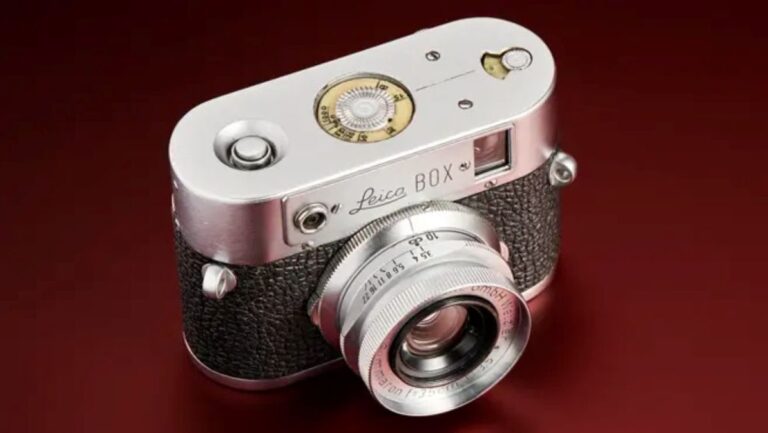
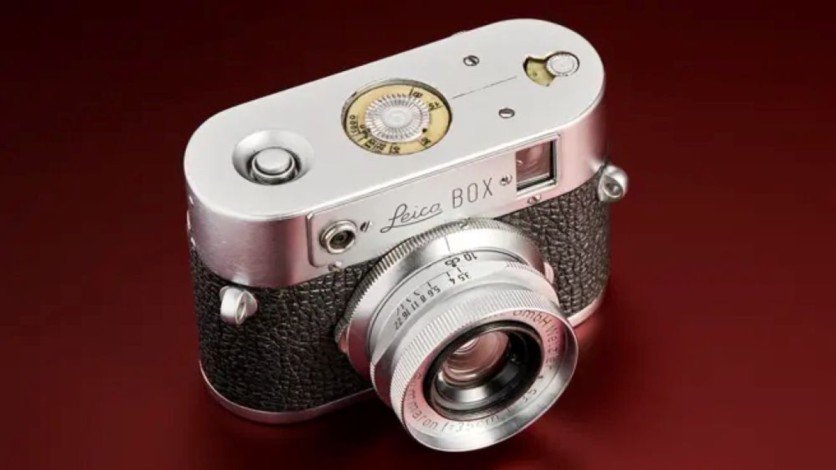
The sale is led by a one-off working Leica BOX prototype estimated at €400,000 to €500,000 (approximately $438,800 to $548,500 USD), which, according to Macfilos is the only operational example known. Pre-bidding is open at leitz-auction.com. Leica’s release puts the lot count at more than 400, while CineD counts 514, and neither source explains the gap.
At the 40th Leitz Photographica Auction in June 2022, a Fisheye-Nikkor 2.8/6mm valued at €80,000 to €100,000 (approximately $87,760 to $109,700 USD) opened at €40,000 (approximately $43,880 USD) and did not sell. A year later the same lens, identified by its serial number, appeared on eBay at €130,000 (approximately $142,610 USD), according to PetaPixel.
At Auction 45 in November 2024, a Fisheye-Nikkor 2.8/6mm estimated at €80,000 to €90,000 (approximately $87,760 to $98,730 USD) with a starting price of €40,000 was also marked unsold, and PetaPixel’s Auction 45 results list a Fisheye-Nikkor among the lots that did not sell. Leitz’s catalog page for that lot says it is believed that fewer than 200 were made.
The Auction 49 example is graded A- (near mint) with clean optics, and it comes with a leather front cap, a rear cap, the original metal case and a Nikkormat FT body. The sources reviewed do not say whether this example is one of the earlier unsold lenses.
Nikon showed the lens at Photokina in 1970, and it reached the market in 1972 only by special order.
The optics explain both the appeal and the scarcity. The 6mm Fisheye-Nikkor applies an equidistant projection formula, in which an image point’s distance from the frame center is proportional to its angle from the lens axis. Nikon built the f/2.8 version from 12 elements in nine groups, and removable front filters are not accepted, so five filters sit in a turret at the rear of the lens mount.
The result is a lens that weighs 5.2 kg (11.5 lb), with a built-in tripod mounting socket. A Nikon description quoted by lens-db says the lens “actually sees behind itself.” PetaPixel separately says the lens’s market price “fluctuates wildly,” with past listings ranging from about $34,000 to more than $160,000.
CineD’s snapshot of reported pre-bids, taken the day before the sale, shows how far bids sit from estimates on five lots.
| Lot | Estimate | Reported pre-bid | Pre-bid vs. low estimate |
|---|---|---|---|
| Fisheye-Nikkor 2.8/6mm | €80,000 to €90,000 (approximately $87,760 to $98,730 USD) | €80,000 (approximately $87,760 USD) | 100% |
| Leica BOX prototype (lot 37) | €400,000 to €500,000 (approximately $438,800 to $548,500 USD) | €320,000 (approximately $351,040 USD) | 80% |
| Kiev Arsenal SKD space camera (lot 478) | €90,000 to €100,000 (approximately $98,730 to $109,700 USD) | €55,000 (approximately $60,335 USD) | 61% |
| Salgado Leica R6 (lot 205) | €28,000 to €32,000 (approximately $30,716 to $35,104 USD) | €17,000 (approximately $18,649 USD) | 61% |
| Lomo anamorphic outfit (lot 469) | €20,000 to €24,000 (approximately $21,940 to $26,328 USD) | €10,000 (approximately $10,970 USD) | 50% |
Those figures are a snapshot from the day CineD wrote, not live results, and the room will set final prices.
The Salgado lot pairs Sebastião Salgado’s Leica R6 with two photographs from his Kuwait series and a signed copy of his limited-edition photobook Workers, according to Leica’s Auction 49 release. Salgado used the camera to document the burning Kuwaiti oil fields during the 1991 Gulf War, and he died in 2025. An earlier Leitz lot, an R6 “Salgado” from the same Gulf War work, reached €16,800 including premium (approximately $18,430 USD) against an estimate of €6,000 to €8,000 (approximately $6,582 to $8,776 USD).
The Kiev Arsenal SKD is a Soviet-era space camera. An earlier SKD, made in 1968 and shot on perforated 70mm film in a detachable magazine, sold for €57,600 (approximately $63,187 USD) including premium at Auction 22 against an estimate of €18,000 to €20,000 (approximately $19,746 to $21,940 USD). It exposed 50 x 50 mm negatives (about 2 x 2 in) and held 100 images. The estimate on the Auction 49 SKD is five times that earlier estimate.
The Lomo outfit is a set of anamorphic cine lenses, aimed at filmmakers rather than stills collectors.
The Leica BOX is a mid-1950s 18 x 24 mm prototype, per Leica’s press release, and the design went no further. It shoots half-frame images (0.71 x 0.94 in) on 35mm film loaded in Agfa’s Karat cassette system, in a body of about 100 x 64 x 48 mm (3.9 x 2.5 x 1.9 in) with a fixed Leitz Summaron 3.5cm lens. The example on offer carries serial number 000.01. Because each frame is half the standard size, a 36-exposure roll would yield 72 pictures.
Alexander Sedlak, managing director of Leitz Photographica Auction, says only one operational example is known to exist today. The only other known BOX carries a Summaron 2.8cm f/5.6 and is a non-working design study held in the Leica Camera Archive. The auction house does not say why the design went no further.
CineD lists the buyer’s premium as 20% of the hammer price plus applicable taxes, and it reports that LiveAuctioneers adds a 5% fee plus VAT for live online bidders. Leitz’s catalog page for an earlier lot states that items under margin scheme taxation carry a 24% premium if they remain in the EU and 20% if shipped outside it, so terms vary by lot and by buyer location.
At a 20% premium, a €400,000 hammer price on the BOX would total €480,000 (approximately $526,560 USD) before platform fees and taxes, and a €500,000 hammer would total €600,000 (approximately $658,200 USD). Leica reports past results including premium, so bidders comparing an estimate with a published result should confirm that both use the same basis.
At Auction 48 on June 13, 2026, a Leica MP-33 sold for €600,000 (approximately $658,200 USD) including premium, and a Leica IIIb in black paint reached €312,000 (approximately $342,264 USD), about 8.7 times the top of its €32,000 to €36,000 estimate (approximately $35,104 to $39,492 USD).
At Auction 45, a Leica M prototype sold for €2.04 million (approximately $2,237,880 USD), nearly three times its estimate of up to €700,000 (approximately $767,900 USD). At Auction 40 in June 2022, Leica 0-series no. 105 sold for €14.4 million (approximately $15,796,800 USD), a world record for a camera. Auction 45 also left a Fisheye-Nikkor unsold, which shows that an estimate marks where Leitz expects bidding to land and does not guarantee a buyer.
Dr. Walter Mandler designed the Elcan 66mm f/2 at Ernst Leitz Canada in the late 1960s on commission for the US Navy, and only about 200 were produced. Leica revived the design as the Summicron-M 66 f/2 in its Classic Line, available from Sept. 3, 2026, in a limited edition of 660 lenses. Serial number 001 carries an estimate of €16,000 to €20,000 (approximately $17,552 to $21,940 USD).
Leica’s release says bids can be placed in advance online at leitz-auction.com, in writing or by telephone, and live bidding runs through leitz-auction.com and liveauctioneers.com. A separate online sale, Leitz ON, runs through Nov. 29, and an exhibition marking 60 years of the Leica Noctilux opens at Leica World during the auction weekend.
Before Saturday, a bidder has four numbers to hold against each other: the estimate, the buyer’s premium of 20% or more, any platform fee, and the unsold history of comparable lots. Pre-bids on the four other lots CineD tracks sit between 50% and 80% of their low estimates, and Fisheye-Nikkor lenses stalled at two earlier sales at similar estimates, so the fisheye’s pre-bid at its low estimate is the figure to watch when the room opens.
Currency conversions are approximate, use a rate of €1 = $1.097, and may differ at the time of sale.
The auction is scheduled for Saturday, Nov. 28, 2026, at noon CET (6:00 a.m. ET) in Wetzlar, Germany, and pre-bidding is open now. Leica’s page gives the time as “12 am (CET),” while CineD says 12:00 pm CET, so confirm the start time with the auction house.
CineD lists a buyer’s premium of 20% of the hammer price plus applicable taxes, and a further 5% plus VAT for bidders who use LiveAuctioneers. Leitz catalog pages for earlier sales show a 24% premium under the margin scheme for items that stay in the EU.
The lens applies an equidistant projection formula and, per a Nikon description, “actually sees behind itself.” It weighs 5.2 kg (11.5 lb), carries built-in filters because removable front filters are not accepted, and went on sale in 1972 by special order.
The auction house does not say why the design went no further, and the only other known example is a non-working design study.