September 4, 2026:


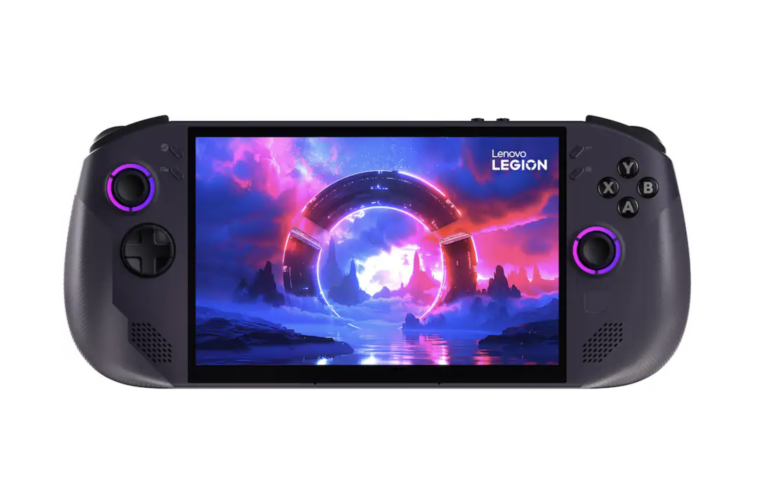
Best Buy is selling the Lenovo Legion Go S — the 8-inch, 120Hz SteamOS model powered by an AMD Ryzen Z1 Extreme processor, with 32GB of LPDDR5X-7500 RAM and a 1TB PCIe Gen 4 SSD — for $999.99 at Best Buy. That price sits $580 below the $1,579.99 “comparable value” Best Buy lists for the same unit — a figure that is not an inflated MSRP but the actual price this device was charging during the worst of this year’s DRAM memory crisis. Understanding why that gap exists is the most important thing a buyer can know before clicking Add to Cart.
The $999.99 sale price is not a standard promotion. It is a clearance signal — a retailer working through remaining inventory of a product line that Lenovo temporarily discontinued in April 2026 as the 2026 DRAM memory crisis rewrote the economics of handheld gaming.
This is how it happened. The AI datacenter buildout of 2025 and 2026 diverted semiconductor fab capacity away from consumer DRAM and NAND flash toward High Bandwidth Memory for AI accelerators, where margins dwarf those of retail memory. Samsung, SK Hynix, and Micron — the three companies controlling roughly 89% to 90% of the world’s DRAM supply — shifted production accordingly. The result: conventional LPDDR5X prices surged up to 89% in 2026, according to TrendForce data compiled by tech-insider.org. Gaming handhelds, which use LPDDR5X in the tight thermal envelopes that make them portable, were directly in the blast radius.
For the Legion Go S specifically: this device launched in early 2025 at approximately $829.99 for the Z1 Extreme / 32GB / 1TB SteamOS configuration. By April 2026, the same SKU was listing at $1,579.99 at Best Buy — nearly double its launch price. Lenovo simultaneously pulled it from lenovo.com with a “Temporarily unavailable” message. Stock and direct listings returned within weeks as pressure eased slightly, but the product line has been clearly transitioning to the Legion Go 2 as Lenovo’s current flagship.
The $999.99 figure is $170 above the device’s original MSRP but $580 below the crisis peak. For a product that remains functionally competitive in 2026, that’s the kind of pricing context that changes a purchase decision.
The Legion Go S’s single most important selling point is that it ships from Best Buy running SteamOS — Valve’s Linux-based gaming operating system — and almost every Windows PC game in existence runs on it. The mechanism that makes this work is called Proton.
Most PC games are written to call Windows’s DirectX graphics API. Proton intercepts those calls and translates them to Vulkan — a cross-platform graphics API that runs on Linux — in real time. For DirectX 9/10/11 titles, the translation layer is called DXVK; for DirectX 12 titles, it’s VKD3D-Proton, a library Valve maintains. The performance penalty from this translation is minimal for the vast majority of games. Prior TechTimes coverage noted that Proton’s Direct3D-to-Vulkan translation delivers near-native Windows game performance on Linux.
The practical result is a device that behaves more like a gaming console than a PC: drop into a game from a controller-optimized interface, suspend and resume without losing state, and let Steam handle updates automatically. For gamers whose libraries skew toward single-player and cooperative titles, SteamOS removes every friction point Windows-based handhelds introduce.
The anti-cheat limitation is real and specific. Some multiplayer games use kernel-level anti-cheat software — Riot Games’ Vanguard (used in Valorant), and certain EAC and BattlEye configurations — that requires loading a driver at the Windows kernel level. Linux’s security architecture makes this impossible without fundamental changes the publishers have not made. Games confirmed to not run on SteamOS include Valorant, Fortnite, and PUBG — all listed as broken in the GamingOnLinux anti-cheat tracker. Destiny 2’s kernel-level anti-cheat also currently blocks SteamOS.
Buyers whose libraries are dominated by those specific competitive shooters should check ProtonDB before purchasing, or consider the Windows version of the Legion Go S. Buyers whose libraries skew toward single-player, cooperative, or non-kernel-anti-cheat multiplayer will find SteamOS compatible with the overwhelming majority of their games. Independent testing consistently shows SteamOS extracts 20% to 40% more battery life from identical hardware compared to Windows versions.
This SKU runs the AMD Ryzen Z1 Extreme — the top-tier chip from AMD’s first-generation handheld lineup — rather than the Z2 Go found in the cheaper Legion Go S configurations. That distinction matters more than it sounds.
The Z1 Extreme is built on AMD’s Zen 4 architecture, manufactured on TSMC’s 4nm process. Its integrated Radeon 780M GPU uses RDNA 3 architecture with 12 compute units and up to 77 GB/s of memory bandwidth. The Z2 Go found in the entry-level Legion Go S configurations uses Zen 3+ on a 6nm process, with a Radeon 680M (RDNA 2) at only 51 GB/s memory bandwidth. That 51% bandwidth advantage translates directly to gaming: in benchmarks across demanding titles, the Z1 Extreme delivers roughly 6% to 8% higher frame rates in GPU-bound scenarios and measurably better results in memory-bandwidth-sensitive games.
The Legion Go 2 — Lenovo’s current flagship at $1,199 — uses the newer Z2 Extreme, which adds Zen 5 architecture, an RDNA 3.5 GPU (Radeon 890M), and 90 GB/s memory bandwidth. The Z2 Extreme is approximately 12% to 22% faster than the Z1 Extreme depending on the power envelope, according to PC Gamer’s Z2 Extreme benchmarks. Whether that gap justifies $200 more — plus the Legion Go 2’s OLED 8.8-inch display upgrade — is the key purchase decision.
The 32GB of LPDDR5X running at 7,500MHz in this configuration is meaningfully better than the 16GB / 6,400MHz found in base Legion Go S models. At current DRAM crisis pricing, 32GB of LPDDR5X alone represents a significant portion of the device’s bill of materials — context that makes $999.99 look less arbitrary once you understand what the memory inside now costs.
| Specification | Detail |
|---|---|
|
Display |
8″ PureSight IPS, 120Hz, VRR, 500 nits, 100% sRGB, 16:10, 10-point touch |
|
Processor |
AMD Ryzen Z1 Extreme (Zen 4, 4nm, 8-core) |
|
Integrated GPU |
Radeon 780M (12 CUs, RDNA 3) |
|
RAM |
32GB LPDDR5X @ 7,500MHz |
|
Storage |
1TB PCIe Gen 4 SSD + MicroSD slot (up to 2TB expansion) |
|
Battery |
55.5Wh with Rapid Charge Pro (50% in 30 min; full in ~90 min) |
|
Operating System |
SteamOS |
|
Weight |
1.6 lbs (730g) |
|
Ports |
2× USB-C, 3.5mm audio combo |
|
Sale Price |
$999.99 at Best Buy |
The Legion Go S is 1.6 lbs (730g) in a unibody chassis with a Nebula polymer finish that resists fingerprints and oil. The Legion TrueStrike controllers include Hall effect joysticks and triggers — a design that uses magnetic field sensing rather than physical potentiometers, eliminating the drift that plagues conventional analog sticks over time. Triggers are adjustable between short and long travel, the D-Pad is a pivot design (clickable in any direction without diagonal ambiguity), and the right controller includes a small touchpad for desktop navigation.
Thermal management comes from Lenovo’s Legion Coldfront cooling system with a high-performance fan, larger heat sink, and software-controlled fan modes for tuning the noise-versus-temperature tradeoff. Lenovo claims 73% improved airflow compared to baseline — a figure from Lenovo’s marketing materials that has not been independently audited.
The 65W USB-C adapter included in the box is travel-rated for international use, and the Rapid Charge Pro technology delivers a 50% charge in approximately 30 minutes.
The purchase decision at $999.99 comes down to four variables.
If your gaming library is mostly single-player or cooperative, and you’re not locked into Valorant/Fortnite/PUBG: the Legion Go S SteamOS is a compelling buy at this price. SteamOS’s compatibility with the Steam library is extensive, the Z1 Extreme handles most titles comfortably, and the 32GB / 1TB configuration leaves headroom for demanding games and a large library.
If you play kernel-anti-cheat multiplayer games: check ProtonDB first. Many multiplayer games work fine. The problematic ones are specifically those using Vanguard, or publishers who have not enabled Linux-compatible EAC/BattlEye modes. If your core games are on that list, the Windows version of this device — or a different handheld — is the better choice.
If the $200 gap to the Legion Go 2 is in budget: the Legion Go 2 offers the newer Z2 Extreme chip (meaningfully faster), an OLED 8.8-inch display, and a newer generation platform. For buyers who want the freshest technology and can absorb the additional cost, the Legion Go 2 is the better long-term bet.
On the question of Lenovo’s origin: Lenovo is headquartered in Beijing and is subject to China’s National Intelligence Law, which requires Chinese organizations to cooperate with government intelligence requests on demand. This applies to the company’s firmware and products. TechTimes has covered Lenovo’s data obligations under Chinese law in full in a prior article. The Legion Go S runs SteamOS — a Valve operating system, not Lenovo software — which provides more separation from Lenovo’s software stack than a cloud-connected Lenovo device. Readers who consider this a material concern should review that coverage.
On stock: Best Buy’s listing noted only 2 units remaining at one location at the time of research. Limited inventory is consistent with this being a clearance pricing event. The deal’s duration is not guaranteed.
TechTimes may earn a commission from purchases made through retailer links in this article.
Lenovo temporarily delisted the Legion Go S from its own website in April 2026 during the peak of the DRAM memory crisis, when Best Buy prices had spiked to $1,579.99. Stock and listings returned within weeks, and the device remains available at Best Buy. However, Lenovo’s current flagship is the Legion Go 2 (launched June 2026 at $1,199), so the Legion Go S is clearly a legacy product in wind-down mode. The $999.99 sale price reflects a retailer clearing remaining inventory rather than a permanent new price point. Limited stock is expected.
Games that use kernel-level anti-cheat software are the main compatibility gap. The anti-cheat in question — most notably Riot’s Vanguard (Valorant), and certain configurations of Epic’s Easy Anti-Cheat and BattlEye — requires loading a driver at the Windows operating system’s deepest access level, which Linux’s security architecture does not permit. Publishers must create and enable Linux-compatible versions of their anti-cheat systems to make their games work on SteamOS. Valorant, Fortnite, and PUBG are the most prominent games currently blocked. Check the GamingOnLinux anti-cheat tracker and ProtonDB before purchasing if competitive multiplayer is your primary use case.
The Z1 Extreme uses AMD’s Zen 4 CPU architecture and an RDNA 3 integrated GPU (Radeon 780M) with 77 GB/s memory bandwidth. The Z2 Extreme in the Legion Go 2 uses Zen 5 and an RDNA 3.5 GPU (Radeon 890M) with 90 GB/s memory bandwidth. In real-world gaming at 1080p, the Z2 Extreme delivers roughly 12% to 22% better performance depending on the power envelope and workload. For most handheld gaming at moderate settings, the Z1 Extreme remains capable; the Z2 Extreme advantage is most visible in demanding AAA titles at higher quality settings. The Legion Go 2 also adds an OLED display upgrade, which many buyers may find worth the $200 premium on its own.
The global DRAM shortage — driven by AI datacenters redirecting semiconductor fab capacity toward High Bandwidth Memory for AI accelerators — caused conventional LPDDR5X (the memory type used in gaming handhelds) prices to surge roughly 89% in 2026, according to TrendForce data. This directly raised the cost of every device containing significant high-speed memory. The Legion Go S’s 32GB of LPDDR5X became one of the most expensive components in the device, which is why the $1,579.99 crisis-era price is more comprehensible than it sounds — and why $999.99 now represents a genuine opportunity to buy a high-spec device closer to its original economic reality.