Korean Game Show G-STAR 2026 Runs Without Nexon, NC, Netmarble as Overseas Sales Top Half of Revenue

November 22, 2026:

Korean Game Show G-STAR 2026 Runs Without Nexon, NC, Netmarble as Overseas Sales Top Half of Revenue
Gstar
Gstar.or.kr

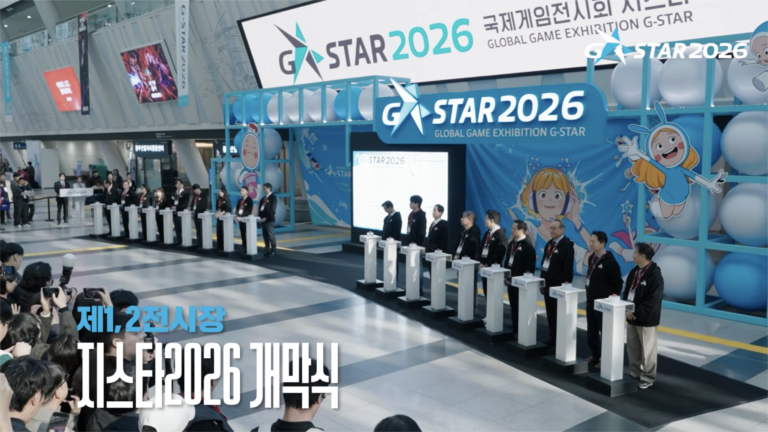
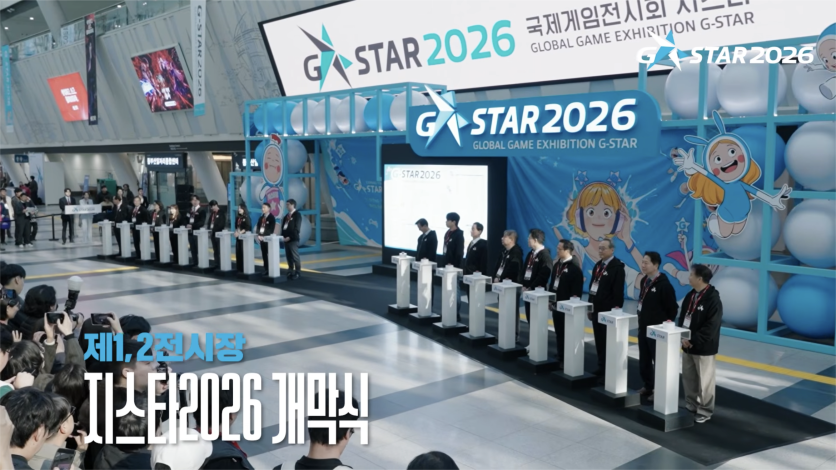
G-STAR 2026, South Korea’s largest game show, opened Thursday, Nov. 19, at the BEXCO convention center in Busan and runs through Sunday, Nov. 22, with Nexon, NC and Netmarble absent for all four days. It is the first time all three have skipped the show since 2021, The Korea Times reported. Overseas customers now supply more than half of sales at each of the three publishers, and all three lined up Tokyo Game Show showings in September instead.

Sunday is the closing day. The Overwatch Champions Series (OWCS) Asia Finals, which award four Asian berths at December’s World Finals in Guangzhou, China, end with the grand final. Inven Global’s OWCS schedule lists a 3:30 p.m. KST (1:30 a.m. ET) broadcast and a 4 p.m. KST (2 a.m. ET) first match on each of the three days, but Sunday opens with a student tournament final, so the grand final itself starts later.

For readers outside Korea, the show now tells a different story than it did in earlier years. Korean publishers are premiering games abroad, overseas publishers and an AI company fill the space, and Nexon, one of the absent publishers, is a co-investor in a state-backed game fund meant to grow Korea’s game industry.

Nexon, NC and Netmarble Sit Out First Time Since 2021 as Booth Count Rises

Organizers counted 1,237 companies from 41 countries in a pre-opening tally, 36 fewer than the 1,273 companies from 44 countries at last year’s show. Booth space still grew, to 3,445 booths from 3,269 a year earlier. The indie showcase drew about 100 developers, up from 80 last year.

Krafton was the only major Korean company with a large booth, The Korea Times reported, and Webzen also exhibited in the main consumer hall, according to Bizwatch’s exhibitor roundup. A new Global Game Showcase offers 13 titles and more than 150 demo stations, set up with Intel and PlayStation.

The first morning still drew long lines. About 300 to 400 people queued at Krafton’s booth in the first 90 minutes after doors opened around 11 a.m., about 200 gathered at Webzen’s within 15 minutes, and a wait of about 2 hours 20 minutes was reported for the line, according to eToday’s first-day report. Organizers asked staff to post temporary closing signs for safety, and the same report said Kakao Games skipped the consumer exhibition. Not every observer saw a crush: a marketing executive at a Russian game distributor told The Korea Times the first day was much lighter than usual.

Why Are Korean Publishers Skipping G-STAR for Gamescom and Tokyo Game Show?

The answer starts with where their customers live. In the second quarter, overseas sales were 52% at Krafton and NC, more than half at Nexon and 78% at Netmarble. Industry officials told the paper that global shows may work better for exposure and attracting visitors, and that the move from domestic mobile role-playing games toward console and PC titles favors audiences in North America and Europe. Krafton and NC showed games at Gamescom in Cologne, Germany, while Nexon, Netmarble, NC, Smilegate, NHN and Shift Up were scheduled for Tokyo Game Show. Bizwatch’s report on AGF 2026, an event held Nov. 4 to 6 in Goyang, said Nexon, NC and Netmarble shifted their attention there as Chinese and Japanese publishers took spots at G-STAR.

The organizing committee offered a production-cycle explanation at an August press conference: console-scale games take years to build, so publishers cannot bring a new title to Busan every November, Digital Daily reported. Chairman Cho Young-ki said the committee built the show’s framework around fast-changing global trends.

An Inven Global column questioned whether that explanation is enough. It reported that Netmarble, Com2uS and WEMADE gave up vice-chair seats that carry an annual fee of ₩120 million (approximately $89,138), that vice-chair companies fell from 12 to 9, and that Microsoft Korea and Epic Games Korea withdrew entirely. Asked about the exodus, Cho acknowledged many concerns but said a clear solution is not easy to find.

Nexon Co-Funds State Game IP Fund While Culture Ministry Pushes Production Tax Credit

Nexon’s absence sits beside its role in Seoul’s game policy. On June 23, the Ministry of Culture, Sports and Tourism announced a ₩120 billion game IP fund (approximately $89.1 million) built through the Korea Fund of Funds’ culture account. The ministry put in ₩60 billion (approximately $44.6 million), Nexon ₩58.8 billion (approximately $43.7 million) and the venture capital firm Kona Venture Partners ₩1.2 billion (approximately $0.89 million). Korean outlets described it as the largest sub-fund in the culture account to date, and Nexon has said it plans about ₩250 billion over five years (approximately $185.7 million), including roughly ₩130 billion (approximately $96.6 million) in direct investment through its new Nexon Partners subsidiary.

Culture Minister Chae Hwi-young, also romanized Choi Hwi-young, led NHN as chief executive from 2007 to 2009. He toured the Krafton and Webzen booths at the show. At his inauguration, he said AI technology is “fundamentally restructuring industrial frameworks” and pledged support for Korean AI that reflects the country’s history and culture.

On Nov. 18 at the Korea Game Awards, Chae said the ministry would persuade relevant ministries so a production-cost tax credit for games can be established. Cho Seung-rae, chair of the National Assembly’s Finance, Economy and Planning Committee, said the issue is on his committee’s agenda. Fiscal authorities have countered that game companies already receive substantial research and development tax credits, according to Inven Global’s tax-credit explainer. Games are excluded from production tax credits of up to 15% to 30% that apply to films, dramas, streaming content and webtoons.

Wrtn’s Crack Becomes First Non-Game Main Sponsor as G-CON Turns to Narrative

Wrtn Technologies, which runs the AI story-creation platform Crack, is the first non-game company to serve as G-STAR’s main sponsor in the show’s 22-year history, The Korea Times reported in September. This year’s G-CON conference carries the theme of narrative.

G-CON, the two-day developer conference at BEXCO’s Convention Hall, ended Friday, Nov. 20, after 14 sessions spanning adjacent industries that reached into film, webtoons and animation. Thursday’s speakers included Kim Hyung-tae, the Shift Up chief executive, Shinji Mikami, known for the Resident Evil series, and members of The Witcher development team. Kim Yong-ha of Nexon Games was among the announced speakers, even as Nexon skipped the show floor.

Chinese Exhibitors Fill Floor Space: What China’s National Intelligence Law Requires

Hall 1’s largest booths belong to Krafton and Webzen from Korea and to HoYoverse, NetEase and Google Play from abroad, according to Kyunghyang’s preview of the show. HoYoverse, which operates from Singapore as a wholly owned subsidiary of miHoYo, a Shanghai-based company, is among the exhibitors. In August, the Inven Global column described the consumer hall’s exhibitor list as dominated by Chinese companies such as HoYoverse, NetEase’s Joker Studio, Bilibili and Century Games, and as closer to a convention for Chinese publishers. That is the columnist’s characterization, not a finding by organizers.

China’s National Intelligence Law, passed June 27, 2017, requires organizations and citizens to support, assist and cooperate with national intelligence work in accordance with law. Experts disagree on how far that reaches abroad. A 2019 analysis by Mannheimer Swartling concluded that overseas subsidiaries of Chinese companies could be subject to it, though that analysis relied on a literal reading of the English text rather than Chinese domestic legal practice, while Huawei submitted a 2018 opinion from the Zhong Lun law firm stating that its overseas subsidiaries are not. Jeremy Daum of China Law Translate has argued that the law’s intent is unclear and that it has no clear enforcement mechanism. The law is a legal-risk factor for readers who share account data with any publisher that has a Chinese parent company, not evidence that any exhibitor has handed data to the state.

Sunday Brings Overwatch Asia Grand Final and Hyundai Racing Final

The OWCS Asia field began with eight teams in an online stage, and six advanced to Busan. The finals began Friday, Nov. 20, with best-of-five matches at BEXCO Auditorium and a best-of-five Saturday.

Sunday opens with the G-STAR Cup Overwatch Student Tournament final, followed by the third-place match and the grand final, both best-of-seven. The prize pool is $40,000, with $25,000 for the winner, and four teams earn places at the World Finals in Guangzhou in December. Korean-language broadcasts run on the official SOOP OWCS Korea channel, and viewers can earn a Sombra skin through Drops.

Hyundai Motor is also hosting the final round of its 2026 Hyundai N Virtual Cup on Sunday at BEXCO, played on Gran Turismo 7. Tickets were sold in advance only, with no on-site sales. Adult admission costs 18,000 won (approximately $13.37) and teen admission 8,000 won (approximately $5.94), with entry at 10 a.m. or noon.

Whether the big three come back is the open question for 2027. Korean publishers that earn most of their sales overseas have a clear reason to favor Cologne and Chiba, the government is pressing for a game production tax credit and a state fund that Nexon helps finance, and organizers are betting that AI sponsors, narrative programming and foreign publishers can carry a show built on domestic premieres. Readers tracking Korea’s game industry should watch three things: where Korean publishers debut their next titles, whether the Finance Ministry yields on the tax credit, and how much of the show floor goes to exhibitors from jurisdictions with state data-access laws.

Currency conversions are approximate and use an exchange rate of about ₩1,346 per U.S. dollar as of Nov. 20, 2026.


Frequently Asked Questions

When does G-STAR 2026 end?

The consumer show ends Sunday, Nov. 22, at BEXCO in Busan, and the business hall closes Saturday, Nov. 21, according to G-STAR’s own exhibitor page. Some English-language coverage, such as one Korea Times report, described the show as running through Saturday, which does not match the organizers’ consumer schedule.

Does China’s National Intelligence Law apply to games shown at G-STAR?

The National Intelligence Law requires organizations and citizens to support national intelligence work, and experts disagree about whether it reaches overseas subsidiaries of Chinese companies. HoYoverse is a subsidiary of Shanghai-based miHoYo, and TechTimes’ HoYoLAND report covers that legal question. The law is a risk factor, not proof that any game collects or shares data improperly.

How can viewers outside Korea watch the OWCS Asia Finals?

Inven Global’s schedule lists Korean-language broadcasts on the official SOOP OWCS Korea channel, starting at 3:30 p.m. KST (1:30 a.m. ET) each day, and says viewers can earn a Sombra skin through Drops.

Is G-STAR losing ground to Gamescom and Tokyo Game Show?

The evidence is mixed. Exhibitor companies fell to 1,237 from 1,273, but booths rose to 3,445 from 3,269. The Korea Times reported in September that the show is losing traction as Korean publishers move new titles to global shows.

Source link