Karbonn Rebel Returns With Android 16 at Under $120; India’s 5G Market Has Moved On

November 3, 2026:

Karbonn Rebel Returns With Android 16 at Under $120; India’s 5G Market Has Moved On
Karbonn Rebel
Karbonn.in

Karbonn Mobiles launched two new budget Android handsets on November 2, 2026, marking the Indian brand’s first re-entry into the smartphone market after years confined to feature phones. The Rebel and the Rebel Pro will go on sale exclusively on Amazon India on November 4, 2026, at 12 PM IST (1:30 AM ET), with effective street prices starting at approximately $115 USD — a direct pitch to budget buyers in a market where smartphone prices rose 16 percent in the first half of 2026. The timing is deliberate: Karbonn is betting that Indian consumers left behind by a rising price tide will choose a known domestic name over a Chinese rival, provided the specs hold up. Whether that bet pays off depends almost entirely on a trade-off the brand made in the engine room — one it has not publicly foregrounded.

Why Karbonn Left and Why It Came Back

Karbonn was founded in 2009 as a joint venture between Delhi-based Jaina Group and Bengaluru-based United Telelinks Limited (UTL). At its peak in the third quarter of 2014, the brand ranked fourth in India’s smartphone market alongside peers Micromax, Lava, and Intex — the domestic quartet that market analysts nicknamed the “MILK” brands — collectively controlling roughly 45 percent of India’s handset market. Then came the Chinese onslaught. Starting around 2015, Xiaomi, Vivo, and Oppo entered India with manufacturing scale, deep supply chain leverage, and product cycles Karbonn could not match. The MILK brands were pushed out of smartphones entirely, surviving in feature phones, JioBharat-type rural devices, and low-cost accessories.

Karbonn never formally shut down, but for practical purposes it vanished from the conversation Indian consumers were having about which smartphone to buy.

The comeback was signaled on October 29, 2026, when CEO and Managing Director Pradeep Jain of Jaina Group announced Karbonn’s smartphone re-entry in explicitly generational terms. “Today’s young India buys with intent. They want technology that fits their lives and lets them express who they are, not a premium paid for someone else’s idea of status,” Jain said at the launch event.

The macro context supports at least part of that argument. According to Counterpoint Research, three of India’s top five smartphone brands in the July-to-September 2026 quarter were Chinese — Vivo at 16 percent market share, Oppo at 12 percent, and Xiaomi at 12 percent — dominating the Q3 2026 market, leaving little room for domestic players. Meanwhile, India’s Union Cabinet approved the ₹62,500 crore (approximately $6.5 billion USD) Mobile Phone Manufacturing Scheme (MPMS) in July 2026, with MeitY formally notifying the MPMS in August, providing financial incentives specifically reserved for Indian-owned mobile brands that develop domestic design and intellectual property. The government has set an ambition of having phones designed, manufactured, and branded entirely within India by late 2028.

What the Rebel and Rebel Pro Actually Offer

Karbonn has taken a dual-launch approach, differentiating the two phones on the features most likely to drive purchase decisions in the budget segment.

The Rebel leads with its battery — a 7,000 mAh cell with 18W wired fast charging and a charger included in the box, an increasingly rare inclusion at this price tier. It runs on a 6.75-inch (17.15 cm) HD+ LCD display at up to 90Hz refresh rate and up to 650 nits of peak brightness. The rear camera is a 50MP AI-enhanced primary sensor. The phone is available in two RAM and storage tiers — 4GB RAM + 64GB storage and 6GB RAM + 128GB storage — in Blue, Gold, and Silver.

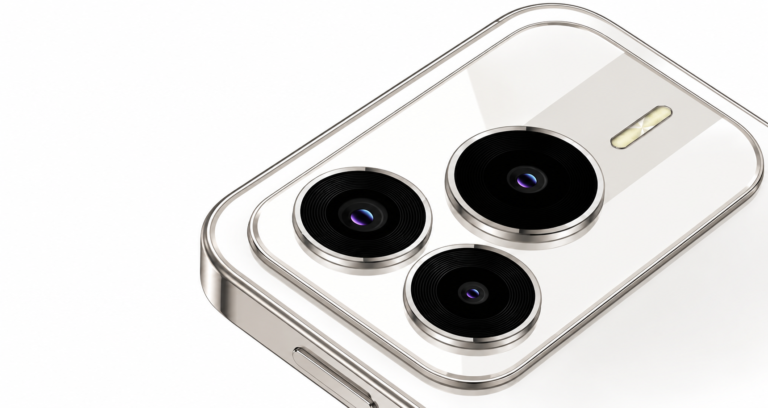
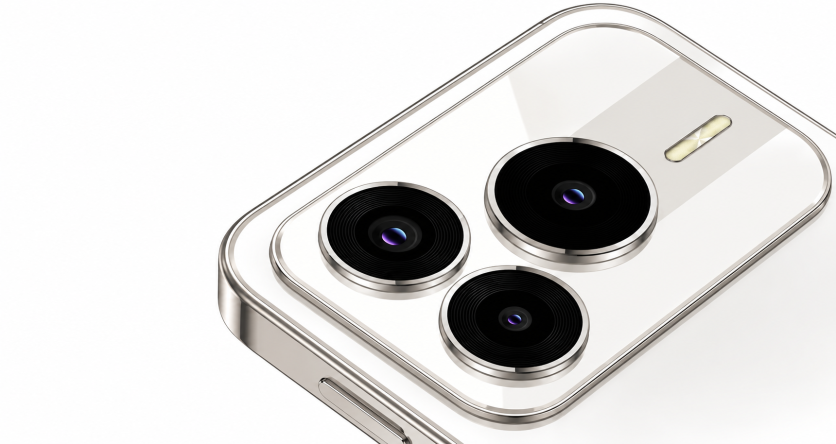
The Pro trades 1,000 mAh of battery capacity (settling at 6,000 mAh with 20W charging) for a faster 120Hz refresh rate on its 6.7-inch (17 cm) HD+ LCD panel, a brighter 720-nit peak, a 64MP AI dual-camera system mounted in a triple-ring module, and a 16MP front-facing camera. The Rebel Pro’s full specifications include two configurations — 4GB + 128GB and 6GB + 128GB — in Cherry Red, Gold, Gray, and Blue.

Both handsets share: an IP64 rating for dust and splash resistance (protection against limited dust ingress and water splashed from any direction), a 3.5mm headphone jack, USB Type-C charging, a side-mounted fingerprint sensor, face unlock, and Google Gemini AI integration. Crucially, both ship with Android 16 out of the box — a genuine advantage in a segment where most competitors still ship Android 14 or Android 15. Karbonn has committed to two years of major Android OS upgrades and two years of security patches. Both phones will be backed by a service network covering more than 500 Indian cities.

Pricing

Model MRP Launch Price Effective Price (bank discount)

Karbonn Rebel

₹14,999 ($157)

₹11,999 ($125)

₹10,999 (approximately $115)

Karbonn Rebel Pro

₹14,999 ($157)

₹12,499 ($130)

₹11,499 (approximately $120)

A ₹1,000 (approximately $10) bank discount is available at checkout on Amazon India.

What Does ‘No 5G’ Actually Cost Karbonn?

Here is the part of this launch that matters most for a reader deciding whether the Rebel series is worth considering — and the part the launch announcement most conspicuously avoids foregrounding.

Both phones run on the MediaTek Helio G81, an octa-core, 12-nanometer chipset from MediaTek’s budget “G” (gaming) series. The G81 is a capable processor for basic smartphone workloads — messaging, video streaming, navigation, light gaming — and its Mali-G52 GPU handles casual gaming titles like Free Fire and PUBG Mobile at balanced settings. What the Helio G81 cannot do is 5G. The chip does not have an integrated 5G modem. Adding 5G capability to a phone at this price point requires a more advanced silicon node — typically 6nm or smaller — which substantially raises the device’s bill-of-materials cost. This is the engineering trade-off Karbonn made: use the less expensive 12nm 4G chipset, keep the price at ₹11,999, and ship a bigger battery and a cleaner software experience instead.

That calculation made obvious sense in 2023. In November 2026, it is more complicated.

India’s 5G smartphone market reached 88 percent market share in 2025, according to CMR India — meaning more than eight out of every ten smartphones sold in India were 5G-capable. More critically for Karbonn’s competitive position, India’s budget 5G shipments surge in the ₹6,000–₹8,000 range grew over 1,900 percent year-over-year in 2025, and the ₹10,000–₹13,000 5G segment grew more than 138 percent year-over-year in the second quarter of 2025. In practical terms: a consumer with the same ₹11,000–₹12,500 budget as the Rebel series already has multiple 5G options from Vivo, Realme, and Motorola to choose from.

This does not automatically disqualify the Rebel series. A 7,000 mAh battery on a 4G phone will outlast most 5G phones at a similar price point in real-world use, because 5G radio draws more power when active. Android 16 is a genuine differentiator — competitors ship Android 14 and Android 15 at this tier. And for a buyer who primarily uses their phone indoors in well-covered urban areas where 4G speeds are functionally sufficient, the 5G absence may not be perceptible in daily use.

But for a buyer who wants a device they can use across a five-year lifespan as India’s network architecture continues to shift, buying a 4G-only phone in late 2026 carries a clear forward-looking risk.

Is Karbonn Targeting a Real Gap?

The Rebel series’ strongest argument is software: Android 16, zero bloatware, and a committed update schedule in a segment where most rivals ship phones stuffed with pre-installed apps and uncertain update histories. For a category of buyer — students, first-time smartphone buyers in smaller cities, parents buying a secondary device — that is a credible value proposition.

The distribution reality, however, is more complicated. Karbonn made its name through more than 85,000 retail touch points and over 1,000 service centers in tier-2 and tier-3 Indian cities — exactly the kind of offline presence that built trust in communities where online shopping was not yet the default. The Rebel launch is Amazon India-exclusive. That eliminates upfront distribution costs, but it also sidelines the physical network where Karbonn’s brand equity was actually stored. A consumer in a smaller city who knew Karbonn’s service center by name cannot walk in and see the Rebel on a shelf.

Karbonn has acknowledged this indirectly by announcing a Rebel 5G variant is in development — specifications and pricing not yet disclosed. That future phone, not the 4G Rebel and Rebel Pro, will be the more meaningful test of whether the brand can compete with the Chinese incumbents on terms those incumbents are actually competing on.

Does Android 16 Change the Calculus?

For technically minded buyers, Android 16’s presence on a sub-₹12,000 device deserves more attention than it typically gets in budget phone coverage. Android 16, released by Google in 2026, brings a refreshed permission model, improved predictive back gestures, enhanced notification controls, and a more robust baseline for privacy management. Most phones in the sub-₹15,000 segment in India — from Chinese brands and domestic players alike — ship with Android 14, meaning they launch already two generations behind. Karbonn’s commitment to two OS upgrades means buyers starting on Android 16 will receive Android 17 and Android 18, potentially extending the phone’s software relevance to 2028 or beyond.

This is, on its own, a legitimate and undervalued differentiator in a segment where after-sales software support has historically been treated as an afterthought.

What Happens Next

Karbonn has positioned the Rebel series as an opening statement rather than a complete portfolio. The Rebel 5G, when it arrives, will reveal whether the brand is genuinely prepared to compete with Chinese OEMs on specifications that have become table stakes in 2026 — not merely on nostalgia and software cleanliness.

For now, the Rebel and Rebel Pro go on sale via Amazon India on November 4, and the reception will tell Karbonn what it needs to know: whether there is a meaningful market segment that values Indian brand identity, clean software, and battery endurance enough to accept a 5G gap that the broader market has largely moved past.


Frequently Asked Questions

Is the Karbonn Rebel a 5G phone?

No. Both the Karbonn Rebel and Karbonn Rebel Pro are 4G-only devices, running on the MediaTek Helio G81 chipset, which does not include a 5G modem. Karbonn has announced a separate Rebel 5G variant is in development but has not disclosed its specifications or pricing. This is a significant consideration: India’s 5G smartphone shipments exceeded 88 percent of total smartphone sales in 2025, and the ₹10,000–₹13,000 price bracket already has multiple 5G options from competing brands.

What happened to Karbonn phones? Why did they disappear?

Karbonn was once a top-four smartphone brand in India, peaking at fourth place in the third quarter of 2014. Beginning around 2015, Chinese manufacturers Xiaomi, Oppo, and Vivo entered India with the advantage of enormous manufacturing scale and deeply integrated supply chains, allowing them to undercut Indian brands on price while matching or exceeding them on specifications. Karbonn, along with Micromax and Lava, was progressively displaced from the smartphone market and survived primarily by selling 4G feature phones.

What makes Android 16 on a budget phone meaningful?

Most phones in the sub-₹15,000 ($157) segment in India currently ship with Android 14 — two versions behind Android 16. Starting on a more current operating system version means more recent security protections, more current privacy controls, and the ability to receive future OS updates that keep the device functionally current for longer. Combined with Karbonn’s stated commitment to two major OS upgrades and two years of security patches, a Rebel series buyer starting on Android 16 could receive Android 18, extending software support into 2028.

How do the Rebel and Rebel Pro compare to each other in terms of what you give up?

The choice is essentially between battery capacity and camera capability. The standard Rebel trades a smaller camera (50MP vs. 64MP, no dedicated selfie spec vs. 16MP) and a slower display (90Hz vs. 120Hz) for a larger battery (7,000 mAh vs. 6,000 mAh) and slightly slower charging (18W vs. 20W). For buyers who prioritize all-day endurance over photography quality, the standard Rebel is the better fit. For buyers who shoot video or take selfies frequently, the Rebel Pro’s camera hardware is meaningfully better — the 16MP front camera and the 64MP dual rear system outspec the standard model notably.

Source link