HomeAuto JMGO IRIS Ultra Max Projector Wins Japan VGP2027 Award; German Lab Measures 4,350 of 6,500 Lumens
JMGO IRIS Ultra Max Projector Wins Japan VGP2027 Award; German Lab Measures 4,350 of 6,500 Lumens
November 26, 2026:
Global.jmgo.com
JMGO’s IRIS Ultra Max and IRIS Ultra projectors won the Special Grand Prize in the Audio-Visual Division of Japan’s VGP2027 awards, according to JBD Co., Ltd.’s release, JMGO’s Japanese distributor, dated Nov. 25 (10 p.m. ET on Nov. 24). The prize is a vote by critics and retailers, not a measurement or a security review: German test site Netzwelt measured 4,350 lumens from the Ultra Max in Film mode against JMGO’s 6,500 ISO lumens rating, and the maker, Shenzhen Holatek, is listed in Shenzhen and answers to Chinese data laws, which this article covers in its own section below.
All 11 JMGO Models Won VGP2027 Awards, and Six Took at Least One Gold
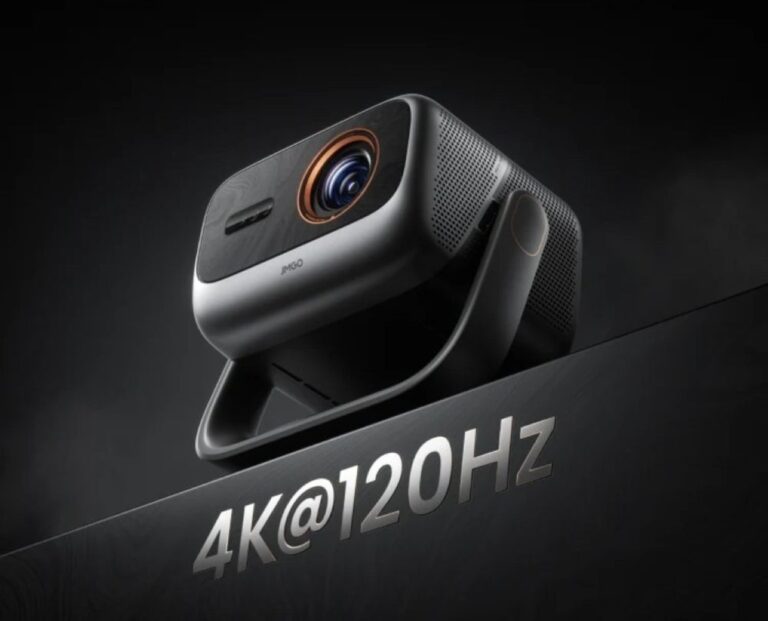
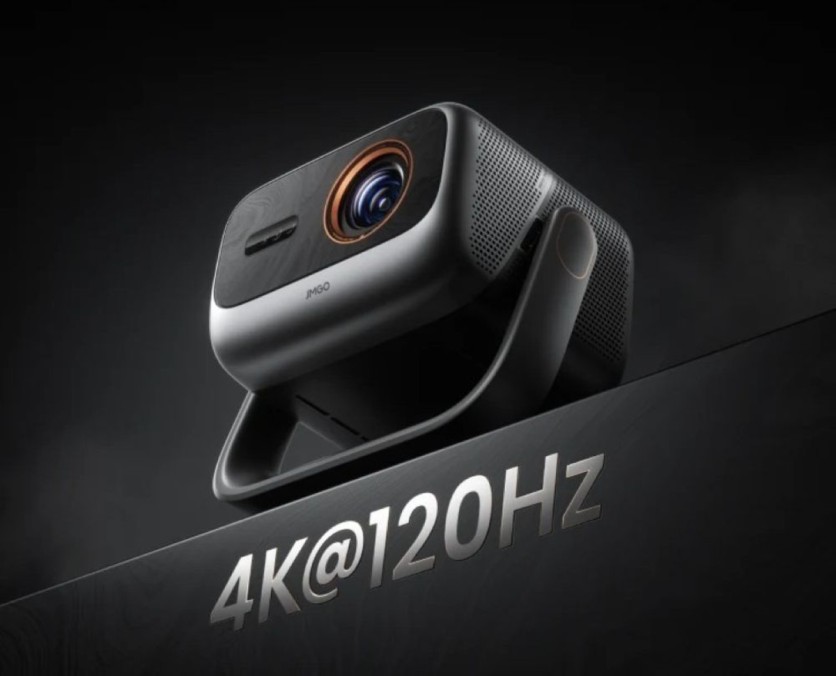
The release lists 11 JMGO models and credits the Special Grand Prize to the IRIS series’ MALC 6.0 engine, 4K/120Hz support and Anti-RBE processing, a hardware feature JMGO says reduces the rainbow effect. It contains no judge comments and no prices. The official VGP site separately lists the IRIS Ultra Max and IRIS Ultra among its 11 Special Grand Prize winners across video and audio products, alongside XGIMI’s TITAN Noir Max, another Chinese-brand projector.
Two awards are in play: the Audio-Visual Division (映像音響部会) and the Lifestyle subcommittee (ライフスタイル分科会). “Award” in the table means a prize below gold.
Model
Audio-Visual Division
Lifestyle
IRIS Ultra Max
Special Grand Prize + Gold
n/a
IRIS Ultra
Special Grand Prize + Gold
n/a
O2S Ultra 4K
Gold
Gold
N3 Ultimate
Gold
Gold
N1S Ultimate 4K
Award
Gold
N3 4K
Award
Gold
N1S Pro 4K
Award
Award
N1S 4K
Award
Award
N3 SE
Award
Award
PicoPlay+
Award
Award
PicoFlix
Award
Award
The two IRIS models are listed only in the Audio-Visual Division, and the other nine appear in both.
VGP Combines 10 Critics and About 30 Retailers but Publishes No Scoring Detail
VGP has run twice a year since 1987 under publisher Ongaku Shuppan, with winners decided by 10 professional critics plus votes from about 30 retailers across roughly 300 brands and 3,000 entries, according to a BenQ Japan release. That release says the process weighs marketability as well as product quality. The official VGP page calls the review rigorous but gives no scoring or procedure details.
The Special Grand Prize is a special award the IRIS models received in addition to gold, not a score. Projectors have won special awards before: XGIMI’s TITAN received a special award and a gold at VGP2026 SUMMER, according to an XGIMI release. Sony’s BRAVIA 9 II received a Judges’ Special Award at VGP2027.
Netzwelt Lab Measured 4,350 Lumens in Film Mode Against 6,500 ISO Lumens Rated
JMGO rates the Ultra Max at 6,500 ISO lumens and 10,000:1 native contrast, and the Ultra at 4,500 ISO lumens and 7,000:1. According to PC-WELT’s test report, the brightness figure applies only to the brightest mode with full laser power and an open iris, while the contrast figure applies with the iris nearly closed, so a buyer cannot have both at once. Netzwelt, testing a unit loaned by the manufacturer for a review published Oct. 25, measured 4,350 lumens in Film mode and about 2,580 lumens with the iris at setting 5; contrast rose from 1,280:1 to 8,600:1 with the iris engaged. The Netzwelt summary we read does not state the measurement method, and ISO and lab lumen figures are not directly comparable.
PC-WELT measured noise of about 30 dB at 30 cm (11.8 in) against JMGO’s specification of up to 26 dB, and power draw of about 90 W at the lowest laser level and 219 W at full power against a 300 W nominal rating. Netzwelt measured 31 dB(A) and criticized very warm exhaust air and a bulky external power supply on a unit that weighs 7.0 kg (15.4 lbs) and measures 31 x 23 x 27 cm (12.2 x 9.1 x 10.6 in).
Gaming figures are thinner. Netzwelt measured 15 to 19 ms of input lag at 60Hz and reports roughly half that at 120Hz. JMGO’s 1 ms latency figure, AV Watch reports, applies to Full HD at 240Hz, not 4K.
Reviewers also split on the rainbow effect. Netzwelt saw no rainbow effect and said it had never seen that on another DLP projector. PC-WELT found the hardware protection reduces colored flashes but does not remove them, so sensitive viewers may still notice them in some scenes.
How Does Single-Chip DLP Reach 4K at 120Hz?
Both IRIS models use a single 0.47-inch DMD (digital micromirror device) whose physical pixels are 1080p-class, and they reach 3,840 x 2,160 by pixel shifting, according to PHILE WEB’s review, which carries a PR label. AV Watch’s launch report lists 3,840 x 2,160 resolution but does not describe the method. In pixel-shifting designs, the image is moved by a fraction of a pixel several times per frame so the eye assembles a higher-resolution picture, a technique Wikipedia’s DLP entry covers. Doing that fast enough for 120 frames per second is the problem JMGO says it solved.
JMGO credits what it calls a HyperPulse Actuator, which it says shifts 480 times per second, plus a dual-controller design. PHILE WEB’s review names two synchronized DLPC8545 controllers, split left and right, working with a MediaTek MT9679 system-on-chip. Because the chip is 1080p-class, “true 4K” here means shifted 4K, which is how many 4K DLP projectors work.
The tradeoff shows up in contrast. JMGO’s answer is a dual iris with an F2.0-F7.0 range in six steps and 15 blades on the Ultra Max. Netzwelt’s numbers suggest the iris carries much of the weight: contrast rose from 1,280:1 to 8,600:1 while measured brightness fell from 4,350 to about 2,580 lumens, a drop of roughly 1,770 lumens, although the summary does not say both figures share identical conditions.
JMGO calls the IRIS series the world’s first 4K@120Hz smart projector series.
HyperPulse Shift Rate, 1 ms Lag and Anti-RBE Rest on JMGO Claims
Most published IRIS figures trace to JMGO or to outlets that did not test the unit. Forbes’ Sept. 2 report relies on JMGO’s specifications and reports no hands-on measurements, including for the Anti-RBE claim. PHILE WEB, which hosts VGP’s results site, labels its Nov. 4 review as PR, and the page we read lists brightness, contrast and color-gamut figures as manufacturer values. A German retailer that sells the projector gave it an “Outstanding Product Award” in a promotional article that, in the version we read, lists no lab measurements.
JMGO also says the IRIS series sold more than 5,000 units in China within three months of a May launch, a company figure with no independent source.
Auto Alignment Misses Sometimes and Japan Retail Date Is Not Announced
PC-WELT found the Ultra Max’s automatic alignment is not equally reliable in every environment. JMGO’s store lists a two-year US/EU warranty for the Ultra Max.
In Japan, Makuake pre-sales began Nov. 4 on the crowdfunding platform, with the campaign running to Jan. 21, 2027, at 10 p.m. Japan time. Tax-inclusive early prices are ¥453,700 (approximately $2,852 USD) for the Ultra Max and ¥311,870 (approximately $1,960 USD) for the Ultra. Planned general retail prices are ¥698,000 (approximately $4,387 USD) and ¥479,800 (approximately $3,016 USD), and no general sale date has been announced. AV Watch reported the earliest tier was limited to 90 Ultra Max and 30 Ultra units at 35% off, with delivery scheduled by the end of November. JMGO’s Winter Sale, which began Nov. 20 and runs through Jan. 7, 2027, with discounts of up to 42%, does not include the IRIS models or PicoFlix.
Overseas, the series was announced at IFA 2026 in early September, and JMGO’s US store lists sale prices of $2,999 for the Ultra Max and $1,899 for the Ultra against list prices of $3,499 and $2,399. Notebookcheck reported shipping dates of Oct. 19 for the Ultra Max and Oct. 26 for the Ultra. Prices change, so confirm on JMGO’s store before buying.
JMGO Maker Shenzhen Holatek Falls Under China’s National Intelligence, Data Security and Cybersecurity Laws
Buyers should read this section before buying or using an IRIS projector. JMGO was founded in 2011 and is based in Shenzhen, China, and its manufacturer is Shenzhen Holatek Co., Ltd. (深圳市火乐科技发展有限公司), listed at an address in Shenzhen’s Nanshan District in iF Design’s company listing. PHILE WEB’s own review says JMGO was founded in Shenzhen in 2011. JMGO’s US store page lists no company address or headquarters.
Three Chinese laws bear on that:
National Intelligence Law of the People’s Republic of China (effective June 28, 2017). Article 7 says organizations and citizens shall support, assist and cooperate with national intelligence efforts in accordance with law.
Data Security Law of the People’s Republic of China (effective Sept. 1, 2021). Article 35 says that when a public security organ or national security organ needs data for national security or to investigate crimes, strict approval formalities must be completed, and the law obliges organizations to cooperate with such requests.
Cybersecurity Law of the People’s Republic of China (effective June 1, 2017, amended effective Jan. 1, 2026). Article 28 requires network operators to provide technical support and assistance to public security and national security organs.
These duties bind Chinese organizations whatever their privacy policies say, as an earlier TechTimes report noted. Scholars dispute how far Article 7 reaches data held by overseas subsidiaries or stored outside China, and how the duty is enforced. We found no documented government data request tied to JMGO products.
What data the projector could expose. JMGO’s privacy policy, updated Oct. 29, 2026, covers its website and store: contact, payment, account and transaction details, device and network data including IP address and identifiers, and usage data. It says data may be stored and processed outside your country, names neither a legal entity nor a postal address, and allows disclosure to law enforcement or government agencies. It does not address the projector itself. The IRIS models run Google TV software, so Google’s own data practices apply to the platform. We found no JMGO document describing what the projector’s own software collects.
What independent audits say. We found no independent security audit of IRIS firmware or network traffic. A lack of audit is not evidence of harm or of safety. A Jamestown Foundation analysis of smart TV security risks discusses televisions, not projectors, and does not mention JMGO. Separately, Google disrupted a million-device Android TV box botnet on Nov. 2 and banned the box maker, Videostrong, according to BleepingComputer; nothing we found connects that case to JMGO. The FCC has added foreign-produced drones, routers, advanced robotic devices and power inverters to its Covered List, per Morrison Foerster, and we found no such action naming projectors.
How to limit exposure. Steps reduce exposure but cannot change the legal condition, and TechTimes has outlined similar mitigation steps for other projectors: put the projector on an isolated guest network, avoid signing in with a primary Google account, turn off ad personalization and any viewing-data or content-recognition settings offered at setup, revoke microphone access, and use an external streamer so the projector works only as a display.
Award, Lab Numbers and Jurisdiction Each Answer Different Buyer Questions
The VGP prize shows that a panel of critics and retailers favored the IRIS series in Japan, but it publishes no scores and measures nothing. The lab numbers tell a narrower story: Netzwelt’s 4,350 lumens in Film mode and about 2,580 lumens at iris setting 5 sit well below the 6,500 ISO lumens rating, reviewers disagree on whether the rainbow effect is fully suppressed, and automatic alignment is not equally reliable. The HyperPulse shift rate, the 1 ms latency figure and the sales figures remain JMGO’s own claims. On jurisdiction, JMGO’s maker operates under China’s National Intelligence Law, Data Security Law and Cybersecurity Law, no independent audit of the firmware exists that we could find, and no price discount or award changes that legal condition. A buyer who accepts that condition, isolates the projector on its own network and weighs 4,350 measured lumens against the 6,500 rated is making a more informed decision than the Special Grand Prize alone supports.
Currency conversions are approximate and use an exchange rate of about ¥159.09 per $1 on Nov. 25, 2026 per Trading Economics.
Frequently Asked Questions
Does a VGP Special Grand Prize mean the IRIS Ultra Max was lab tested?
No. VGP winners come from votes by 10 critics and about 30 retailers, and the official page publishes no scoring details. Measured results come from outlets such as Netzwelt’s lab measurements and PC-WELT’s test report.
Is JMGO a Chinese company, and does Chinese law apply to IRIS owners’ data?
JMGO is a Shenzhen-based brand, and its maker, Shenzhen Holatek, is subject to China’s National Intelligence Law, Data Security Law and Cybersecurity Law. How far those laws reach data on products sold abroad is disputed among scholars, and we found no documented request tied to JMGO.
Is the IRIS Ultra Max really 4K at 120Hz?
JMGO and AV Watch say both HDMI 2.1 inputs accept 4K at 120Hz. The image comes from pixel-shifting a 1080p-class chip, according to PHILE WEB’s review, and Netzwelt’s input lag report says latency roughly halves at 120Hz, though we found no independent check of the 4K/120Hz image itself.
Do RGB laser projectors still show the rainbow effect?
Projectors that build color with a spinning wheel can show rainbow effect flashes because red, green and blue appear in sequence, and designs without a spinning wheel can reduce them. Viewers differ on how noticeable the flashes are: PC-WELT found JMGO’s Anti-RBE reduces them but does not remove them, per its test report.