HomeAuto Japan Approves Anselamimab for Amyloidosis After Phase 3 Miss; 3 Japanese Kappa Patients Studied
Japan Approves Anselamimab for Amyloidosis After Phase 3 Miss; 3 Japanese Kappa Patients Studied
November 14, 2026:
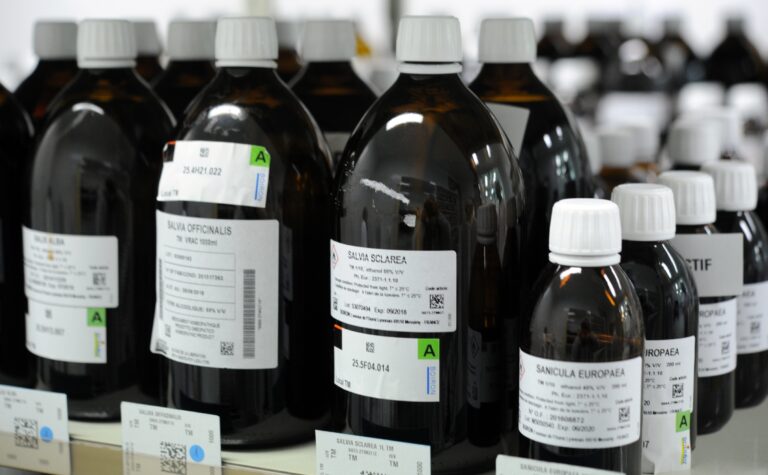
This picture taken on May 20, 2016 shows flasks of mother tincture at Boiron laboratory in Brest, western of France. (Photo by FRED TANNEAU / AFP) FRED TANNEAU/AFP via Getty Images
Japan approved anselamimab in September 2026 for a narrow slice of AL amyloidosis patients, even though the drug missed its overall Phase 3 goal. The country’s drug regulator wrote that the supporting kappa-subtype result was not a prespecified hypothesis and that a confirmatory trial in kappa patients ideally should have been conducted. Only 3 of 17 Japanese patients in the pooled trials had that subtype. Fortress Biotech, which sold Caelum Biosciences to AstraZeneca in 2021, highlighted the approval in its third-quarter results on Nov. 13.
The practical stake: patients and investors reading “approved in Japan” should know the approval rests on a 72-patient subgroup, not on a trial the drug won.
What Did Japan Approve Anselamimab For?
The approval covers Amilopaive IV Infusion 300 mg for systemic AL amyloidosis with kappa-predominant light chains, given alongside other chemotherapy. Alexion Pharma GK, AstraZeneca’s rare-disease unit, filed the application Nov. 20, 2025, and the regulator’s First Committee on Drugs reviewed it on Aug. 26, 2026. Approval carries a risk management plan, orphan status and a 10-year re-examination period.
AL amyloidosis occurs when abnormal plasma cells produce misfolded light-chain proteins that deposit as fibrils in organs. Roughly 20% of an estimated 74,000 patients worldwide have the kappa type, according to figures AstraZeneca gave Fierce Biotech.
Why Did Japan Approve Drug That Missed Phase 3 Goal?
AstraZeneca announced in July 2025 that the two CARES Phase 3 trials, covering 406 patients, missed their primary endpoint. The overall win ratio was 1.11 with a P value of .332, and all-cause mortality showed a hazard ratio of 0.80 with P=.290.
The kappa subgroup looked different. Among 72 kappa patients, 31.3% on anselamimab died versus 58.3% on placebo, a hazard ratio of 0.38 with a nominal P value of .012. The annual frequency of cardiovascular hospitalizations was 0.41 on the drug versus 1.4 on placebo. In the lambda group, mortality was essentially identical, 33.3% versus 33.9%. Serious adverse events were similar overall, 75.6% on the drug versus 75.4% on placebo.
Not every measure in the kappa group cleared the bar. The kappa win ratio of 2.06 had a confidence interval of 0.98 to 4.31, which includes no effect, and a nominal P value of .100.
Regulator and Sponsor Disagree on Whether Kappa Analysis Was Prespecified
AstraZeneca and trade outlets such as Fierce Biotech describe the kappa analysis as prespecified, and the trial’s expert discussant called the finding prespecified as well. The Japanese regulator’s review says otherwise: the kappa subgroup was not a prespecified hypothesis in CARES, and kappa type was not a stratification factor, so comparability of the treatment arms within kappa patients is not assured. The two descriptions may refer to different things, such as a planned analysis list versus a formal hypothesis, and the sources do not settle which.
The regulator still approved. It said a new confirmatory trial in kappa patients ideally should have been conducted, but accepted the CARES kappa results given the limits of the data and the rarity of kappa disease. It concluded the data suggest a certain efficacy and that safety is acceptable given the benefit shown.
Two experts backed the finding with caveats. Lead investigator Ashutosh Wechalekar called the kappa benefit biologically plausible, noted that the anselamimab arm had more stage IIIb patients, a sicker group, and said a dedicated trial would be hard because kappa patients were only about 17% of those enrolled. Rafat Abonour, the expert discussant, said the missed primary endpoint made it “technically a negative trial,” but called the result credible because it was prespecified and said confirmatory studies are needed.
The Japanese data add little independent weight. Only 3 of 17 Japanese patients had kappa disease, two on treatment and one on placebo, and the Japanese patients were enrolled in the global CARES studies rather than a Japan-specific trial. Japan’s approval is therefore a second reading of the same 72-patient subgroup that every other regulator sees, not a replication.
Kappa Fibrils Bind Anselamimab Over 4,000 Times Tighter Than Lambda in Lab Tests
Anselamimab is a recombinant monoclonal antibody against amyloid fibrils built on human IgG1. It targets fibrils already deposited in tissue, rather than the light-chain production that standard chemotherapy suppresses, and is designed to induce their removal through phagocytosis, the engulfing of fibrils by immune cells.
The preclinical data the applicant cited give a reason to expect kappa and lambda to differ. In binding tests, kappa fibrils showed a dissociation constant of 2.66×10⁻¹¹ mol/L versus 1.16×10⁻⁷ mol/L for lambda, a difference of more than 4,000-fold in affinity. In mouse studies cited in the review, the antibody shrank kappa amyloid deposits by 73% versus 15% for lambda.
The constraint is statistical, not biological. A nominal P value applies to one planned test, and with more subgroups examined, the chance of a false positive increases. Kappa patients on placebo also died at a much higher rate than lambda patients, 58.3% versus 33.9%, so part of the gap between arms may reflect an unusually poor placebo group rather than drug effect. The regulator also cited studies suggesting kappa patients may respond less to chemotherapy, which could raise their baseline risk.
Birtamimab’s Subgroup Signal Failed Confirmation in 2025
Prothena’s birtamimab is the nearest precedent. Its VITAL Phase 3 missed its overall endpoint, but a post hoc Mayo Stage IV analysis showed a hazard ratio of 0.413. The confirmatory AFFIRM-AL trial enrolled 207 Mayo Stage IV patients, reported a hazard ratio of 0.915 with P=0.768 on May 23, 2025, and Prothena discontinued development.
The comparison has limits. Birtamimab’s signal came from a post hoc analysis, while AstraZeneca calls the kappa analysis prespecified. The lesson is narrower: a subgroup benefit in an overall-negative trial has now failed one confirmation attempt in the same disease.
Is Anselamimab Approved in the United States?
Not as of Nov. 13, based on public records. The drug holds FDA Fast Track designation and U.S. orphan status, plus EU orphan designation. Fortress said in May that AstraZeneca had disclosed submissions in the EU and Japan. No public document found confirms an FDA submission.
That matters to Fortress because of the 2021 Caelum sale. In a July 2025 filing, Fortress said it received about $57 million upfront and remains eligible for up to about $125 million more, out of up to $295 million payable to all former Caelum stockholders, tied to regulatory and sales milestones. The Q3 2026 release says Fortress is eligible for commercial milestones based on sales and a regulatory payment on FDA approval, but gives no amounts and does not say which milestones Japan’s approval triggers.
Fortress Q3 Operating Loss Widened by Just $0.4 Million
Fortress reported net revenue of $19.2 million versus $17.6 million a year earlier, up about 9%, with product revenue of $18.9 million. Operating loss widened to $7.2 million from $6.8 million, as research and development rose to $1.7 million from $0.2 million.
The headline swing came below the operating line. Net loss attributable to common stockholders was $7.9 million, or $0.23 per share, versus net income of $3.7 million, or $0.13 per share, in Q3 2025. Total other income swung from a positive $15.7 million to a negative $1.1 million, driven by a $17.7 million “other income” line in the 2025 quarter versus negative $18,000 this year.
Cash reached $152.2 million, up $72.8 million from $79.4 million at year-end 2025. Fortress and its private subsidiaries held $114.1 million of that, with Journey Medical holding $22.3 million, Mustang Bio $14.3 million and Avenue Therapeutics $1.5 million. The company said it repaid the final $15.0 million to Oaktree in September, released all liens and has no outstanding debt at the parent level. The consolidated balance sheet still lists $18.1 million in long-term notes payable and $7.5 million in short-term partner company notes.
Journey’s rosacea drug Emrosi, approved by the FDA in November 2024 and launched at the end of March 2025, drove about 40,000 prescriptions in the quarter. Royalty revenue was small: $0.2 million from Cyprium’s ZYCUBO and $0.1 million from UNLOXCYT.
Dotinurad Blocks URAT1 After Lesinurad Left U.S. Market
Gout drug dotinurad blocks URAT1, a kidney uric acid transporter that reabsorbs uric acid into the blood, so inhibiting it increases uric acid excretion. Fuji Yakuhin’s version was approved in Japan in 2020, and China approved it in 2024. Fortress subsidiary Urica acquired U.S. and European rights in 2021, then sold them to Crystalys in July 2024 for 35% of Crystalys’s equity plus a 3% royalty.
The cautionary precedent is lesinurad, an earlier URAT1 inhibitor. The FDA approved Zurampic in December 2015 with a warning about acute renal failure, and it was withdrawn because of low sales. Crystalys CEO James Mackay says dotinurad binds its target more precisely and could better protect the kidneys. That is a company claim until Phase 3 data arrive.
Crystalys raised a $130 million Series B announced July 22, 2026, led by Frazier Life Sciences, after a $205 million Series A in September 2025. Mackay said the money gives runway at least a year beyond the Phase 3 readouts. Two Phase 3 trials are underway: RUBY compares dotinurad with allopurinol in people with high uric acid tied to gout, and TOPAZ tests the same comparison in tophaceous gout. Results are expected in 2027, according to BioPharma Dive.
A third study, the Phase 2 AMETHYST trial, will enroll 90 patients who cannot take xanthine oxidase inhibitors such as allopurinol or who do not respond to Krystexxa, with a readout expected in the third quarter of 2027. Patients intolerant of standard therapy make up 10% to 15% of gout patients, and around half of those treated with allopurinol-type drugs do not respond.
Brain Tumor Program MB-109 Slipped From 2024 Start to Possible 2027 Trial
MB-109 pairs two therapies: MB-101, a City of Hope CAR T-cell therapy aimed at IL13Rα2 on glioblastoma cells, and MB-108, an engineered herpes simplex virus from Nationwide Children’s Hospital. The virus is designed to make cold tumors hot by recruiting effector T cells into the tumor. MB-101 alone produced two complete responses among 53 patients at City of Hope, lasting 7.5 and more than 31 months, both in patients with the “hottest” tumors.
The FDA accepted the investigational application on Oct. 26, 2023, and Mustang said Phase 1 enrollment was expected to begin in 2024. Fortress now says only that it is exploring a first-quarter 2027 trial.
FB-607 Pairs Rifaximin With N-Acetylcysteine to Reach Bacteria in Gut Mucus
Fortress said a majority-owned private subsidiary holds an exclusive license from Cedars-Sinai for FB-607, a novel combination therapy for diarrhea-predominant irritable bowel syndrome (IBS-D), and announced the deal Nov. 10 without disclosing terms. According to a summary of the announcement, FB-607 is an enteric-coated, pH-sensitive combination of rifaximin and N-acetylcysteine meant to reach bacteria in the intestinal mucus layer and target biofilms. The announcement puts the U.S. IBS-D population at about 4.5 million adults.
Rifaximin has been FDA-approved for IBS since May 2015, though patients may need repeat courses. A Phase 2 trial compares two doses with placebo over 14 days, and Fortress said top-line results are expected in the second half of 2027. A proof-of-concept study reportedly showed efficacy across several endpoints, but the summary gives no figures.
Japan’s Nod Signals Possible Kappa Benefit but Offers No Proof
For patients, the picture is a plausible but unconfirmed benefit in kappa-type AL amyloidosis, backed by a 72-patient subgroup, lab binding data and a regulator that said a confirmatory trial ideally should have been conducted. For Fortress investors, the FDA regulatory milestone depends on a U.S. path that is not public, while operating results moved little and cash rose to $152.2 million. The next scheduled Fortress-linked readouts are in gout and IBS-D in 2027, not in anselamimab.
Frequently Asked Questions
What is anselamimab used for in Japan?
It is approved as Amilopaive for kappa-predominant systemic AL amyloidosis, combined with other chemotherapy.
Does Japan’s approval mean the FDA will approve anselamimab?
No. Japan’s regulator said the kappa result was not a prespecified hypothesis and that a confirmatory trial ideally should have been conducted, and no U.S. filing was public as of Nov. 13.
Why can a subgroup result be less reliable than a primary endpoint?
A nominal P value applies to one planned test, so a result found by examining several subgroups after an overall miss carries a higher chance of false positives.
How much money could Fortress receive if anselamimab succeeds?
In a July 2025 filing, Fortress said it remained eligible for up to about $125 million of up to $295 million payable to former Caelum stockholders, tied to regulatory and sales milestones. Its Q3 2026 release gives no amounts.