HomeAuto IMF Grants El Salvador Bitcoin Waiver, Releasing $138 Million in Loans
IMF Grants El Salvador Bitcoin Waiver, Releasing $138 Million in Loans
October 3, 2026:
MARVIN RECINOS/AFP via Getty Images
The International Monetary Fund’s Executive Board formally approved the combined second and third reviews of El Salvador’s 40-month Extended Fund Facility on October 1, 2026, authorizing an immediate disbursement of SDR 101.96 million — approximately $138 million (exchange rate as of October 2, 2026; conversions are approximate) — and formally granting waivers for missed performance criteria tied to Bitcoin accumulation. For the first time in the IMF’s institutional history, its governing board has formally accommodated a sovereign government’s cryptocurrency holdings rather than treating accumulation as a program-ending breach.
The decision completes a legal and institutional process that a September 3, 2026 staff-level agreement began, but which required the full authority of the Executive Board to take effect. A staff-level agreement is a preliminary finding; an Executive Board decision is a binding institutional act. The distinction matters because it is the board’s action, not the staff finding, that formalizes the principle: a sovereign government can retain Bitcoin under an active IMF loan program, provided accumulation is funded privately rather than through public resources.
This formal rule — written in the waiver language of a binding program decision — is now the IMF’s stated position. It is available as precedent to every emerging-market government that wants to hold Bitcoin while remaining eligible for IMF financing.
What the Board Actually Approved — and What It Did Not
The waiver covers a specific, quantifiable breach: El Salvador’s Bitcoin reserve grew from 5,968 BTC when the program began in December 2024 to approximately 7,764 BTC by early September 2026 — an increase of roughly 1,796 coins despite the EFF program’s explicit zero-ceiling quantitative performance criterion on voluntary public-sector Bitcoin accumulation.
The IMF’s accounting for this increase distinguishes between what happened before and after June 27, 2025 — the date of the first review. Movement before that date was previously explained as consolidation of coins from a BANDESAL cold-storage address into the Strategic Bitcoin Reserve Fund wallet, rather than net new purchases — a position IMF spokesperson Julie Kozack confirmed in July 2025. Movement after that date — including a November 2025 announcement of a 1,090 BTC acquisition worth approximately $100 million — was explained in the September 3 staff-level agreement as the product of private donations, verified through Salvadoran documentation provided to the IMF.
Neither the IMF nor El Salvador has publicly named a single donor, disclosed the number of donors, or identified how much any individual or organization contributed.
What the board’s October 1 decision does not include is any endorsement of Bitcoin as a legitimate reserve asset, any positive characterization of El Salvador’s broader crypto strategy, or any modification of the EFF’s requirement that the government’s remaining Bitcoin position ultimately be fully unwound. The program’s direction of travel — toward eventual disposal of the sovereign BTC holdings — has not changed. The formal accommodation is narrower than it may appear: it covers what has already accumulated, under a specific explanation, with strengthened governance conditions attached.
A Pattern of Repeated Accommodation, Not a One-Time Clearing
The October 1 waiver is not the first time the IMF has formally accommodated El Salvador’s Bitcoin program breach. The first review of the EFF, completed by the Executive Board on June 27, 2025, was formally titled a request for waivers of nonobservance of Performance Criteria. That review also required formal waivers for missed criteria, a fact that did not receive prominent coverage at the time.
This means the IMF has now formally accommodated El Salvador’s Bitcoin-related performance criterion failures across multiple review cycles — not as a one-time correction, but as a recurring institutional practice. The implication for the precedent is meaningful: a country that misses the Bitcoin accumulation ceiling does not automatically lose program access, even repeatedly, provided it can document the source of the accumulation and take “corrective measures” in the IMF’s assessment.
JPMorgan economists noted after the September 3 staff-level agreement that board approval would “remove uncertainty that had long blocked disbursement” and help El Salvador “restore credibility in international financial markets.” The concrete financial consequence of that credibility restoration has now materialized: the coupon rate on El Salvador’s interest-only sovereign bonds fell from 4% to 0.25% upon the October 1 board approval, a reduction tied to a timing clause in the bond structure that made the coupon drop contingent on IMF board sign-off by early October.
What Chivo’s Privatization Completes
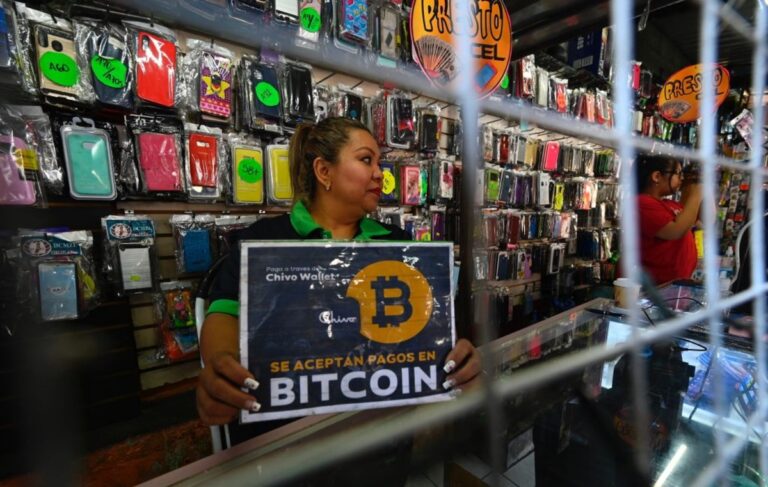
Alongside the waiver decision, the October 1 approval ratified the earlier completion of Chivo’s privatization — a condition required for program compliance. Majority ownership and operational control of the government-backed Bitcoin wallet, launched in September 2021 with a $30 credit per registered user funded from public resources, have been transferred to an unidentified private operator. The government retains a minority stake and custodial responsibility for customer assets.
Chivo’s privatization signals the end of El Salvador’s experiment with direct government Bitcoin payment infrastructure. By January 2025, surveys found that 92% of Salvadorans had not used Bitcoin in the prior year, with family remittances through Chivo and similar wallets accounting for less than 1% of total transfers in December 2024. Bukele himself later acknowledged the Bitcoin legal tender mandate had been his government’s most unpopular measure.
The privatization follows a broader pattern in how the Bukele administration approaches technology infrastructure: state-initiated, then privately operated. The 2023 Digital Modernization Law transferred El Salvador’s health and education systems to Google Cloud’s infrastructure. An April 2026 announcement extended the model to AI-powered management of the national health system. In each case, the government initiates the technological transformation and then cedes day-to-day operations to a private-sector partner while retaining a regulatory role. Chivo’s privatization fits exactly this pattern.
What the Waiver Formalizes for Other Countries
The framework that the October 1 decision formally encodes can be stated plainly: under an IMF loan program with a zero ceiling on public-sector Bitcoin accumulation, a sovereign government’s reserve can continue to grow — indefinitely, in principle — provided it can document that growth as privately funded rather than publicly purchased, and provided the IMF accepts that documentation. The donor’s identity, the amount each donor contributed, and the mechanism by which private individuals or organizations chose to give Bitcoin to a sovereign government are not required to be publicly disclosed.
That framework carries a structural weakness the IMF has not addressed: if the donors behind a sovereign government’s Bitcoin reserve never need to be named publicly, and if blockchain records cannot distinguish a government purchase from a private donation on-chain, then the practical enforceability of the “no public funds” condition depends entirely on the credibility of documentation that only the IMF and the borrowing government can read. A sovereign government with willing private donors — crypto-industry figures, friendly states operating through private vehicles, or anonymous holders willing to make large transfers — could maintain a growing Bitcoin reserve while remaining formally compliant with an IMF no-accumulation criterion.
El Salvador’s Bitcoin Office continued posting “bought Bitcoin” notifications on X as recently as the week before the September 3 staff-level agreement, attaching treasury charts showing 31 coins added over the preceding 30 days. The IMF’s compliance determination and El Salvador’s own public communications offered different accounts of the same reserve at the same time. The October 1 board decision has formally accepted the IMF account — but the mechanism that produced the discrepancy remains in place.
The Broader Economic Picture
The waiver decision sits inside an EFF program that is, by conventional macroeconomic measures, performing well. The IMF projects real GDP growth of 4.5% for El Salvador in 2026, building on 2025 growth of 3.9% that exceeded earlier forecasts. The non-financial public sector’s primary surplus is widening consistent with the EFF’s Fiscal Responsibility Law target of reducing public debt to 80% of GDP by 2030. The IMF has also noted that the program is contributing to a significant decline in poverty, driven partly by improved security conditions.
Those security conditions trace to Bukele’s anti-gang campaign, which has brought El Salvador’s homicide rate to a historic low of 1.3 per 100,000 inhabitants in 2025 — but which has also involved the mass detention of tens of thousands of suspected gang members, raising sustained civil-liberties concerns from human rights organizations.
The austerity attached to the IMF program has its own distributional consequences. Labor unions estimate 47,000 jobs have been eliminated since Bukele took office in 2019, with independent economists attributing approximately 15,000 specifically to the post-2024 fiscal adjustment. Annual inflation reached 2.76% as of June 2026, with essential products costing approximately $260 per month for the average household. These distributional costs sit alongside the macroeconomic improvements the IMF’s press release highlights — present in the same country, serving different populations.
The October 1 board decision advances the broader program: total disbursements under the EFF will rise to approximately $369 million of the $1.4 billion total access, with the remaining balance to be released through subsequent reviews. The program’s catalytic effect on multilateral financing beyond the IMF’s own funds — designed to unlock more than $3.5 billion in combined support from the World Bank, Inter-American Development Bank, and other lenders — depends on continued program compliance.
Key Facts at a Glance
Item
Detail
IMF facility
40-month Extended Fund Facility (EFF)
Total program size
SDR 1,033.92 million (~$1.4 billion)
Current disbursement
SDR 101.96 million (~$138 million)
Reviews completed
Second and third (combined)
Board decision date
October 1, 2026
El Salvador BTC reserve
~7,764 BTC
GDP growth forecast (2026)
4.5%
GDP growth forecast (2027)
4.0%
Chivo wallet
Transferred to private majority ownership
Bond coupon rate
Fell from 4% to 0.25% upon board approval
SDR conversion rate used
1 SDR = $1.354080 USD (IMF, October 2, 2026)
Frequently Asked Questions
Has the IMF granted Bitcoin-related waivers to El Salvador before?
Yes — and this is an underreported element of the story. The first review of El Salvador’s EFF, completed by the Executive Board on June 27, 2025, was formally titled a request for “Waivers of Nonobservance of Performance Criteria.” The October 1, 2026 decision is therefore not El Salvador’s first IMF waiver for Bitcoin-related program breaches — it is the most recent in a pattern of repeated formal accommodations across multiple review cycles. The institutional implication is that the IMF has effectively normalized formal waivers as its mechanism for managing sovereign Bitcoin accumulation under loan conditionality, rather than treating accumulation as a program-ending breach.
What exactly does “formal waiver” mean in IMF program terms, and why does it matter?
An IMF waiver of nonobservance is a formal Executive Board decision that officially excuses a missed quantitative performance criterion while keeping the program active. A staff-level agreement is a preliminary staff finding — the board’s approval is what creates the binding institutional record. The October 1 decision is the first time the IMF’s governing board, not merely its staff, has formally accommodated a sovereign government’s cryptocurrency reserve breach under an active loan program. That formal board-level record is what makes the decision a precedent rather than an administrative accommodation.
What happens to El Salvador’s Bitcoin reserve going forward?
Under the October 1 decision, El Salvador may retain its existing holdings of approximately 7,764 BTC — but may not use public funds to add more. The IMF’s formal position is that the residual exposure “should ultimately be fully unwound,” though no specific timeline or deadline was set. Private donations can still grow the reserve without triggering the performance criterion, provided they are documented to the IMF’s satisfaction. No donor for any of the 1,796 coins added since June 2025 has been publicly identified, and the IMF has not indicated it will require public disclosure as a condition of future program reviews.
Who bears the cost of El Salvador’s IMF program beyond the Bitcoin conditions?
The economic program attached to the EFF involves substantial fiscal austerity that has fallen primarily on public-sector workers and lower-income households. Labor unions estimate 47,000 jobs eliminated since 2019, with independent economists attributing roughly 15,000 specifically to post-2024 IMF-related fiscal adjustment. Annual inflation reached 2.76% by June 2026, with essential products costing approximately $260 per month for a typical household. The IMF’s GDP growth forecast of 4.5% for 2026 reflects the macroeconomic aggregate; the distributional effects of the adjustment are largely absent from the Fund’s public communications on the program.