September 20, 2026:


If you’ve been tracking the boomer shooter scene, right now is the moment to act: HMUR, a fast-paced retro first-person shooter built entirely by solo developer FoxusSexus and published by Valkyrie Initiative, has a free demo live on Steam as part of Boomstock 2026 demo announcement, a genre festival dedicated to fast-paced retro shooters running through September 24. The demo itself is available on Steam through October 1 — so if this style of game interests you at all, the window to get inside Mirnogorsk without paying is open right now.
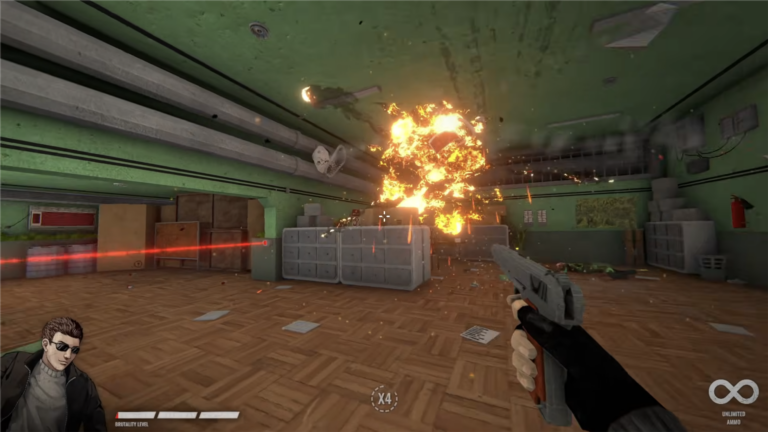
HMUR drops you into an alternate 1990s Soviet Union — specifically into Mirnogorsk, a classified innovation city in the depths of Khakassia described on the HMUR Xbox store page as “the pride of the Union, a center of progress.” You play as Sergei, a utility worker whose ordinary life inside the facility dissolves the moment a catastrophic accident reshapes everything around him. What caused it? That question hangs over every level. What is certain is that the answer involves navigating the wreckage at high speed, fighting through waves of enemies with scarce ammunition, and dying repeatedly — at which point you restart and try again faster and smarter than before.
The HMUR Steam store page positions the game explicitly in a lineage that includes the high-tech Soviet setting of Atomic Heart, the intense gunplay of Dusk, and the hardcore action tempo of Hotline Miami. That’s a specific, credible set of reference points: each of those games is known for distinct design contributions — the Soviet retrofuturist aesthetic, the precision-movement FPS shooting, and the instant-death-instant-retry tension loop, respectively. HMUR is attempting to pull all three into a single package.
The design philosophy at the center of HMUR is deliberately unforgiving and equally deliberately educational. A single hit can end your run; a single hesitation — a moment of stillness when the game demands motion — invites the same outcome. Death returns you to the beginning of the level, not a checkpoint midway through. This is not a punishment mechanic dressed up as difficulty; it is the core feedback system. You learn Mirnogorsk’s corridors the same way speedrunners learn platformers: through failure, pattern recognition, and increasingly rapid improvement. The HMUR one-life game design is the spine of its entire difficulty arc.
This approach shares DNA with Hotline Miami‘s instant-restart design, where the brief duration of each attempt turns death into a fast learner’s tool rather than a frustration. What HMUR adds is the spatial complexity of non-linear levels: the game’s stages are not corridors but HMUR branching level design structures, where choosing a different path alters which enemies you encounter, what resources become available, and how the encounter sequences unfold. Having trouble with one path? The game explicitly encourages finding another.
Ammunition is scarce, which means every shot carries weight. The arsenal is described as large, but the tension of resource scarcity prevents the game from collapsing into a mindless spray-and-pray exercise. The HMUR original soundtrack details are equally distinctive: original music blending techno, hardbass, and breakcore — a distinctly East European club-music lineage that gives HMUR an audio identity as specific as its visual one.
HMUR is being developed entirely by a single person at FoxusSexus, and that context is worth pausing on. The game is confirmed for PC (Steam), PlayStation 4, PlayStation 5, Xbox One, and Xbox Series X|S via the HMUR PlayStation store listing and the HMUR Xbox store listing, as well as Nintendo Switch — seven distinct release targets, including four separate console platforms spanning two hardware generations. A decade ago, a solo developer targeting that platform footprint would have faced a near-impossible porting workload.
What makes it tractable now is Unity — the engine FoxusSexus chose to build HMUR in. The Unity cross-platform engine capabilities allow a single C# codebase to compile for PC, PlayStation, Xbox, and Nintendo Switch targets, with the engine abstracting away most of the platform-specific rendering and input layer. The developer still has to optimize for each hardware tier, but the architecture is shared. This is the infrastructure that turns “solo developer, seven platforms” from a boast into an engineering reality. It is also why Unity remains the dominant engine choice for indie developers attempting scale that would previously have required a team.
Valkyrie Initiative, the Almaty, Kazakhstan-based publisher backing the project, has a track record of supporting exactly this kind of small-team indie work. The Valkyrie Initiative publisher profile shows a catalog that includes Mondealy, Skelethrone: The Chronicles of Ericona, and The Mildew Children.
The demo that launched this week is not FoxusSexus’s first time putting HMUR in front of players. Last year, at Boomstock 2025, the game ran its first public playtest — and the time between then and now was spent incorporating that community feedback alongside the developer’s own creative improvements. That iteration process shows in how deliberately the developer is approaching this next public build: FoxusSexus is explicitly asking players who try the demo to leave a review on Steam’s demo page per the HMUR demo is available now devlog (App ID 4230470), specifically noting three things worth flagging — what worked, what felt awkward or too difficult, and what could be improved.
HMUR was also selected as one of 50 finalists at The Indie Premier 2026 per the Indie Premier 2026 finalist announcement, a showcase organized by Mega Cat Studios and Unity PGH in Pittsburgh that brought together over 50 studios and publishers including Raw Fury, Daedalic, Devolver Digital, and 11 Bit Studios per the Indie Premier 2026 winners announced. The game did not take home an award — the developer disclosed that directly in the July 2026 devlog, which is the kind of transparency that tends to build goodwill with exactly the audience this game is aimed at.
Boomstock 2026 runs on Steam through September 24. The HMUR demo is available through October 1 at Steam App ID 4230470. The full game — still without a release date — will remain accessible to wishlist on the main HMUR Steam page (App ID 3499560). The demo trailer embedded on the itch.io page provides a direct look at the game’s current build.
The game’s Soviet sci-fi setting sits in interesting company in 2026. HROT, the Czech solo-developed Sovietcore boomer shooter, established that a distinctly Eastern European aesthetic — grim, strange, laced with institutional grimness and off-kilter humor — could find a passionate audience in the genre, as documented in the PC Gamer HROT review. HMUR’s setting, with its fictional innovation city and its propaganda-poster heritage of Soviet progress narratives, operates in the same cultural space, but with a more kinetic, arcade-immediate design language than HROT’s measured pacing. Whether that combination lands will become clearer once more demo feedback accumulates.
The developer’s request is specific and generous: tell them what worked, what felt too hard, and what should change. For a solo-developed game still in active development, that’s not a PR formality — it’s the mechanism by which the finished product gets made. If you play the demo, the review page is the most useful place to put your thoughts.
Boomstock is an annual Steam festival dedicated to fast-paced retro shooters — the genre sometimes called “boomer shooters” — and it provides both a curated discovery window for players and a meaningful promotional moment for games in the space. HMUR’s demo launched alongside Boomstock 2026, which runs through September 24. Being included in a genre-specific festival puts the game directly in front of the audience most likely to appreciate its design philosophy. The Boomstock 2025 Steam festival ran September 23–27 and featured similar genre curation for over 170 games.
HMUR has no mid-level checkpoints. When Sergei dies — which happens easily and often in the early going — the player restarts the level from the beginning. This is intentional: the game’s entire difficulty arc is built around learning each level’s enemy placements and branching paths through repetition, not through accumulated resources or gear. Players who enjoyed the instant-restart loop in Hotline Miami or the skill-floor ethos of classic Doom will likely find this familiar. Players who prefer checkpoint saves should set their expectations accordingly before downloading. The HMUR one-life game design is described by the developer as a core feedback system, not a punishment.
The demo represents HMUR’s current state of development and reflects approximately a year of iteration since the Boomstock 2025 playtest. FoxusSexus is still incorporating feedback, meaning the final game will almost certainly differ — potentially significantly — from what the demo contains. The FoxusSexus developer demo statement explicitly asks players to flag what felt awkward or too difficult, suggesting the difficulty calibration in particular is still being tuned. Think of the demo as an invitation to influence the game’s development rather than a preview of a locked product.
For players, the practical consequence of FoxusSexus choosing Unity is that HMUR is on track for genuine simultaneous releases across PC, two PlayStation generations, two Xbox generations, and Nintendo Switch — an unusually broad platform commitment for a single-developer project. The Unity multiplatform development capabilities mean the core game runs on a shared codebase, making this ambition technically viable. For players who don’t game on PC, that means a real chance of a console release without the multi-year port delays that typically follow indie PC launches.