HomeAuto HiBy RS2 II DAP Brings Darwin III R2R Architecture to $439 at Autumn Headphone Festival
HiBy RS2 II DAP Brings Darwin III R2R Architecture to $439 at Autumn Headphone Festival
November 8, 2026:
Hiby.com
Japan’s largest personal-audio showcase, the Autumn Headphone Festival 2026, opened this morning at Station Conference Tokyo above the Yaesu North Exit, and the most architecturally significant product at the Mix Wave booth is also the most affordable entry yet into HiBy’s flagship DAC platform: the RS2 II, a compact digital audio player (DAP) that runs the same Darwin III R2R + FPGA architecture as the brand’s ¥598,000 (approximately $3,767 at current exchange rates; global USD list price separately set at $3,899) RS8 II flagship, at a Japanese market price of ¥79,200 (approximately $499 at current exchange rates; global USD list price separately set at $439).
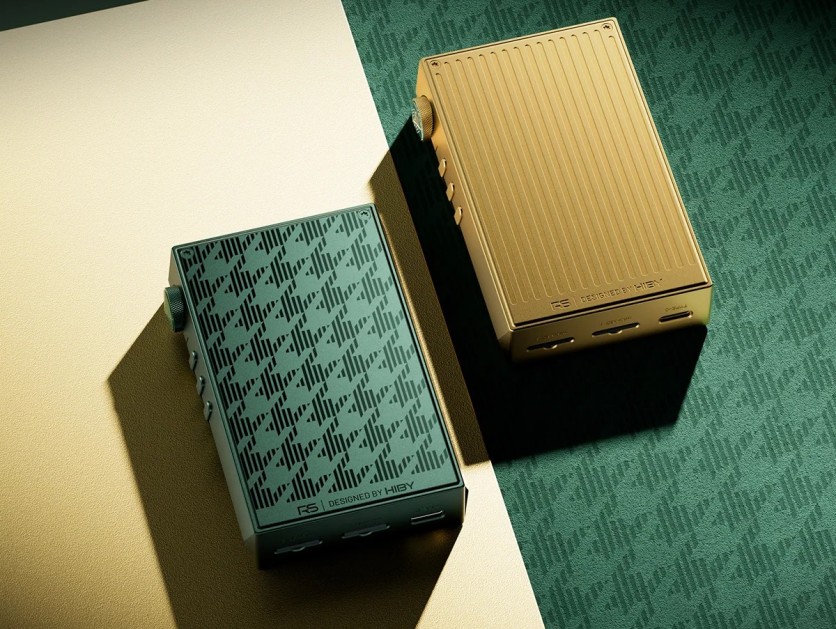
The RS2 II was announced globally on October 19 and makes its first Japan demonstration today alongside a 500-unit Gold Limited Edition and the BD100, a Bluetooth-equipped desktop DAC/amplifier aimed at the gaming and hybrid-listening market. All three are due before year-end 2026.
What Darwin III Actually Does — And Why It Matters for $439
The DAP market at $400–$550 is crowded with capable players from FiiO, Shanling, and iBasso, virtually all of them running Android operating systems and off-the-shelf delta-sigma DAC chips from AKM, ESS Sabre, or Cirrus Logic. Darwin III does something none of them do: it converts digital audio to analog through a discrete R-2R resistor-ladder network managed by an in-house FPGA, rather than a commoditized DAC chip.
Understanding why that matters requires a brief look at how both architectures work. A delta-sigma DAC — the dominant design in every mass-market DAC chip since the 1990s — takes a digital audio stream, oversamples it massively (running it at sample rates many times the original), and uses a technique called noise shaping to push the resulting quantization noise out of the audible frequency range. The result is a measured performance that looks excellent on paper. The tradeoff: oversampling introduces digital noise-shaping artifacts, and while these are generally inaudible at modest levels, a segment of audiophile listeners objects to their sonic character in direct listening comparisons.
An R-2R ladder DAC takes a different approach. Its circuit is a cascaded network of two resistor values — R and 2R — where each bit of the digital audio word controls a corresponding resistor pair. The ladder produces an analog voltage directly proportional to the digital input without any oversampling in NOS (non-oversampling) mode. That’s the architecture audiophile manufacturers Denafrips, Holo Audio, and Schiit Audio revived in the mid-2010s for high-end desktop equipment. The tradeoff: the accuracy of the analog output depends entirely on how precisely the resistors are matched to each other. A 0.1% resistor-tolerance error produces a 0.1% output error — translating to a THD+N that, in a purely discrete R2R design, typically lands in the 0.01–0.1% range.
Where Darwin III’s FPGA earns its price: HiBy’s third-generation Darwin platform places an FPGA — a reprogrammable digital logic chip — between the digital audio source and the R2R resistor network. In the RS2 II’s implementation, that FPGA houses more than 35,000 logic units and 40 high-speed DSP units. Its job is to handle all digital signal processing before the resistors ever see the audio signal: multi-tap FIR filtering, anti-aliasing filter selection (the RS2 II offers multiple filter modes), NOS/OS mode switching (users can choose oversampled or non-oversampled output), harmonic generation controls for even/odd harmonic balance, and — critically — digital calibration that measures and compensates for each physical resistor’s actual value versus its nominal target. That last function is why HiBy’s RS8 II (the flagship implementation, with 100,000 logic units and 212 DSP units) can claim a THD+N specification of less than 0.0008% while using a discrete R2R circuit — a figure that, by HiBy’s own account, represents roughly one-tenth the distortion of its predecessor. No independent laboratory measurement of that specific figure has been published; the spec comes from HiBy’s own test data.
The RS2 II uses a leaner FPGA variant than the RS8 II — approximately 35% of the flagship’s logic capacity — appropriate for a device at a fraction of the price. The full Darwin III signal-processing pipeline remains intact: the architecture handles everything from digital input to analog output end-to-end, with independently separated left-right power supplies ensuring channel isolation. Four OPA1622 operational amplifiers arranged in a fully balanced configuration drive the headphone outputs. The RS2 II is architecturally unique among sub-$500 DAPs: no competitor in this price bracket offers an in-house FPGA R2R design.
HiBy says the Darwin III platform, across all its implementations, claims a Chinese national invention patent — cited in its press materials as ZL202110679601.X, a figure TechTimes was unable to independently verify from public patent records.
RS2 II Specifications
The RS2 II runs HiBy’s PureAudio HiByOS on an Ingenic X1600E dual-core SoC — a deliberately stripped-down operating system that dedicates all processing resources to audio playback. There is no Wi-Fi, no Android ecosystem, and no streaming service support directly on the device. That’s a tradeoff: buyers who want Tidal or Qobuz running natively need an Android DAP from a competitor; buyers who want an offline high-resolution library with no background tasks or connectivity overhead will find HiByOS’s minimal footprint a feature rather than a limitation.
The display is a new 3.55-inch panel at 480 × 800 pixels — 45% more screen area and 122% more pixels than the original RS2, with slim bezels giving a nearly full-face appearance in a compact chassis measuring 91.95 × 62.05 × 18.6 mm (3.62 × 2.44 × 0.73 in) and weighing 156 g (5.5 oz).
Format support: PCM up to 384 kHz/32-bit, native DSD256, and MQA 8X decoding. On MQA: the format entered administration in April 2023, was acquired by Lenbrook International (parent of NAD and Bluesound), and was dropped by Tidal — historically its primary commercial partner — in July 2024. As of late 2026, no major streaming service actively delivers MQA content to consumers. The RS2 II’s MQA decoding capability is present for backward compatibility, but buyers should not purchase the device for its MQA support; that ecosystem has largely contracted.
Storage: two microSD slots, each supporting cards up to 2 TB, for a combined 4 TB maximum — enough for a substantial DSD and high-bitrate FLAC library. Both cards surface as a unified library view.
Output power: 630 mW through the 4.4 mm balanced headphone output (Pentaconn standard). Also available: 3.5 mm single-ended output, coaxial output, Line Out, and USB DAC input for desktop integration.
Japan market price: ¥79,200 (approximately $499 at current exchange rates). HiBy’s separately stated global USD list price: $439. Availability: late November 2026.
The Gold Limited Edition: Brass, Patina, 500 Units
The RS2 II Gold Limited Edition carries identical internal hardware to the standard green aluminum model but diverges sharply in materials. The chassis is brass — a copper-zinc alloy roughly 3.1 times denser than aluminum — which raises the weight to 240 g (8.5 oz), a 54% increase over the standard model’s 156 g (5.5 oz).
Brass offers two engineering benefits the aluminum chassis does not: higher mass for vibration damping and suppression of radio-frequency interference, and a natural patina development at points of repeated skin contact. HiBy positions this as a collector’s property — the device “records” the listening hours accumulated over time in its surface appearance. That framing is accurate: the copper in brass does oxidize where touched, producing a distinctive brown-gold tint over months of handling.
Production is capped at 500 units worldwide, with the Chinese domestic market allocated separately. Japan market price: ¥105,300 (approximately $663 at current exchange rates). HiBy’s global USD list price: $549 — approximately a 25% premium over the standard model at the global price point. Availability: late November 2026.
BD100: Gaming-Adjacent Desktop DAC with Bluetooth 5.4
The BD100 desktop DAC and headphone amplifier occupies entirely different technical territory from the RS2 II. Where the RS2 II is R2R and FPGA-driven, the BD100 uses two Cirrus Logic CS43198 delta-sigma chips — the same off-the-shelf architecture used by many competitors — supporting PCM up to 768 kHz/32-bit and DSD512.
Output power: 1,087 mW at the 4.4 mm balanced output (HiBy spec; independent measurement unavailable). Connections: 3.5 mm and 4.4 mm headphone outputs; USB, optical, and coaxial digital inputs; and a microphone input for gaming and voice-chat use cases.
The BD100’s most distinctive specification is its wireless stack. Built around Qualcomm’s QCC5181 SoC, it supports Bluetooth 5.4 along with LDAC (Sony’s up-to-990-kbps wireless audio codec) and aptX Lossless — Qualcomm’s protocol that enables genuine lossless CD-quality (16-bit/44.1 kHz) transmission over Bluetooth when paired with a compatible source device. For a desktop DAC at this price, aptX Lossless is a meaningful differentiator: users who move between wired headphones and wireless streaming can maintain lossless quality on both paths.
Japan market price: approximately ¥26,000 (approximately $164 at current exchange rates). Global USD price: TBA. Release: before end of 2026.
Market Context
The RS2 II’s direct competitors at the $439 global price — the FiiO M11s (~$400), Shanling M6 Ultra (~$499), and iBasso DX240 (~$450) — all run Android with Wi-Fi and streaming app support. All use off-the-shelf delta-sigma DAC chips. The RS2 II trades streaming connectivity and an Android app ecosystem for the Darwin III R2R architecture and HiByOS’s audio-focused simplicity. Neither is objectively better; they represent different priorities. A buyer who streams Qobuz or Tidal regularly needs a competitor’s device. A buyer with a large local FLAC or DSD library who wants to maximize the analog conversion stage — and who finds the R2R character audibly preferable — has no other FPGA R2R option at $439.
The festival floor today includes comparative listening opportunities from Sony (newly announced Walkman NW-WM1ZM3/AM3 and NW-ZX900, in a ticketed room on the sixth floor), Audio-Technica’s wood-chassis flagship, the iBasso D18 CROTALUS, FiiO’s DT11 portable transport and BTR19 Bluetooth amplifier, and Singapore-based KOTORI Audio’s Project 787 hybrid in-ear monitor. The festival runs free of charge through 18:00 JST.
What Chinese Manufacturer Status Means for Buyers
HiBy Digital is headquartered in Dongguan, Guangdong, China. The company also maintains a Delaware incorporation address in the United States; that address does not change HiBy’s legal obligations under Chinese law.
Three laws apply to HiBy as a Chinese company regardless of where its products are sold or where their servers are physically located:
National Intelligence Law of the People’s Republic of China (2017), Article 7: “All organizations and citizens shall support, assist, and cooperate with national intelligence work in accordance with the law, and shall protect national intelligence work secrets they are aware of.” This obligation applies to HiBy and to all organizations operating under Chinese law.
Data Security Law of the People’s Republic of China (2021): Establishes government access to data held by Chinese companies and requires data localization for certain categories of information.
Cybersecurity Law of the People’s Republic of China (2017, amended effective January 2026): Requires network operators to store data within China and to provide technical assistance and support to authorities for national security purposes.
What data could be affected: The RS2 II’s offline architecture materially changes its risk profile compared to an Android DAP from a Chinese company. HiByOS has no Wi-Fi; the device is primarily an offline music player. Realistic exposure points are: firmware update connections to HiBy’s servers; and any HiBy companion desktop app installed on a connected computer. In USB DAC mode, the RS2 II presents to a connected computer as a standard USB Audio Class device — standard audio hardware with minimal data exposure. The BD100 uses Bluetooth but has no native internet connection.
No independent security audit: No publicly available independent security audit of the RS2 II or BD100 by a named research firm or government agency has been identified. No CVEs have been assigned to HiBy products. No US, EU, or UK regulator has issued a specific advisory on HiBy devices (unlike Huawei, ZTE, or DJI).
Practical steps for buyers concerned about this exposure:
Download firmware only from hiby.com official pages; verify any checksum provided
If using HiBy’s companion app on a work device, run it in an isolated browser profile or virtual machine
For USB DAC use, the device presents as generic USB audio hardware — standard risk level
BD100 Bluetooth functions via standard Qualcomm pairing; apply normal Bluetooth hygiene (pair in private, unpair when not in use)
A buyer weighing the RS2 II against an equivalently priced Android DAP from a Chinese competitor should note that the RS2 II’s offline HiByOS architecture represents a lower data-collection surface than an Android device with Wi-Fi and app store access — even from the same jurisdiction. The structural legal obligation on HiBy as a company remains regardless; the RS2 II’s device architecture simply reduces the number of channels through which that obligation could be exercised.
Key Specifications
RS2 II (Green)
RS2 II Gold Limited Edition
BD100
Type
Portable DAP
Portable DAP (500 units ex-China)
Desktop DAC/Amp
DAC Architecture
Darwin III (FPGA + R2R)
Darwin III (FPGA + R2R)
2× Cirrus Logic CS43198 (delta-sigma)
FPGA
35,000+ logic units, 40 DSP
35,000+ logic units, 40 DSP
—
OS / SoC
PureAudio HiByOS / Ingenic X1600E
PureAudio HiByOS / Ingenic X1600E
Qualcomm QCC5181 (BT SoC)
Display
3.55-inch, 480 × 800 px
3.55-inch, 480 × 800 px
—
Storage
2× microSD (up to 2 TB each; 4 TB combined)
2× microSD (up to 2 TB each; 4 TB combined)
—
Amp Stage
4× OPA1622, fully balanced
4× OPA1622, fully balanced
—
Max Output
630 mW (4.4 mm balanced)
630 mW (4.4 mm balanced)
1,087 mW (4.4 mm balanced)
Headphone Outputs
4.4 mm BAL, 3.5 mm SE
4.4 mm BAL, 3.5 mm SE
4.4 mm BAL, 3.5 mm SE
Other I/O
Line Out, Coaxial Out, USB DAC
Line Out, Coaxial Out, USB DAC
USB, Optical, Coaxial, Mic In
Bluetooth
None
None
5.4 (LDAC, aptX Lossless)
PCM Support
Up to 384 kHz/32-bit
Up to 384 kHz/32-bit
Up to 768 kHz/32-bit
DSD Support
DSD256 (native)
DSD256 (native)
DSD512
MQA
8X (see note in body)
8X (see note in body)
—
Wi-Fi
None
None
None
Chassis
Aluminum alloy
Brass
—
Weight
156 g (5.5 oz)
240 g (8.5 oz)
—
Dimensions
91.95 × 62.05 × 18.6 mm (3.62 × 2.44 × 0.73 in)
91.95 × 62.05 × 18.6 mm (3.62 × 2.44 × 0.73 in)
—
Japan Price (JPY)
¥79,200 (~$499 at current rates)
¥105,300 (~$663 at current rates)
~¥26,000 (~$164 at current rates)
Global USD List Price
$439
$549
TBA
Release
Late November 2026
Late November 2026
By end of 2026
Exchange rate as of November 7, 2026: 1 JPY ≈ $0.0063 USD; conversions are approximate. Japan retail yen prices and global USD list prices are set independently by the manufacturer and may differ from the spot-rate conversion.
Frequently Asked Questions
What is R2R, and why do audiophiles care about it?
An R-2R resistor ladder DAC converts a digital audio signal to analog by routing each bit through a network of two resistor values (R and 2R), producing a voltage proportional to the digital input without oversampling. Audiophiles who prefer R2R cite its absence of digital noise-shaping artifacts in NOS (non-oversampling) mode; critics note that resistor-matching precision determines accuracy, and that delta-sigma DAC chips can achieve lower measured distortion without special compensation. Darwin III’s FPGA provides that compensation, closing most of the measured-performance gap.
Can the RS2 II stream from Tidal, Spotify, or Qobuz?
No. The RS2 II runs HiByOS, not Android. It has no Wi-Fi and no app store. Playback is from local files stored on microSD cards (up to 4 TB combined) or from a connected device via USB DAC mode. Buyers who require streaming app support should consider an Android DAP from FiiO, Shanling, or iBasso at the same price tier.
Is the RS2 II’s MQA 8X support useful in 2026?
Marginally. Tidal dropped MQA support in July 2024 and switched to FLAC. No major streaming service currently delivers new MQA content to consumers. The RS2 II decodes MQA for backward compatibility with any existing MQA files in a buyer’s library, but it is not a reason to choose this device over competitors.
Is the Gold Limited Edition worth the premium?
The Gold edition (¥105,300/~$663 at current rates; $549 global list) adds a brass chassis — heavier at 240 g (8.5 oz) vs. 156 g (5.5 oz) for the aluminum version — with vibration-damping properties and a patina that develops over use. Internal hardware is identical to the standard model. Production is limited to 500 units ex-China globally. Whether the premium is justified depends on whether a buyer values material engineering properties and collectibility over portability (the 54% weight increase is noticeable during extended wear).
Is HiBy a Chinese company, and what does that mean for my privacy?
Yes. HiBy Digital is headquartered in Dongguan, China and is legally subject to China’s National Intelligence Law (2017), Data Security Law (2021), and Cybersecurity Law (2017). These laws require Chinese companies to cooperate with government intelligence requests on demand. The RS2 II’s offline HiByOS architecture (no Wi-Fi, no streaming) meaningfully reduces its data-collection surface compared to an Android DAP from the same jurisdiction. No independent security audit of the RS2 II or BD100 is publicly available. See the “What Chinese Manufacturer Status Means for Buyers” section for practical mitigation steps.