HomeAuto Green Hydrogen Germany: EWE and Verbund Launch 500MW Plant Collocated With Cavern Storage
Green Hydrogen Germany: EWE and Verbund Launch 500MW Plant Collocated With Cavern Storage
October 11, 2026:
Verbund.com
As Europe’s green hydrogen sector continues to shed projects at an alarming rate, two established utilities are moving in the opposite direction. EWE AG and Verbund AG announced on Friday that their jointly owned hydrogen subsidiary will develop CHC Electrolysis JadeWeser — a 500-megawatt (MW) electrolyzer facility in Nordenham, Lower Saxony, designed to produce approximately 50,000 tonnes of green hydrogen per year by 2032. What separates this launch from the dozens of announcements that never survive to a final investment decision is not just its scale, but the engineering logic behind its site selection: JadeWeser is built next to the infrastructure that determines whether any project of this size can be economically viable under current EU rules.
JadeWeser: What Was Launched and Why It Matters
The project will be developed through a joint venture — EWE Hydrogen GmbH and Verbund Green Hydrogen GmbH — that received European Commission clearance on July 9, 2026. Verbund Green Hydrogen initially acquired a 50.1% stake in the joint entity, with the arrangement structured to reach full parity over time. The new joint-venture company will act as a standalone project vehicle.
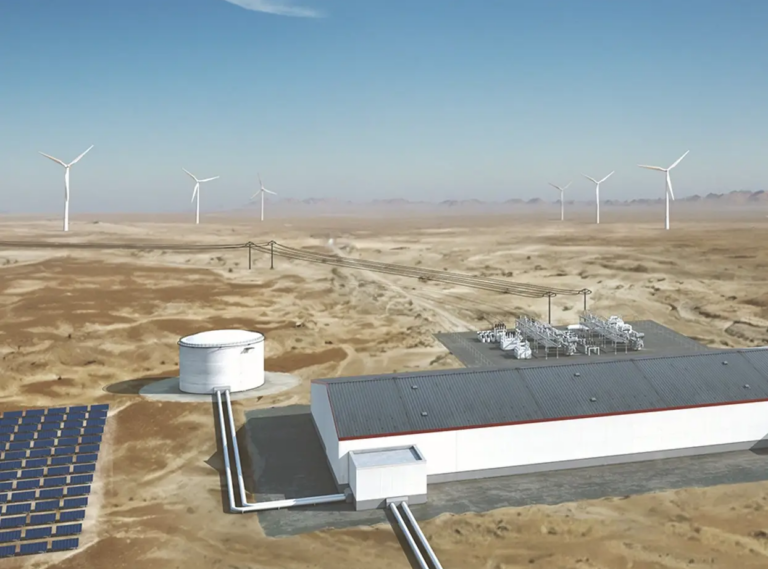
The Nordenham site sits in the Wesermarsch district, positioned between Oldenburg and Bremerhaven, and connects to a 380-kilovolt (380-kV) electricity grid with stated capacity for expansion into the gigawatt range. The project has confirmed access to a water supply and to existing industrial port infrastructure. Critically, it sits adjacent to both Germany’s forthcoming national hydrogen pipeline backbone — the Wasserstoff-Kernnetz, a 9,000-kilometer network under development (approximately 5,590 miles) — and planned hydrogen cavern storage facilities. Those two adjacencies are the article’s central technical argument, and they are not incidental.
“With the JadeWeser project, one of the most infrastructurally well-positioned hydrogen projects in Europe is taking shape,” said Jost Ahrens, Managing Director of Verbund Green Hydrogen GmbH, in the EWE-Verbund joint press release. “Next to a former nuclear power plant, an industrial hub for the production of green hydrogen is emerging — creating excellent conditions for an economical and secure hydrogen supply.”
No specific offtakers have been named. The companies say production will serve industrial, transport, and energy sector customers once online. A final investment decision has not been taken.
Why Most Projects at This Scale Have Not Made It This Far
To understand why infrastructure adjacency matters, it helps to understand what has killed the projects that did not make it. Roland Berger’s Clean Hydrogen Radar, updated in July 2026, found that while 440 gigawatts (GW) of green hydrogen production capacity has been globally announced for 2030, the consultancy’s probabilistic model — accounting for failure rates, cancellations, and delays — puts realistic capacity at 40GW by that date: a 10-to-1 attrition ratio.
Germany has not been insulated from this pattern. The HyScale 100 project in Schleswig-Holstein — a 500MW-to-2.1GW initiative backed by Raffinerie Heide, Danish utility Ørsted, Swiss building materials firm Holcim, and French utility EDF’s Hynamics arm — collapsed for the second time in August 2026, despite having had nearly €900 million (approximately $1.04 billion USD) in federal and state funding committed to it. The state ultimately spent nothing, as no funds had been disbursed, but the project died all the same.
EWE itself canceled its smaller 50MW Bremen electrolyzer project after ArcelorMittal withdrew from its green steel program — a reminder that even projects within the same CHC initiative are not immune. Sweden’s Stegra (formerly H2 Green Steel), which is building a 740MW hydrogen-based steel plant in Boden, has faced capital shortfalls that have clouded its timeline.
The proximate driver across almost every failure is the same: unfavorable economics, driven significantly by EU regulations governing Renewable Fuels of Non-Biological Origin (RFNBO).
How the Technology Works — and Why Regulation Changes the Equation
Green hydrogen is produced by electrolysis: passing direct-current electricity through water to split it into hydrogen (H₂) and oxygen (O₂). EWE’s Emden plant uses a Proton Exchange Membrane (PEM) electrolyzer supplied by Siemens Energy. In a PEM system, water is fed to the anode side of a thin solid polymer membrane — typically made from a perfluorosulfonic acid material called Nafion. Electricity oxidizes the water at the anode, releasing oxygen, protons (H+), and electrons. The protons cross the membrane to the cathode, where they combine with electrons to form hydrogen gas. The membrane simultaneously serves as proton conductor, gas separator, and electrical insulator — all in a cell no thicker than a few hundred micrometers.
PEM’s key engineering advantage for a project like JadeWeser is its speed: a PEM electrolyzer can ramp output from zero to full capacity in seconds, matching the variability of offshore wind and other intermittent renewable sources. Unlike alkaline electrolyzers — the older, cheaper, but less responsive alternative — PEM systems are designed to be switched on and off with wind and solar cycles without mechanical stress on the membrane.
This responsiveness matters enormously under EU rules. RFNBO regulations — specifically EU Delegated Regulation 2023/1184, which entered force in January 2024 — require that hydrogen claiming “renewable” status be produced with electricity that meets strict criteria: it must be additional (from newly built renewable sources), geographically correlated (in the same electricity bidding zone), and temporally correlated with renewable generation. Until the end of 2029, monthly matching applies. From 2030 onward, the regulation requires hour-by-hour matching of renewable electricity production with hydrogen production.
That last requirement is the cost-driver the industry is fighting over. The University of Cologne’s Energy Institute found that applying the full RFNBO criteria — including hourly temporal correlation — can raise green hydrogen production costs in Germany by up to 20% compared to unrestricted grid access. Executives from Thyssenkrupp Nucera, RWE Hydrogen, and Hydrogen Europe have publicly called for relaxing the hourly matching rule, arguing that maintaining it post-2029 would price projects out of the market. The European Commission has signaled its hydrogen strategy revision is underway, and hydrogen futures traders estimated relaxing the temporal rules could cut production costs by €1–2 per kilogram (approximately $1.16–$2.32 USD/kg).
This is where JadeWeser’s infrastructure-first logic becomes a direct engineering response rather than a geographic convenience. Research found that while hourly RFNBO matching imposes a significant cost penalty on electrolyzers that must idle during non-renewable periods, cavern storage reduces this cost penalty to just 7–8% — because stored hydrogen can be dispatched during high-demand periods while the electrolyzer runs optimally during periods of maximum renewable generation.
EWE’s broader Clean Hydrogen Coastline (CHC) program already includes a 500,000-cubic-meter (approximately 17.7 million cubic feet) underground natural gas salt cavern at Huntorf, in the Wesermarsch region, converting to hydrogen storage with commissioning planned for 2027. JadeWeser’s siting in the same district — the Wesermarsch — means it is designed to feed into that same storage capability once it comes online. The project’s stated proximity to cavern storage facilities is not a future aspiration: the infrastructure is already under conversion down the road.
EWE’s Clean Hydrogen Coastline: The Program Behind the Project
JadeWeser represents a significant scaling of an initiative already in motion. EWE’s CHC program started building the Emden electrolyzer — a 320MW PEM facility in Emden — in late November 2025, one of the largest electrolyzers in Europe at the time of its groundbreaking, targeting 26,000 tonnes of green hydrogen per year when it comes online in autumn 2027. In July 2026, EWE broke ground on H2CoastLink 1, a 24-kilometer (approximately 15-mile) pipeline connecting the Emden facility to the national hydrogen backbone via Leer, with commissioning scheduled for autumn 2027.
Salzgitter AG contracted 10,000 tonnes per year of Emden’s output from 2030 for use in its SALCOS low-CO₂ steelmaking program, which replaces coal-based blast furnaces with direct-reduced iron powered by hydrogen. This week, adhesive tape and surface protection manufacturer tesa signed an additional agreement to offtake 500 tonnes per year from the Emden plant starting January 2028, for use in steam generation at its Hamburg facility.
Together, EWE and Verbund already have approximately 400MW of green hydrogen capacity in operation or under active development. If JadeWeser proceeds as announced, the combined CHC portfolio would represent over 800MW — a meaningful fraction of Germany’s revised DENA target of 5.5GW of installed electrolysis capacity by 2030, according to government-backed energy agency DENA.
The Partnership Logic: Why Verbund
Verbund’s role in the joint venture is not incidental. The Austrian utility generates 95% from renewables, primarily large-scale alpine hydropower, making it one of Europe’s largest hydropower operators. That renewable electricity profile directly supports RFNBO certification requirements — a partner with provably renewable generation capacity reduces the compliance complexity of sourcing certified renewable electricity for electrolysis at scale.
“The energy transition needs capable European partnerships,” said Verbund CEO Michael Strugl in the EWE-Verbund joint press release. “With this joint venture, we are pooling the strengths of two established energy companies and creating the conditions for a secure and competitive supply of green hydrogen. JadeWeser is an important building block of a future European hydrogen economy.”
EWE’s Tobias Moldenhauer, Managing Director of EWE Hydrogen GmbH, was direct about what determines viability: regulatory certainty on electricity procurement costs, network fees, and indirect emissions costs would be essential before a final investment decision is possible. “The development of a hydrogen economy is capital-intensive, long-term, and associated with different risks, especially in the market ramp-up phase,” Moldenhauer said in the official press release. “That makes reliable strategic partnerships all the more important.”
What Policymakers Are Doing — and What Still Needs to Happen
JadeWeser’s commercial viability will be substantially determined by decisions in Brussels over the next 12 to 18 months. On the positive side, Germany’s Bundesrat has approved a binding RFNBO transport quota of 10% for road and rail transport by 2040, with a 1.5% interim target by 2030 — a demand signal that project developers have said is necessary to justify long-term contracts. The European Commission has confirmed a fourth European Hydrogen Bank auction before year-end 2026, and has signaled a broader revision of the EU’s hydrogen strategy is underway.
The pivotal question is what the Commission does with the RFNBO temporal correlation requirement. If it maintains the post-2029 hourly matching rule without modification, projects that cannot pair storage with their electrolyzer will face structural cost disadvantages that the existing subsidy landscape may not cover. JadeWeser’s cavern storage proximity gives it a technical hedge that most canceled projects lacked. Whether that hedge is sufficient — or whether the regulatory environment improves enough to make the hedge unnecessary — is the question that will resolve by the time the company needs to pull the trigger on a final investment decision.
Frequently Asked Questions
What is a PEM electrolyzer, and why does EWE use that technology for this project?
A Proton Exchange Membrane (PEM) electrolyzer splits water into hydrogen and oxygen using direct electrical current passing through a thin polymer membrane. Unlike older alkaline electrolyzers, PEM systems can ramp from idle to full output in seconds — making them ideal for coupling with variable wind and solar power. That flexibility is critical for projects like JadeWeser, where the ability to run the electrolyzer optimally during periods of high renewable generation — and store the surplus hydrogen underground — is the core strategy for managing the cost of EU RFNBO compliance.
Why are so many large green hydrogen projects being canceled in Europe, and what makes JadeWeser different?
The primary driver of cancellations is unfavorable project economics under EU RFNBO rules, which require that green hydrogen be produced with certified renewable electricity matched on an hourly basis from 2030 onward. Research by the University of Cologne’s Energy Institute found this can raise German hydrogen production costs by up to 20% compared to unrestricted grid access. Most canceled projects — including Germany’s HyScale 100 (500MW–2.1GW) and EWE’s own 50MW Bremen plant — lacked the collocated underground cavern storage that reduces that cost penalty to approximately 7–8%. JadeWeser is sited specifically to exploit proximity to hydrogen cavern storage at Huntorf and to the national hydrogen backbone.
Has EWE committed to building JadeWeser, or is this still speculative?
The project is currently in development stage — a final investment decision has not been taken, and the company says commercial viability depends on regulatory conditions, including potential reforms to EU RFNBO rules, electricity procurement cost frameworks, and network fee structures. What distinguishes this from a purely speculative announcement is that the joint venture behind it already has EU merger clearance, the Nordenham site has been secured, the infrastructure adjacencies (grid, water supply, cavern storage, pipeline backbone) are documented, and EWE is simultaneously executing the adjacent 320MW Emden electrolyzer from which JadeWeser draws its strategic rationale. Whether JadeWeser reaches construction will largely hinge on what the European Commission decides about RFNBO reform in 2026–2027.
What is the RFNBO temporal correlation rule, and why does it matter for hydrogen economics?
RFNBO stands for Renewable Fuels of Non-Biological Origin — the EU certification category that green hydrogen must meet to qualify for quotas, subsidies, and market access. The temporal correlation rule requires that the renewable electricity used to produce certified hydrogen be generated at the same time as it is consumed by the electrolyzer — on a monthly basis until end-2029, and hour by hour from 2030 onward. Hourly matching forces electrolyzers to either idle when renewable power is not available in a given hour (cutting utilization rates) or pay premium prices for matched renewable electricity via Power Purchase Agreements. This dramatically affects the levelized cost of hydrogen (LCOH). Underground cavern storage mitigates the problem by allowing the electrolyzer to run flexibly during high-renewable hours and bank the surplus for delivery at any time — reducing the cost penalty from up to 20% to roughly 7–8%, according to academic research. This is why EWE’s siting decisions — from Emden to Huntorf to Nordenham — follow the same engineering logic.