Google Debuts Pokémon Sleep Fitbit Air Band: $31 Premium Buys Pikachu, Not Better Gameplay

August 28, 2026:

Google Debuts Pokémon Sleep Fitbit Air Band: $31 Premium Buys Pikachu, Not Better Gameplay
Pokemon Sleep Fitbit Air
Google

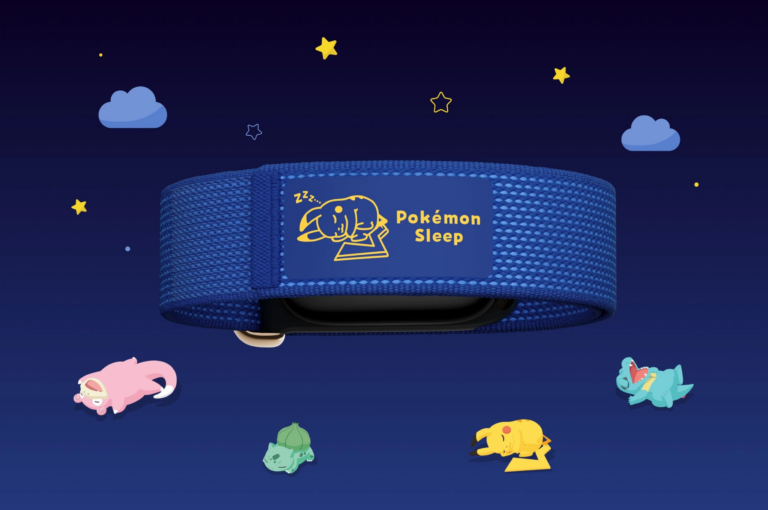
Google announced the Fitbit Air Special Edition on Thursday — a $129.99 fitness band in a “Sleepy Blue” colorway printed with a dozing Pikachu that converts nightly sleep data into in-game currency for one of the mobile gaming world’s most surprising behavioral-design experiments. Pre-orders opened the same day at the Google Store and Target; the band will begin shipping September 15.

Here is the consumer-decision fact buried in the marketing: the integration does not live in the hardware. Every compatible Fitbit and Google Pixel Watch already connects to Pokémon Sleep through the same Android Health Connect and Apple Health pipeline the special edition uses. The $99 standard Fitbit Air, the Charge series, and every Pixel Watch deliver an identical in-game experience for free to anyone who already owns one, as TechCrunch reported on the Pokémon Sleep collab. The approximately $31 premium above the standard Air buys a Pokémon-themed strap and a Snorlax-themed box. For Pokémon fans who want their wearable to look the part, that is a real value. For everyone else, it is optional.

What the Fitbit Air Actually Measures — and How That Data Reaches Snorlax

The Fitbit Air is a screenless recovery tracker Google announced in May 2026 as a direct competitor to the Whoop band — the major distinction being that the Fitbit Air carries no monthly subscription, as TechCrunch detailed at the Fitbit Air launch. At 12 grams with the band and 5.2 grams without — 25% smaller than the Fitbit Luxe and 50% smaller than the Inspire 3 — it is designed to be forgotten on the wrist, which is the point when you are trying to track sleep.

The hardware combines a photoplethysmography (PPG) sensor — the same light-and-photodetector array used in most fitness wearables — with an accelerometer to measure both heart rate and movement simultaneously. Google’s algorithms parse those signals into sleep stage classifications (light sleep, deep sleep, and REM) and calculate a Sleep Score based on duration and stage distribution, as TechCrunch covered in its Fitbit Air specs. Battery life runs up to seven days, and fast charging delivers a full day of use in five minutes. The device is water-resistant to 50 meters (164 feet).

Once that data exists in the Google Health app, the pipeline to Pokémon Sleep is three steps, per the official Pokémon Sleep setup guide:

  1. In Google Health settings, allow the app to write sleep data to Health Connect (Android) or Apple Health (iOS).
  2. Open Pokémon Sleep, go to Settings, and pair the device.
  3. Wear the tracker to sleep. The data syncs automatically each morning.

In-game, that data works as follows: the sleep duration tracked through Google Health produces a Sleep Score. That Sleep Score multiplies Snorlax’s Strength — which helper Pokémon have been building up by collecting Berries during the day — to generate a figure called “Drowsy Power.” The higher the Drowsy Power, the more Pokémon, including rarer sleep styles, gather around Snorlax when you wake up and open the app, per the Pokémon Sleep game mechanics guide. Nap data is also captured and contributes to the daily session. The sync is fully automatic — there are no manual export steps once the initial pairing is done.

Pokémon Sleep Is a More Serious Behavioral Experiment Than It Looks

Pokémon Sleep launched in July 2023 and immediately topped the global download charts in its debut week, according to mobile analytics firm data.ai. That velocity made it the most-downloaded game of that week worldwide — a remarkable performance for an app whose central mechanic is going to bed on time.

The premise is genuinely counterintuitive from a game-design perspective: players cannot play their way to better results by staying up longer, grinding harder, or spending money on the critical variable. The core resource — sleep — is produced only by genuinely going to sleep, on schedule, for a sufficient duration. Behavioral design researchers have argued for decades that the most powerful behavior-change mechanisms create intrinsic motivation by tying the reward directly to the target behavior, a principle developed through B.J. Fogg’s Persuasive Technology research at Stanford. Pokémon Sleep does this unusually well for a mobile game: the social proof of seeing the morning’s Pokémon haul, tied to last night’s actual sleep metrics, creates a feedback loop that players have described as genuinely changing their bedtime habits — not just their in-game stats, according to Bloomberg reporting from August 2023.

Early user reactions from the app’s 2023 launch period document exactly this shift. Where other sleep apps compete on dashboard sophistication, Pokémon Sleep competes on emotional stakes: you don’t want Snorlax to be weak tomorrow morning.

The collaboration is timed to Pokémon’s 30th anniversary, which the franchise has marked throughout 2026 with major product and gaming releases. It is also the first time Google has produced branded wearable hardware explicitly tied to a third-party app’s game mechanics — not just compatibility, but a device whose packaging and strap design communicate the app’s identity on the shelf. That is a meaningful signal about how seriously Google views Pokémon Sleep as a platform rather than a novelty.

Does Your Sleep Tracker Actually Know When You’re Asleep?

A word of honest context: consumer wrist-worn sleep trackers, including all Fitbits, are not medical devices and do not produce clinically validated sleep staging. Google’s own product footnotes state that sleep tracking features are “not intended to diagnose or treat any medical conditions and should not be relied on for medical purposes,” as the official Fitbit Air product documentation makes clear. The standard of truth for sleep staging is polysomnography, a laboratory test involving electrode-based measurement of brain activity, eye movement, and muscle tone — something no wrist band can replicate.

This limitation matters in the Pokémon Sleep context primarily because Drowsy Power is calculated from consumer-grade sleep metrics that may not perfectly reflect actual sleep quality. A reader who gets a lower Sleep Score some mornings should not assume their sleep was clinically problematic — only that the algorithm scored it lower. On August 21, 2026, a separate lawsuit was filed accusing smart ring maker Oura of misleading consumers about the clinical accuracy of its sleep tracking, according to TechCrunch. That case is specifically about Oura, not Fitbit, but it illustrates a broader industry question about how strongly consumer wearable makers can market sleep staging accuracy.

The Fitbit Air is also covered by a minimum age notice: the special edition is intended for ages 13 and up, while the Google Health Coach powered by Gemini — included via the bundled three-month Google Health Premium trial — requires users to be 18 or older, per the Fitbit Air Special Edition product footnotes. Younger users can use the basic sleep tracking without the AI coaching features.

What Does It Actually Come With, and How Does It Compare to What You Already Have?

If you already own a Fitbit Charge 6, Fitbit Luxe, any Pixel Watch, or most other recent Fitbit models, the answer for app functionality is no — you already have everything needed to connect to Pokémon Sleep through Health Connect or Apple Health, and the in-game experience will be identical. TechCrunch confirmed identical Pokémon Sleep compatibility across all supported Fitbit and Pixel Watch devices. The approximately $31 premium over the standard Air buys you the Sleepy Blue band with the silk-printed Pikachu and the Snorlax box — a statement piece for fans, not a functional upgrade.

If you are buying a new fitness tracker and are a Pokémon Sleep player, the standard Fitbit Air at $99 is competitive with both the premium Pokémon Sleep edition ($129.99) and with the Whoop subscription model (approximately $30 per month ongoing). The Air offers A-fib detection, SpO2 monitoring, heart rate variability tracking, and seven-day battery life with no ongoing fees after purchase, as detailed at the Fitbit Air original launch.

The bundle includes three months of Google Health Premium — which unlocks the Gemini-powered health coach and deeper analytics — before reverting to $9.99 per month, per the Google Health Premium trial terms. That three-month window is a meaningful trial period for users who have not decided whether AI coaching adds value to their routine.

Availability

The Fitbit Air Special Edition Pokémon Sleep is available to pre-order now:

  • United States: $129.99 at the Google Store and Target (online and in-store)
  • Japan: ¥19,800 (approximately $124 USD at August 28, 2026 exchange rates)
  • Ships: September 15, 2026
  • Includes: Three months of Google Health Premium at no additional cost (auto-renews at $9.99/month; cancel anytime)
  • Age: Intended for ages 13 and up; Google Health Coach features require age 18+

The standard Fitbit Air remains available at $99 and connects to Pokémon Sleep with identical in-game functionality.


Frequently Asked Questions

Does the Pokémon Sleep Fitbit Air give you better in-game results than a regular Fitbit?

No. The Pokémon Sleep integration runs entirely through the Android Health Connect or Apple Health API — the same pipeline all compatible Fitbit and Pixel Watch devices use. Any current Fitbit model that writes sleep data to Health Connect or Apple Health produces the exact same Drowsy Power calculations and Pokémon encounter rates as the special edition. The themed strap and packaging are purely cosmetic; the hardware inside the module is identical to the standard Fitbit Air, as TechCrunch reported on wearable compatibility.

How does the Health Connect pipeline actually work — and who can see my sleep data?

When you allow Google Health to link with Android Health Connect, the app writes your sleep stage and duration data to an on-device repository. Pokémon Sleep reads from that repository each morning with your permission — it sees sleep duration and stage classifications, not raw biometric signals. On iOS, the same flow runs through Apple Health instead of Health Connect. The data stays on-device in Health Connect; Pokémon Sleep reads what you authorize it to read, according to the Google Health setup instructions.

Is the Fitbit Air’s sleep tracking clinically accurate?

Consumer wrist-worn sleep trackers use PPG and accelerometry to estimate sleep stages — they are not medically validated devices. Google’s own product documentation states the feature is “not intended to diagnose or treat any medical conditions,” per the official Fitbit Air product footnotes. The sleep staging is useful for tracking personal trends over time, but a single night’s score should not be interpreted as a clinical measurement. For decisions involving sleep disorders or medical treatment, consult a healthcare professional.

Why has Pokémon Sleep managed to sustain sleep-habit changes that traditional health apps haven’t?

Pokémon Sleep’s behavioral design ties the in-game reward directly and exclusively to the target behavior — you cannot earn Drowsy Power any other way than actually sleeping. This is structurally different from step-counting apps where you can make up activity at the end of the day. The constraint is the feature: because the game literally requires you to go to bed on time and sleep for a sufficient duration, players who care about their Snorlax have described genuinely shifting their bedtime routines — not just their awareness of sleep, according to Bloomberg reporting from August 2023.

Source link