November 17, 2026:


People taking GLP-1 drugs eat roughly 200 to 400 fewer calories a day, according to the JAMA Summit Report on Obesity, now online at JAMA, while per-person US calorie supply has climbed from about 3,200 to almost 4,000 a day since 1970s agricultural policy changes. For the roughly one in nine US adults now on these drugs, and for anyone weighing coverage, the report’s message is that the medication lowers intake but does not change the food environment around it.
The report was presented at ObesityWeek 2026, which runs Nov. 14 to 17 in National Harbor, Maryland. Its authors conclude that no single intervention will be enough, and they call for broader insurance coverage, more clinician training in obesity care, tighter oversight of compounded GLP-1 drugs and food-policy changes.
The two figures are not a like-for-like comparison. Calorie supply measures food made available to Americans, not food eaten, and the report presents the drug effect and the supply figure separately. TechTimes places them side by side only to show scale: a few hundred calories a day is a real effect, set against a food supply that sits far above it.
The report also puts ultraprocessed foods at about 55% of the US diet. That share depends on a classification system, NOVA, introduced by Carlos Monteiro and colleagues at the University of São Paulo, and neither Codex nor the European Food Safety Authority offers a commonly accepted definition of ultraprocessed food.
On policy, the report cites Chile’s food-labeling and marketing rules and Mexico’s sugary-drink tax as population-level examples with measurable outcomes, and it notes that US city sugary-drink taxes have shown mixed effects.
The report says US obesity prevalence may be declining for the first time in decades, a shift it attributes mainly to GLP-1 use, while severe obesity continues to rise. A Gallup survey found that 11% of US adults currently use a GLP-1 drug for weight loss and 15% have ever used one, and it puts the 2026 national obesity rate at about 36.4% to 36.8%, down from a 39.9% peak in 2022.
An ObesityWeek analysis of national survey data by Muntner and colleagues found that severe obesity among adults 65 and older with Medicare coverage rose from 4.5% to 7.4%, or from about 1.3 million to 4.5 million people. AJMC reports that all observational analyses include Amgen-affiliated coauthors.
The report suggests that the Medicare GLP-1 Bridge and Medicaid BALANCE model could be expanded if successful. Part D plan sponsors, who would carry any expansion in that program, have not signed on in sufficient numbers so far. CMS delayed the Medicare Part D portion of BALANCE indefinitely on April 21, 2026, after sponsor applications fell short of an 80% threshold set for Part D enrollment. The Medicaid portion is proceeding.
CMS Innovation Center director Abe Sutton told Endpoints News that plans cited Part D instability. UnitedHealthcare’s Bobby Hunter, the insurer’s CEO of government programs, pointed to “notable challenges and outstanding questions with the currently planned structure.” The report’s authors want wider coverage, and the insurers that would have to provide it describe the design as unresolved.
The Bridge began July 1, 2026. Beneficiaries pay a $50 copay outside Part D protections: it does not count toward out-of-pocket costs, the low-income subsidy does not apply, a single central processor handles prior authorization in 2026, and the program runs through Dec. 31, 2027. Enrollment in a Part D plan is required, and eligibility covers adults with a BMI of 27 or higher plus a qualifying condition, or a BMI of 35 or higher, for Wegovy (pill and injection), the Zepbound KwikPen and Foundayo.
Juliette Cubanski of KFF set the $50 copay against a hypothetical beneficiary living on a $750-a-month Social Security check, calling it a lot of money for that person. The separate Bridge exists outside Part D because a 2003 law prohibits Part D weight-loss coverage.
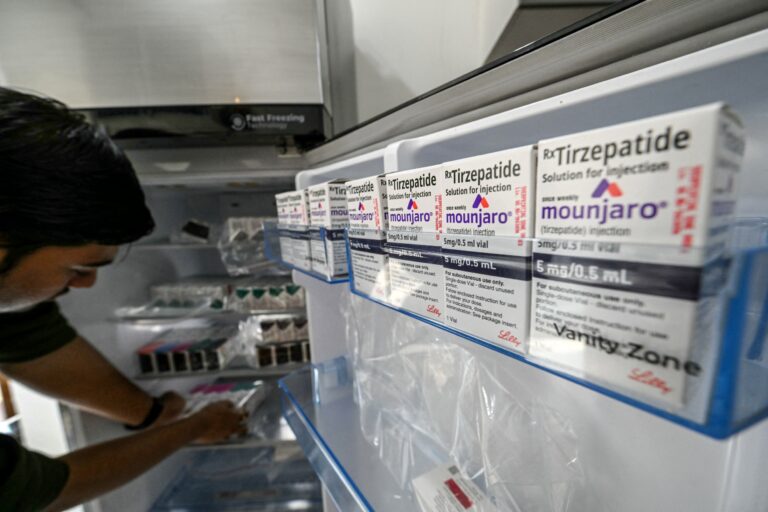
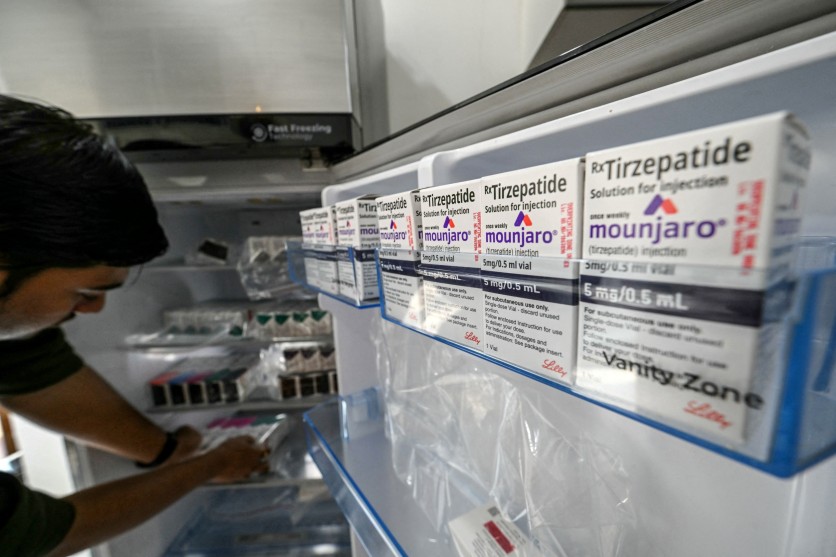
The report recommends enforcement against compounded copies outside shortage conditions, timely FDA action on nominations to the 503A Bulks List, adverse-event reporting for 503A pharmacies, clearer enforcement against interstate telehealth sales, and oversight of active pharmaceutical ingredient sourcing. FDA sent warning letters to 30 telehealth firms on March 3, 2026, and reiterated that compounded drugs are not FDA-approved. Another 25 letters followed on June 16, 2026, alleging misleading website claims about compounded semaglutide and tirzepatide.
Gallup says broader access to compounded versions may be part of why GLP-1 use is rising. Hims & Hers agreed in a March 9, 2026 settlement with Novo Nordisk to stop advertising compounded GLP-1s and to move patients to branded drugs when clinically appropriate, and on Nov. 6 it committed not to offer compounded versions of Lilly’s Zepbound or Foundayo.
That sets up a tradeoff no source quantifies, and it is TechTimes analysis, not a finding of the report. Enforcement against copies could narrow a low-cost channel that Gallup links to rising use, while Medicare Part D has no standard weight-loss benefit and the Bridge reaches only beneficiaries enrolled in Medicare. Whether coverage expansion arrives before enforcement tightens is a question the report’s recommendations leave open.
The report’s authors note that first-year discontinuation is common. A Truveta analysis of 125,474 adults published in JAMA Network Open found that 64.8% of people without type 2 diabetes and 46.5% of people with it stopped within a year. At ObesityWeek, an analysis reported by AJMC put 12-month persistence at 41.9%, and another found that 35.7% of 69,462 submissions for prior authorization were denied. A meta-analysis in eClinicalMedicine found people regained about 60% of lost weight within a year of stopping.
The report warns about upcoming SNAP and Medicaid work requirements and funding cuts, which cut against its call to strengthen food and health-care access. States must condition Medicaid expansion eligibility on work requirements by Jan. 1, 2027. An earlier Congressional Budget Office analysis of the House-passed bill projected 4.8 million more uninsured people in 2034 and a 5.2 million drop in federal Medicaid coverage; CBO has not published updated estimates for the enacted law.
On care delivery, the report asks for clinician training in obesity care, team-based care with dietitians and pharmacists, and annual multidisciplinary guidelines. It notes that bariatric surgery use remains under 1% among eligible people.
The JAMA Summit on Obesity met in May 2026 with support from the AMA Foundation. Participants included Rachel Batterham of Eli Lilly, Jason Brett of Novo Nordisk, Lotte Bjerre Knudsen of Aarhus University, Kim Boyd of Weight Watchers (WW) and Francesca Celletti of the World Health Organization, and Marion Nestle gave the keynote. Lilly and Novo Nordisk sell the drugs whose broader coverage the report supports, so readers should weigh that commercial interest alongside the report’s recommendations.
WHO issued its first obesity guideline on GLP-1 therapies on Dec. 1, 2025, and conditionally recommends long-term use for most adults, with intensive behavioral programs offered as an option. The guideline was later published in JAMA. Both documents treat obesity as a chronic condition that needs sustained care.
Possibly. The JAMA report says prevalence may be declining, mainly because of GLP-1 drugs, while severe obesity keeps rising. Gallup’s 2026 survey puts the rate at about 36.4% to 36.8%.
It could, though no source quantifies the effect. The report recommends enforcement against copies outside shortage conditions, and Gallup says broader access to compounded versions may be part of why use is rising. Part D law also prohibits weight-loss drug coverage, so there is no standard benefit to replace that channel.
CMS has extended the Bridge through Dec. 31, 2027. The report suggests the Bridge and Medicaid BALANCE could be expanded if they succeed, but the Bridge is currently scheduled to end on that date.
No. FDA has reiterated that compounded drugs are not FDA-approved, and compounded GLP-1 products are not assessed for safety, effectiveness or quality the way approved drugs are.