Gallipoli Launches: Critics Hail WW1 FPS as Series Best, Steam Start Mixed

August 22, 2026:

Gallipoli Launches: Critics Hail WW1 FPS as Series Best, Steam Start Mixed
Galliopi
Blackmillgames.com

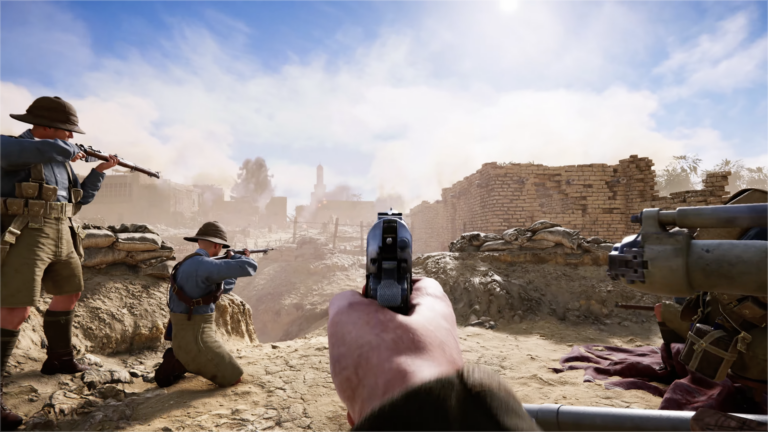
BlackMill Games has done something the entire Western video game industry has largely avoided for a decade: put players on the winning side at Gallipoli. The Dutch indie studio’s fourth entry in the long-running WW1 Game Series launched August 20, 2026 for PC (Steam, Epic Games Store, and Microsoft Store), PlayStation 5, and Xbox Series X|S, bringing 50-player multiplayer combat to the Ottoman Fronts — a theater other shooters have almost entirely left alone. Critics who reviewed the game before launch score it strongly; the Steam community is more divided. Both reactions, it turns out, fit a pattern the series has followed before.

Front Left Unexplored

The Gallipoli campaign of 1915–16 was one of the most catastrophic Allied operations of World War I. Britain, France, Australia, New Zealand, and India combined to attempt a seizure of the Dardanelles strait, intending to force the Ottoman Empire out of the war and open a supply route to Russia. They failed decisively: roughly 500,000 combined casualties, an Allied withdrawal in January 1916, and an Ottoman victory that reshaped the modern world. Mustafa Kemal, who commanded Ottoman defenses at critical moments, later became the founder of the Republic of Turkey. The April 25 landing at Anzac Cove became Anzac Day — the most significant commemorative holiday in Australia and New Zealand.

In Turkey, the battle is called Çanakkale, and it holds much the same weight that Stalingrad holds for Russia. The game appears to know its audience: BlackMill published it as Çanakkale on the Turkish Xbox store, and included Turkish voice-over support alongside English — a distinction no major WW1 game has made before.

“With Gallipoli, we’re highlighting a front that’s often overlooked, despite its importance,” BlackMill Games founder Jos Hoebe said when the game was announced through IGN in August 2025. “Others have explored it before, but this game lets us go deeper, offering a more accurate and complete portrayal in line with the rest of the WW1 Game Series.”

What Arrived on Shore

Gallipoli runs on Unity 6 and supports up to 50 simultaneous players in its primary game mode, Expedition — an attack-and-defend structure built around momentum rather than kill counts. Attackers gain momentum by capturing objectives or inflicting heavy enough losses on defenders to break their resistance; defenders win by holding their ground and exhausting the attackers’ advance. DualShockers reviewer Jaime Tugayev describes it as a “much-refined reimagining of the tickets system” present in other large-scale shooters, noting that the mechanic forces attackers to keep moving and prevents the defensive camping that can stall other large-scale FPS games.

The core gameplay philosophy remains what it has been across all four WW1 Game Series entries: one-shot-one-kill ballistics, deliberate weapon handling, and suppression mechanics that degrade aim and reload speed based on incoming fire — with familiarity with a specific weapon gradually improving those stats over time. Players choose from 10 historical classes, including Officer (squad coordination), Rifleman, Sniper, Heavy Machine Gunner, and Stretcher Bearer (the game’s medic role), each with access to more than 50 historically accurate weapons and equipment options drawn from British and Ottoman arsenals. AI bots fill any open slots in public matches, ensuring populated lobbies regardless of player count — a critical design decision for a game in a niche genre.

Five maps shipped at launch: the contested beaches of Anzac Cove and V Beach (including a landing scenario aboard the converted collier SS River Clyde, from which of the first 200 troops to disembark at the actual 1915 battle, only 21 reached the shore); the sun-baked desert surrounding Ctesiphon; the battered streets of Kut al-Amara; and the Suez Canal. This range — from beach assaults to open desert — makes Gallipoli the most geographically diverse entry in the series, and the first to move entirely outside Europe.

New quality-of-life additions include crouched sprinting to keep soldiers below exposed trench lines, on-screen squad markers, and expanded mechanical roles for the Stretcher Bearer and Heavy Machine Gunner classes.

How Critics See It

The review embargo lifted alongside the August 20 launch, and the early critical reception is strong. DualShockers gave the game a nine out of ten — among the highest scores the outlet awards — calling it “a resounding success for BlackMill Games” and “a strong contestant for best FPS of the year so far.” Reviewer Tugayev praised the weapon weight, map detail, and sound design, while noting a cluttered default HUD arrangement, the lack of variety in game modes beyond Expedition, an AI that struggles with healing downed players, and sniper scopes he described as blurry. CGMagazine awarded it nine out of ten, calling it “an all-around improvement for the World War I series, bringing sharper visuals and better gameplay to one of the conflict’s least-explored fronts.” Metacritic critic scores were scheduled to become available today.

Pre-launch media reactions had been encouraging. At PAX East in March, IGN’s floor preview noted the game might be the best WW1 game the studio has produced. GamingTrend’s Jackson Lustberg wrote ahead of release that Gallipoli would “probably be my go-to FPS when it’s released.”

What Steam Is Saying — and Why That History Matters

Steam’s user review count on launch day sits at a “Mixed” rating, with roughly 65% of a few hundred early reviews positive. Concerns in the reviews point to game balance issues and mechanics complaints that are typical of online multiplayer games in their first days of wide play. That matters less for this particular series than it might for others.

Isonzo, Gallipoli’s immediate predecessor, followed an essentially identical trajectory: early “Mixed” reception at launch gave way, as the playerbase found its footing and patches arrived, to an 86% positive rating from more than 7,900 Steam reviews today. Verdun, the series’ 2015 debut, now holds 88% positive from more than 17,000 reviews. BlackMill’s pattern is not to launch smoothly and stay there, but to launch roughly and improve — and the studio’s track record with post-launch support supports that pattern. The first free content update for Gallipoli, adding a new map called Ali Al Muntar, was already in its final stages as of the launch date, the developer confirmed on Steam.

The gap this franchise occupies, as one early reviewer put it, is narrow by design: “too slow and too punishing for the Call of Duty player, too permissive for the ARMA crowd.” That specificity is both a commercial constraint and a guarantee — the players who want what BlackMill makes can reliably find it here, and the players who want something else were never in the target audience.

Pricing and Editions

The base game is priced at $29.99, with a 25% launch discount on Steam, Epic Games Store, and PS5 bringing it to $22.49 — and a 20% discount on Xbox Series X|S during the same window. The discount runs through September 3. Full crossplay between PC, PS5, and Xbox Series X|S is available from launch.

Cosmetic DLC packs — smaller and cheaper than those offered for Isonzo, designed around individual subfactions — are available at $6.99 each. Premium editions bundle the base game with two cosmetic packs: the Ottoman Empire Edition and the British Empire Edition are priced at approximately $39.99, with the First Expedition Edition at approximately $49.99, all with corresponding launch discounts applied. An Expeditions Pass bundles the base game with four cosmetic packs and the upcoming Second Expedition DLC. The WW1 Game Series Franchise Complete Bundle, which packages all four games and their DLC, is also available for players who want to start from Verdun.

Is Gallipoli Worth Getting Into Now?

For existing WW1 Game Series fans, the answer from every critical source is yes. Gallipoli represents the most polished and geographically ambitious entry the series has produced, adds mechanical refinements that make squad play more fluid, and covers a front that is genuinely underrepresented in the genre. The historical setting carries more resonance — and more complexity — than most WW1 games attempt.

For newcomers to historical FPS games, the picture is more nuanced. Gallipoli sits in a deliberate niche between the accessibility of Battlefield 1 and the hardcore simulation of ARMA — which means it will reward players who find Call of Duty too shallow and ARMA too demanding, while frustrating everyone else. The bot fill system means lobbies will be playable at any player count, removing one of the usual risks of buying into a niche multiplayer game at launch.

The September 3 discount deadline is the practical consideration. The current 25% price reduction on Steam and PS5 makes the buy-now argument straightforward for anyone in that niche. The studio’s track record with post-launch patches and free map updates — and Isonzo’s trajectory from “Mixed” to “Very Positive” — suggests the game will likely be stronger in three months than it is today.


Frequently Asked Questions

Is Gallipoli good despite the mixed Steam reviews?

Based on early critical reviews — including a nine out of ten from DualShockers and a nine out of ten from CGMagazine — the game appears to be the strongest entry BlackMill Games has released. The mixed Steam reception at launch follows the same pattern as Isonzo, which launched to similar user hesitation before stabilizing at 86% positive. Mixed Steam scores at launch are a poor predictor of long-term quality for this specific franchise.

Does Gallipoli require a large player base to be enjoyable?

No. AI bots fill all open slots in public matches automatically, and can also be enabled in custom matches. The game is built around bots for hybrid human-plus-bot environments, which protects against the dead-lobby problem common in niche multiplayer games.

How does Gallipoli compare to Battlefield 1 and Hell Let Loose?

Gallipoli sits deliberately between them. It is slower and more lethal than Battlefield 1 — one accurate rifle shot kills outright — but more accessible than Hell Let Loose’s rigorous communication requirements and slower pace. Where Battlefield 1 covers the Ottoman Front briefly as a backdrop, Gallipoli makes it the entire map pool and simulates its specific weapons, class structures, and tactical conditions with the franchise’s characteristic historical depth.

What free content is coming after launch?

BlackMill confirmed that a new map called Ali Al Muntar was already in its final development stages as of the August 20 launch. The studio confirmed a multi-year roadmap structured around “Expeditions,” each covering a different set of Ottoman Front campaigns. The first expansion covers the Gallipoli Peninsula and Mesopotamia campaigns; a Second Expedition DLC expanding to the Sinai and Palestine campaigns is also in development.

Source link