HomeAuto From First Trail to First Wheelie: Why the Yozma IN 11 Is the Most Interesting Electric Dirt Bike Under $1,500
From First Trail to First Wheelie: Why the Yozma IN 11 Is the Most Interesting Electric Dirt Bike Under $1,500
November 25, 2026:
Every dirt rider remembers the first time the front wheel came up on its own. Too much throttle at the bottom of a hill, the bars go light, and for half a second your brain has to choose between chopping the power and looping the bike. Most people learn to wheelie by surviving that moment a few hundred times.
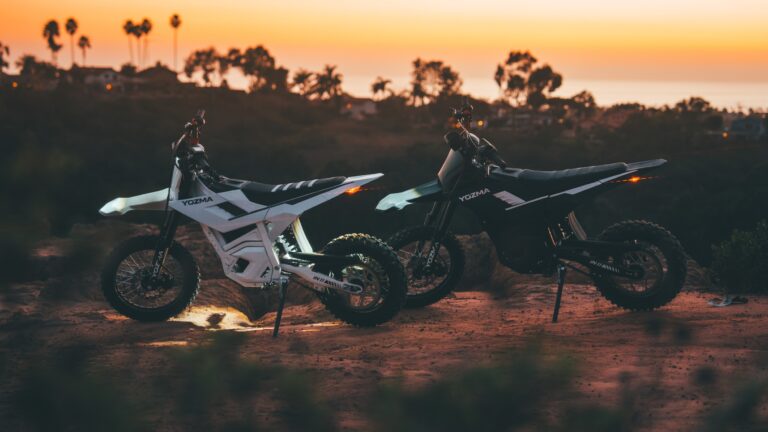
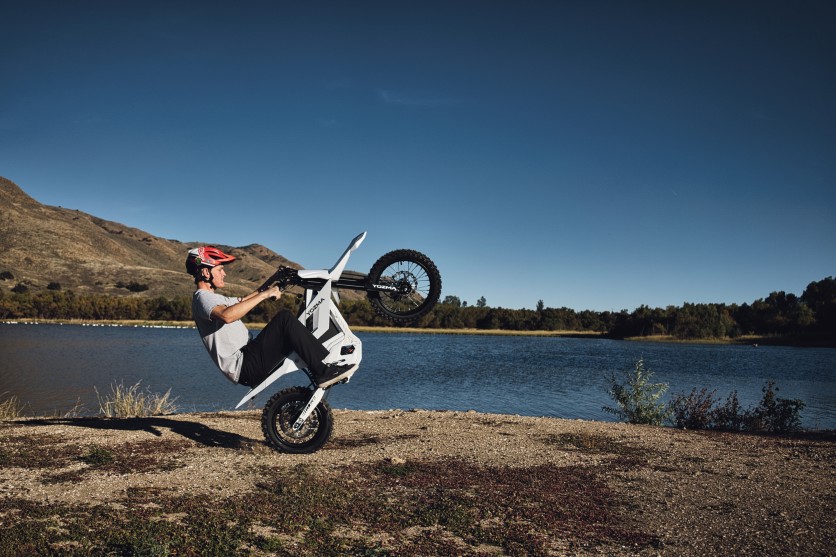
Yozma’s new IN 11 is the first budget electric dirt bike we have seen that treats that moment as a feature rather than an accident. Switch the dashboard to Mode 4 and a gyroscope inside the motor controller watches the bike’s pitch, trims the power to hold the front wheel at a set angle, and steps in if the lift goes too far. Wrap that around 4,800 watts of peak power, a 52-volt battery, a magnetic emergency switch and a one-button reverse, and you have a bike that is as much a training partner as a toy.
At its current $1,399 price the IN 11 sits in the same bracket as the Heybike Villain and Anyland Rev Pro, and $400 above Yozma’s own IN 10. So the question is not whether it is powerful. It is whether the way Yozma has spent that power makes it a better bike to learn on and grow into. Having compared it line by line against its predecessor and its three closest rivals, we think it does.
Power that climbs, delivered in steps
The headline figure is 4,800W peak, up from 2,600W on the IN 10. The figure that matters more on a trail is 200 N·m of torque on a 134.5 lb bike. Put a 150 lb teenager aboard and the motor is moving about 285 lb all-in, roughly 75 percent more peak power per pound than the same rider gets on an IN 10. That extra margin is what lets Yozma rate the climb at 40 degrees instead of 10’s 30. On a loose, rutted fire road, that is the difference between walking the bike up the last pitch and riding over it.
Electrek, which has tested every Yozma to date, wrote that the IN 11’s 200 N·m “feels like it belongs on a much more expensive e-moto.” Electric Cycle Rider, whose 11-year-old test rider races 65cc and 85cc motocross bikes, found the first mode “mellow and subdued” and said that by mode three the bike was “scooting along well enough to keep an adult entertained.”
That ladder is the point. Retail listings put Eco at 18.7 mph, Sport at 35.6 mph and Race at the full 45 mph. A new rider spends a weekend in Eco learning where the balance point is, moves to Sport once the trail feels familiar, and opens up Race only when there is room to use it. VICE’s reviewer, who found the extra power “easy to feel” off the line, recommended exactly that progression.
Stunt Mode, explained properly
Mode 4 is what separates the IN 11 from every other 45 mph mini e-moto, so it is worth explaining what actually happens when you select it.
In other words this is a hardware-level system that measures the bike’s pitch, not a throttle map. In Stunt mode you ride as normal, pull up on the bars to lift the front wheel, and the controller takes over the fine work: it reads the bike’s pitch many times a second and modulates motor output to hold the wheel at the target angle. Yozma quotes a supported window of 15 to 40 degrees, and its anti-tip assistance pulls power back if the pitch runs past the limit. The controller handles the throttle finesse; the rider still handles balance, steering and the rear brake.
In Stunt mode the controller holds the front wheel at a set angle; the rider still steers and covers the rear brake. Yozma
Two things make this a better first-wheelie system than the alternatives. The first is where the window starts. The Anyland Rev Pro, the only other bike in this price range with an auto-wheelie controller, offers fixed presets of 25, 35 and 45 degrees. The IN 11’s 15-degree floor is a far gentler place to learn: the front wheel is a few inches up, the bike is still fully steerable, and a bail-out means easing off rather than crashing. The second is what you are left with once you have learned. The Rev Pro tops out at 3,000W and 34 mph. The IN 11 is a genuinely powerful electric dirt bike in its own right and has a 45 mph trail bike underneath you.
Early reviews bear that out. VICE’s Sam Watanuki, who owns an IN 10 Pro and says his unassisted wheelie attempts end “on my butt” most of the time, got into brief wheelies on the IN 11 “without the wipeouts I’m used to” and said the assist “worked better than I did.” Electrek likened it to “digital training wheels,” and RunPlayBack found it most effective for the slow, deliberate wheelies a learner should start with. A wheelie assist still demands practice, protective gear and a clear, flat space, and Yozma’s own guidance says as much. But all three riders confirm the system does what Yozma says it does.
Control systems that take the fear out of learning
Yozma pitches the IN 11 as fun first and power second, with control running through everything. The control hardware is where it pulls clear of the budget pack.
Magnetic emergency switch. A lanyard clips to the rider; pull it off its magnetic base and the motor cuts instantly. The IN 10 does not have one, and VICE called its arrival “a no-brainer” for new riders. For a parent handing a 45 mph machine to a 14-year-old, it is the most reassuring line on the spec sheet.
High-visibility brake light. Electrek’s main complaint about the IN 10 was its lack of rear lighting. The IN 11 adds a bright brake light to the headlight, so riders following on a dusk trail can see when the bike ahead is slowing.
One-button reverse. Hold the R button on the left bar, roll the throttle, and the bike backs up. It sounds trivial until you have tried to walk a 134 lb bike backwards out of a rut, off a trailer or around a tight garage. Reverse is normally found on far pricier machines such as the $5,699 Talaria Komodo; among the IN 11’s direct rivals only the Heybike Villain lists a reverse-assist function.
Dual hydraulic disc brakes. Electric Cycle Rider called the brakes “a standout” with “a surprising amount of stopping power,” RunPlayBack called them “excellent” and “actually usable,” and Electrek said they are “more dialed in” than the IN 10’s. On a bike that will spend time with its front wheel in the air, the rear brake is also the manual override for every wheelie.
Full suspension. A hydraulic fork and a nitrogen-charged rear shock soak up roots and washboard, and RunPlayBack praised the fork for handling rough ground “without drama.” It is tuned for play riding: backyard loops, fire roads and the terrain a 14/12-inch bike belongs on.
Weatherproofing and the dashboard. An IPX6 rating covers the dust of a dry trail as well as rain and puddles, and an angle-adjustable color display stays readable whether you are seated, standing or mid-wheelie.
Range: the number you will actually see
The 52V 27Ah battery holds 1,404 Wh, 25 percent more than the IN 10’s 1,123 Wh. Yozma’s 55-mile claim is an Eco-mode, ideal-conditions figure and should be read that way. Electrek expects 20 to 30 miles when riding hard and said its testing suggested better range than comparable bikes. On a mini e-moto, 20 to 30 hard miles is a long afternoon with margin to get home.
The battery is removable and key-locked, so it can charge indoors while the bike stays in the shed. A full charge takes about six hours on the included charger, which runs off any ordinary wall outlet.
The IN 11’s 43.3-inch wheelbase is 1.6 inches longer than the IN 10’s, which steadies the bike at speed and during wheelies. Yozma
IN 11 vs IN 10: what changed, and why
The IN 10 is the bike that made Yozma. Electrek called it “unstoppable” at its price and it carries a 4.8-star average across more than 1,200 reviews on Yozma’s site. The IN 11 does not replace it: the two share 14/12-inch wheels and the same 3 ft 11 in to 5 ft 11 in rider range, and sit $400 apart. Here is how they compare, using Yozma’s own specification sheet.
Feature
IN 10
IN 11
What it means on the trail
Price
$999 (Nov 2 to Dec 15)
BFCM limitedly priced at $1399
$400 buys everything below
Power
2,600W
4,800W
85% more peak power: harder launches, steeper climbs, less bogging under an adult rider
Top Speed
40 mph
45 mph
A higher Race ceiling; Eco and Sport caps still keep beginners in check
Max Range
53 miles
55 miles
Modest on paper because the IN 11 spends its bigger battery on power; real-world range is better than the IN 10’s
Battery
48V 23.4Ah (1,123 Wh)
52V 27Ah (1,404 Wh)
25% more energy; higher voltage means less sag under hard throttle
Torque
146 N·m
200 N·m
37% more torque; climb rating rises from 30° to 40°
Charger
AC 100 to 240V, 50Hz
AC 100 to 240V, 50Hz
Same charger, any wall outlet; about six hours to full
Brakes
Heavy-duty hydraulic brakes
Dual hydraulic brakes
Hydraulic discs at both wheels; reviewers rate them sharper and better matched to the extra speed
Suspension
Hydraulic suspension
Hydraulic fork system and rear shock absorption
Front and rear both damped, tuned for a lighter, more agile rider
Tire Size
14/12 in
14/12 in
Same compact footprint
Waterproof
IPX6
IPX6
Adds a dust-ingress rating for dry trails, with splash protection for rain and puddles
Display
Colorful LED
Colorful LED
Angle-adjustable on the IN 11, readable standing up or mid-wheelie
Max Payload
265 lb (Beginner Friendly)
220 lb (Agile & Playful)
Tuned for a lighter, more agile rider; see below
Riding Modes
3 modes
Eco / Sport / Race / Stunt
Adds a dedicated wheelie-assist mode with anti-tip assistance
Reverse Gear
None
One-button reverse
Back out of ruts, trailers and garages without lifting a 134 lb bike
New features
None
One-touch wheelie, reverse gear, and high-visibility brake light
The skill-building package, backed by the magnetic emergency switch
What got better
Almost everything you can measure. The power and torque increases change the bike’s character: the IN 10 is a quick trail bike for a teenager, while the IN 11 has enough reserve to carry a 180 lb adult up a hill without running out of breath. The higher-voltage battery matters as much as its capacity, because at 52V the motor draws less current for the same power, so the last third of a ride feels more like the first. The longer wheelbase and sharper brakes are there to manage the extra speed. And the emergency switch and brake light answer the two most common criticisms of the IN 10.
Why the payload rating is a feature, not a footnote
Yozma labels the IN 10 “Beginner Friendly” and the IN 11 “Agile and Playful,” and the 220 lb rating follows from what the IN 11 is for. A wheelie-assist controller is calibrated around a rider mass; its pitch targets and anti-tip thresholds behave most predictably when the bike is not carrying its maximum structural load, and the suspension stays in its sweet spot on landings. Rating the IN 11 at 220 lb keeps the stunt system inside the window it was tuned for, and it is the same rating Sur-Ron puts on the Light Bee X. Riders above it are well served elsewhere in the range: the IN 10 carries 265 lb and the larger-wheeled IN 10 Pro carries 330 lb.
The same thinking runs through the chassis. Yozma put the larger battery and motor low in the frame, and Electrek reported that the IN 11 turns “a lot tighter” and feels “lighter” than cheap rivals: a low centre of mass is exactly what gives a wheelie a predictable balance point. The longer wheelbase steadies the bike at speed, and the 29.5-inch seat lets most teens flat-foot it. The result is a bike that feels planted in exactly the moments a learner needs it to.
How the IN 11 compares with its closest rivals
The honest competitive set for a $1,399 mini e-moto on 14/12-inch wheels is three bikes: the Heybike Villain, launched in January 2026 and the IN 11’s most direct spec-for-spec rival; the Engwe Eagle, the price leader; and the Anyland Rev Pro, the only other bike with an auto-wheelie controller. Figures are manufacturer claims at the time of writing.
Specification
Yozma IN 11
Heybike Villain
Engwe Eagle
Anyland Rev Pro
Price (sale / regular)
$1,399 / $1,599
$1,199 / $1,299 (sold out at time of writing)
$799 / $1,199
$1,299 to $1,399 / $1,799
Peak power
4,800W
~4,160W
3,200W
3,000W
Top speed
45 mph
45 mph (44.3 tested)
45 mph (about 40 tested)
34 mph
Battery
52V 27Ah (1,404 Wh)
52V 26Ah (1,352 Wh)
52V 27Ah (1,404 Wh)
48V 22.5Ah (1,080 Wh)
Claimed range
55 mi
50 mi (about 20 tested)
55 mi
48 mi
Riding modes
4 (Eco / Sport / Race / Stunt)
3 (20 / 38 / 45 mph)
3
3 (12 / 22 / 34 mph)
Wheelie assist
Yes, 15° to 40°, anti-tip
No
No
Yes, 25° / 35° / 45° presets
Reverse
One-button
Reverse assist
No
No
Magnetic emergency switch
Yes
Yes
Yes
Not listed
Brake light
Yes, standard
Tail light optional ($50)
Headlight only
Headlight only
Brakes
Dual hydraulic disc
Dual hydraulic disc + regen
200 mm hydraulic disc
Hydraulic disc
Suspension
Hydraulic fork + nitrogen shock
150 mm hydraulic fork + 40 mm rear shock
Full suspension (basic; bottoms out under 200 lb per Electrek)
Dual adjustable hydraulic
Warranty
12 months, lifetime support
12 to 24 months
12 to 24 months
12 months
Where they are equivalent. All four ride on 14/12-inch wheels, use mid-drive motors with chain drive, carry a removable 52V or 48V battery and stop with hydraulic discs. The Villain and Eagle match the IN 11’s 45 mph ceiling, and the Eagle matches its battery capacity exactly. On a flat trail in a middle mode, a rider would struggle to separate the three 52V bikes.
Where the IN 11 pulls ahead. It has the highest peak power of the group. It is the only bike here with four modes, the only one with a stunt mode and anti-tip assistance at this speed level, the only one with a true one-button reverse, and the only one that pairs a standard brake light with the emergency switch. It also has the deepest record of independent testing: Electrek, VICE, Electric Cycle Rider and RunPlayBack all rode it within a month of launch, and Electrek’s conclusion was that Yozma’s edge is “brand trust, build quality, braking, handling, and range.”
What the price buys. The Engwe Eagle is cheaper, but it gives up 1,600W of peak power, the stunt mode, reverse and brake light, and Electrek found its basic suspension bottoming out under a 200 lb rider. The Rev Pro has the wheelie controller but not the power or the speed to grow into. The Villain is the closest match on paper and lacks the stunt mode entirely. The IN 11 is the only bike in the set that puts all of it in one frame.
Step up a tier and the picture changes again. A 2026 Sur-Ron Light Bee X or Segway Xaber 300 brings 10,000W to 21,000W peak on full 19/18-inch wheels, at roughly $4,700 to $5,300. Tellingly, the newest Sur-Ron now ships with its own two-level wheelie-control system, which shows where the IN 11’s party trick sits in the premium tier. The IN 11’s achievement is bringing that controller technology down to under $1,500.
Who it is for, and our verdict
The IN 11 is an electric dirt bike for teens and adults alike: riders aged 14 and up, between 3 ft 11 in and 5 ft 11 in, up to 220 lb. That covers most teenagers and plenty of adults who want a second, more playful bike beside a full-size machine. VICE’s reviewer put his son on it and reported the bike fit him “to a T.” Taller or heavier riders have the IN 10 Pro, with its 17/14-inch wheels, in the same family.
It is also an adult electric dirt bike for people who have never wheelied and would like to, without looping a 250 lb gas bike in a car park. That is a new category, and the IN 11 is currently the most complete entry in it.
A few practical notes. The bike is off-road only and not street legal, lights notwithstanding. Budget for a helmet, gloves and knee and elbow protection, which Yozma discounts by 30 percent when three accessories are added to an order. The bike and battery ship separately and may arrive on different days. Assembly takes about an hour; Electrek called it “quicker and easier than any other emoto I’ve built.”
On price, the IN 11 launched on October 22 at $1,499 after a $1,299 early-bird window, and Yozma’s published holiday schedule has the black model at $1,399 through November 30 before it returns to $1,499 in December; the white model, which began shipping in mid-November, is $1,499. The same bike is on Amazon at matching prices. Yozma, a Denver-based brand founded in 2025 and the North American dirt-bike partner of Belgium’s national football team, backs it with a 12-month warranty, free shipping in the continental US and lifetime customer support, and showed an IN 11 Pro at EICMA in Milan this month ahead of a European launch next year.
TechTimes verdict. The Yozma IN 11 Electric Dirt Bike is the 45 mph mini e-moto that has thought hardest about what happens between a rider’s first trail and their first wheelie, and it backs that up with the strongest power, the best control hardware and the most independent testing in its class. For a teenager with a safe place to ride, or an adult who wants the most fun bike in the garage, it is our pick under $1,500 this holiday season.
Where to buy: Yozma official site (yozmasport.com/products/in-11) or the Yozma Amazon store.