HomeAuto Film Family Is First Horror to Depict Child Paranoia from Inside Anticipatory Grief
Film Family Is First Horror to Depict Child Paranoia from Inside Anticipatory Grief
August 23, 2026:
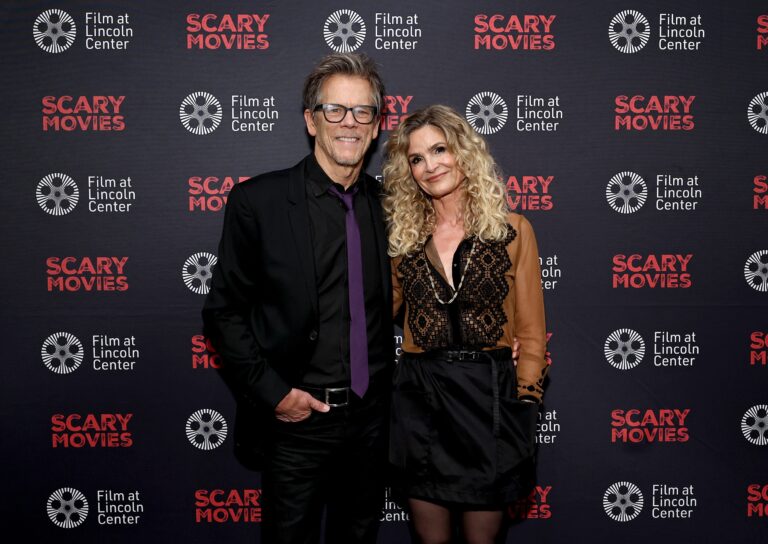
Kevin Bacon and Kyra Sedgwick attend Scary Movies XIV – “Family Movie” at Lincoln Center for the Performing Arts on August 19, 2026 in New York City. Jamie McCarthy/Getty Images
The trailer for Family, the debut feature from writer-director Benjamin Finkel, dropped Thursday — and the footage does not lead with a monster. It leads with a house where somebody is dying and a child who has decided she can do something about it. Ten-year-old Johanna paints a birdhouse blue with gold stars, plants it in the yard, and calls for a good spirit to save her father from cancer. What arrives, the Bloody Disgusting trailer exclusive suggests, is not what she invited. The film opens in limited theaters and on major rental platforms September 25, 2026. What Finkel captured on screen — before it had an official diagnosis — is one of the most clinically under-recognized conditions in pediatric mental health: anticipatory grief in a child whose brain does not yet have the regulatory hardware to contain it.
That is not a loose metaphor for a hard time. It is a neurological description of what happens when prolonged terror runs through a developing prefrontal cortex that cannot suppress it.
What Anticipatory Grief Actually Is
Anticipatory grief was formally named by psychiatrist Erich Lindemann in 1944 to describe the phenomenon of grieving a loss before it occurs — a grief experience clinically distinct from post-loss bereavement. The loss has not happened. But the brain’s predictive machinery has already registered the incoming rupture and begun processing it. The result is not grief for the person, who is still present, but grief for a future in which they are not.
In adults, the pattern includes depression, anxiety, pre-emptive identity reorganization, and sometimes deliberate emotional withdrawal from the dying person as a form of self-preservation. In children, the picture is categorically different — and far less studied. Children grieve developmentally, meaning their capacity to sustain intense emotion is physiologically limited. They oscillate between grief reactions and apparent normalcy, between crying and playing, in ways adults systematically misread as resilience or indifference. What looks like a child who does not understand or does not care is frequently a child who cannot sustain the emotion long enough to display it conventionally — a pattern clinicians now call the intermittent grief response, documented in research on child grief patterns from caregivers.
For Johanna, the terror of her father’s decline does not arrive as depression. It arrives as a persecutory fantasy: a conviction that a malevolent force has entered the house and is turning her parents against her. This is what developmental psychologists call displaced affect — the unconscious redirection of an emotion too large to bear (the anticipated loss of a parent) into a form the psyche can engage with (a supernatural enemy that can be identified, confronted, and theoretically defeated). The displaced affect grief hallucinations children literature has documented this response in nonpsychotic children aged 9 to 14 experiencing family loss.
The film holds open whether the entity is real. What the science does not hold open is whether this response is pathological. It is not. It is documented.
Why the Child Brain Specifically Generates This
The prefrontal cortex — the brain region responsible for top-down suppression of emotional alarm signals from the amygdala — does not reach functional maturity until a person’s mid-twenties. In a 10-year-old, it is an early-stage regulatory system encountering a signal load it was not built to handle. Research confirms that amygdala prefrontal cortex developmental immaturity means prefrontal-amygdala connections remain immature during childhood, becoming adult-like only during adolescence.
When a child is experiencing prolonged anticipatory grief over a parent’s terminal illness, the amygdala — the brain’s threat-detection center — enters a sustained state of hyperactivation. Anxiety, hypervigilance, and sleep disruption are standard outputs of this state. The prefrontal cortex, in an adult, would dampen these signals through executive control. In a child, it cannot do this reliably. The result is a nervous system running on near-continuous high alert, without the top-down suppression that would prevent that state from generating perceptual distortions.
Research on bereaved children and adolescents — specifically those experiencing pre-loss anticipatory grief — shows elevated rates of negative cognitions: persistent beliefs that something terrible is about to happen, that the environment is unsafe, that the adults around them cannot be trusted. A comprehensive review of parental cancer impacts children emotionally confirms that children’s psycho-emotional responses differ significantly by age and disease stage. In cases where the social support network has simultaneously collapsed — as it has for Johanna, whose mother is consumed by solo caregiving — the clinical evidence indicates this can extend into psychotic-spectrum presentations: vivid perceptual distortions that are indistinguishable, from the inside, from external reality.
This is not Johanna making things up. Her brain is doing exactly what developing brains do under sustained, uncontained terror. It is generating a version of reality that the terror can inhabit.
What Happens to Children Clinicians Are Not Watching
The largest unstated clinical problem is not what happens to children who are recognized as anticipatory grief sufferers. It is what happens to children who are not recognized as such — which is most of them.
Children in households with a terminally ill parent present symptoms that clinicians trained in standard behavioral frameworks routinely misfile. The intermittent grief response means a child who appears fine one afternoon and paranoid the next is not flagged as grieving; they are flagged as behaviorally dysregulated. The displaced affect that produces a “my parents are trying to hurt me” narrative looks, to an underprepared clinician or school counselor, like oppositional behavior, attention-seeking, or the opening of a safeguarding concern — not a grief response. A study of parental cancer invisible clinical practice found that patients’ children are “typically invisible in clinical practice,” a description the study applied specifically to a population at elevated risk for psychosocial harm.
The DSM-5-TR only formally classified Prolonged Grief Disorder as a diagnostic category in 2022. Anticipatory grief in children remains outside most standard clinical frameworks, with no formal diagnostic criteria of its own. The children of terminally ill parents are, in the clinical literature’s language, “typically invisible in clinical practice.”
Finkel began writing this story at fourteen, shortly after losing his father to cancer. He did not have a clinical vocabulary for it. Most of the children living through this do not either. Most of the adults around them do not recognize what they are watching.
Why a Child Builds a Spirit Vessel
The birdhouse is the film’s most precisely realized element — and its most anthropologically grounded. Blue, egg-shaped, painted with gold stars: Johanna’s ritual object is a vessel designed to attract and contain a spirit. The tradition it participates in is ancient and specific.
Within Jewish folklore — and the film places the family in a clearly Jewish cultural context, complete with a rabbi grandfather played by Allan Corduner — the closest analog is the dybbuk: a dislocated spirit from Kabbalistic and Ashkenazic tradition, typically understood as the soul of a deceased person who has not found rest. The concept was codified most influentially in S. An-sky’s 1914 Yiddish play “The Dybbuk” and adapted into the landmark dybbuk folklore Kabbalistic tradition — the 1937 Polish-Yiddish film directed by Michał Waszyński. The Stroum Center for Jewish Studies at the University of Washington has characterized the period from 2012 onward — encompassing The Possession, The Vigil, The Offering, and now Family — as a “new wave of Jewish horror” built on these sources, as described by Férauge Jewish horror wave article.
What distinguishes Family from standard dybbuk-adjacent horror is the inversion of the vessel’s intent. Johanna is not trying to trap a malevolent spirit. She is trying to attract a benign one. The horror emerges when what answers the invitation is not what was asked for — a structure found in cautionary traditions worldwide, from djinn-summoning in Islamic folklore to kami invocations in Japanese Shinto.
Cognitive science offers an additional layer. The human brain’s agency-detection system — theorized by psychologist Justin Barrett as the Hyperactive Agency Detection Device, or HADD — is biased toward false positives: it evolved to assume intentional agents are present in ambiguous situations, because the cost of wrongly assuming a predator is there is lower than wrongly assuming it is not. Research documenting the Barrett hyperactive agency detection framework describes how a child under extreme, sustained stress would be expected to show heightened agency attribution in ambiguous situations. The birdhouse is not a symptom of irrationality. It is a symptom of a cognitive system doing exactly what it evolved to do — attributing agency to environmental phenomena — at exactly the moment stress has made that attribution most likely. Johanna does not imagine the spirit because she is broken. She imagines it because she has a human brain under pressure.
What the Film Gets Right About Caregiver Collapse
The secondary horror of Family is not supernatural. It is structural. In the Hollywood Reporter SXSW Family review, Ruth Wilson’s Naomi is described as a parent so consumed by her husband’s dying that her daughter falls below the threshold of her attentional capacity. This is not moral failure. It is what family systems research calls caregiver displacement: the well parent’s attentional bandwidth, normally distributed across multiple relationships, becomes radically narrowed by the demands of solo caregiving.
For Johanna, this represents a dual loss: the looming loss of the ill parent and the functional loss of the available one. Research confirms that children in these circumstances show significantly elevated rates of anxiety, behavioral dysregulation, and negative cognitions. Clinical evidence indicates that children of seriously ill parents are twice as likely depressive symptoms — specifically, twice as likely to experience clinically significant depressive symptoms — compared to children without terminally ill parents. The film does not give Naomi a scene of deliberate neglect. It gives her a scene of human saturation — and positions Johanna’s terror in the gap that saturation creates.
In a Screen Rant Finkel interview SXSW, Finkel described it in terms that are clinically precise even if unintentionally so: the illness “just sort of travels around and sort of possesses everyone.”
Where Science Ends and the Uncanny Begins
Family earned Bloody Disgusting’s “scary” at SXSW 2024 — not despite its psychological grounding, but because of it. Critics at the IndieWire SXSW Family 2024 review noted a “cosmic sci-fi” pivot in the third act — an Aronofsky-esque widening of the frame that suggests Johanna’s inner world has acquired its own ontological weight. This is philosophically adjacent to what consciousness studies calls the hard problem: whether subjective experience is reducible to its neural correlates, or whether the felt reality of a hallucination is, in some sense that matters, real.
Research on grief hallucinations prevalence bereaved adults is broadly consistent on one point: between 50 and 80 percent of bereaved individuals report sensing the presence of the deceased in ways that feel perceptually real — visual, auditory, or tactile. In children, whose prefrontal regulatory circuits are still maturing, the threshold for these experiences is lower, and the distinction between imagination and perception is itself less sharply drawn than in adults. A child who genuinely believes she sees her mother attacking her is not lying. She is reporting the output of a perception system that has been reshaped by uncontained fear.
The film holds both accounts simultaneously — Johanna’s experience and her mother’s denial — without resolution. This is not a narrative cheat. It is an accurate representation of the epistemological situation: a child whose perceptual testimony is structurally discredited by the adults around her. The horror of not being believed — of having one’s subjective reality dismissed — is, as the iHorror Family 2026 trailer review observed, a form of terror “nobody outgrows.”
What the Trailer Launched Into
Family premiered at SXSW in March 2024 as a Midnighters selection, where it won the SXSW 2024 NextGen Award winners. Two years later, the theatrical trailer — released exclusively by Bloody Disgusting on August 21, 2026 — marks the film’s shift from festival circuit to commercial release ahead of Halloween season. The distributor, Vertical, has scheduled a September 25 opening in limited theaters alongside simultaneous availability on major digital rental platforms.
The timing positions Family to reach audiences who have been primed for exactly this kind of horror by the genre’s recent trajectory — from The Babadook‘s post-loss maternal depression to Hereditary‘s inherited family trauma to the Possession remake cast grief biology now filming with Margaret Qualley. What Family adds is a dimension none of those films examined: anticipatory grief, experienced before the loss, by a child whose brain is not equipped to contain it. Finkel started writing this story at fourteen. It took twelve years to complete. What he was describing — before he would have had the clinical language for it — was one of the most invisible conditions in pediatric mental health.
Frequently Asked Questions
What is anticipatory grief, and how is it different from normal grief?
Anticipatory grief is grief experienced before a loss occurs — typically when a family member has been diagnosed with a terminal illness. Psychiatrist Erich Lindemann formally named the phenomenon in 1944. Unlike post-loss grief, it is time-bound to the pre-death period and includes specific features: separation anxiety, rehearsal of the death, ambivalence, and attempts to adjust to circumstances that are still actively changing. The key distinction is that the person being grieved is still present. The grief is for the future without them.
Does anticipatory grief actually cause paranoid ideation in children?
Yes — through documented neurological mechanisms, not metaphor. When a child is experiencing prolonged anticipatory grief, the amygdala enters a sustained state of hyperactivation without adequate top-down suppression from the still-developing prefrontal cortex. The result is elevated anxiety, hypervigilance, and — in cases where social support has simultaneously collapsed — perceptual distortions that can include paranoid ideation: the conviction that environmental dangers are intentional and targeted. Research in the Journal of Child and Adolescent Trauma documents how grief reactions manifest differently at different developmental stages, with children showing behavioral symptoms that can include oppositional behavior and anxiety. The process is called displaced affect: grief too large to bear is unconsciously redirected into a form the psyche can engage with. A child who constructs a narrative about being harmed by a parent is not lying. She is demonstrating that her amygdala is running without adequate suppression, as documented in research on grief-induced hallucinations and family dynamics in nonpsychotic children aged 9 to 14.
What is the dybbuk tradition, and why does it fit this film?
The dybbuk is a figure from Kabbalistic and Ashkenazic Jewish folklore — a dislocated spirit that inhabits the living, typically understood as a soul that has not found rest. The concept was codified in S. An-sky’s 1914 Yiddish play and reached its definitive cinematic form in the 1937 Polish-Yiddish film The Dybbuk, directed by Michał Waszyński. Family participates in what the UW Stroum Center for Jewish Studies calls “a new wave of Jewish horror” that draws on this folklore tradition. The film’s specific inversion — Johanna intends her birdhouse as an invitation to a benign spirit, not a trap — resonates with cautionary traditions worldwide about the gap between what is summoned and what responds.
Why do clinicians miss anticipatory grief in children, and what can parents do?
Children express grief intermittently rather than continuously, oscillating between distress and apparent normalcy — a pattern adults frequently misread as resilience or indifference. Their behavioral symptoms (paranoid ideation, oppositional behavior, irritability, regressive behavior) are routinely categorized as behavioral disorders rather than grief responses. The DSM-5-TR formally classified Prolonged Grief Disorder only in 2022; pediatric anticipatory grief has no formal diagnostic category. Children of terminally ill parents are described in the clinical literature as “typically invisible in clinical practice.” Parents who recognize these patterns in a child should seek pediatric grief counseling specifically focused on anticipatory grief — distinct from standard bereavement counseling — and should communicate with the child’s school and healthcare providers about the family situation before behavioral symptoms escalate into misdiagnosis.