October 18, 2026:


A free, playable demo of Feather’s Edge — a kinetic Metroidvania from South African studio Clockwork Acorn — landed on Steam on October 2, and the game followed it up with a new gameplay trailer at The MIX Fall Game Showcase on October 16, cementing its status as one of the more inventive action-platformers in the indie pipeline. The studio, founded in Cape Town in 2014, has drawn 43,000 Steam wishlists and 12,000 closed-playtest registrations before releasing a single commercial product — an unusual level of pre-release momentum for an independent game from a country that remains dramatically underrepresented in global indie development.
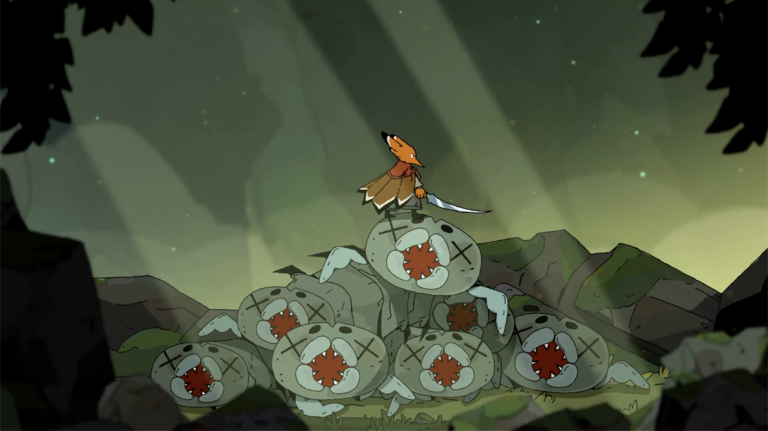
Feather’s Edge takes place inside the Tower of Time, a crumbling vertical structure where a collapsed temporal order has fractured the world into wildly mismatched biomes — eons-old jungles beside ancient lava flows, freezing corridors beside desert ruins, entire sections drifting apart as time fails. Players take on the role of Upu, a Hoopoe bird warrior tasked with reaching the summit before the tower — and the world — collapses entirely. Hoopoe bird carries symbolic weight across African and Middle Eastern cultures as a symbol of wisdom and determination, a culturally specific choice that distinguishes the protagonist from the genre’s predominantly European and Japanese inspirations.
The central dramatic question is simple: can Upu master the Tower’s time-fractured challenges in time to restore the flow of time before everything falls apart? The tone the game creates in pursuit of that question is fast, precise, and punishing — a game about achieving mastery under conditions of urgency, with an aesthetic that is visually lush even as it demands mechanical rigor.
Here is where the game earns its “kinetic” label — and where it makes its structural contribution to the genre.
In a conventional Metroidvania, movement and combat are separate subsystems layered on top of each other. The player moves, positions, then initiates a combat interaction. In Feather’s Edge, the dash-and-slash character controller collapses those two systems into a single, unified input. Aim, jump, and attack happen in one decisive motion: once the player commits to an optimal jump arc, the blade is already extended and combat and movement into one slicing action. Combat is not a separate system — it is built into how you move. As Clockwork Acorn put it: “Kill three birds with one stone when you aim, jump, and slice through enemies in one decisive motion.”
The closest genre parallel is Dandara — a 2018 Metroidvania from Brazil’s Long Hat House in which the protagonist’s movement worked like a gravity-defying billiard shot movement, completely replacing the traditional run-and-jump axis. Feather’s Edge goes further: where Dandara redesigned how you navigate, Clockwork Acorn has redesigned what navigation does, making the traversal system the combat system in the same input.
This produces a rhythm-action quality that conventional Metroidvanias only approximate. Combat encounters are fast, expressive, and punishing of errors — but deeply satisfying when executed precisely. The design philosophy draws more from action games and fighting games than from the slower, deliberate pacing of traditional genre entries. The result is a tempo distinctly the game’s own.
The game structures its encounters around what it calls “micro-challenge rifts” — compact, discrete combat arenas embedded throughout the Tower of Time that can be revisited at will. Player skills and scores are tracked across attempts, creating a score-attack loop within the exploration framework. The design incentivizes returning to earlier rifts with newly unlocked powers rather than simply grinding forward.
This hybrid approach borrows the ability-gated map structure of Metroidvania design (explore, unlock power, revisit) but embeds an arcade mastery loop (revisit rift, improve score, pursue perfection) that transforms replay value from a side effect into a design goal. Players unlock new powers progressively as bosses are defeated — including kunai throws, mid-air jump redirection, time-slowing, and time-freezing — and each new tool feeds back into the unified movement-combat system, changing both how the player traverses and how they fight. Surviving a rift and mastering it are two different achievements the game deliberately distinguishes.
Feather’s Edge is funded by Outersloth, the indie funding initiative established by Innersloth, the developers of Among Us. By March 2026, Outersloth had invested $19.16 million across games, having accepted roughly 1.4% of applicants — a selectivity rate the fund described as “slightly higher than the industry standard” in a GDC 2026 presentation.
The fund’s publicly disclosed contract terms give developers terms meaningfully more favorable than typical publisher deals: Outersloth receives 50% until recouped, then 15% — compared to industry norms of 70–80% recoup shares that drop to 20–30%. The fund does not seek IP ownership, and developers remain self-published. Outersloth backed Feather’s Edge at an early stage, when, as Clockwork Acorn described it, the project was “still a fledgling.”
Clockwork Acorn’s prior work includes Jetstream, an earlier action title, and the studio contributed to Terra Nil: Vita Nova, the acclaimed ecological restoration game. Feather’s Edge represents their first original IP on this scale.
The game’s new gameplay trailer aired at The MIX Fall Game Showcase 2026 on October 16 — a two-hour online event from the Media Indie Exchange, a curatorial organization founded in 2012 that has a documented track record of surfacing titles that go on to commercial and critical success. Selection for the showcase is not automatic; Feather’s Edge was part of a curated slate, placing it among the more closely watched upcoming PC indie releases in the fall 2026 window.
A separate in-person showcase took place at PAX West in Seattle on September 4. The fall online showcase on October 16 represented the game’s most significant public-facing moment since the closed playtest phase.
The game’s announcement trailer surpassed 650,000 views across platforms since its April 25, 2026 world premiere at Indie Live Expo. Within 72 hours of announcement, the game had accumulated 10,000 Steam wishlists — a figure that more than doubled in the weeks following. The closed playtest, rolled out in batches to registered players, drew early comparisons to Dandara in Steam community discussion forums, with players engaging actively on bug reports and control feedback — including calls for twin-stick gamepad support, to which the studio has appeared responsive.
The demo launched on Steam on October 2, giving any player a free slice of core gameplay without a wishlist or registration requirement.
Feather’s Edge is in development for PC (Windows, macOS, and Linux), with a Steam page live and the free demo available now. No release date has been announced. System requirements are modest — a minimum of an Intel Core i3, 4 GB RAM, and an Intel HD 620 or equivalent GPU — meaning the game is intended to run on mid-range and older hardware, not just high-end rigs.
The studio has encouraged players who enjoy the demo to leave a review, a small but meaningful signal for an independent team at this stage of development. For players deciding whether to invest time: the demo is the clearest available answer.
Feather’s Edge is a 2D action-platformer from Cape Town-based Clockwork Acorn in which the protagonist, Upu the Hoopoe bird warrior, must fight to the top of a collapsing Tower of Time. The game’s core design innovation is its “dash-and-slash” character controller: combat and movement are unified in a single input, so aiming, jumping, and attacking happen in one fluid motion — rather than the conventional Metroidvania structure in which movement and combat are separate systems. This creates encounters that feel more like rhythm-action sequences than deliberate platformer fights, and it’s the feature most players highlight in community discussion.
Yes. A free, no-purchase-required demo is available on Steam at store.steampowered.com/app/3804760. The demo covers a meaningful slice of the game’s mechanics, environments, and boss encounters. The full game has not yet received a release date, but it is available to wishlist.
The game is developed and self-published by Clockwork Acorn, a remote studio founded in Cape Town, South Africa in 2014, known previously for Jetstream and contributions to Terra Nil: Vita Nova. The project is funded by Outersloth — the indie funding initiative established by Innersloth, the developers of Among Us — which has invested approximately $19.16 million across 24 games since its founding, at a published acceptance rate of around 1.4% of applicants. Outersloth’s publicly disclosed contract terms give developers a more favorable revenue split than typical publishing deals.
No release date has been announced as of October 17, 2026. The game is confirmed for PC (Windows, macOS, Linux via Steam). The studio has not announced console versions, though the Outersloth contract structure covers multi-platform rights by default. The free demo is the best way to assess readiness and decide whether to wishlist for launch notification.