Canada and the European Union are poised to announce the most significant realignment of Western critical minerals architecture in years — a deal that would, for the first time, allow the European Investment Bank to directly fund Canadian mining projects, with an EIB-Canada letter of intent already signed at the PDAC 2026 conference. The agreement, confirmed in a draft joint statement circulated among EU member states and reported by AFP and POLITICO, was reached in the weeks bracketed by two converging crises: US tariffs that have fractured Canada’s southern trade anchor, and a Chinese rare-earth accommodation reached October 9 under the EU-China rare-earth licensing framework that illustrated, even as it briefly eased, how much administrative leverage Beijing retains over European industrial supply chains.
For Ottawa and Brussels alike, the pact — to be formally unveiled at the October 29–30 summit in Montreal, 17 days from publication — represents something beyond a bilateral minerals deal. It is insurance against an uncertain era of great-power competition, and a structural bet on Canadian geology as the West’s most accessible hedge against Chinese dominance of the materials that power both clean energy and modern defense systems.
Six-Year Push Toward EIB Financing Reaches Decisive Moment
The foundations stretch back to June 2021, when the EIB and Canada signed an EIB-Canada raw materials partnership — a framework that sat largely dormant until shifting geopolitics forced both sides to act. The pace accelerated sharply in March 2026, when the EIB and Canada formalized a Letter of Intent at PDAC alongside a broader EU-Canada Joint Statement on Critical Minerals.
That same week, Canada’s Minister of Energy and Natural Resources Tim Hodgson announced 30 new critical minerals partnerships expected to unlock C$12.1 billion (approximately $8.51 billion USD) in project capital across 12 allied partners. The announcements brought the total mobilized under Canada’s Critical Minerals Production Alliance to C$18.5 billion (approximately $13.0 billion USD).
The March letter of intent, while significant diplomatically, stopped well short of a concrete financing commitment. What changed in the months since was not the minerals themselves — but the world around them. By early October 2026, the draft joint statement for the Montreal summit indicated that both sides had moved decisively further. The document states that Canada and the EIB have “completed negotiations of an agreement that will facilitate European Investment in critical Canadian resources, in particular, critical minerals.” That phrase — “completed negotiations” — marks a decisive step beyond the 2026 letter of intent, signaling that EIB financing for specific Canadian projects is no longer hypothetical.
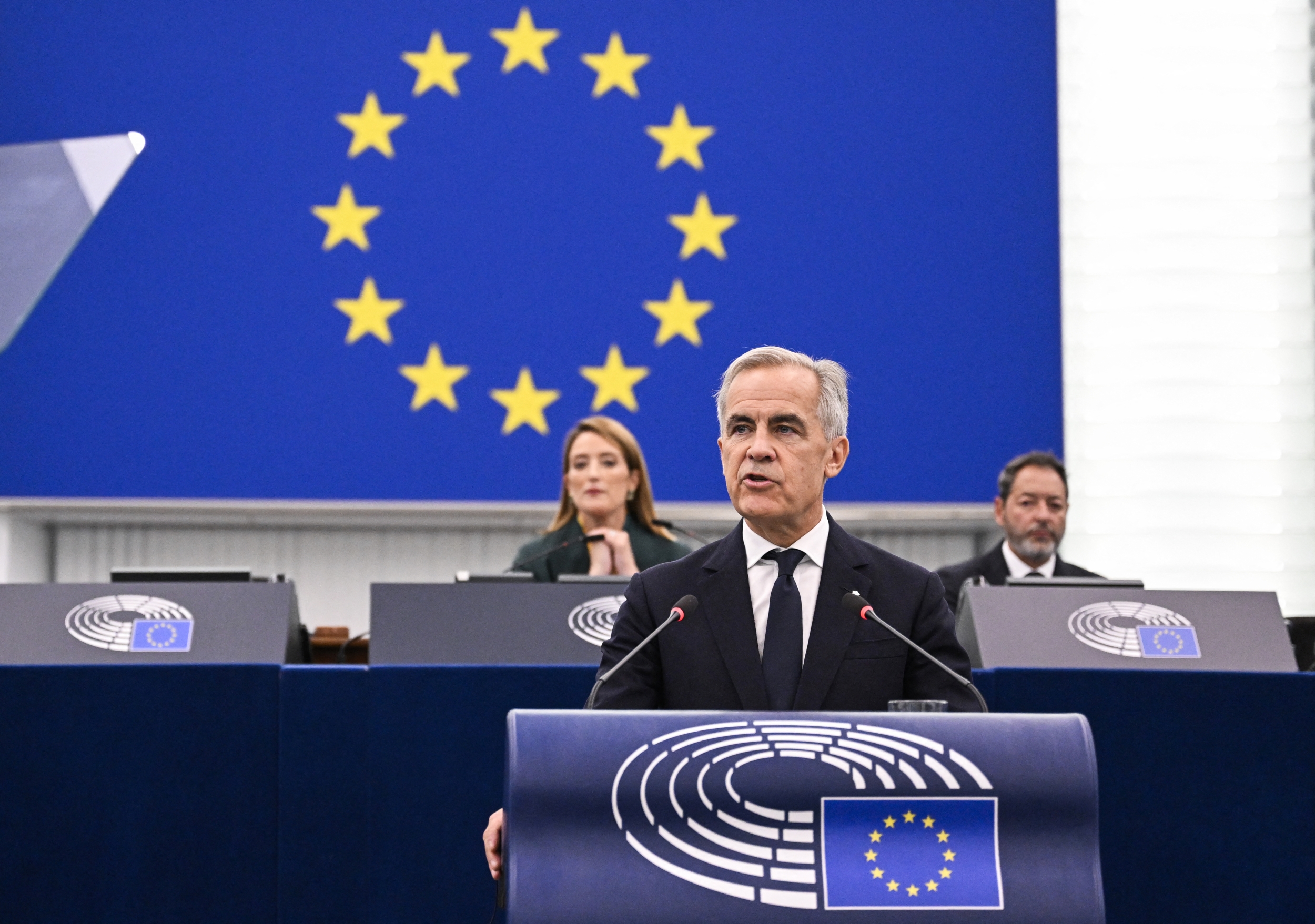
As EIB President Calviño told CBC, “the time is ripe” to deepen cooperation with Canada by exploring how to finance Canadian projects. She identified critical minerals as the first area of shared interest and said the EIB was exploring a framework agreement enabling investment “and beyond” — language that signals ambitions extending into digital and clean-energy infrastructure, echoing the agenda Prime Minister Mark Carney laid before the European Parliament in Strasbourg on September 17.
Montreal Summit Package: “Alliance for Future” Extends Beyond Minerals
The critical minerals agreement is the centerpiece of a broader package expected to be unveiled at the Montreal summit, framed under what the draft joint statement calls an “Alliance for the Future.” The package includes a digital trade deal designed to “allow for faster, lower cost secure digital trade and transactions,” an agreement to strengthen cooperation between competition authorities, and a pact for the EU and Canada to jointly purchase 50 water bombers made by Canadian firm De Havilland for wildfire deployment by 2030. The document also calls for strategic stockpiles of critical resources to shield supply chains from “market fluctuations and geopolitical impacts.”
The summit follows European Commission President Ursula von der Leyen’s Canada EU associate membership proposal that Canada be invited to become the EU’s first-ever “associate member” — a category invented for one country, including access to EU defense-industrial cooperation, Horizon Europe research programs, and Erasmus+ exchanges.
For Prime Minister Carney, the Montreal summit represents the operationalization of a pivot he outlined in Strasbourg. In his Carney Strasbourg address on strategic autonomy, Carney said Canada and Europe should “secure our strategic autonomy” through cooperation in “critical minerals, defence industrial capacity, AI and compute, energy security, space, and payments” — explicitly linking rare-earth supply chains to digital sovereignty and sovereign compute infrastructure in a single strategic frame. Carney’s Canada AI for All strategy — a C$2 billion initiative targeting AI adoption growth from 12% to 60% of Canadian businesses by 2034 — positions Canada as a producer not only of raw minerals but of the digital infrastructure those minerals ultimately enable.
EIB President Calviño has publicly committed the EIB to injecting €70 billion (approximately $78.6 billion USD) into European technology infrastructure, including AI gigafactories built in partnership with the European Commission. The Canada-EIB deal is therefore embedded in a broader European technology-sovereignty push that extends well past mine gates.
Trump Tariffs Force Canada to Seek European Market Insurance
The proximate cause of the acceleration is unmistakable. Trump 50% tariffs on Canada — covering steel, aluminum, automobiles, and car parts — have fundamentally altered Ottawa’s strategic calculus, pushing Canada to seek what analysts call “alternate market insurance”: locking in European offtake commitments and financing that reduce dependence on the US as a buyer of Canadian mineral output.
US Trade Representative confirmation that Trump’s tariff regime will not change has removed any expectation of near-term restoration of the prior trade architecture. The collapse of US-Canada trade talks left Ottawa with sharply reduced leverage in Washington and sharply increased incentive in Brussels.
Ontario Premier Doug Ford, among the most vocal Canadian politicians on the minerals file, captured the dynamic bluntly in his Ford statement on critical minerals: “At a time when China is winning the race to dominate these resources while also restricting the sale and shipment of critical minerals to the US, Canada and Ontario need to urgently get our critical minerals out of the ground, processed and shipped to the factory floors that are building for the future.”
Rare Earth Exchanges, which first reported the EIB-Canada pact’s finalization on October 11, noted that European financing and offtake commitments could redirect Canadian critical mineral output toward EU reindustrialization — a development that would complicate US defense supply chain security even as Washington simultaneously seeks preferential access to those same resources.
China’s Rare-Earth Controls: One-Year Licensing Deal Masks Structural Risk
If US tariff pressure is the push, China’s dominance in critical mineral processing is the pull. The October 9 EU-China licensing framework illustrated why both sides feel urgency acutely — and why a one-year diplomatic accommodation is not the same as long-term supply security.
EU Trade Commissioner Maroš Šefčovič met Chinese Commerce Minister Wang Wentao in Beijing and confirmed the EU is working with China on an EU-China rare-earth export system to ensure more stable flows of rare-earth minerals to the bloc. Brussels called for “a new and stable system of trade in critical materials” — language that acknowledged the framework does not eliminate Chinese administrative discretion but rather regularizes it.
That distinction matters enormously. A licensing system that must be renewed annually preserves Beijing’s ability to slow-walk applications, impose retroactive conditions, or decline licenses for individual buyers as geopolitical circumstances change. It is structurally different from a trade agreement that permanently removes export controls, and EU leaders know it.
The numbers underlying that vulnerability are stark, as documented in the Library of Parliament supply chain data:
- China accounts for 69% of total world mine production of rare-earth elements
- China accounts for 79% of total world mine production of graphite
- In 2024, China’s share of refined material production reached 96% for graphite, 91% for rare earths, 78% for cobalt, 70% for lithium, and 44% for copper
European Commission President von der Leyen noted that China’s tightening of export controls “has a huge impact on us here in the European Union,” adding that the bloc will focus on “joint purchasing, stockpiling, and investment in strategic projects for the production and processing of critical raw materials here in the EU.”
The EU Critical Raw Materials Act — which sets a target of no more than 65% of any strategic material from a single country — cannot be met at current Western production levels without Canadian capacity coming online at scale. The Canada pact is the most direct near-term mechanism Brussels has to move that needle.
Canada’s Offer: Only Western Hemisphere Nation With Full EV Battery Mineral Set
Canada’s attractiveness as a partner rests on a combination of geological endowment, political stability, democratic governance, and sheer proximity. Canada holds all EV battery minerals required for battery manufacturing — graphite, nickel, aluminum, lithium, copper, cobalt, manganese, molybdenum, and rare earth elements — making it the only country in the Western Hemisphere with this full set. Canada is also home to 45 advanced Canadian mineral projects spanning graphite, lithium, and rare earth elements across multiple provinces.
The EIB has described Canada as a “natural EIB-Canada supply chain ally” for the EU as it works to diversify and secure critical raw materials supply chains, reduce strategic dependencies, and strengthen economic security, citing large reserves, recognized mining expertise, and strong environmental and social standards.
The critical gap is at the processing and refining stage. While Canada accounts for no more than 5% of global mine production of cobalt, graphite, lithium, and nickel, the separation and refining capacity that transforms ores into battery-grade materials barely exists outside of China. As the Library of Parliament rare-earth processing data shows, the rare-earth processing pipeline — mining, ore processing, separation and refining, alloy production, magnet manufacture — is controlled by China at the middle three stages at rates between 78% and 96%. EIB financing is designed specifically to de-risk the capital required at those intermediate stages, taking first-loss risk that commercial banks will not accept for early-stage processing facilities.
Trilateral Race: Washington’s DFARS Deadline Meets Brussels’ Financing
One underappreciated dynamic is adding urgency to the realignment on both sides of the Atlantic, and the draft does not name it explicitly: the looming US Defense Federal Acquisition Regulation Supplement (DFARS) deadline creates a competition between allied markets for Canadian processing capacity that does not yet exist at scale.
The DFARS rare-earth magnet restriction requires that by January 1, 2027, the entire rare-earth magnet supply chain feeding US defense systems must be free of Chinese involvement — covering neodymium-iron-boron (NdFeB) magnets, tantalum, and tungsten from the mining stage through final production. NdFeB magnets are used in EV motors, wind turbines, and military guidance systems; the US has essentially zero domestic magnet production at scale.
That gap means an enormous volume of US defense demand for non-Chinese supply must be filled from allied producers — including Canadian operations — in a very short window. European financing and offtake commitments arriving before that deadline could redirect Canadian critical mineral output toward EU reindustrialization, complicating US defense supply chain security even as Washington simultaneously needs preferential access to those same resources.
The result is a trilateral dynamic the draft joint statement does not address: the EU, by financing Canadian processing capacity first through the EIB, may secure a structural position in Canadian mineral output before DFARS urgency translates into comparable US financing commitments. The party that capitalizes the scaling of Canadian processing wins the allocation.
The irony is considerable: Trump’s tariff pressure on Canada may be inadvertently accelerating the EU’s first-mover advantage in the very resource flows that US defense contractors will urgently need by January 2027.
Indigenous Consent: Wild Card in Every Canadian Mining Project
Neither Ottawa nor Brussels can treat Canada’s mineral reserves as a simple ledger of supply waiting to be unlocked. Indigenous governance is a structural variable in every project.
Indigenous nations — including Norway House Cree Nation and the Tłı̨chǫ Government — hold significant influence over whether Canada’s mineral deposits translate into commercial production. Under Canada’s UNDRIP Act FPIC obligation — the United Nations Declaration on the Rights of Indigenous Peoples Act (2021) — free, prior, and informed consent (FPIC) is a statutory obligation for projects affecting Indigenous lands.
Any EIB financing framework will need to accommodate FPIC timelines and governance complexity. Projects lacking completed consent processes face legal challenge risk that affects investment bankability — a factor EIB’s due diligence framework must explicitly address. The EIB’s stated commitment to “strong environmental and social standards” is precisely where FPIC obligations will be tested in project-level review.
Canadian government officials have signaled awareness of this dimension, but no specific mechanism for accelerating FPIC processes without compromising their integrity has been announced. It remains the most consequential variable between the geological endowment Canada advertises and the production volumes the Montreal summit package implies.
What the Summit Must Deliver
The bigger picture is a potential structural shift in Western mineral architecture, but the Montreal summit’s real-world impact depends entirely on what specific documents it produces.
The draft joint statement’s “Alliance for the Future” framing encompasses critical minerals, defense-industrial cooperation, energy, digital trade, Arctic policy, and the associate membership category — a package that, if delivered in binding form, would represent the deepest Canada-EU integration since CETA Canada-EU trade framework. Canada and the EU have described themselves as sharing “unparalleled trade access, shared values, and complementary economic strengths” capable of supporting “a deeper and more integrated relationship.”
Whether the summit delivers a genuinely binding financing framework with named projects and capital commitments — or another layer of aspirational language — is the decisive test. The minerals annex that emerges from Montreal must contain EIB financing figures and named projects rather than aspirational language for the alternate market to become no longer hypothetical.
The summit is 17 days away.
Currency conversions are approximate, based on exchange rates as of October 1, 2026, and are subject to change.
Frequently Asked Questions
What is the EIB-Canada critical minerals deal, and why does it matter?
The European Investment Bank (EIB) is finalizing an agreement to directly finance critical minerals projects in Canada — the first time the EU’s public development bank will have a mandate to invest in Canadian mining operations. The deal matters because it represents the EU’s most concrete step toward securing independent supply of rare earth elements, graphite, lithium, cobalt, and other materials critical to EV batteries, wind turbines, and defense systems. Canada is the only country in the Western Hemisphere with all EV battery minerals, and EIB financing targets the processing and refining stages where Chinese dominance is greatest — between 78% and 96% of global refined output depending on the material, as recorded in the Library of Parliament processing data.
Why did the EU reach a rare-earth licensing deal with China on October 9 — and is that a solution?
EU Trade Commissioner Šefčovič and Chinese Commerce Minister Wang Wentao reached understandings in Beijing on October 8–9, 2026 on an export licensing framework intended to stabilize rare-earth flows to European industry, as confirmed in the TIC-2 licensing framework confirmed. But this is a one-year accommodation, not a structural solution: a licensing system preserves Chinese administrative discretion permanently, allowing Beijing to slow-walk approvals or decline licenses for individual buyers as geopolitical conditions change. The WTO ruled China’s prior rare-earth quota system illegal in 2014 (DS431), but a licensing regime is legally distinct and harder to challenge. EU leaders acknowledged this limitation publicly, and the Canada pact is being finalized precisely because the October 9 framework does not resolve the structural dependency.
What is the DFARS rare-earth magnet deadline, and how does it affect Canada’s options?
US Defense Federal Acquisition Regulation Supplement (DFARS) clause 252.225-7052 requires that by January 1, 2027, all rare-earth magnets in US defense systems — including neodymium-iron-boron (NdFeB) magnets used in weapons guidance, EV military vehicles, and drone propulsion — must come from supply chains with no Chinese involvement, as specified in the DFARS magnet supply chain requirement. No fully scaled American mine-to-magnet supply chain currently exists. This creates enormous US demand for Canadian and other allied mineral processing capacity — demand that arrives simultaneously with EIB financing offers. The result is a competition between the EU and the US for Canadian processing capacity that does not yet exist at scale. Whichever market finances that capacity first will likely hold preferential access to its output.
What role do Indigenous nations play in whether Canadian mineral projects actually move forward?
Under Canada’s UNDRIP FPIC statutory requirement — the United Nations Declaration on the Rights of Indigenous Peoples Act (2021) — free, prior, and informed consent (FPIC) is a statutory obligation for projects on or affecting Indigenous lands. Nations including Norway House Cree Nation and the Tłı̨chǫ Government hold governance authority over regions with significant mineral deposits. FPIC processes add complexity and timeline risk that must be priced into investment feasibility — making EIB due diligence more complex than a standard country-risk analysis. No mechanism has been announced that would accelerate these processes without compromising their legal integrity. Indigenous consent is the most consequential gap between Canada’s advertised geological endowment and the production volumes that a scaled EIB financing framework would require.