Dreampainters Wraps Gamescom, Heads to PAX West With Paint-Based Puzzles

August 31, 2026:

Dreampainters Wraps Gamescom, Heads to PAX West With Paint-Based Puzzles
Dreampainter
Frozendistrict.com

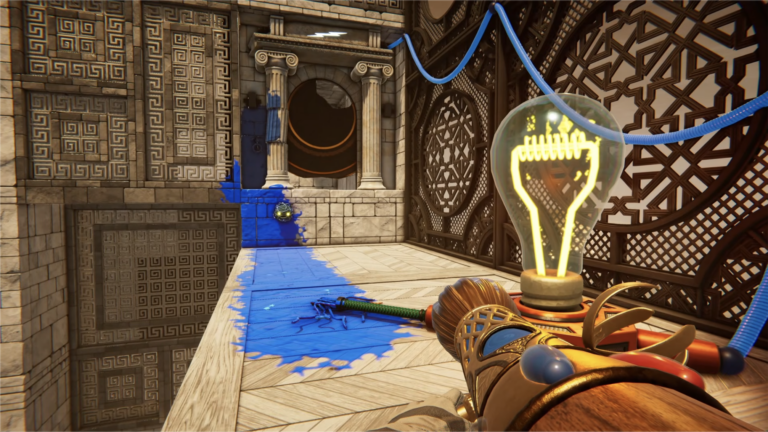
Polish developer Stability Games is closing out its Gamescom 2026 run today and heading to PAX West in Seattle next week, giving puzzle game players their first back-to-back chances to try Dreampainters — a first-person puzzler built around a color-as-property system that lets multiple valid solutions exist for every level. The Steam playtest, which ran through July before being reopened specifically for this showcase stretch, is active right now for anyone who wants to try the game before a release date has been set.

The mechanic at the center of Dreampainters is more specific than the phrase “paint puzzles” suggests. Each color a player applies to the game’s dream environments carries a distinct physical rule: a painted surface might become traversable, trigger a state change in nearby objects, or alter how gravity interacts with whatever it coats — all detailed on the Steam store page. The design goal is a constraint-satisfaction system with multiple valid solution paths rather than the single-correct-answer format that Portal’s physics portals made famous. Whether that goal produces puzzles that feel clever rather than accidentally solvable is the question the current playtest is positioned to answer — and the one any prospective wishlist addition should go looking for.

What Ray Is Actually Looking For

You play as Ray, a struggling artist whose financial situation has gotten bad enough that a strange recruitment ad looks like a reasonable opportunity. Neurem Labs, a research organization, pays subjects to sleep while scientists monitor their dreams. The premise stays cheerful and color-saturated for a while. Then it doesn’t. The deeper Ray goes into the study, the more insistent a nagging question becomes: why is a corporate lab this specifically interested in Ray’s dreams, what are they actually doing with them, and — in the game’s most unsettling flourish — are you even who you think you are?

The emotional register is a deliberate tonal arc from whimsy to unease, with the art style doing the narrative work of signaling the transition. What makes the setup mechanically interesting rather than just atmospheric is that Ray’s memories are an active gameplay resource. Before entering each dream, players choose which of the artist’s memories to bring with them — and that selection physically reshapes the upcoming dreamscape. The same puzzle geometry can behave differently depending on which memory is active, adding a light procedural layer on top of the color-interaction system without requiring the developer to build separate level variants from scratch.

Paint Differently, Not Portal Differently

The games Stability Games names as inspirations — Portal, Superliminal, and Viewfinder — share a first-person perspective and a puzzle structure built around a single transformative mechanic, but they work very differently from each other and from Dreampainters. The Endix Showcase 2026 reveal trailer confirmed the studio’s positioning against this lineage at the game’s first public showing.

Portal’s portals create spatial shortcuts; the puzzle is determining which surfaces to connect. Superliminal’s mechanic manipulates perceived scale based on where objects are placed relative to the player’s viewpoint. Viewfinder lets players project 2D photographs into 3D space, replacing the environment behind the frame with whatever the photo depicts — turning a snapshot of a walkway into an actual walkway. Each of these produces a single transformation type that the puzzle designer constrains differently per level.

Dreampainters’ color system is closer to a rule set than a single transformation: different colors map to different environmental interaction properties, and because multiple colors are available at once, the space of valid approaches to any given puzzle is wider than in the games it cites. That is a design ambition, not yet a proven design achievement — the playtest exists precisely to stress-test whether multi-solution color puzzles produce satisfying experiences rather than arbitrary ones. Playtest feedback from the first session, which ran approximately five complete levels, was collected through an in-game feedback mechanism and a Discord community; the developers specifically tracked completion and speedrun times, which suggests they are paying close attention to how players move through the designed solution space.

Solo Campaign, or Grab Someone Else’s Brush

Dreampainters supports two players across four co-op configurations: local split-screen, online co-op, and Steam Remote Play Together — the last of which requires only one purchase between players. The game includes puzzle sections designed specifically for two-player play alongside the solo campaign, which is a meaningful design distinction. Co-op puzzle games fail most often when one player can simply solve the level while the other observes; dedicated two-player puzzle sections require the developer to build communication and role-division requirements into the puzzle geometry itself.

Portal 2’s dedicated co-op campaign remains the benchmark for what that looks like at its best. Whether Dreampainters reaches that bar is unknown before release, but the structural commitment to building dedicated co-op content rather than layering a second character onto solo puzzles is the right starting point.

Where to Try It Right Now

Gamescom 2026’s show floor is open today at Koelnmesse in Cologne, Germany — and Dreampainters is playable today at the Frozen District booth until the convention closes. For those not in Cologne, the Steam playtest is currently accepting access requests on the game’s store page. Players who receive access can invite up to three Steam friends who have been on their friends list for more than 30 days.

The following week, Dreampainters will be playable at PAX West 2026 in Seattle, Washington, at the Games From Poland booth, number 925, from September 4 through September 7. Games From Poland is a collective that brings Polish indie developers to major international conventions, and its PAX West presence is a confirmed exhibitor listing for the show. This marks the game’s first international showcase appearances.

On the AI Voice Question

A community thread on Dreampainters’ Steam page, opened July 23, raised a concern that has appeared across several indie games this year: the game uses AI-generated voice acting, and the disclosure of that use — a pop-up inside the game stating it is temporary — was not considered sufficient by at least some playtesters. The user who raised the concern noted they would not have joined the playtest had they known AI voice was present.

Valve’s mandatory AI disclosure policy, introduced in January 2024 and updated in January 2026, requires developers to disclose pre-generated AI content — including AI-produced voice lines — on the Steam store page under an “AI Generated Content Disclosure” section, not only within the game itself. As of publication, the Dreampainters Steam store page does not display an AI content disclosure label. The developers’ position — that the AI voice is temporary and will be replaced — does not resolve the disclosure requirement for the playtest period in which the AI voice is present.

This is not a new problem in the indie space. Nearly one in five new Steam releases as of early 2026 carries an AI disclosure label, and a study of 2025 Steam releases found that AI disclosure correlates with fewer reviews for higher-ambition games, suggesting player sensitivity to the question is stronger among the audiences most likely to engage with a game at depth. The question of whether temporary AI voice, disclosed only in-game, meets Valve’s policy requirements is one Stability Games will need to address formally before launch.

System Requirements (Early Estimate)

Stability Games notes that the posted specifications are early estimates and will be updated. As currently listed on the Dreampainters Steam page:

Minimum: Windows 10 64-bit, Intel Core i5 seventh generation or AMD Ryzen 5 first generation, 8 GB RAM, Nvidia GeForce GTX 1060 6GB or AMD Radeon RX 580 4GB, DirectX 11, 20 GB storage.

Recommended: Windows 10 64-bit or newer, Intel Core i5 tenth generation or AMD Ryzen 5 third generation, 16 GB RAM, Nvidia RTX 2070 8GB or AMD Radeon RX 5700 XT 8GB, DirectX 12, 20 GB storage.

The game ships with 18 language options. Full English audio is the only spoken-language option at launch; all other languages receive interface and subtitle support.


Frequently Asked Questions

What does Dreampainters’ color mechanic actually do, and is it different from other paint-based games?

Each paint color in Dreampainters carries a specific physical interaction rule — a painted surface might become traversable, trigger an environmental state change, or alter how objects behave nearby. The design goal is to make multiple valid solution paths available for each puzzle, rather than a single correct answer. The closest comparable in released games is Chicory: A Colorful Tale, where painting also changes environmental properties, though Chicory is more of an adventure game than a spatial puzzle experience. Portal, Superliminal, and Viewfinder — the games Stability Games cites as inspirations — each use a single-transformation mechanic with tighter solution constraints. Whether Dreampainters’ multi-solution approach produces consistently satisfying puzzle moments is the central open question; the current playtest is the best way to evaluate it firsthand.

Does the memory selection mechanic change the puzzles themselves, or just the visuals?

According to the game’s official description, choosing which of Ray’s memories influences a dream actually alters the dreamscape environment — not just how it looks, but its physical layout and the objects within it. This means the same underlying puzzle can present differently depending on which memory is active, giving the selection mechanic a functional role rather than a purely cosmetic one. How significantly the environments diverge across memory choices is not yet confirmed by post-playtest reporting.

What is the AI voice acting issue, and should it affect whether I join the playtest?

A playtest participant raised a concern in the Steam community in July 2026 that Dreampainters uses AI-generated voice acting. The developers acknowledged this inside the game via a pop-up stating it is temporary. Valve’s policy requires disclosure of AI-generated content on the Steam store page, and as of publication that label is absent. If AI voice acting in indie games is a factor in your decision to participate in a playtest, you should be aware of its presence. The developers’ stated intent is to replace it before launch, but no timeline has been confirmed.

When does Dreampainters release, and where can I try it now?

No release date has been announced — the Steam page lists the date as “to be announced.” The playtest is currently open on Steam and accepting access requests. Dreampainters will be playable at PAX West 2026 at the Games From Poland booth, number 925, from September 4 through September 7 in Seattle, Washington.

Source link