Donutal Skips Paperwork: Arc System Works’ Alien Interview Game Is Now on Steam

September 7, 2026:

Donutal Skips Paperwork: Arc System Works’ Alien Interview Game Is Now on Steam
Donutal
Arcsystemworks.com

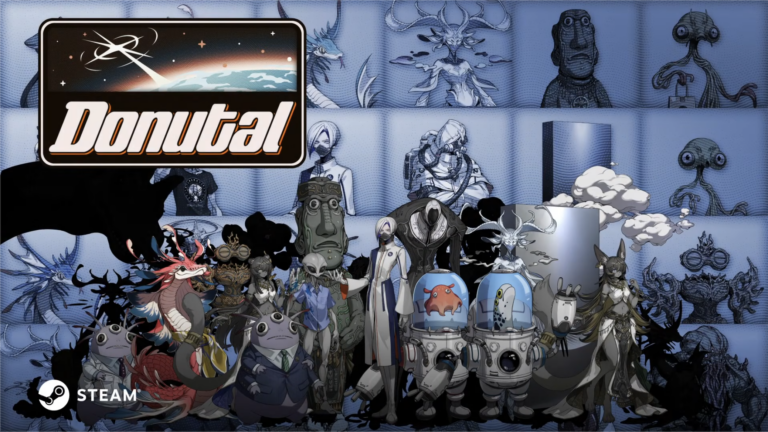
Arc System Works — the Yokohama studio behind Guilty Gear and BlazBlue — shipped Donutal on September 3 for $9.99 on Steam, and it trades everything the studio is known for in favor of something it has never quite attempted: a conversation-and-deduction adventure where the player sits across from a group of aliens and tries to determine which ones to let into Earth, and which ones to turn away. The game’s premise and its core mechanic are the same thing — conversation is not just the subject of Donutal, it is literally the only tool the player has.

Players who purchase the game before November 30, 2026 at 5:00 PM PT will receive the 13-track Donutal Original Soundtrack at no additional cost. Arc System Works has said the soundtrack access date for early buyers will be confirmed separately, and that the OST may be sold individually afterward. The window is approximately 85 days from the game’s launch.

What Year Is It, and Why Is That Your Job

The year is 2206. What was once the International Space Station has been repurposed as the International Space Port — the entry point for alien species that Earth is now, somewhat desperately, hoping will help it fix problems that went unmanaged across the prior two centuries. Humanity’s crises have escalated beyond its own capacity to resolve, and several alien civilizations with significantly more advanced technology have become aware of Earth and willing, under some conditions, to help Earth solve mounting crises.

The player character wakes from 150 years of cryosleep on the day diplomatic relations with other planets officially begin — which is a deeply inconvenient time to discover they have no memory of their past and owe a substantial debt they have no recollection of incurring. The job of Chief Extraterrestrial Counselor, screening the aliens who come through the port each day, is not chosen. It is the mechanism of debt repayment. Whether Earth is still standing by the time the debt is cleared depends entirely on whether the player makes the right calls.

Why This Is Not Papers, Please in Space

Every outlet covering Donutal since its February 2026 announcement has reached for the same comparison: Papers, Please, Lucas Pope’s 2013 indie landmark. That comparison is accurate in atmosphere — both games cast the player as the bureaucratic gatekeeper — but it is imprecise in mechanism, and the mechanism is the more important difference.

Papers, Please is a document-verification game. Travelers arrive with papers. The player has a rule book. The challenge is procedural: does this document match the current rules? New rules are added daily, expanding the player’s procedural vocabulary. The cognitive task is pattern-matching with mounting complexity.

Donutal eliminates the paperwork entirely. The Steam store page states the distinction clearly: “Conversation is your tool. There is no paperwork here.” The player receives no documents to cross-reference and no rule book to consult. Information arrives exclusively through what the aliens say, who they accuse, who they instinctively protect, and how they behave when placed beside a different alien. The cognitive task is inferential rather than procedural: what does this behavioral pattern tell me about something the alien hasn’t said directly?

This distinction matters because it changes what kind of player gets something out of Donutal. Players who enjoyed Papers, Please‘s systematic precision may find Donutal harder to hold in their hands — the “right answer” is less mechanically obvious and more dependent on reading behavioral cues that the player must learn to recognize across multiple playthroughs.

How the Chemistry System Works

Each working day opens with a news bulletin that reflects how the previous day’s decisions affected Earth. Then the player is presented with a group of up to eight aliens seeking entry. The default mode of information-gathering is conversation — asking questions, listening to what each alien says about itself and about its fellow travelers.

The structural feature that separates Donutal from a basic interview game is the simultaneous interrogation. The player can pull two aliens into the interview room at once, and the game’s chemistry system changes what each alien says and how they react depending on who is standing next to them. Lovers corroborate each other — or provide cover. Members of species locked in ancient hostility may expose each other’s inconsistencies under pressure. At least one species can sense a subject’s innocence, making it a useful interrogation partner when paired with a deceptive subject.

The Martians, one of the more colorful species in the cast, are biologically incapable of lying — a trait that makes them useful interrogation partners but socially difficult, because they also have no concept of tact. The Pictor, who possess technology that far exceeds Earth’s capabilities, are widely regarded as the planet’s best hope and are generally trusted as candidates. The Octo are intelligent cephalopods who share a genetic lineage with a rival species called the Takoo, and the nature of that feud is not immediately clear — which makes every Octo arrival a puzzle.

Depths Extend Beyond the First Day

Donutal is designed to be played across multiple runs. The game features a branching save system that allows players to return to any checkpoint and replay an interrogation with different alien pairings — or replay the same screening day with the knowledge gained from a previous, unsuccessful attempt. A failed decision does not simply end the playthrough; it often surfaces information that the player can carry into a subsequent run or apply immediately by reloading.

Early reviewers note that while the core mechanics remain accessible, the interconnected systems — species traits, chemistry pairs, branching story consequences, and the daily news feedback loop — produce significantly more depth than the opening hours suggest. The Netto’s Game Room review, published before launch, describes “dozens of hours of depth” available to players willing to explore the branching paths.

The android DOLPHIN handles daily briefings and operational logistics but has no authority to influence the player’s final decisions. That responsibility remains entirely with the player — a design choice the game does not present as comfortable. Earth’s fate depends on the player’s reads.

Can Arc System Works Pull This Off

Arc System Works is not exclusively a fighting game developer, though it is primarily understood as one. The studio has a history of adventure titles — the Jake Hunter series and, more recently, Another Code: Recollection — developed with former staff of the original developer Cing after that studio closed. Donutal fits within that tradition rather than marking a clean break from it, though it represents the studio’s most ambitious original adventure IP in years.

The game was developed and published entirely by Arc System Works without an external developer — a distinction from the studio’s licensed-IP fighting games (Marvel Tōkon: Fighting Souls, Granblue Fantasy Versus: Rising), which involve separate development partnerships.

A Note on the In-Game News Illustrations

One aspect of Donutal that drew criticism when the game was announced in February 2026 is worth naming plainly: the in-game “news site” that appears at the start of each day uses AI-generated and post-retouched images for its illustrations. The AI use was disclosed on the Steam page at announcement. By the time the final launch information was published in late August 2026, that disclaimer had been removed from the page without explanation from Arc System Works.

The AI images appear in a specific, contained context — the in-game newspaper illustrations that accompany news items — rather than in the game’s main character art, backgrounds, or cutscenes, which are hand-crafted. Reviewers have noted that the images are “mostly blurry messes” that add little to nothing to the game. This is not a significant fraction of the total visual content, but it is a real limitation buyers should know about before purchasing.

What’s in the Early Purchase Soundtrack

The Donutal Original Soundtrack covers 13 in-game tracks. Several are original compositions, including the interrogation-screen track ASSIGNMENT SEQUENCE. Others are arrangements of classical works: the character introduction trailer featured a synthesizer-inflected Holst arrangement of “Mars, the Bringer of War” from The Planets suite, and a version of Chopin’s Nocturne No. 2 in E-flat major, Op. 9, No. 2 — rearranged with a “retro-futuristic, groovy, and chill” sensibility. Jupiter from Holst’s Planets also appears. The OST will be delivered separately from the game; access timing for early purchasers has not yet been confirmed.

Where and How to Get It

Donutal is available now on PC via Steam. The game supports English and Japanese interface and subtitles. Steam features include Achievements, Trading Cards, and Cloud saves. Minimum hardware requirements for Windows 11: an AMD A8-7600 or Intel Core i3-3210 equivalent processor, 8 GB of RAM, and a GTX 750-class GPU or an AMD Radeon RX 460 equivalent, with DirectX 11 and 2 GB of available storage.

A free demo has been available on Steam since the game’s February 2026 announcement, covering early sections of the game and providing a practical sense of whether the conversation mechanic holds for a given player before they commit to the purchase.


Frequently Asked Questions

How is Donutal different from Papers, Please?

The foundational difference is information type. Papers, Please asks players to cross-reference documents against an expanding rule book — the challenge is procedural pattern-matching. Donutal eliminates documents entirely: there is no paperwork, no rule book, and no checklist. Information arrives only through what aliens say in conversation, who they protect, who they accuse, and how they behave when paired with another alien. The cognitive demand is behavioral inference rather than procedural verification. Players who like systematic, rule-based puzzles may find Donutal more subjective; players who prefer reading social dynamics may find it more engaging.

Does Donutal have multiple endings?

Yes. The game features a branching narrative structured around a save system that allows players to replay interrogation sessions with different alien pairings and different choices. Failed decisions reveal information usable on subsequent runs. Early reviewers describe “dozens of hours of depth” available through the branching paths, and the game is explicitly designed for multiple playthroughs. Making too many missteps can lock a player out of certain endings, incentivizing careful decision-making alongside experimentation.

What is the early purchase bonus, and how long does it last?

Players who buy Donutal before November 30, 2026 at 5:00 PM PT (8:00 PM ET) will receive the 13-track Donutal Original Soundtrack at no extra charge. The OST will be delivered separately — Arc System Works has not yet announced the specific access date. The soundtrack may be sold individually afterward. The early purchase window is approximately 85 days from the September 3 launch.

Does Donutal use AI-generated content?

Some of it, in a limited context. The in-game “news site” — a daily summary that opens each screening day — uses AI-generated and post-retouched images for its article illustrations. This was disclosed on the Steam store page at announcement but was removed from the page before launch without explanation from Arc System Works. The game’s main character art, backgrounds, and other visual elements are hand-crafted. Reviewers have noted the AI images as the game’s primary weakness — described as blurry and adding little to the experience.

Source link