HomeAuto Deadlock Violet Brings Terrain Control and Second Economy to City Never Sleeps
Deadlock Violet Brings Terrain Control and Second Economy to City Never Sleeps
October 18, 2026:
Valvesoftware.com
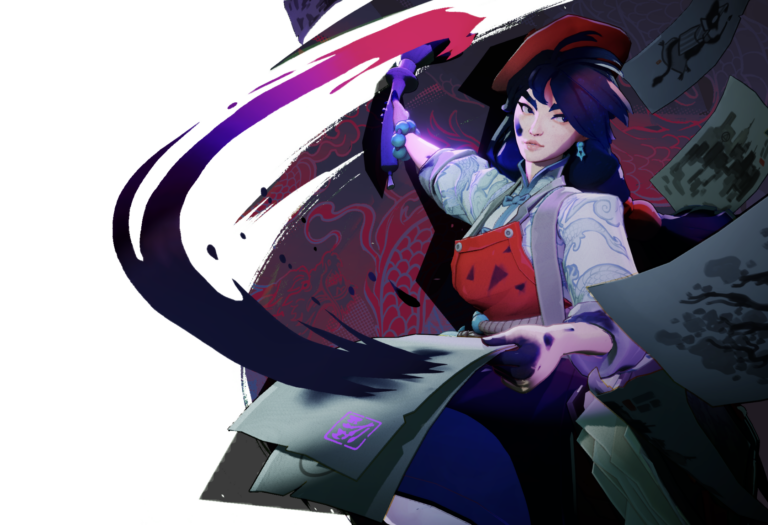
Violet joined Deadlock’s playable roster on October 16, 2026, arriving as the fifth City Never Sleeps hero — and with the most architecturally layered kit of the campaign. Where prior City Never Sleeps additions have centered on mobility, frontline pressure, or mid-range damage, Violet introduces mechanics Deadlock has not offered before: freeform physical terrain creation, movement economics that reward allied positioning, and a hero-specific stat-stacking system that generates a second in-match economy entirely separate from the Souls that every other hero accumulates.
The six community-voted heroes are releasing every Tuesday and Friday at 2:00 PM PT through October 20. The final hero, Nurse Harrow, is scheduled for October 20 unlock at 2:00 PM PT.
Who Violet Is: Art Student Entering a Demonic Ritual for Recognition
Violet’s lore gives her a motivation that stands apart from the rest of Deadlock’s cast, most of whom enter the Ritual in search of power or survival. According to Violet’s published lore page, Violet immigrated to the game’s haunted New York setting, called “The Cursed Apple,” at age twelve. A devoted arts student, she earned a full scholarship and, in her junior year, received inclusion in what the game describes as MoMA’s prestigious student showcase, “The Upstart Gallery” — a recognition that, for most people, would be the arrival of a career.
For Violet, it is not enough. Her central anxiety is not about being untalented. It is about being talented and invisible — about succeeding commercially on the terms that are available to a fine arts student, and still dying without anyone having truly seen her work. The Ritual, in Violet’s reckoning, is not a shortcut to power. It is the only stage large enough to guarantee she gets noticed. Her in-game voice line captures it directly: “I worked too hard to get here, I can’t stop now.”
The character’s tags — Ambitious, Nimble, Creative — reflect that motivation mechanically. Violet is not a slugger. She is a tactician whose most powerful plays reward patience, line-of-sight discipline, and map memory, as outlined in her full ability set.
Living Ink: The First Freeform Terrain Tool in Deadlock
Violet’s first ability, Living Ink, operates in two distinct modes accessed through the same charge pool, which resets on a 22-second cooldown with two charges at 7-second intervals between uses.
In Empower mode (primary fire), Violet fires three guided bullets that the player can steer in flight. Each bullet deals 120% of her normal bullet damage plus 35 spirit splash damage in a small area around impact, scaled by spirit power. Every successful hero hit reduces all of Violet’s ability cooldowns by 1.5 seconds and half that for item cooldowns, creating a skill-chaining loop: land enough guided shots and the rest of Violet’s kit becomes available faster than its base timers suggest.
In Draw mode (zoom/alt-fire), Violet spends the same charge to paint a solid ink stroke across the environment — a freeform barrier up to 25 meters long that physically blocks both projectiles and characters from passing through. The stroke lasts 20 seconds and can be destroyed with a heavy melee attack, but any hero who strikes it takes spirit damage in return. The deterrent structure is intentional: breaking the barrier punishes the attacker.
This “Draw mode” is the ability that most clearly distinguishes Violet from every existing Deadlock character. Several heroes create zoning effects — McGinnis deploys turrets, Dynamo pulls enemies into a singularity — but Violet’s barrier is a player-drawn, freeform construction. Its position, angle, and length are chosen in real time, which means effective use requires reading the match and drawing placements with purpose: sealing off a zipline approach, creating a chokepoint at an objective, or boxing an enemy against a wall mid-fight. The 25-meter draw range is generous enough to span most corridor widths in the game’s map.
Flow State: Movement Economics and Offensive Pressure
Violet’s second ability, Flow State, operates on a 23-second cooldown and has no charges. When activated, Violet drags a brush that leaves a physical ink trail on the ground as she moves. The trail grants allies passing through it a 100% bonus to slide distance — a significant mobility boost in a game where slides are a primary evasion tool. Enemies who cross the trail take spirit damage that scales with how long the trail has been traveling: the minimum is 50 damage (with 0.9 spirit scaling), rising to 100 damage (with 1.8 spirit scaling) after two seconds of travel, punishing enemies who pursue Violet into the trail rather than routing around it.
The reactivation mechanic adds a decision layer. Pressing the ability again before the trail ends “flicks” the brush forward, ending the trail early but delivering a focused burst of damage in a larger area at the flick point. This converts a zone-control tool into an offensive burst when the moment is right — acceleration for allies who need to close distance on a target, or a damage burst into a clumped group at an objective. The full Flow State mechanics and scaling reward pre-engagement planning.
The practical result is that Flow State rewards pre-engagement pathing. A Violet who anticipates where a fight will break out and activates Flow State on approach arrives with the terrain already modified: allies are faster, and enemies who follow are slower and taking damage. The ability does no direct damage to enemies who simply avoid the trail, which means opposing teams with strong positioning can neutralize it. Against teams that commit to engagements in tight spaces — near Haunt camps, at the Rejuvenator, in the map’s new Chinatown and Theater districts added in City Never Sleeps — Flow State becomes a significant force multiplier.
Still Life: A Hero-Specific Rogue-Like Economy
The ability that sets Violet’s design furthest apart from any other character in Deadlock is Still Life, her third ability, with a 35-second cooldown and a 2.6-second channel time.
Violet targets an enemy hero within 25 meters and begins sketching them. As long as she maintains line of sight for the full channel duration, the target takes 30 spirit damage per second. If the sketch completes uninterrupted, the target suffers an additional 60 spirit damage, a 1-second stun, and drops a physical “sketch” collectible in the game world. Violet or her allies can pick up that sketch. For Violet specifically, each sketch she collects grants a permanent stat boost for the rest of that match — the specific stat depends on which hero she drew. The Still Life hero-specific stat buffs are fixed and cover the game’s four primary dimensions:
Weapon Damage from sketching: Deadman Danny, Gray Talon, Infernus, Ivy, Vindicta, and others in the game’s marksman/carry archetype
Spirit Power from sketching: Baba, Celeste, Solomon, Sinclair, Violet herself, and others in the ability-damage archetype
Max Health from sketching: Abrams, Mo & Krill, Rat King, Shiv, and frontline/tank heroes
Movement Speed from sketching: Apollo, Haze, Lash, Mirage, Pocket, and high-mobility heroes
This design creates a meta layer within individual matches. An experienced Violet player learns which enemy heroes drop which stats and prioritizes her sketching order accordingly. A team composition heavy with frontliners means Violet’s Still Life grants health on completion — survivability that compounds with her zone-control kit. A composition built around mobile assassins means Violet captures movement speed stacks that help her maintain the line-of-sight required for her abilities.
The structural implication is significant: Violet is the first hero in Deadlock to operate on two simultaneous economic tracks. Every Deadlock player accumulates Souls — the game’s primary match currency, earned from AI Troopers, neutral Haunts, and enemy heroes, and spent at in-match shops — and those Souls determine build direction and power scaling. Violet does all of that. But Still Life generates a separate progression system: sketch stacks that accumulate permanently throughout the match, outside the Soul economy, tied directly to her ability performance rather than to farming efficiency. A Violet who completes three sketches on different heroes before mid-game carries more hidden power than her soul total alone indicates — power the opposing team cannot directly measure from the item readout.
Abstract Landscape: Vision Denial and a Trap for Those Who Leave
Violet’s ultimate, Abstract Landscape, operates on a 165-second cooldown with a 0.6-second cast time and a 6-second duration. Violet creates a circular ink field at her location that simultaneously creates two asymmetric conditions for anyone inside versus outside. The full Abstract Landscape mechanics are among the most strategically layered in Deadlock’s current roster.
From outside the field: vision through the ink is blocked. Enemies standing outside cannot see what is happening within Violet’s circle — it functions as a conventional fog of war element for the opposing team.
From inside the field: the reverse is not true. Enemies who enter the field are revealed to Violet’s team. They cannot hide within the ink; the field that conceals allies from outside observers simultaneously exposes enemies to those watching from inside.
The third layer activates at the boundary: any enemy who exits the field after entering takes 100 spirit damage (with 1.4 spirit scaling), suffers a 30% movement speed reduction, and receives a 2-second silence that prevents ability use. The ink is consumed on an exit, meaning each enemy who breaks out of the circle destroys the field for everyone.
This inversion — enemies who enter are revealed, enemies who leave are punished — makes Abstract Landscape a territorial trap rather than a simple smokescreen. The field’s optimal use is not hiding inside it indefinitely but forcing the opposing team into a choice: do not enter (and cede the territory Violet is controlling), enter and accept being visible to Violet’s team, or leave and absorb the exit penalty. Allies inside the circle gain 25 Spirit Power for the duration, making it a simultaneous power-up zone for the team and a territory-denial structure for the opponent.
At the tier-5 upgrade, Abstract Landscape gains a critical behavior change: the ink is no longer destroyed when an enemy leaves. The field becomes a permanent-duration vision-and-punishment zone, allowing Violet to reuse it against multiple escaping enemies rather than expending it on the first one.
Early Competitive Baseline
Violet unlocked on October 16, 2026, part of Deadlock’s ongoing pattern of shattering its own Steam concurrent-player records with each City Never Sleeps hero drop. Through the first four heroes of the update — Rat King, Baba, Solomon, and Deadman Danny — every single release produced a new all-time peak, culminating in Deadman Danny’s 275,452 all-time player peak on October 13. Whether Violet’s arrival extended that streak is expected to be confirmed via SteamDB within hours of publication.
Early statistical data on Violet’s competitive performance was not yet available at time of publication — Deadlock Labs hero tracking site, the community site that collects match data, noted that hero-specific win rates typically populate within a day or two of a hero’s unlock. Based on the prior pattern for City Never Sleeps heroes, meaningful competitive statistics should be available by October 18.
What is already visible in the wiki is that Violet’s base stats position her as a mid-tier health hero with above-average mobility: 780 HP, 7.2 m/s base movement speed, and 3 stamina charges, as documented in Violet’s base stats. The stamina count is notable — it means Violet has above-average dash availability, which pairs with a kit that rewards precise repositioning and maintaining line-of-sight windows for Still Life. The relatively average base HP suggests she is designed to avoid extended direct fights rather than win them through endurance.
What Violet Reveals About City Never Sleeps’ Design Philosophy
The five heroes delivered under City Never Sleeps before Nurse Harrow each fill a different mechanical role, and their release order — determined by community vote — has moved from the most immediately accessible to the most systems-complex.
Rat King and Baba were front-loaded: a punishing frontliner and a cackling area-denial witch whose kits are readable within a few games. Solomon introduced strategic depth through his chess-board mechanic (historically-sourced positions encoded into his reload animation). Deadman Danny brought aerial mobility and a managed resource — the overheating jetpack — that rewards timing discipline over raw aim. Violet is the most mechanically layered of the five, asking players to maintain terrain awareness (for Living Ink placement), trail positioning (for Flow State), line-of-sight discipline (for Still Life), and territorial geometry (for Abstract Landscape) simultaneously.
The update as a whole suggests Valve is building a roster deliberately — staggering the accessible and the complex, using community voting to let the playerbase warm up on more intuitive heroes before introducing those that require more investment to understand. Violet’s mid-update slot makes sense from that perspective: she arrived after the playerbase had weeks of experience with the update’s new map geography, the new Haunt objectives, and the updated competitive cadence — all knowledge that directly informs how to deploy her kit effectively.
Frequently Asked Questions
What is unique about Violet’s Living Ink ability compared to other Deadlock heroes?
Living Ink has two modes sharing the same charge pool. In Empower mode, Violet fires steerable guided bullets that reduce her ability cooldowns on hero hits. In Draw mode, she paints a solid physical barrier — up to 25 meters long — that blocks both projectiles and character movement for 20 seconds. Destroying the barrier punishes the attacker with spirit damage. The user-drawn freeform barrier is the only ability of its type in Deadlock’s current roster; other heroes create zoning effects through turrets or singularities, but none let the player draw an arbitrary physical obstruction across the environment.
How does Violet’s Still Life ability create a second economy in Deadlock?
Every Deadlock hero earns Souls — the game’s primary match currency earned from Troopers, Haunts, and enemy heroes — and spends them at in-match shops on items. Violet’s Still Life creates a separate, parallel economy: each completed sketch drops a collectible that permanently grants Violet a specific stat bonus for the rest of the match. Which stat she gains (Weapon Damage, Spirit Power, Max Health, or Move Speed) depends on which hero she drew — a fixed stat mapping per hero. A Violet who completes multiple sketches on different heroes accumulates hidden power outside the Soul economy, making her effective strength harder for opponents to gauge from item purchases alone.
Does Abstract Landscape work like a conventional smoke grenade?
Not exactly. From outside, the field blocks vision — enemies cannot see in. But enemies who enter the field are revealed to Violet’s team, and enemies who try to leave take spirit damage, a movement slow, and a silence penalty. The field is destroyed when an enemy exits, unless Violet has upgraded it to the tier-5 version, which removes that destruction mechanic. The net effect is closer to a territorial trap than a concealment tool: it forces the opposing team to choose between not entering (ceding the area), entering and being revealed, or leaving and absorbing a damage-and-silence penalty.
When does Nurse Harrow arrive, and how can players vote for her?
Nurse Harrow, the sixth and final City Never Sleeps hero, is scheduled to unlock on Tuesday, October 20, 2026, at 2:00 PM PT. Players vote for hero release order through the pre-game lobby voting system before each match. The voting system doubles the winning team’s votes and doubles every player’s votes on their first win of the day. The hero with the most accumulated votes when the next unlock window opens becomes the next playable hero.