September 30, 2026:


Valve’s Deadlock crossed an all-time high of 228,086 concurrent players on September 30, 2026 — a new all-time peak — after releasing “City Never Sleeps,” its largest content update yet, shattering the previous record of 171,490 set in September 2024 and placing the still-invite-only title among Steam’s ten most-played games. The milestone is significant not just as a number: it arrives in a genre where Sony shut down Concord — a $400 million rival hero shooter — after just two weeks on sale in 2024, making Deadlock’s trajectory the clearest evidence yet that Valve’s approach — free to play, community-designed heroes, deep MOBA economics — is doing something its competitors were not.
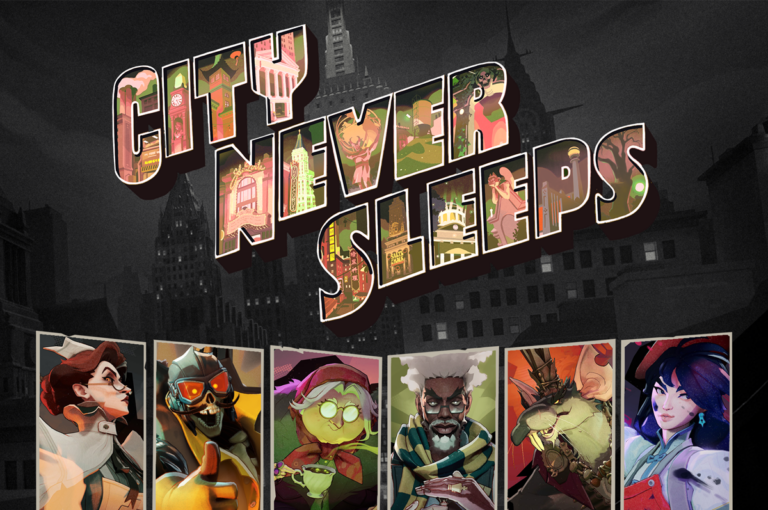
The update introduces six new playable heroes, a comprehensive renaming and redesign of the three-lane map (colloquially known as the Cursed Apple), new NPC mechanics, a redesigned HUD, and more than 10,000 new voice lines. Alongside the patch, Valve published a rare set of developer notes discussing the studio’s priorities over the past year — a signal observers widely read as momentum toward a formal public launch.
Deadlock’s genre-defying growth is rooted in what it asks players to do differently from every other hero shooter on the market. Rather than entering matches with set loadouts, Deadlock players collect “souls” — an in-game currency earned by defeating enemies, last-hitting NPC troopers in lanes, and destroying objectives — and use them to purchase and upgrade items through a dynamic shop mid-match. This is the MOBA economic layer: the same resource-management loop that made Dota 2 and League of Legends enduring competitive games, layered underneath third-person shooter combat.
The distinction matters because it defines how matches feel and why the player base keeps returning. In a pure hero shooter, the gap between winning and losing teams is measured in skill and coordination. In Deadlock, it is also measured in economic decisions: which items to buy, when to trade a gunfight for a soul-generating wave clear, how to push a lane while contesting the new Unstable Rift objective. The result is a game that rewards learning curves over time rather than burning through fast-refresh sessions — a structural property that supports a persistent, growing community rather than a launch-spike audience.
Valve’s free-to-play, invite-only model compounds this advantage. Sony’s Concord sold approximately 25,000 copies across PlayStation 5 and PC and shut down its servers on September 6, 2024 — fourteen days after release. Deadlock is free, has never asked for payment, and benefits from Valve’s distribution advantage on Steam itself: every player it attracts is already on the platform Valve monetizes through other games, making Deadlock’s acquisition cost effectively zero and its user research yield enormous.
The marquee addition to “City Never Sleeps” is the Rat King, a hero whose path to Deadlock is an unusually direct example of developer-community collaboration. The character concept originated as fan art posted to the Deadlock subreddit roughly a year ago, accumulating enthusiastic community support before Valve independently moved toward making it official. Eagle-eyed players had also spotted a reference to the Rat King in a Dota 2 console string from 2020, suggesting the concept had lived in Valve’s imagination for years before the community independently converged on it.
This is not the first time Valve has let the community shape its roster. The gargoyle hero Ivy was redesigned in 2025 to more closely match fan art interpretations of her character — toning down a fearsome original face in favor of the endearing version players had already decided she was. The August 2025 update introduced six heroes through a player voting system, where the community determined the order of release through match victories. “City Never Sleeps” continues that system with new wrinkles: all voting now takes place in a newly introduced pre-game lobby, and votes from the winning team count double.
The Rat King is described as “Scrappy, Regal, Tenacious.” It joins five other new heroes: Baba (Cackling, Beady, Hexing), Deadman Danny (Reckless, High-Flying, Explosive), Nurse Harrow (Strict, Terrifying, Saviour), Violet (Expressive, Nimble, Creative), and Solomon (Strategist, Grandmaster, Checkmate).
Not all six are playable immediately. Heroes will unlock on a staggered schedule: two per week, on Tuesdays and Fridays at 2:00 PM PT (5:00 PM ET). The first hero is scheduled to unlock this Friday, October 2. Votes are earned through match victories.
Beyond the new heroes, “City Never Sleeps” delivers the most extensive map redesign in Deadlock’s two-year public history. The three main lanes have shed their placeholder color names in favor of New York-inflected identities. The mid lane (formerly blue) is now Broadway, running from Uptown and Times Square to Downtown. The bottom lane (formerly green) is now Greenwich, passing through Umbria University, Central Park, and The Brownstones. The top lane (formerly yellow) is now York, with three waypoints: Stock Exchange, Seaport Dock, and Old Fairfax Factories.
Four new side-street districts have been added: Theatre, Chinatown, Haunted Lot, and Plaza — each with its own unique Haunt camps (Deadlock’s category of neutral creep objectives). A new underground Sunken Plaza beneath the main square and a Bell Tower complete the expansion. The full roster of new Haunts across all districts: Specimen (Broadway), Gutter Ghouls (Greenwich), Barrel Mimics (York), Stage Hands (Theatre District), Crabbage Pots and Festival Spirit (Chinatown District), Shrooms (Haunted Lot District), and Underhands (Plaza District).
The map’s occult 1940s New York setting — what Eurogamer’s Matt Cox described as “alternative-world fantasy goth New York” — has been one of the game’s defining appeals. The lane renaming deepens the lore geography by giving the three lanes distinct identities that reflect their placement and feel.
For readers new to Deadlock’s release cadence: Valve does not drop all new heroes simultaneously. Instead, players collectively decide which order the roster unlocks by voting in the new pre-game lobby. Each match victory earns voting tokens. Tokens are spent on a candidate hero, with the top vote-getter unlocking on the next scheduled release date — Tuesdays and Fridays at 2:00 PM PT (5:00 PM ET).
The new “winning team votes count double” mechanic adds a competitive incentive layer: winning more efficiently means more influence over which hero the community gets next. It is a deliberate alignment of in-game success with community co-creation — the kind of design loop that has kept Deadlock’s player base engaged between major updates, when many comparable games see sharp audience drop-offs.
“City Never Sleeps” adds three new gameplay mechanics that are likely to reshape match flow. The Broker is a new NPC merchant capable of transforming standard items into corrupted variants. The specific cost of these corrupted upgrades is not yet detailed in public patch notes, and the community is actively theorizing about the risk-reward tradeoff, which suggests Valve has intentionally left some ambiguity to generate discovery.
Steam Vents grant a brief period of invisibility and minor regeneration to any player standing on them — a movement and information mechanic that will introduce new angles for ambushes, escapes, and repositioning. Tough Crates and Buff Containers replace some existing destructibles on the map, requiring a Heavy Melee attack to open rather than a standard hit. The input distinction turns looting from a background action into a deliberate choice, adding a small skill-check layer to resource gathering.
The “City Never Sleeps” update includes a redesigned health bar, improved ally indicators, an enhanced stats display, a new targeting mode, an in-match event feed, and an overhauled shop layout. Pre-match conversation voice lines have grown from more than 700 to 1,500, with an additional 10,000 non-ping voice lines recorded across the roster. A new in-game dialogue player allows players to browse the full voice library on demand.
The more consequential addition for the game’s long-term trajectory may be the accompanying developer notes. Valve published a discussion of its priorities over the past year alongside the patch — a rare instance of the studio offering a forward-looking perspective on a game it has technically never formally announced. The notes are widely read as signaling that Deadlock is now in a phase of consolidation toward a formal public launch rather than continued open-ended development.
Deadlock has been in closed beta since August 2024. It is currently the most wishlisted game on Steam, per data from May 2026. No official release date has been set.
Where most hero shooters send players into matches with fixed abilities and no in-match economic layer, Deadlock layers a MOBA-style resource system on top of its combat. Players collect “souls” by last-hitting lane troopers and defeating enemies, then spend them on items in a dynamic mid-match shop. The result is a game that rewards longer-term strategic decisions — what to buy, when to leave a lane, how to time objectives — rather than pure aim and coordination alone. This economic depth is the primary structural reason Deadlock’s player base returns more consistently than the genre’s more straightforward entries.
The first hero from the “City Never Sleeps” batch will unlock this Friday, October 2, 2026 at 2:00 PM PT (5:00 PM ET). Two heroes will unlock per week after that, on Tuesdays and Fridays at the same time. Players vote on release order by spending tokens earned from match victories; winning-team tokens count double under the new system.
Yes, Deadlock is free to play and has never charged players anything. Access is currently limited to invite-only: existing players can invite friends through Steam. The game remains in closed beta as of September 30, 2026, with no official launch date announced. It is the most wishlisted game on Steam. Developer notes published alongside “City Never Sleeps” are widely interpreted as movement toward a public launch.
Sony’s Concord launched August 23, 2024 at $40, sold approximately 25,000 copies, and shut down its servers fourteen days later — one of the most high-profile failures in modern gaming history. Analysts cited genre oversaturation, a premium price point in a free-to-play market, and a lack of differentiation. Deadlock avoids each of those problems: it is free, it is built by Valve (which owns Steam and benefits from platform-level distribution advantages), and its MOBA soul economy creates meaningful strategic depth that pure hero shooters lack. The 228,086 concurrent player record it set today — with access still invite-only — is the starkest possible contrast.