HomeAuto DDR5 Prices Tripled as AI Ate DRAM Supply; Kingston Still Leads at 62% for 23rd Year
DDR5 Prices Tripled as AI Ate DRAM Supply; Kingston Still Leads at 62% for 23rd Year
October 8, 2026:
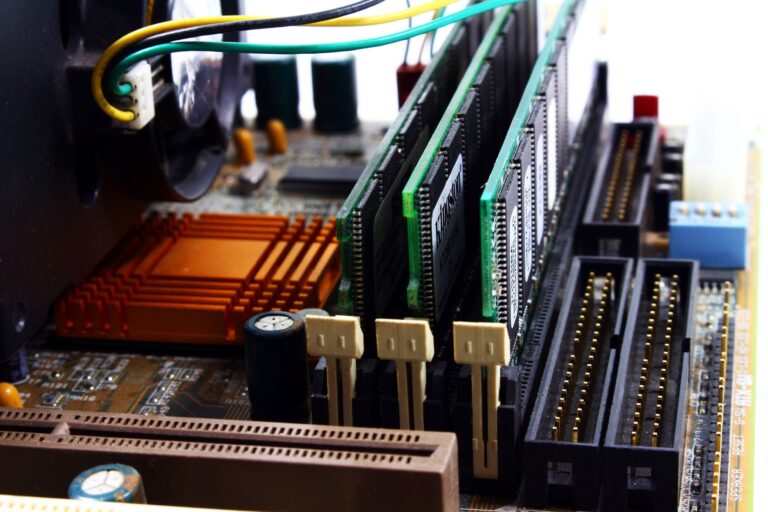
Valentine Tanasovich/pexels.com
Kingston Technology retained its position as the world’s largest third-party DRAM module supplier in 2025 for the 23rd year running — but for the first time in years, it lost ground in percentage terms, dropping from 66% of the market to 62% as competitors rode an AI-driven price surge more aggressively than Kingston’s massive procurement scale allowed. That same AI infrastructure buildout is now the reason the 32 GB DDR5 kit you priced last summer costs three to five times more today.
Kingston’s 23-Year Streak Survives — Barely Changed at the Top
According to TrendForce’s annual rankings by revenue, the global DRAM module market generated approximately $21.2 billion in 2025, a 59% year-over-year surge from $13.3 billion in 2024. Kingston’s estimated revenue grew 48% to roughly $13.1 billion, and it held its No. 1 position with an estimated 62% market share.
The streak now spans five complete memory generations — DDR1 through DDR5 — and the rise and fall of PC optical drives, the birth of the smartphone, the cloud computing buildout, and now the AI infrastructure supercycle. No other module maker has displaced Kingston for a single year since TrendForce began publishing these rankings in the early 2000s.
But Kingston’s headline milestone comes with a footnote that didn’t appear in its press release. The company grew at 48% in a year when the overall market expanded by 59%, which means Kingston’s share of the market shrank — from 66% to 62%, a four-point loss in a single year. That four-point gap went to competitors who had timed their inventory purchases better.
Why Kingston’s Dominance Has a Structural Ceiling
Understanding why Kingston underperformed the market’s average in 2025 requires knowing how DRAM module economics work. Kingston is not a chip manufacturer. Samsung, SK Hynix, and Micron produce all of the world’s DRAM dies — the actual silicon capacitor-and-transistor arrays that store data. Kingston’s business is purchasing those dies and assembling them onto printed circuit boards as finished memory modules: the DIMMs you install in a desktop, the SO-DIMMs in a laptop, the registered RDIMMs in a server. Kingston’s competitive edge is procurement scale — as the market’s largest single buyer of commodity DRAM dies, it can secure supply and manage inventory in ways no smaller competitor can replicate.
That same scale created a disadvantage in 2025. When DRAM die prices rise sharply in the second half of a year, the companies that benefit most are those that built cheap inventory in the first half and sold it at higher prices in the second half. Kingston, as a continuous large-scale buyer, was already paying market prices throughout — it couldn’t benefit from the same inventory arbitrage that let competitors post double-digit outperformance. ADATA, ranked second with a 6% market share, grew 82% year-over-year. Apacer ranked eighth and grew 96%. Ramaxel entered the rankings at No. 3 with 153% growth, its first appearance in the top tier, driven partly by partnerships with domestic Chinese DRAM suppliers and cloud providers. Team Group, ranked fifth, was the only company among the top nine for which TrendForce did not publish a year-over-year growth figure in its report’s body text.
Kingston’s absolute 48% revenue gain is not a failure — it represents several billion dollars of additional sales. But the market-share loss shows the structural ceiling of the commodity-assembler model when the market moves fast and inventory timing matters.
What Is High-Bandwidth Memory, and Why Does It Affect Your RAM Price?
This is where the story stops being about Kingston’s competitive positioning and starts being about what every PC builder, laptop buyer, and server operator pays at retail.
DRAM memory comes in two fundamentally different architectures. The DDR5 sticks in a consumer PC are flat modules — multiple DRAM chips mounted on a printed circuit board, connected to the CPU via a standard slot. High-Bandwidth Memory (HBM) is something different: multiple DRAM dies stacked vertically four to twelve layers high, connected through thousands of microscopic vertical channels called Through-Silicon Vias (TSVs), and placed directly alongside the processor on the same silicon package. The result delivers roughly 20 times the bandwidth of a conventional DDR5 flat module design — which is why every AI accelerator from NVIDIA’s H100 to AMD’s MI300X uses it as its primary memory.
HBM’s manufacturing process cannot be performed by module assemblers like Kingston. Producing HBM requires the same fabrication plants that make conventional DRAM dies, but with additional TSV drilling steps and specialized packaging — all operations only chip fabricators can do. As AI infrastructure spending accelerated through 2025, Samsung, SK Hynix, and Micron began converting wafer capacity that previously produced conventional DDR5 dies toward HBM production, which commands roughly five to ten times the revenue per wafer.
The result: fewer DDR5 dies available for the module assemblers, tighter supply in the consumer and enterprise channel, and sharply higher prices. North American and Chinese cloud providers ramped server DRAM orders in the second half of 2025 to support agentic AI workloads, which further squeezed allocations for PC and consumer applications.
What Consumers Are Actually Paying Right Now
The price effects are not abstract. As of mid-2026, retail DDR5 RAM costs three to four times what it did in mid-2025. A 32 GB DDR5 kit that sold for approximately $90–$100 a year ago now runs $350–$450. TrendForce reported in August 2026 that a standard 32 GB DDR5 kit that sold for around $100–$200 in October 2025 now starts at roughly $350; Germany’s DDR5 price index reached 486% of July 2025 levels. Bloomberg has reported that DRAM contract prices are up nearly 400% since September 2025.
Cameron Crandall, Kingston’s datacenter SSD business manager, described the situation in a December 2025 interview as a “pricing apocalypse unlike anything he’s seen in 29 years.” His advice to PC builders: do not wait. Crandall said in the interview that he advised consumers to not hold off on purchases because prices would be more expensive 30 days later, describing supply constraints he expected to persist well into 2026.
Micron, the Boise, Idaho-based chip fabricator whose consumer-facing brand Crucial had been a leading retail RAM provider, exited the consumer retail market by late 2025 — a direct consequence of its strategic reallocation to AI infrastructure production. With Crucial gone, Kingston is now one of the few remaining major brands with consistent retail shelf presence for consumer DDR5.
TrendForce forecasts that server DRAM contract prices will rise an additional 13–18% quarter-over-quarter in Q3 2026. Analysts who in early 2026 had projected a shortage lasting through 2028 have since revised their estimates to an even longer timeline, with the structural driver — HBM production consuming fabricator capacity at the expense of conventional DRAM supply — showing no signs of reversal.
The DDR4-to-DDR5 Transition Is Accelerating — With Mixed Consumer Implications
There is a separate generational shift layered underneath the AI supply story. The memory industry is completing its transition from DDR4 to DDR5 — the fifth full memory generation Kingston has navigated during its market-leading streak.
DDR5, standardized by JEDEC in July 2020, delivers roughly double the bandwidth of DDR4 at approximately the same latency (~14 nanoseconds), runs at lower voltage (1.1V vs. 1.2V), and can scale to dramatically higher per-DIMM capacities. A key architectural change is the integration of voltage regulators onto the DIMM itself — in DDR4, those regulators lived on the motherboard. DDR5 also introduces a dual-subchannel architecture that improves memory access efficiency for burst workloads. Its planned successor, DDR6, is on the JEDEC roadmap for 2028.
Samsung and SK Hynix began signaling end-of-life plans for DDR4 chips in late 2024, initially targeting a phase-out in late 2025. But surging demand and elevated prices turned DDR4 production into a cash-generating holdover, and both companies pushed the DDR4 phase-out into 2026. Kingston had been shipping DDR5 modules under both its mainstream line and its FURY enthusiast brand for several years before the mainstream shift accelerated.
The generational transition has an important consumer implication: DDR4 and DDR5 are not physically compatible — a DDR5 DIMM will not fit in a DDR4 slot, and upgrading from a DDR4-era system to DDR5 requires a new CPU and motherboard platform, not just new RAM.
Market Concentration and Kingston’s Competitive Position Going Into 2026
The TrendForce data shows the DRAM module market remains highly concentrated, though that concentration slipped slightly in 2025. The top five module makers — Kingston, ADATA, Ramaxel, Kimtigo, and Team Group — accounted for 77% of total market revenue in 2025, down from 81% in 2024. The top nine accounted for 81%.
Kingston’s nearest competitor holds 6% — roughly one-tenth of Kingston’s share. No competitive threat to its No. 1 ranking is visible in the short term. But the four-point share decline from 2024 to 2025 carries a structural signal worth watching. In a market where DRAM die supply is increasingly allocated to HBM production, Kingston’s purchasing volume — its historic competitive moat — is only as effective as the three fabricators’ willingness to keep selling it a large share of their conventional DDR5 output.
TrendForce also noted that module makers across the industry increasingly shifted toward industrial and enterprise server segments in 2025, where higher-margin products and longer contract cycles provide some insulation from spot-market price volatility. Kingston’s press release describes broader expansion “across consumer, enterprise, industrial, and data center applications.” Whether that pivot accelerates in 2026 — and whether it means the company’s consumer DIMM presence thins — is the question its 24th consecutive year of market leadership will have to answer.
Does Kingston Have a Ceiling?
Kingston’s 23-year streak has outlasted everything the memory industry has thrown at it: five complete DDR generations, the rise of cloud computing, the post-pandemic boom-and-bust, and now the AI-induced supply squeeze. In absolute dollar terms, $13.1 billion in estimated 2025 revenue represents an extraordinary business built on an apparently modest product — a stick of RAM.
But Kingston is not a technology company in the conventional sense. It does not design memory chips, does not own fabrication plants, and cannot independently determine how many DDR5 dies are available for it to buy. Its 23-year dominance rests on the willingness of three chip fabricators to keep selling it conventional DRAM at scale — and those fabricators are now being paid five to ten times more, per wafer, to produce HBM for AI customers.
That structural reality is the one the 23-year anniversary headline obscures. Kingston’s crown is real. The competition that could take it does not yet exist. But the raw material supply that the crown depends on is becoming structurally more constrained, not less — and the consumers paying $450 for RAM that cost $100 a year ago are living inside that constraint right now.
Frequently Asked Questions
Why are RAM prices so high in 2026?
The primary cause is competition for DRAM fabrication capacity. Samsung, SK Hynix, and Micron — the world’s three DRAM chip manufacturers — have shifted a growing portion of their wafer production to High-Bandwidth Memory (HBM), the stacked, high-speed memory inside AI accelerators like NVIDIA’s GPUs. HBM commands roughly five to ten times the revenue per wafer compared to conventional DDR5 memory. With fewer wafers producing conventional DRAM, supply tightened against strong AI server demand in the second half of 2025, pushing prices sharply higher for all buyers — including consumers buying desktop and laptop RAM. The 2026 RAM price crisis is expected to continue through at least 2028 per analysts tracking the structural HBM conversion.
What does it mean that Kingston holds 62% of the DRAM module market?
Kingston is a module assembler, not a chip manufacturer. It buys DRAM dies from Samsung, SK Hynix, and Micron, then assembles them onto printed circuit boards and sells the finished DIMMs and SO-DIMMs under its brand. Its 62% market share means that of every dollar the world’s independent DRAM module makers collected in 2025 — a combined $21.2 billion — Kingston collected about $13.1 billion. Its nearest competitor, ADATA, held roughly 6%. This dominance reflects Kingston’s unmatched procurement scale, its global distribution, and decades of platform certifications, but it does not mean Kingston can influence chip prices or fabrication capacity decisions made by Samsung, SK Hynix, or Micron. Kingston’s own press release acknowledges its role as a channel-market supplier dependent on those three fabricators’ allocation decisions.
Should I buy RAM now or wait for prices to drop?
This is the practical question consumers are asking, and the honest answer as of October 2026 is that there is no strong case for waiting in the near term. Kingston’s Cameron Crandall, speaking in December 2025, advised consumers to buy without delay, warning that prices would continue rising. TrendForce forecasts server DRAM contract prices to rise an additional 13–18% in Q3 2026, and analysts have extended their shortage timelines. The structural driver — HBM production consuming fabricator capacity at the expense of conventional DRAM supply — has not changed. If you need RAM for an upgrade or a new build, the current market does not reward delay; buying the specific capacity you need now is the advice industry insiders are giving publicly.
What is the difference between DDR5 and the High-Bandwidth Memory used in AI systems?
They are both built on DRAM technology, but they serve fundamentally different roles and cannot be substituted for each other. A DDR5 module is a flat circuit board you plug into a motherboard slot; it connects to the CPU through a standard 288-pin interface and delivers approximately 40–70 GB/s of bandwidth per channel. HBM is a completely different physical structure: four to twelve DRAM dies stacked vertically and fused together using thousands of microscopic vertical channels called Through-Silicon Vias (TSVs), then placed directly alongside the processor on the same package. An NVIDIA H100 carries 80 GB of HBM3, delivering roughly 3.35 terabytes per second of bandwidth — about 50 to 80 times a single DDR5 channel. HBM cannot be manufactured by module assemblers like Kingston; it requires fabricator-level TSV processes. The two memory types share silicon but occupy entirely different tiers of the supply chain, which is why HBM demand strains DDR5 supply without any consumer ever being able to use HBM in a standard PC.