October 22, 2026:


Developer Hey Bird!’s occult detective puzzle game Inkblood announced its expansion to Xbox Series X|S, PlayStation 5, and Nintendo Switch yesterday at the Critical Reflex Time 2026 showcase — paired with the launch of a free Steam Next Fest demo that lets players work through three of its ten cases right now. The announcement came via a Critical Reflex Time showcase announcement issued on October 20, 2026.
The game, built by a Czech studio whose art draws on Czechoslovakian cinema and Eastern European folklore, was previously confirmed only for PC. Now anyone with a Steam account can play the first three cases free, and console players have a confirmed 2027 window to look forward to. The occult detective puzzle game Inkblood is available to wishlist and demo on Steam now.
Inkblood casts you as Inquisitor #0134, deputized in a hurry after your predecessor — Inquisitor #0133 — vanished while pursuing a cult. Wicked sorcery is spreading through the land, rotting the minds of citizens and fraying reality itself. Your job is to solve ten distinct cases of ritual murder and occult corruption before the region collapses entirely — and to find out what happened to the investigator who came before you.
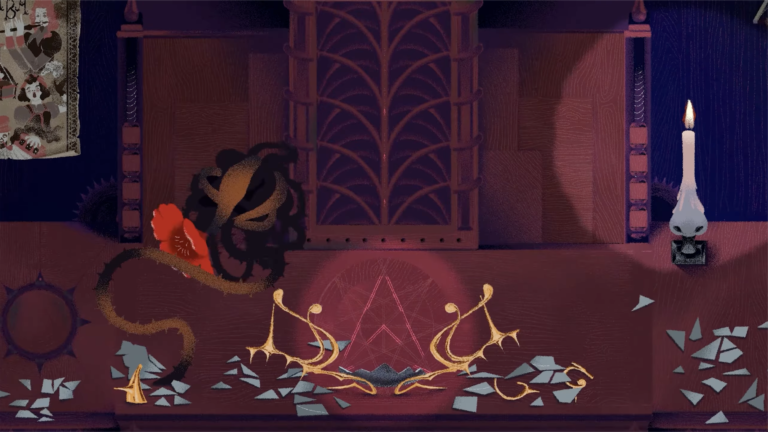
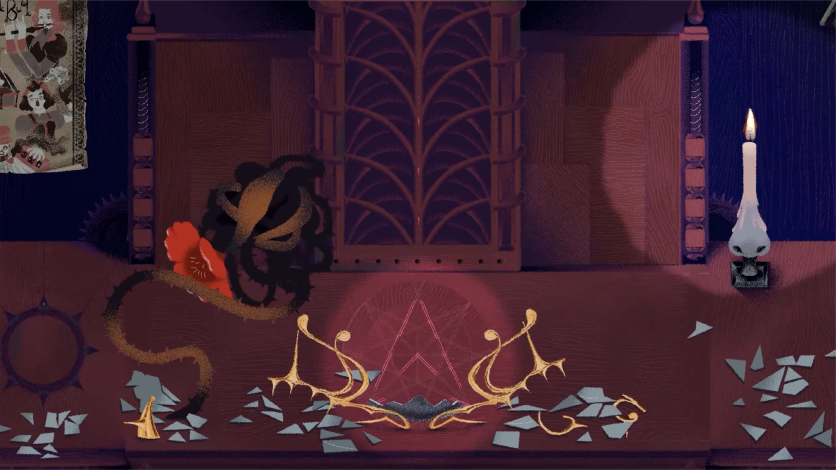
The setting is 19th-century Eastern Europe rendered in a striking hand-drawn style, and the key creative constraint is unusual: you never leave your carriage. All communication with the outside world comes through letters slid through the window; you observe every crime scene through the vehicle’s three glass panes. Art director Natálie Konečná described the carriage window design constraint to Creative Bloq in an October 2, 2026 interview: “There are no doors in the carriage, so you are a prisoner. You don’t speak with any characters outside; they put letters through. It has to feel like you are isolated in the carriage and you’re just a passive viewer, but it also has to feel like a first-person camera, even though it’s 2D.”
That constraint is a design choice as much as a narrative one. Hey Bird! built every location so that it is viewable through one of three specific window perspectives, each with distinct lighting and weather. A soft parallax effect creates the illusion of depth in a scene that is entirely flat.
Inkblood‘s most distinctive mechanical tool is a magnifying glass that reveals the past state of whatever you’re looking at. Hold it over a window and you see the same location as it appeared at a different time — at night where it’s currently morning, or before a murder that has since been cleared away. Konečná described the time-contrast magnifying glass mechanic: two layers exist for every location (present and past) and the magnifying glass transitions between them in real time. “You just put two layers, present and past, and we just rework them, so one is at night, and the other is in the morning,” she explained. “There is a lot of layering in general in Inkblood, and I feel 2D games have to have a strong pipeline and baseline for this kind of layering.”
This places Inkblood in a specific lineage of puzzle investigation games that make deduction itself the core mechanic — not just atmosphere. Return of the Obra Dinn (2018) let players reconstruct deaths from frozen moments in time; The Case of the Golden Idol (2022) had players fill in blanks to describe what a scene shows. Inkblood extends that approach by building time-contrast directly into the world’s visual layer, so the past is always a magnifying-glass motion away from the present.
The rest of the investigation toolkit is deliberately old-fashioned: a camera for photographing evidence, a case-file compilation system, and a radio to report theories to your overseer once you’ve formed one. All of it is physically present inside the carriage rather than displayed in a separate UI. Konečná described the hand-drawn 2D world technique: “All the UI in the game is built-in; there’s no extra layer; everything has to feel tactile.” Navigation happens through a world map displayed on your coachman’s back.
The animations are built with cutout techniques in TVPaint and Photoshop, then run through a custom Unity shader that imitates the “Line Boiling” effect — the organic shimmer of lines in traditional pen-and-ink animation, where outlines shift subtly frame to frame.
Hey Bird! is based in the Czech Republic, and the team leaned explicitly into that cultural heritage. The game’s primary cinematic reference is Mysterious Castle in the Carpathians, a Czechoslovakian film whose grotesque atmosphere Konečná described as the direct visual template for Inkblood‘s world. The Czechoslovakian cinema visual influences extend to animator Ivan Štrobl, who studied at the animation school in Zlín — the Czech Republic’s hub for film and animation — and cited Czech illustrator Miroslav Šašek and animator Karel Zeman as influences visible in the game’s final look.
Critical Reflex has marketed the game as “unsettlingly cozy” — a phrase that points to a specific and increasingly well-defined genre. Cozy horror games combine the methodical, low-pressure gameplay loops associated with life-simulation games with horror subject matter that would feel overwhelming in an action context. Strange Horticulture, one of Inkblood‘s stated inspirations, is a canonical example: you run an herbalism shop while the world outside grows more sinister. Inkblood uses the same structural logic — the calm discipline of puzzle-solving as a container for material that, in another genre, would be genuinely frightening. The cozy horror puzzle genre is anchored by games like Strange Horticulture, which Inkblood explicitly cites as an inspiration.
The game had 60,000 Steam wishlists at launch by the time its first public demo launched on October 1, 2026, according to Insider Gaming. The Steam Next Fest demo, released yesterday alongside the console announcement, covers three full cases. An April 2026 Steam playtest had previously offered two cases to a narrower audience.
The console announcement for Inkblood was one of several significant reveals at the second annual publisher showcase — Critical Reflex Time 2026 — which aired immediately after the ID@Xbox Showcase on October 20. The headline news across the full broadcast:
Buckshot Roulette — the indie horror game that has sold more than 10 million copies on PC and Xbox — will arrive on PlayStation 5, PlayStation 4, and Nintendo Switch soon. No specific date was given.
Mouthwashing, Critical Reflex’s award-winning psychological horror game about the dying crew of a shipwrecked space freighter, will launch on Xbox Series X|S and Xbox Game Pass (as well as PlayStation 5, PlayStation 4, and Nintendo Switch) on October 29.
Arctic Eggs, the surreal egg-cooking simulator, was shadow-dropped on Xbox Series X|S during the showcase. PlayStation 5 and Nintendo Switch versions are coming later.
Cucina Stellata, an Italian-gastronomy horror game, launched free on Steam during the broadcast itself.
Two new game announcements rounded out the show. amFM is a surreal psychological RPG in which players tune into the minds of others, searching for the truth behind a catastrophic rainfall that destroyed civilization — players can switch dimensions at any time and build mechanisms to confront enemies. It is coming to PC and Xbox Series X|S. KEYKRUNCHER™ is a horror game about eating keyboards in a clinical assessment room, with something waiting in the hallway. It is also coming to PC and Xbox.
Several Critical Reflex games launched three free Steam demos during the showcase. Pipes.exe, a co-op screensaver horror game, dropped a new Steam demo with Twitch integration that lets viewers add words to an in-game profanity filter. Drowned Lake, an atmospheric survival horror game built around found-footage discovery, launched its first public demo on Steam. Tiny Chills – Not From Ear, a surreal ear-cleaning simulation, also launched its first demo.
The Inkblood free Steam Next Fest demo is available now at no cost. The full PC version of the game is expected to arrive in 2026; the console versions are set for 2027.
Inkblood was originally announced for PC via Steam. At the Critical Reflex Time showcase announcement on October 20, developer Hey Bird! and publisher Critical Reflex confirmed the game will also come to Xbox Series X|S, PlayStation 5, and Nintendo Switch. The PC version is expected in 2026; the console versions are set for 2027.
The closed-carriage design is both a narrative conceit and an artistic framework. You observe every crime scene through the carriage’s three windows, which forces the game to design each location as a set of specific perspectives rather than an open space. Art director Natálie Konečná has described the carriage window design constraint as intentional — it makes you feel isolated, passive, and dependent on what the outside world chooses to show you, which echoes the bureaucratic powerlessness of the Inquisition you serve. The constraint also allowed Hey Bird! to build each location as a hand-crafted parallax scene with consistent depth cues, rather than a navigable environment.
All three belong to a specific lineage of puzzle investigation games where deduction is the mechanic rather than the theme. Return of the Obra Dinn lets players reconstruct deaths from frozen moments. The Case of the Golden Idol has players populate a narrative template with words gathered from observing a scene. Inkblood adds a time-contrast mechanic — a magnifying glass that overlays the past state of a location onto the present — and wraps everything in a carriage-bound isolation design that neither of the earlier games used. The “cozy horror” framing also distinguishes it: the methodical puzzle structure is meant to feel calm and methodical even as the subject matter (cult murders, mind-corrupting sorcery) is unsettling.
Yes. The Inkblood free Steam Next Fest demo covers three of the game’s ten cases. It launched on October 20, 2026, as part of Steam Next Fest. No account beyond a standard free Steam account is required to claim and play it.