November 11, 2026:


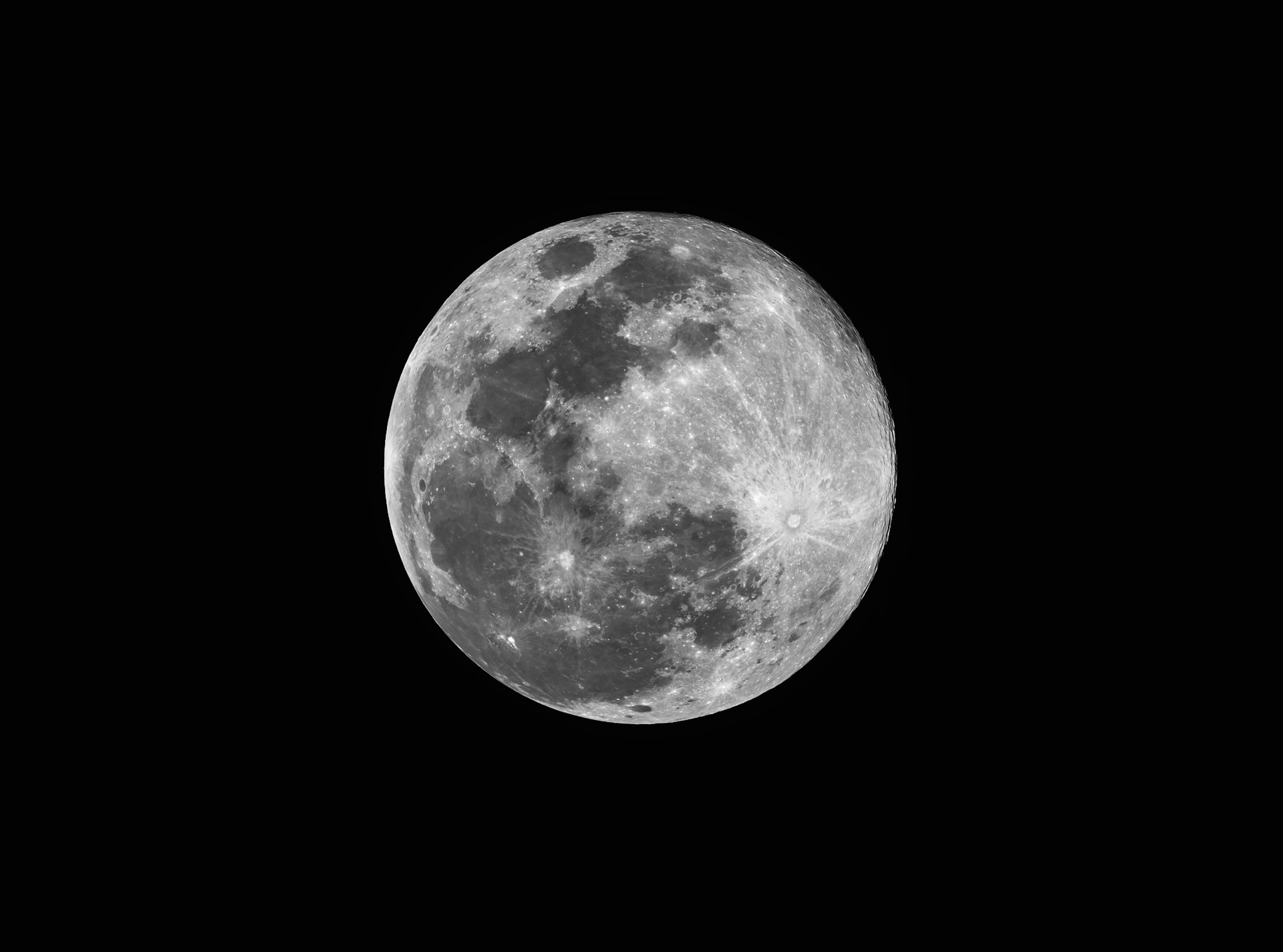
The Moon may hold more than traces of its geological history. According to a new theoretical study, microscopic fragments of ancient technology from distant star systems could have accumulated on its surface over billions of years.
Researchers suggest that lunar dust may preserve artificial materials left behind by civilizations that existed long before humanity began exploring space.
The proposal does not claim that extraterrestrial technology has already been discovered. Instead, it introduces a different approach to the search for extraterrestrial intelligence (SETI): examining lunar soil for microscopic technological signatures, also known as technosignatures.
The idea is based on the Moon’s unusual environment, which allows material from space to settle and remain relatively undisturbed. If fragments of artificial objects can travel between star systems, some may eventually reach the lunar surface and become part of its ancient dust.
Unlike Earth, the Moon has virtually no atmosphere or global magnetic field to shield its surface from incoming space material. It is continuously exposed to meteorite impacts, interplanetary dust, and microscopic particles traveling through the solar system.
The absence of liquid water, active weather systems, and tectonic movements also means that lunar surface material does not undergo the same processes that constantly reshape Earth’s landscape.
As a result, particles that land on the Moon can accumulate in its regolith, the loose layer of dust, soil, and broken rock covering the lunar surface. Researchers believe this environment could make the Moon a natural archive of material originating from different parts of the galaxy. Some of these particles may even have formed before the Moon itself.
In a study uploaded to the preprint server arXiv on June 23, planetary scientist Lewis Pinault of University College London and the SETI Institute proposed investigating whether this accumulated material could contain microscopic evidence of ancient extraterrestrial technology.
The traditional search for extraterrestrial intelligence has largely focused on detecting signals that could indicate advanced civilizations.
These searches commonly involve looking for unusual radio transmissions from distant planetary systems or potential technosignatures associated with massive artificial structures, including hypothetical Dyson spheres.
However, radio signals have an important limitation: they generally require a civilization or technological system to be active when observations take place. A civilization that disappeared millions or billions of years ago would no longer be transmitting signals for modern telescopes to detect.
The researchers behind the new study suggest that physical traces of technology could offer another way to investigate extraterrestrial civilizations. Even after a civilization disappears, some manufactured materials could survive and eventually travel into interstellar space.
According to Live Science, the study proposes several possible ways microscopic technological fragments could escape their original planetary systems.
One possibility involves the deterioration or destruction of artificial structures, spacecraft, and other manufactured objects. Another involves powerful asteroid impacts striking planets that may once have supported technological civilizations.
Such events could eject fragments of metal and other artificial materials into space. Once released, sufficiently small particles could be carried away from their original star systems by stellar winds and other processes. They could then drift through interstellar space for extremely long periods before encountering another planetary system.
Using computer models, the researchers estimated that technological fragments measuring up to approximately three micrometers could escape their home systems and travel through interstellar space for as long as one billion years.
Some of these particles could eventually enter the solar system and settle on the Moon. The researchers point to the discovery of interstellar dust in samples collected from asteroid Bennu as evidence that material from beyond the solar system can reach nearby celestial bodies. NASA’s OSIRIS-REx mission collected samples from Bennu, which orbits between Earth and Mars.
One of the study’s most interesting proposals concerns how much lunar material is needed for a meaningful search. The researchers estimate that examining approximately 35 cubic feet, or one cubic meter, of lunar regolith could potentially reveal at least one microscopic technological fragment.
This would involve searching through lunar soil using specialized laboratory techniques rather than relying on ordinary visual inspection.
Microscopy could help identify unusually shaped particles, while industrial materials analysis could examine their chemical composition and physical properties. Artificial intelligence-assisted imaging could also help researchers process large quantities of microscopic observations and identify potential candidates.
However, finding an unusual particle would not automatically establish that it came from an extraterrestrial civilization. Researchers would still need to determine whether its composition and characteristics could be explained by natural processes or human-made contamination.
Despite decades of lunar exploration, no collected Moon sample has been confirmed to contain technosignatures.
The researchers argue that this does not necessarily mean such fragments are absent from the lunar surface.
Previous lunar sample collections were not specifically designed to search for microscopic remains of extraterrestrial technology. Their relatively limited quantities may also make it difficult to detect extremely rare particles.
A sample can contain enormous amounts of ordinary lunar material while still missing a technological fragment that may be distributed unevenly across the surface.
The study therefore suggests that a negative result from a small sample would not be enough to dismiss the possibility. Instead, it could indicate that larger quantities of lunar soil need to be examined or that the original models require further refinement.
Upcoming lunar exploration programs could provide opportunities to investigate the proposal. China’s Chang’e-7 mission and future NASA Artemis missions are among the programs expected to contribute additional lunar surface research and sample collection.
However, the quantities of regolith gathered during individual missions may be considerably smaller than the one-cubic-meter sample proposed by the researchers. A more extensive investigation could become possible as astronauts establish longer-term operations on the Moon.
Both the United States and China have expressed plans for future lunar infrastructure, creating opportunities for scientific experiments that could eventually be conducted directly on the lunar surface. Analyzing samples on the Moon could also reduce the need to transport large quantities of material back to Earth.
Such developments may eventually allow researchers to investigate lunar regolith on a scale that was not practical during earlier exploration missions.
The proposal has attracted interest from researchers searching for extraterrestrial intelligence. Bill Diamond, president and CEO of the SETI Institute, described the idea as an original and reasonable addition to existing methods for searching for technosignatures.
The concept expands the scope of SETI research by considering that evidence of technological civilizations may survive in physical form rather than through detectable electromagnetic signals. It also offers an opportunity to investigate ancient civilizations that may have existed long before humanity’s astronomical observations began.
Still, the study remains theoretical. Its predictions need to be tested through actual lunar samples and more detailed investigations. The research has been submitted to the International Journal of Astrobiology, but according to the supplied study information, it has not yet been published as a peer-reviewed paper.
Scientists have proposed that microscopic fragments of artificial materials from distant star systems could have accumulated on the lunar surface. However, scientists have not found any evidence of extraterrestrial technology in Moon samples so far.
The Moon has virtually no atmosphere, no active weather systems, and no liquid water on its surface. These conditions allow incoming space particles to accumulate in lunar soil with relatively little disturbance.
Technosignatures are potential signs of technology created by an intelligent civilization. They can include artificial radio signals, unusual structures, and physical materials that cannot be readily explained by natural processes.
The study suggests that fragments of spacecraft, artificial structures, or other technological objects could be ejected into space following collisions or structural destruction. Small particles could then travel between star systems and eventually enter the solar system.
The researchers estimate that approximately one cubic meter of lunar regolith could be sufficient to find at least one microscopic technological fragment, although this remains a theoretical prediction.
No confirmed evidence of ancient extraterrestrial technology has been reported in lunar samples. The proposed research introduces a new method for examining samples specifically for microscopic technosignatures.
Future lunar exploration missions could provide additional samples, but a comprehensive investigation may require larger quantities of regolith and specialized equipment. Permanent lunar research facilities could eventually make such studies more practical.