Colorbound Lands October 12: Jam-Born Aymara Puzzle-Platformer Hits Eight Platforms

September 13, 2026:

Colorbound Lands October 12: Jam-Born Aymara Puzzle-Platformer Hits Eight Platforms
Colorbound
Whitethorngames.com

Whitethorn Games and Chilean solo developer Panpipe Studio have confirmed that Colorbound — a puzzle-platformer built around a color-physics mechanic and rooted in Andean Aymara culture — will launch on eight platforms this October. A free playable demo is already live on Steam, giving players a direct line to the mechanic before spending a cent.

The game began as a 10-day entry in the Latin American Games Showcase game jam, which ran March 28 through April 6, 2025, under the theme “What the Eyes Don’t See, the Heart Doesn’t Feel.” That jam win led directly to a publishing agreement with Whitethorn Games — and that path from jam prototype to eight-platform commercial release, completed in under two years, is the story the LAGS ecosystem was designed to produce. With the October 12 date now locked and 11 languages confirmed at launch, Colorbound is one of the clearest examples yet of what the Latin American indie pipeline looks like when it works.

How Color Becomes a Physics Tool

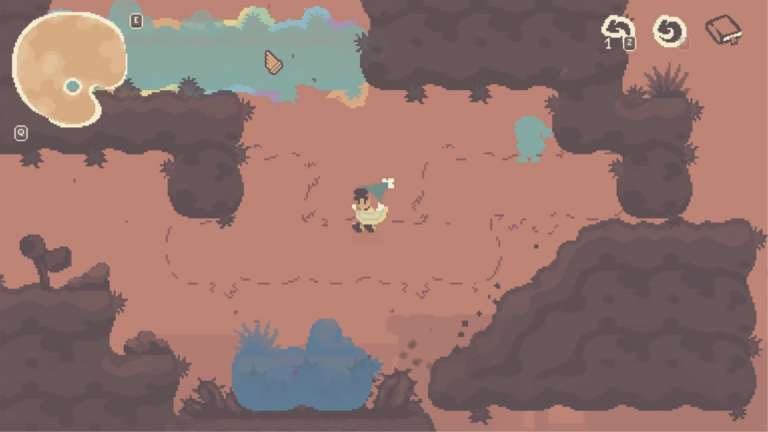
The mechanic at Colorbound‘s center is a palette-based property system. Players control Anku, a young Aymara boy who possesses the rare ability to paint the world around him with collected colors — and each color confers a distinct physical property on whatever it touches. Lighter pigments cause painted objects to float upward once applied; heavier colors increase object mass and cause it to drop or sink. The player’s challenge in any given puzzle is to read that property system, identify which physical outcome will open the next path, and then select the right color to produce it.

This creates a double-layer puzzle: the player must solve “what physical change do I need here?” before they can solve “which color produces that change?” As the palette grows — adding more colors with more nuanced properties — the combinatorial complexity grows with it. The design echoes a tradition of color-as-game-mechanic titles (Ikaruga’s polarity system, de Blob’s painting-to-restore mechanic, Hue’s background-shift puzzle logic), but Colorbound’s formulation of color as buoyancy and mass modifier appears to be its own distinct approach to the idea rather than a direct iteration on any one predecessor.

The puzzles play out across a variety of distinct biomes — dusty deserts, forgotten cities in ruin, flourishing forests — and the overworld structure gives players a hub from which to approach individual stages, letting them return to earlier areas as their palette expands. The minimum system requirements are genuinely accessible: an Intel Core i3, 2 GB of RAM, and 5 GB of storage are sufficient to run the game, with Vulkan 1.4 graphics support required.

What Anku Is Looking For

Anku’s grandfather was a beloved musician — a figure who brought his community together through his band’s performances. After the grandfather’s death, the band has scattered. Anku sets out across the world with only his gift and his grief, seeking each former musician, helping them recover their neglected instruments, and reigniting the passion they’d set aside. The central dramatic question driving the journey is whether Anku can reunite every member in time for one final tribute performance — a farewell concert in his grandfather’s memory.

The emotional register the game operates in is specific: warm and visually vibrant on the surface, with an undertone of loss that never resolves into sentimentality. The “heartfelt” label that both the developer and publisher use comes from this specific tension — a child doing something enormous and lonely (traversing strange landscapes alone) in service of something small and intimate (honoring a person no longer alive to hear it). The coloring-the-world mechanic reinforces that emotional logic: Anku literally brightens his environment as he moves forward, which is how grief often works in practice.

Aymara Culture as Foundation, Not Backdrop

The Aymara are an Indigenous people of the Andes and Altiplano regions, with approximately 2.3 million people living across Bolivia, Peru, Chile, and Argentina. Their cultural traditions include a distinct language (an official language in Bolivia and Peru), rich musical heritage featuring instruments such as the charango (a small Andean lute), zampona (panpipes), and bombo (a large drum), and a worldview rooted in reciprocity and harmony with the natural world. UNESCO has undertaken specific Aymara heritage safeguarding projects across Bolivia, Chile, and Peru, focusing on oral expressions, music, and traditional knowledge.

Colorbound‘s creator, Panpipe Studio founder Isaías Arrué R., is a Chilean composer and solo developer who draws on Chilean and Andean heritage in his work. The game’s soundtrack draws on traditional Andean instrumentation, and its visual design reflects South American artistic traditions. That the game’s entire narrative arc — the power of music to honor the dead and hold a community together — is inseparable from the cultural context it draws from is part of what distinguishes Colorbound from puzzle-platformers that use cultural aesthetic as decoration.

From Game Jam Win to Multi-Platform Release

Panpipe Studio did not begin as a commercial studio. Isaías Arrué R. founded it in 2025, after the LAGS Game Jam entry that became Colorbound won both the popular vote among attendees and jury selection at the event. The LAGS Game Jam is organized by the Latin American Games Showcase, an annual event dedicated to increasing the visibility of games being developed across Latin America. The 2025 jam selected at least three games to appear at the LAGS Summer Game Fest showcase — Colorbound was among them.

That pathway matters. The Latin American Games Showcase grew to 80 games from 12 countries in its 2026 edition, matching the scale of many publisher-run events during Summer Game Fest week. The game jam at the base of that infrastructure functions as a discovery mechanism for studios that do not yet exist as commercial entities — and Colorbound‘s trajectory from 10-day jam prototype to Whitethorn-published eight-platform release is what the pipeline was built to make possible.

Whitethorn Games, headquartered in Erie, Pennsylvania, positions itself explicitly as a publisher for accessible, stress-free indie games — describing its catalog as titles that “respect your time” and “never punish you.” Its prior titles include Botany Manor (exploration puzzle), APICO (beekeeping simulation), and Wytchwood (crafting adventure). Colorbound‘s ESRB E for Everyone rating and low system requirements align with that publishing philosophy.

Where and How to Play

Colorbound will launch October 12, 2026, on:

PC: Steam, Epic Games Store, and Humble Store Nintendo Switch and Nintendo Switch 2 Xbox One and Xbox Series X/S PlayStation 4 and PlayStation 5

The free Colorbound demo is available now on Steam. Eleven languages are supported at launch for both interface and subtitles: English, French, Italian, German, Japanese, Korean, Portuguese (Brazil), Russian, Simplified Chinese, Spanish (Latin America), and Traditional Chinese.

The game is also currently featured as part of Steam’s Chile Game Showcase, providing additional visibility for the title and its regional origins.


Frequently Asked Questions

When does Colorbound come out, and what platforms will it be on?

Colorbound will launch October 12, 2026, on PC (Steam, Epic Games Store, and Humble Store), Nintendo Switch, Nintendo Switch 2, Xbox One, Xbox Series X/S, PlayStation 4, and PlayStation 5 — eight platforms in total. A free demo is available right now on Steam for anyone who wants to try the color-physics puzzle mechanic before the game releases.

What is Colorbound actually about, and who is it for?

Colorbound follows Anku, a young Aymara boy whose late grandfather was a beloved musician. The band has scattered since the grandfather’s death, and Anku sets out across diverse landscapes to find each former member, help them recover their instruments, and bring them together for one final tribute performance. The puzzles involve painting the environment with collected colors — lighter pigments make objects float, heavier ones make them drop — to open new paths. The game carries an ESRB rating of E for Everyone and runs on budget hardware (Intel Core i3, 2 GB RAM), making it accessible to a wide range of players and platforms.

What does the LAGS Game Jam have to do with this game?

Colorbound started as a 10-day entry in the Latin American Games Showcase (LAGS) Game Jam 2025, built under the theme “What the Eyes Don’t See, the Heart Doesn’t Feel.” It won both audience and jury recognition at the jam, which led directly to the publishing deal with Whitethorn Games. The LAGS ecosystem — a showcase infrastructure that has grown to 80 games from 12 countries — uses its game jams as a discovery pipeline for Latin American studios that do not yet have commercial backing. Colorbound’s trajectory from prototype to eight-platform commercial release is among the clearest demonstrations of how that pipeline functions.

What cultural traditions does Colorbound draw from?

The game draws from the Aymara people of the Andes — an Indigenous group of approximately 2.3 million people spread across Bolivia, Peru, Chile, and Argentina, with cultural traditions including a distinct language, rich musical heritage (panpipes, small Andean lutes, and drums), and a worldview built around reciprocity and harmony with the natural world. Developer Isaías Arrué R. is a Chilean composer who draws on both Chilean heritage and the broader Andean traditions of the region. The game’s soundtrack uses traditional Andean instrumentation, and its narrative arc — music as the thread that holds a community together after loss — is shaped by that cultural foundation.

Source link