November 21, 2026:


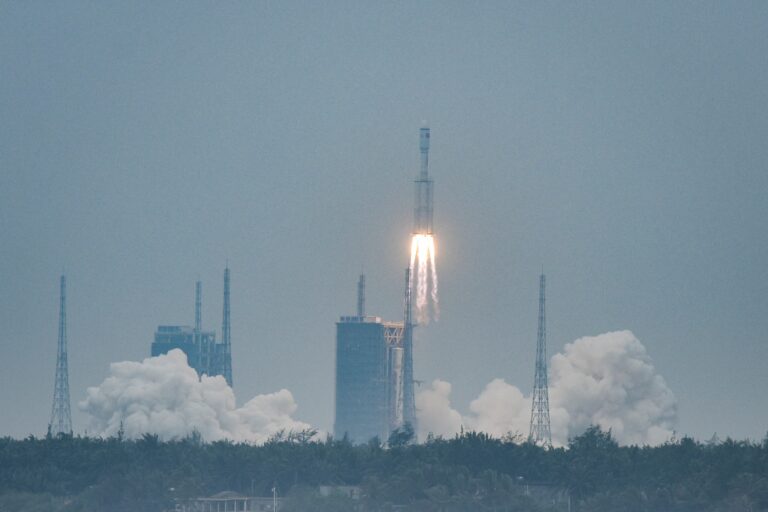
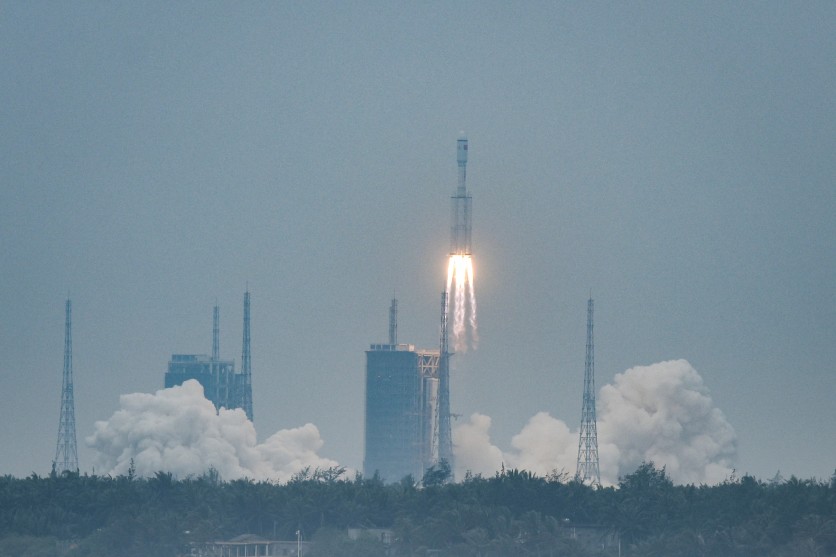
A Long March 8A rocket lifted off from the Hainan commercial spacecraft launch site at 6:59 a.m. ET on Friday (7:59 p.m. Beijing time) and delivered SatNet LEO Group 30 for China’s Guowang internet constellation to its planned orbit, Xinhua reported the launch. The flight came 26 days after Group 28, about eight days longer than the fastest relaunch its pad has managed. Independent analysts who track the program say that gap points to China’s supply of expendable rockets, not its launch pads or satellite factories, as the limit on how fast a Starlink rival fills the sky, according to KeepTrack’s spaceport analysis and a MERICS orbital geopolitics report. Xinhua did not say how many satellites were aboard.
Xinhua called the mission a success but gave no satellite count and no orbital parameters. The tracking site Next Spaceflight lists nine payloads for Group 30, matching earlier Guowang batches, and calls it the 13th Long March 8A mission and the seventh of 2026. Treat the nine as unconfirmed until China publishes a figure.
Group 28 flew on Oct. 24 ET, which was Oct. 25 in China, according to China Daily’s Group 28 report. TechTimes calculates the gap to Group 30 at 26.4 days. Next Spaceflight lists the fastest turnaround at this pad as 18 days 15 hours, so Group 30 trailed the record by about eight days.
The three gaps between Long March 8A flights since Aug. 4 have shortened: 50.0 days, then 31.7, then 26.4, based on the Long March 8 launch list. Shorter, but still well above the pad’s demonstrated floor.
KeepTrack, an independent orbital-tracking site, argues the constraint is rocket production. It says each of the spaceport’s two original pads was designed for about 16 launches per year, or about 32 combined, yet the site flew at roughly half that rate, with 9 launches in 2025 and 11 in the first eight months of 2026. Satellites, it says, are not the limit: the maker Genesat claims about 300 per year, and a factory near Wenchang is designed for up to 1,000.
The Mercator Institute for China Studies (MERICS) reached a similar view in a Feb. 11, 2026 report by Altynay Junusova, Rebecca Arcesati and Antonia Hmaidi. It names the lack of reusable rockets as the key chokepoint, notes that China relies on single-use Long March vehicles, and says Genesat can produce up to 300 satellites per year for SpaceSail, a rival Chinese constellation.
Both are outside analyses. The production rates are manufacturer claims and design ratings, and China does not publish rocket output figures, so neither conclusion has been audited.
The Long March 8A stands 50.5 meters (165.7 feet) tall, has a 3.35-meter (11-foot) diameter and a 5.2-meter (17.1-foot) fairing, and weighs 371 metric tons (about 818,000 pounds) at liftoff, per Wikipedia’s Long March 8 entry. Two boosters and the core stage burn kerosene and liquid oxygen through YF-100 engines, and a liquid-hydrogen upper stage with two YF-75H engines carries the payload on. It can lift 7 metric tons (about 15,400 pounds) to a sun-synchronous orbit at 700 kilometers (435 miles).
Nothing on this vehicle comes back. The Philippine Space Agency’s launch advisory notes that boosters and fairings are designed to be discarded, and Wikipedia’s Long March 8 entry reports a 2018 recovery plan with no later update. Each batch of satellites therefore consumes a whole rocket. At nine satellites per flight, the 12,992 satellites in China’s filing would take roughly 1,440 launches, TechTimes arithmetic that assumes no larger or reusable vehicle changes the load.
Payload mass hints at why nine is the number. Wikipedia lists the lighter 50-degree-inclination Guowang satellites at about 700 kilograms (1,540 pounds) each, or roughly 6,300 kilograms (about 13,900 pounds) per batch of nine; China has not published an official figure. The same rocket carried 20 Qianfan satellites on July 5, 2026, a record batch, according to KeepTrack. MERICS says reusable Zhuque rockets, if commercialized, would carry 10 to 18 satellites per flight.
Launch complex LC-1 is a dedicated pad for Long March 8-family rockets, completed Dec. 29, 2023. According to People’s Daily, it uses a 3.9-meter dual-direction deflection cone and water deluge of about 500 metric tons in 15 seconds, and pre-launch cycles have come down to a record seven days. Officials say weekly launches are possible. No launch has shown it; the demonstrated record between flights is 18 days 15 hours.
The implication is the one KeepTrack draws: building more pads does not raise cadence without more rockets to fly from them. The spaceport is adding pads 3 and 4.
Trackers disagree on the count. Orbital Radar’s live tracker showed 231 Guowang satellites at last check, though the page is undated and may not include Group 30. If that page predates Group 30 and the batch carried nine, the total would be about 240; TechTimes could not confirm either figure independently. Even 240 is under 2% of the 12,992 filed.
TechTimes has reported the published goal of 310 satellites in 2026. From 240, that is 70 more, or eight nine-satellite batches in the 41 days left in the year, one every 5.1 days; from 231 it is nine batches. The last three gaps between Guowang batches, across both rockets, were about 16 days (Group 27 to 28), 15 (28 to 29) and 12 (29 to 30), per CGTN’s Group 29 report and the launch tables.
Counts vary by who is counting, and launched totals can include experimental satellites. China has published no per-satellite throughput or latency figures, and the reports TechTimes found do not say when consumer or commercial service will begin.
The hardware is also not yet where the plan is. Wikipedia reports that the launched shells sit at 1,156 kilometers and 1,175 kilometers (718 and 730 miles), while about 6,000 planned satellites are meant to fly at 500 to 600 kilometers (311 to 373 miles). MERICS says inter-satellite links, software and ground terminals are at early stages and that state-owned enterprises hold spectrum rights.
China SatNet, which manages Guowang, is a state-owned enterprise supervised by the national asset regulator. China’s National Intelligence Law took effect June 28, 2017, and Article 7 requires organizations and citizens to support, assist and cooperate with national intelligence work. For a Chinese state-owned operator, that duty is a fixed legal condition, whatever any privacy policy says.
Scholars dispute its reach. Jeremy Daum wrote in 2024 that the law lacks an enforcement mechanism and does not define intelligence, while a 2019 legal analysis by Mannheimer Swartling concluded overseas subsidiaries could be subject to it. No independent audit of Guowang data handling was found. The Australian Strategic Policy Institute argued in 2024 that satellite internet invites state control.
Group 30 raised the constellation to roughly 2% of its filed size, and the evidence so far points to expendable-rocket output, not pads or satellite factories, as the pace-setter. The pad’s demonstrated floor is about 19 days, and Group 30 followed Group 28 by 26. The 310-satellite goal for 2026 needs eight to nine more batches in 41 days, and the latest gaps have run 12 to 16 days. Satellite counts, performance and service timing remain unconfirmed by any independent source, early hardware has flown to higher shells than the 500-to-600-kilometer layer planned, and the operator is bound by a national law that requires cooperation with state intelligence work. For anyone assessing Guowang as a competitor or a customer, those unknowns weigh as heavily as the launch cadence.
Guowang, meaning “national network,” is a state-run low-Earth-orbit constellation managed by China SatNet, with a filing for 12,992 satellites. Counts in orbit run from about 231 to 240 on the tracker figures above, a small fraction of the full plan; Starlink is SpaceX’s rival network, and TechTimes did not verify a current Starlink count for this comparison.
Xinhua did not say. Next Spaceflight lists nine, which matches earlier batches, but the figure is not confirmed by China.
Analysts at KeepTrack and MERICS say the main limit is production of single-use rockets, not pads or satellite factories. The two original Hainan pads flew at about half their design rate in 2026.
Article 7 of the National Intelligence Law requires organizations and citizens to support and cooperate with national intelligence work. Scholars disagree on how it is enforced and how far it reaches abroad.