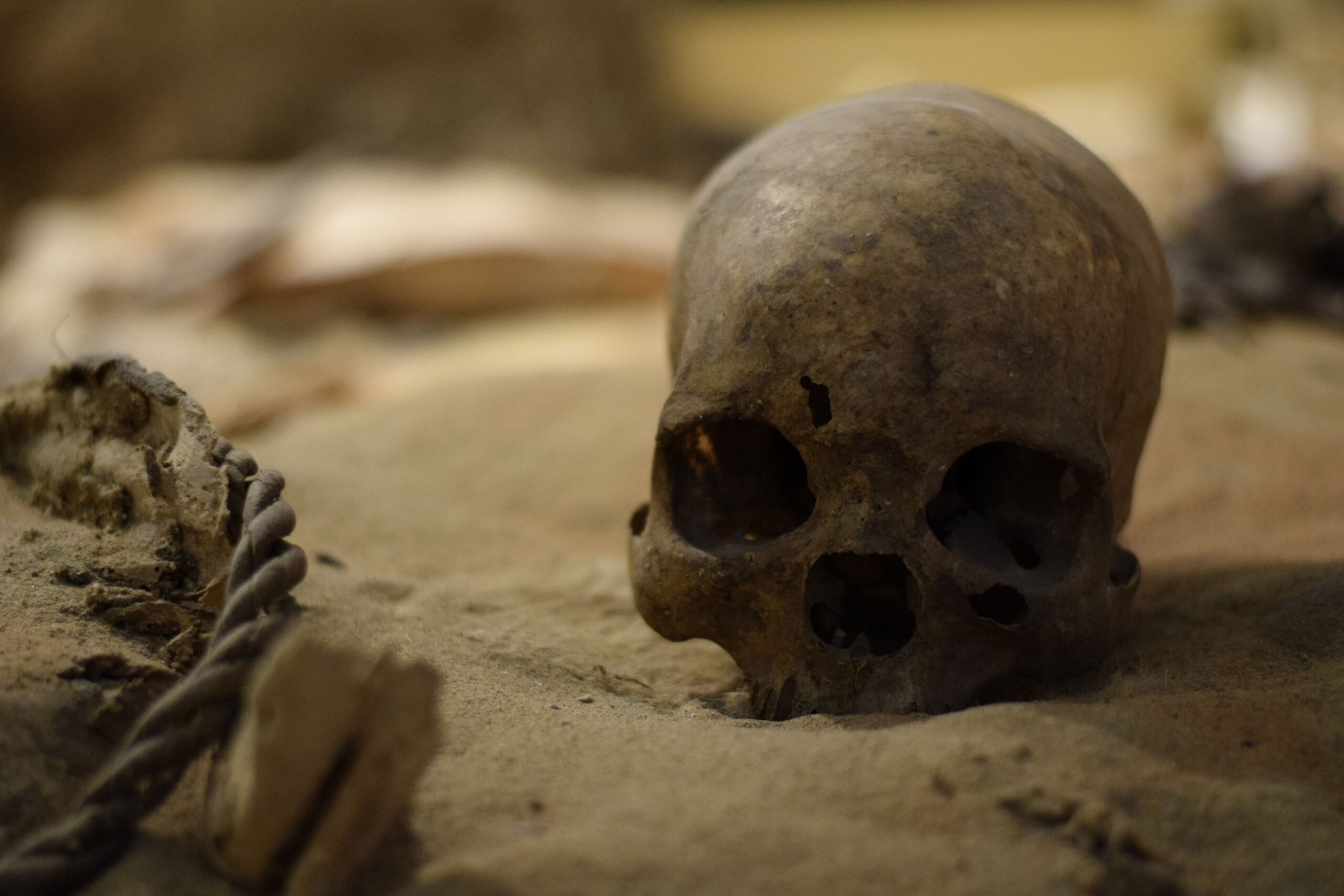
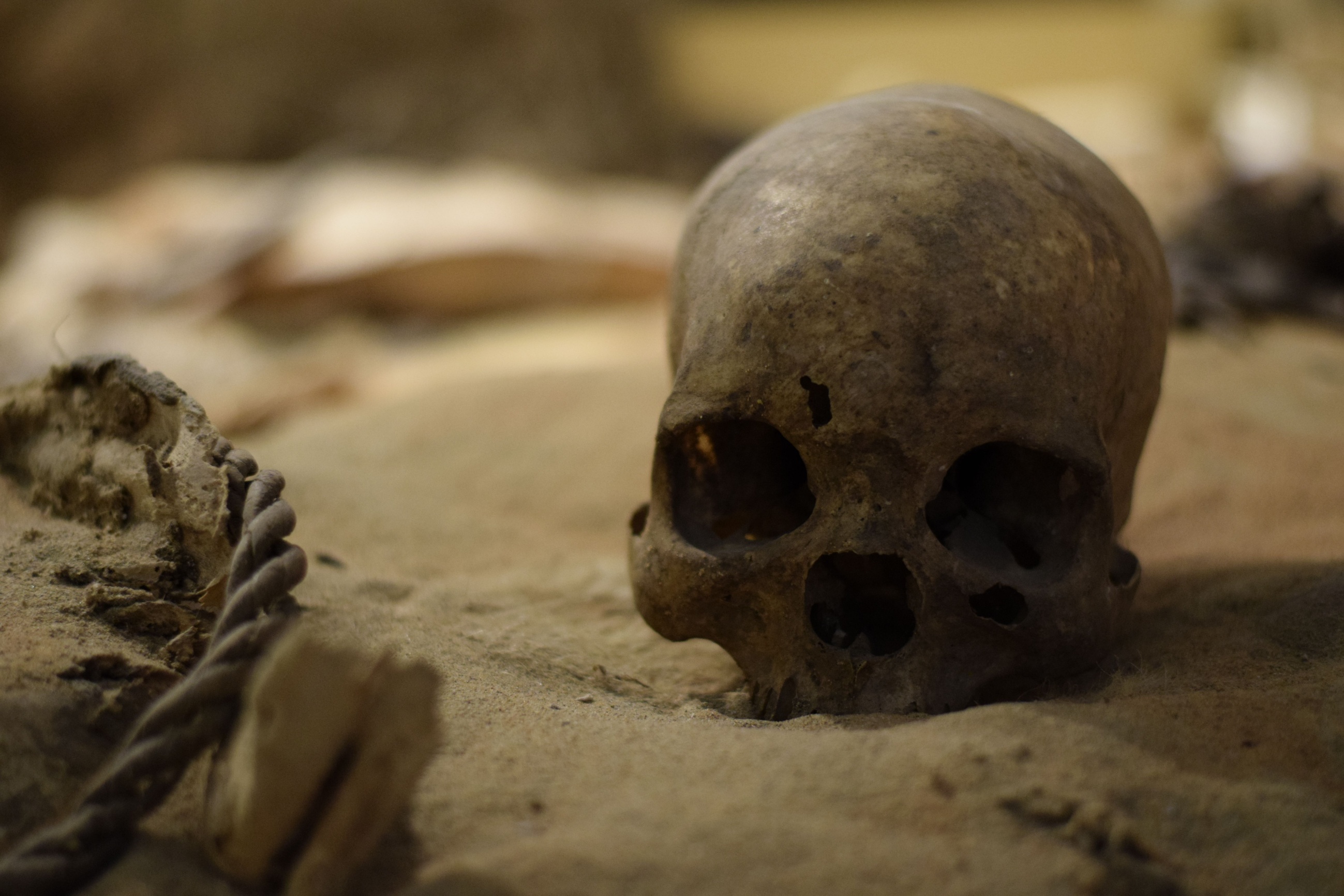
The image most people carry of Viking Age violence is cinematic and external: longships at dawn, raids on monasteries, warrior burials packed with weapons and prestige. What a new peer-reviewed study reveals is far more unsettling — and far more domestic. In Aalborg, Denmark, the partial skull of a toddler aged two to four was found wedged between two successive floor layers of an Iron Age house linked to the Eriksen et al. 2026 paper. Ancient DNA confirmed the victim was a small boy. Radiocarbon dating revealed that the skull was already approximately two centuries old when it was placed in that floor — meaning someone curated the bone for several generations before deliberately building it into a living space, as Live Science reported.
“This means that someone has walked over a child’s skull day after day,” said Marianne Hem Eriksen, the study’s lead author and Research Professor of Viking Studies at Denmark’s National Museum, in a translated press statement. “These glimpses of lives lived from the past show how fascinatingly different people must have thought about life and death.”
The study — published September 28, 2026, as an open-access paper in the Journal of Archaeological Method and Theory — is the first systematic analysis of human remains deposited in domestic contexts across Iron and Viking Age Scandinavia, a dataset the authors describe as “neglected.” The findings do not just add detail to the familiar story of Viking violence. They challenge the entire evidentiary basis on which that story has been built.
Viking Cemetery Data Undercounts Violence: Here Is Why
Scholars have long noted a paradox: Iron Age and Viking Age Scandinavia is associated in both sagas and historical records with what Eriksen’s team calls a “hegemony of violence,” yet the physical trauma rate in formal cemeteries from the same period is surprisingly modest — typically between 0.7% and 6% of remains examined, per the Eriksen et al. 2026 study. If the literary sources are accurate, why is the skeletal evidence so thin?
The paper’s answer is methodological. Archaeological studies of past violence have, for reasons of statistical reliability, concentrated on cemetery assemblages — large, formal burial grounds where remains are abundant and contextually secure. But a significant share of Iron Age and Viking Age victims may never have received cemetery burial at all. Instead, their bodies — or pieces of their bodies — ended up in the floors, walls, refuse pits, wells, and postholes of the settlements where they lived or died.
These deposits have been excavated for decades. They have rarely been analyzed as a coherent violence dataset. Eriksen and her colleagues assembled 192 sets of human remains recovered from domestic contexts at sites across modern-day Denmark, Norway, and Sweden, spanning the full 1,550-year arc of the study period (roughly 500 BCE to 1050 CE), as Gizmodo reported on the dataset. Of those, 12 individuals showed injuries the team assessed as having occurred before or at the time of death. The trauma rate in this domestic assemblage — 6.25% — sits at the high end of what formal cemeteries have yielded. But because these 12 individuals come from only about 23% of sites known to contain human remains in settlement contexts, the actual frequency of violence was almost certainly higher.
What Ancient DNA Revealed: Not Just a Burial, but a Relic
The Aalborg case is the study’s most striking, and its most technically significant.
The recovered material is a frontal bone — part of the skull’s forehead — showing multiple sharp-force injuries consistent with a sword or bladed weapon. Standard osteological analysis of juvenile remains cannot reliably determine sex: children have not yet developed the adult skeletal characteristics that distinguish male from female morphology. The team turned to ancient DNA analysis (aDNA), extracting sex-chromosome markers from the bone, as Live Science explained. The result: the victim was male.
Then came radiocarbon dating. The house in which the skull was found was constructed sometime between 500 and 1 BCE. The skull itself, however, returned a date approximately two centuries earlier. The bone was already old when it was placed between the two floor phases — old enough to have passed through multiple human generations. The inhabitants of the rebuilt house would then have walked across that later floor with the child’s partial cranium beneath their feet, as a matter of daily routine.
This is a different kind of finding from a straightforward killing and concealment. In a 2020 paper in World Archaeology, Eriksen developed the concept of “body-objects” — human crania that were reworked, displayed, or deposited in domestic space not as burials per se, but as things that carried social or spiritual power, occupying a different ontological category from both persons and ordinary objects, documented in her World Archaeology paper. The Aalborg skull — old when deposited, carefully placed between architectural layers — fits that framework precisely. This was not concealment. It was incorporation.
Nineteen Wounds Across Twelve People
The twelve individuals the study identifies as trauma victims yielded a total of 19 injuries assessed as antemortem or perimortem — occurring before or at the time of death. With one exception, all were adults. Six showed head injuries; four had sustained multiple blows combining sharp- and blunt-force trauma to the skull alongside fractures elsewhere in the skeleton. Sex could be determined for six: four males and two females, with three additional individuals tentatively identified as male, per Gizmodo’s trauma dataset breakdown.
Several of the cases are arresting in their own right.
At a Viking Age site dated to around 750 to 1050 CE, a young woman’s skull was recovered from a well near a cluster of four small houses, bearing traces of blows consistent with a sword or axe, per Live Science’s coverage. Like the Aalborg boy’s skull, the woman’s remains may have been held for some time before deposition.
At Gammel Lejre — a royal feasting hall in Zealand that many scholars associate with Heorot from Beowulf — the team found the remains of a man whose skeleton bore multiple blunt-force injuries, several of which had healed. He had survived repeated beatings over the course of his lifetime before dying at the very site celebrated in the deepest tradition of northern European heroic literature.
How Did the ‘Warrior Narrative’ Get Built?
The study’s theoretical contribution is as pointed as its empirical one. Eriksen’s team argues that Viking Age violence scholarship has been shaped from the beginning by what it was able to see — and the evidence it could see was, almost by definition, high-status evidence. Elite burial mounds, weapon deposits, runic commemorative inscriptions: these sources encode a particular version of violence. It is glorious, recognized, primarily masculine, and attached to people whose deaths were publicly commemorated.
The people in wells, pits, and house floors were not commemorated. Their bones did not end up in the places archaeologists typically look for Iron Age dead. In applying sociologist Johan Galtung’s concept of “structural violence” — violence embedded in the social structure itself, not requiring a named perpetrator — the researchers frame these individuals as potentially representative of a class of people whose precariousness was systemic. Malnutrition and chronic physical stress, both of which increase fracture risk and bone fragility, may have been factors alongside direct violence. The location of their remains in refuse contexts and building materials, rather than in graves, marks their exclusion from the social rituals that normally followed death in Scandinavia.
Ben Raffield and colleagues at Uppsala and Stockholm Universities had previously proposed applying Galtung’s framework to Iron Age Scandinavian bioarchaeology specifically, in the journal Archaeological Dialogues. The Eriksen study is the first to test that proposal against a systematic empirical dataset.
“Not all lives were equally grieved and commemorated in the Iron and Viking Ages of Scandinavia,” the researchers wrote in the peer-reviewed JAMT paper. “We may question whether some lives were already considered disposable.”
What the Research Method Makes Possible, and What Remains Uncertain
The study’s methodology is as important as its findings. The team combined osteological analysis — standard bone examination — with digital imaging and biomolecular techniques including ancient DNA and isotope analysis. The combination enabled a level of biographical reconstruction that would have been impossible even a decade ago for fragmentary, poorly preserved juvenile remains. Ancient DNA sex determination for children is specifically valuable because standard osteological methods break down below puberty — the skeleton has not developed the adult features that allow sex estimation.
The researchers are careful about interpretive limits. They acknowledge that some skeletal fractures could result from accidents rather than intentional violence. They do not assert a single explanation for why any given individual ended up in a domestic deposit — the possibilities range from ritual sacrifice to execution to the aftermath of warfare to interpersonal violence within the household. The paper explores multiple scenarios without forcing a conclusion. What is not in dispute is that these people died, that at least 12 of them did so violently, and that someone chose not to bury them in a cemetery.
The paper is authored by Eriksen along with Veronica Tamorri, Vasiliki Louka, Emma Tollefsen, Kevin Kay, and Jo Appleby — the last of whom led the forensic identification of Richard III’s remains at Leicester in 2012. The work emerged from the BODY-POLITICS project, a European Research Council Starting Grant of €1.5 million awarded to Eriksen for a five-year investigation of personhood, sexuality, and death in Iron and Viking Age Scandinavia, as documented on the CORDIS project page.
“It opens up a completely new understanding of Iron Age society, of the occurrence of violence and of the handling of the dead,” Eriksen said. “The results show a much greater complexity in the everyday life and world of imagination of the time than we often attribute to Iron Age people.”
The study is available without charge at DOI: 10.1007/s10816-026-09817-w, published under a Creative Commons license.
(Currency conversion: €1.5 million is approximately $1.68 million USD; exchange rate as of October 10, 2026; conversions are approximate.)
Frequently Asked Questions
How do scientists determine the sex of a child’s ancient skull?
Standard osteological (bone-based) analysis cannot reliably sex children’s skeletal remains because children have not yet developed the adult morphological features — such as pelvic shape or brow ridge characteristics — that distinguish male from female skeletons. Researchers instead extract ancient DNA (aDNA) from the bone material and analyze sex-chromosome markers. In the Aalborg case, aDNA analysis confirmed the victim was male, a determination that would have been impossible from visual bone examination alone.
What does it mean that the skull was 200 years older than the house?
Radiocarbon dating places the child’s death approximately two centuries before the Iron Age house above the skull was constructed. This means the skull could not have been hidden there immediately after the child was killed. Someone kept the bone — potentially across multiple generations — before it was deliberately incorporated into the floor of a later structure. Marianne Hem Eriksen’s own 2020 research in World Archaeology proposed the concept of “body-objects”: human crania curated and deposited in domestic spaces as things that held social, spiritual, or symbolic power. The Aalborg skull may represent exactly that practice.
Why haven’t these victims been noticed before in Viking Age archaeology?
Prior bioarchaeological research into Iron Age and Viking Age violence concentrated almost entirely on cemetery assemblages — formal burial grounds — for reasons of statistical reliability and ease of study. Remains deposited in domestic contexts (house floors, wells, rubbish pits, postholes) were excavated regularly over decades but were never previously assembled into a systematic dataset focused on violence. The new study is the first to do so, assembling 192 sets of remains from across Denmark, Norway, and Sweden and analyzing them as a coherent body of evidence.
Does this study tell us who committed these acts of violence?
No. The paper explicitly does not assert a single cause for the violence it documents. Possible explanations include ritual or sacrificial killing, the aftermath of warfare or raiding, interpersonal or domestic violence, and social punishment. The researchers argue that the domestic-context location of the remains — outside the formal cemetery record — suggests these individuals occupied a marginal social position, excluded from the commemorative practices that normally followed death in Iron and Viking Age Scandinavia. Why any given individual ended up in a pit or under a floor remains, for now, an open question.