November 8, 2026:


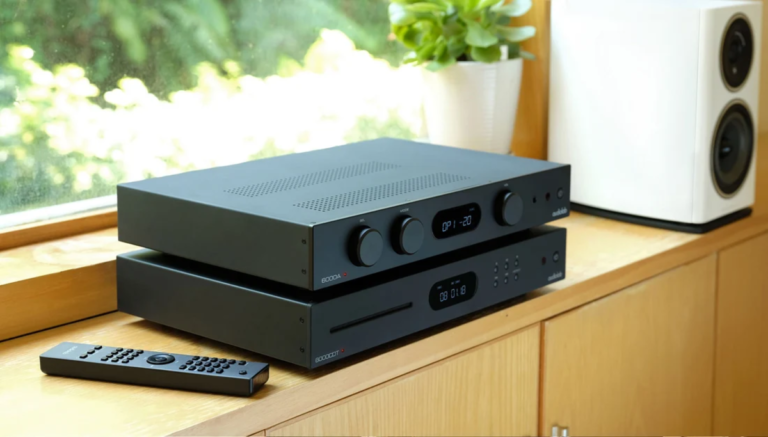
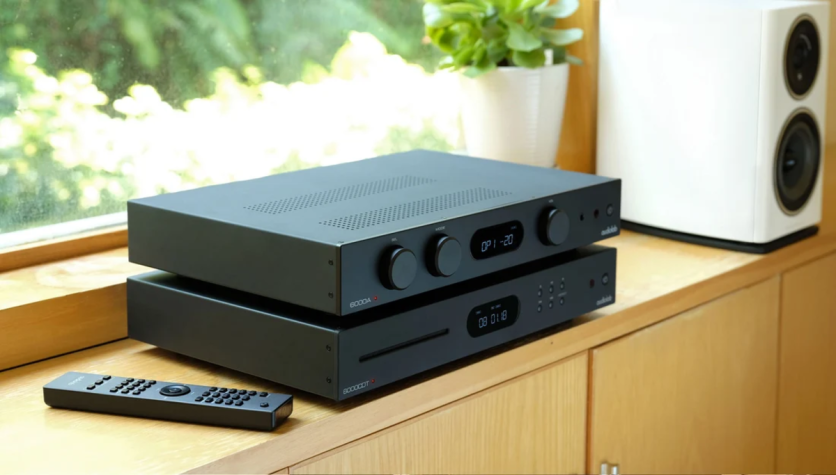
US CD sales jumped 58.6% in H1 2026 — their sharpest revenue rise in decades, according to RIAA data. Into that growing market, Audiolab has just announced the 6000CDT MKII, a comprehensive engineering overhaul of its long-running entry-level CD transport that has become one of the most recommended components in the budget audiophile space. The new model is priced at £399 (approximately $535) / $799 / AU$1,099 (approximately $754) and will be available from late November 2026 through Audiolab’s authorized retail network, in black and silver finishes.
The MKII is not a cosmetic refresh. Audiolab has reworked five core areas of the product — the disc mechanism, the servo control system, the power supply, the transformer, and the master clock circuitry — with the stated goal of delivering more consistent disc reading and a cleaner digital output. For buyers in the market for a dedicated source component, that is precisely the right engineering agenda.
A CD transport differs from a standard CD player in one fundamental way: it outputs a digital signal, not an analog one. There is no built-in digital-to-analog converter (DAC). Instead, the transport sends a raw digital audio stream — via an S/PDIF connection — to a separate DAC, which may be a standalone unit or the DAC built into a modern integrated amplifier. The transport’s only job is to read the disc as accurately and stably as possible before passing the data stream downstream.
That is a narrower brief than a CD player’s, but it is not a simpler one. Reading a CD is a surprisingly demanding mechanical and electronic task. The laser must track a spiral of microscopic pits on a rotating disc, compensating continuously for vibration, motor speed variation, and disc defects. The digital output stage must then encode that bitstream in S/PDIF format, using a master clock to stamp every sample with a precise timing reference. If that clock wavers — even slightly — the downstream DAC receives a signal with timing errors baked in.
Those errors are called jitter.
Jitter, in digital audio, is the deviation of a periodic signal from true periodicity. In plain terms: it is what happens when the gaps between successive digital samples are not exactly equal. The DAC at the other end of the cable must recover the source clock from the incoming signal to know when to sample each data word. If the recovered clock is unstable, the DAC samples at irregular intervals — and those irregular intervals translate into distortion in the analog output.
The effects are not theoretical. Research documented in the ITU-T G.810 standard confirms that less than 1 nanosecond of jitter can, under some conditions, reduce a converter operating at 22 kHz Nyquist frequency to roughly 14-bit effective resolution — meaningfully worse than the 16-bit specification of the Red Book CD standard. Random jitter adds broadband noise to the analog output; deterministic jitter adds spurious tones.
The Red Book CD standard, developed jointly by Sony and Philips and formalized as IEC 60908 in 1987, specifies 16-bit/44.1kHz PCM — a data rate of 1,411.2 kbit/s, with CIRC error correction built in to tolerate disc scratches and defects. Reading that standard correctly is not the hard part; reading it cleanly enough to avoid injecting jitter into the output is where transports diverge.
The 6000CDT MKII’s new master clock system directly addresses this. Audiolab describes the updated circuitry as providing a “highly stable timing reference,” with the promise of greater precision in transient reproduction, tighter stereo imaging, and improved musical coherence. Independent measurements will tell us how much jitter reduction the new clock delivers; those will only emerge once reviewers get hold of production units.
1. New slot-loading transport mechanism. The most fundamental change. The revised unit offers improved physical stability, reduced operating noise, and faster disc handling. All three factors feed directly into the quality of data the laser can extract — a more stable mechanical platform means fewer momentary tracking errors reaching the output.
2. Revised servo control system. The servo is the closed-loop feedback circuit that keeps the laser precisely on track as the disc rotates at variable speed (Constant Linear Velocity). Audiolab says the updated servo makes error correction more effective, particularly with discs that are scratched or worn. A better servo means the transport relies less on its error-correction circuitry — which is a good thing, because error correction is a last resort, not a first line of defense.
3. Redesigned power supply. The power supply now separates the demands of individual subsystems more carefully. This matters because the motors that spin the disc and move the laser generate electrical switching noise. In the original 6000CDT’s layout, that noise had a path into the sensitive digital circuitry. The redesigned supply closes that path.
4. Custom-specified transformer. Works in tandem with the power supply redesign, providing a consistently clean supply specifically for the clock and digital output stages — the two areas most sensitive to power-supply-induced jitter.
5. New master clock. The cumulative beneficiary of all four changes above. With motor noise isolated and the power supply cleaned up, the new oscillator circuit operates in a quieter electrical environment and can maintain a more stable timing reference. The S/PDIF output the downstream DAC receives is therefore more precisely timed — and a more precisely timed S/PDIF signal means less clock-recovery jitter at the DAC.
The 6000CDT MKII handles standard Red Book 16-bit/44.1kHz CDs, as well as CD-R and CD-RW discs. It also reads data CDs containing FLAC, WAV, WMA, MP3, or APE files, with support for sample rates up to 96kHz on compatible formats.
On the connectivity front, there are both optical TosLink and coaxial S/PDIF digital outputs, giving buyers the flexibility to connect to virtually any external DAC or amplifier with digital inputs. The two output types are not sonically identical: coaxial connections can be more robust and support longer cable runs, while optical provides electrical isolation that eliminates ground-loop hum — a useful advantage in systems where the DAC and transport share a noisy power environment.
Additional features include a 12V trigger input and output for auto-powering the unit with a compatible amplifier, an OLED display, and auto-standby. The 6000CDT MKII slots naturally into Audiolab’s expanded 6000 Series lineup alongside the 6000A MKII integrated amplifier, which carries an ESS Sabre DAC chipset. The two are a natural pairing: the transport’s coaxial or optical output feeds directly into the amplifier’s digital inputs, creating a compact CD playback system with no redundant components.
The 6000CDT MKII is a product of Audiolab, a British-branded audio manufacturer that has been part of International Audio Group (IAG) since 2004. IAG is headquartered in Shenzhen, China, with manufacturing operations at a plant in Ji’an, China.
This ownership context is worth noting for readers who track corporate provenance in the audio space. Under China’s National Intelligence Law (2017), organizations operating under Chinese jurisdiction are required to cooperate with government intelligence requests. For networked consumer devices — smartphones, routers, smart home hardware — this creates a structural data-access risk that TechTimes covers routinely.
For the 6000CDT MKII specifically, that risk does not apply. The device has no network connectivity of any kind: no Wi-Fi, no Bluetooth, no Ethernet, no cloud features, no app, and no data-collection capability. It reads optical discs and outputs a digital audio signal. There is nothing for any party to intercept or access remotely. Readers considering connected hardware from IAG-owned brands should evaluate each product on its connectivity profile; for a CD transport, the analysis is straightforward.
The 6000CDT MKII’s most direct rival is the Cambridge Audio CXC, a five-star-rated transport that uses Cambridge’s S3 Servo disc drive (shared with the higher-end Azur 851C). What Hi-Fi? describes its sound as “smooth, open and enjoyable,” with a wide soundstage and crisp treble — praise that has held up across multiple review cycles.
The pricing picture is worth examining carefully. In the UK, the 6000CDT MKII at £399 (approximately $535) arrives £100 cheaper than the CXC’s £499 (approximately $669) — a meaningful domestic advantage. In the United States, the equation inverts: the MKII’s $799 price sits $200 above the CXC’s $599. Australian buyers face comparable pricing, with the MKII at AU$1,099 (approximately $754) versus the CXC at AU$959.
For US buyers specifically, the MKII’s $200 premium over the CXC needs to earn its keep. Audiolab’s five-part engineering overhaul — especially the new master clock — is a credible argument for why it might. Whether the sonic difference is audible and proportionate to the price gap will depend on independent measurements and listening tests that are not yet available. Buyers for whom jitter performance and power-supply isolation are engineering priorities should find the MKII’s specification sheet compelling; buyers on tighter budgets who want a proven five-star performer have an easy answer in the CXC at $599.
Physical media is not the niche category it was. With US CD sales up 58.6% in H1 2026 and vinyl sales up 17.7%, a well-engineered transport at this price point fills a real and growing market gap.
The Audiolab 6000CDT MKII will be available from late November 2026 through Audiolab’s authorized retail network, in black and silver finishes, at £399 (approximately $535) / $799 / AU$1,099 (approximately $754).
Exchange rates as of November 6, 2026; all currency conversions are approximate.
A CD transport reads the disc and outputs a digital audio signal (via S/PDIF), but contains no built-in digital-to-analog converter. You connect it to a separate DAC or to the DAC section of an integrated amplifier. A standard CD player includes both the mechanism and a DAC in one box, handling the entire conversion from disc to analog output internally. The case for a transport is that you can invest in a better standalone DAC without also paying for a DAC built into the disc drive — and that purpose-built transports can prioritize clock stability and read quality in ways that all-in-one players sometimes compromise.
Jitter is timing instability in a digital signal — specifically, variation in the intervals between successive data samples. In a CD transport, the master clock controls the timing of the S/PDIF output. If that clock is unstable, the downstream DAC receives a signal with inconsistent timing, and when it recovers the clock from that signal, it inherits the instability. The result in the analog output is increased noise, reduced dynamic range, or blurred imaging. Research shows that under some conditions, less than 1 nanosecond of jitter can reduce effective DAC resolution from 16-bit to roughly 14-bit.
In the UK, the Audiolab is £100 cheaper (£399 vs. £499). In the US, the equation reverses: the Audiolab costs $200 more ($799 vs. $599). The CXC carries a five-star rating from What Hi-Fi? and uses the S3 Servo drive shared with Cambridge Audio’s higher-end Azur 851C. The Audiolab MKII has not yet been independently reviewed. Its engineering improvements — particularly the redesigned power supply and new master clock — represent a more thorough internal overhaul than the CXC received at its launch, but whether that translates to better measured or perceived performance awaits testing.
International Audio Group, which owns Audiolab, is headquartered in Shenzhen, China and manufactures products at a plant in Ji’an, China. For networked or connected devices, Chinese ownership raises data-access concerns under China’s National Intelligence Law (2017). The 6000CDT MKII has no network connectivity, collects no user data, and has no connectivity features that could expose a user to remote surveillance. For this specific device, ownership location carries no data-privacy implications.
Audiolab says the 6000CDT MKII will be available from late November 2026 through its authorized retail network. Pricing is £399 / $799 / AU$1,099 in black or silver finishes. Authorized retailers vary by region; check Audiolab’s authorized dealer locator for region-specific options.