HomeAuto Carrie Is Streaming Now: Flanagan Turns King’s TK Gene Into Multigenerational Horror
Carrie Is Streaming Now: Flanagan Turns King’s TK Gene Into Multigenerational Horror
October 7, 2026:
Primevideo.com
Mike Flanagan’s Carrie arrived on Prime Video this morning — all eight episodes, simultaneously, in more than 240 countries and territories — and what distinguishes it from every prior adaptation of Stephen King’s 1974 debut novel is not the updated setting or the expanded cast. It is the decision to take King’s own buried text seriously: the suggestion, scattered across the novel in scientific reports, 911 transcripts, and courtroom testimony, that Carrie White’s telekinetic ability is not a supernatural anomaly but a heritable gene — dominant in women, latent in men — that has been producing gifted and destroyed women throughout human history, each of them alone, none of them knowing the others existed.
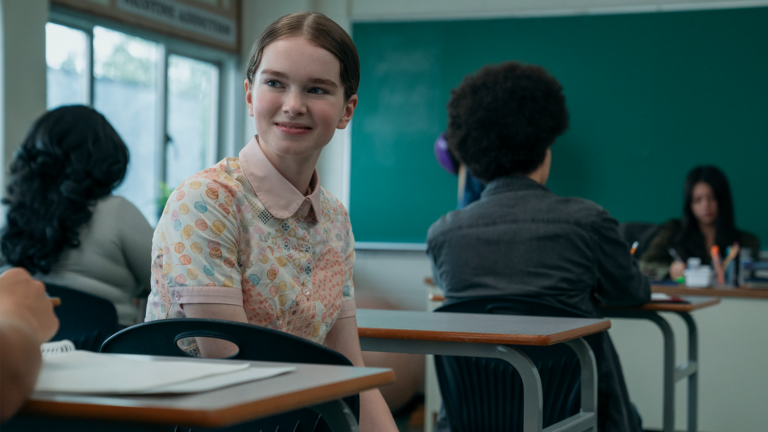
That is the premise Flanagan has built an eight-episode series around. Starting from the second episode, each installment opens on a different woman from a different historical period — another link in what Flanagan calls a “sorority of very gifted women” — before returning to Carrie White (Summer H. Howell) navigating her first weeks of public school in 2026, where the humiliation that triggers her powers will not stay in a locker room. It will go viral.
The October 7 global premiere was confirmed at San Diego Comic-Con on July 25, 2026, with all eight episodes dropping simultaneously — the first time King’s novel has ever received a full television adaptation across its 52-year publication history.
Carrie White in 2026: The Story-Premise
Carrie White has spent her entire life inside a world her mother Margaret (Samantha Sloyan) built for her — not as punishment but as protection. Margaret’s love is fierce and catastrophically misguided: convinced that the world will harm her daughter, she has created what Flanagan describes as “a private utopia,” sheltering Carrie from a danger she cannot name in terms Carrie can understand. When Carrie’s father dies suddenly, that shelter collapses. The state, which did not know Carrie existed, inserts her into public high school.
The girl who arrives at Ewen High is not the clenched, defensive figure Sissy Spacek played in 1976. Flanagan describes her as “wide open,” “eager,” “curious,” and “earnest” — a teenager with no internal defenses, walking into adolescence with the trusting assumption that people are good. The central dramatic question of Season 1 is not whether Carrie will be humiliated — the story’s entire cultural legacy has answered that — but what kind of person she becomes on the other side of it, and whether “victim,” “villain,” and “hero” are even the right categories for what the series lets her be.
The emotional register is expansive psychological horror wrapped around genuine empathy. Even Margaret, recast from King’s religious abuser into a woman who loves too much and knows too little, becomes a tragic figure rather than a monster. The series’ opening eight episodes map Carrie’s descent across an episode-title class schedule — each episode titled as a class period: “First Period” through “AP Physics” — asking what happens when the institution designed to form a young person is also the mechanism for destroying her.
What Flanagan Is Actually Doing With the TK Gene
The prior adaptations — Brian De Palma’s celebrated 1976 film, the 2002 television movie, the 2013 Kimberly Peirce remake — all treated Carrie White as a singularity. The horror was that someone this isolated, this controlled, this undefended, could be made to destroy everything in a single night. Flanagan is asking a different question: what if she was never singular?
King’s novel contains, in its margins, a mythology that none of the films developed. The book’s found-document format — police reports, scientific papers, survivor testimony — includes scholarly speculation that “TK” ability is genetic, that it appears dominantly in women and recessively in men, and that Carrie’s family history includes a telekinetic great-grandmother. De Palma stripped these documents out to make a cleaner horror film. Flanagan has restored them as the series’ structural spine.
“Stephen King also talks about the ‘TK gene’ [for telekinesis] and the science behind Carrie’s abilities,” Flanagan told Entertainment Weekly in July 2026. “Something that the De Palma adaptation ignored was Carrie’s place in the larger universe — that she’s part of a sorority of very gifted women and just doesn’t know it.”
Beginning with Episode 2, each episode opens on a standalone story: a different woman, a different century, a different culture, coming to terms with an ability she cannot explain and a society that cannot accommodate her. Carrie’s specific place among these women — what her connection to them means for the story’s outcome — is what the season builds toward, and what no prior adaptation had the room or the interest to explore.
What Real Genetics Says About the TK Model
King’s TK gene, as the novel’s fictional scientists describe it, follows a specific inheritance pattern: dominant in female carriers, recessive (latent) in males. A woman who inherits one copy of the allele from either parent expresses the trait; a man who carries it does not. For a highly telekinetic daughter to be produced, both parents must carry the gene — as Carrie’s parents did, her father Ralph (Tahmoh Penikett) carrying it recessively, her mother Margaret’s family line carrying it through Carrie’s maternal great-grandmother.
This architecture maps onto a real genetic category: X-linked dominant inheritance. In X-linked dominant conditions, one copy of the altered allele on the X chromosome is sufficient to cause the condition. Because females carry two X chromosomes, one functional copy can compensate for the altered one — and X-linked dominant traits that would be lethal in a male (who carries only one X, with no backup copy) can persist in a female-biased, lower-severity form. Real examples include Rett syndrome and Incontinentia Pigmenti — disorders in which the phenotype appears almost exclusively in females because the hemizygous male genotype is too severe to survive to birth.
The TK gene as King describes it is not this extreme — males survive while carrying it latently — but the X-linked dominant framework provides the closest real genetic analog for its sex-biased expression. A gene that produces only female telekinetics and male carriers is, in its architecture, a plausible X-linked dominant trait.
What about the stress-activation component — the observation that Carrie’s powers emerge specifically at moments of acute physiological and psychological crisis? Here, real epigenetic research into stress provides a compelling parallel. Gene expression is not fixed; environmental stressors can alter it through methylation and other epigenetic mechanisms, turning genes on or off without changing the DNA sequence itself. The hormonal cascade of menarche — the event that triggers Carrie’s initial telekinetic surge in King’s novel — produces exactly the kind of acute, physiologically profound disruption that epigenetic activation research models as a candidate trigger for silenced-gene expression. If the TK gene were epigenetically silenced during Carrie’s sheltered childhood and unlocked by the combined hormonal and social stress of her first weeks at Ewen High, the mechanism is internally consistent within the logic of real epigenetic science.
The central physical problem remains unsolved by any real science: how does a biological system transmit directional force to a macroscopic object at a distance? The human brain generates a measurable electromagnetic field through neuronal activity — detectable as EEG. Research in brain-computer interfaces has shown that amplified, decoded neural EM signals can move cursors, robotic arms, and drone controllers with measurable precision. Neuralink’s 2024 human implantation trials demonstrated cursor control and web browsing through decoded neural signals; Synchron’s Stentrode device achieved similar results without open-brain surgery. These are mediated systems — the brain’s signals act through external hardware, not through space itself. But they prove that the informational content of neural signals can translate to physical-world consequences.
The speculative bridge Flanagan’s fiction inhabits runs from that real capability toward something much further: a gene-produced protein that dramatically amplifies the brain’s endogenous EM field, coupled to what physicists Roger Penrose (Oxford) and Stuart Hameroff (University of Arizona) call “Orchestrated Objective Reduction” — a speculative theory proposing that quantum coherence in neural microtubules underlies consciousness and, possibly, mind-matter interaction. Mainstream physics does not accept Orch OR as established science. But as a scaffold for a fictional mechanism — “brain field, amplified by genetics, exerts force through quantum coupling” — the conceptual path from real BCI research to Flanagan’s telekinesis is coherent, if wildly extrapolated.
The stress-activation then becomes neurologically elegant: acute emotional crisis produces massive sympathetic nervous system activation, flooding the brain with noradrenaline and dopamine and transiently synchronizing large-scale neural oscillations. If Flanagan’s TK mechanism depends on neural synchrony and amplitude — consistent with the epigenetic model — then “powers emerge under stress” maps cleanly onto what psychophysiology knows about extreme emotional states.
What critics who have called the TK mythology too close to X-Men are identifying is a real difference in register: King’s Carrie is horror precisely because the power is isolating and uncontrolled. Flanagan’s is horror that is also science fiction. The terror is not diminished by the genetics — it is relocated. The horror is not the gene. It is what every society that has ever encountered a woman like Carrie has done to her.
Why the Internet Changes What Carrie Is About
The 1974 locker room held perhaps twenty classmates. They laughed, they threw tampons, and then the moment was over — bounded by the walls of the room and the memories of the witnesses. King’s story is about the violence concealed inside ordinary social hierarchies. It is brutal and specific and local.
Flanagan’s 2026 update films the moment on a phone and sends it across the school’s social networks in seconds. This is not cosmetic modernization. Neuroscience suggests it is a qualitative transformation in what the cruelty actually does to Carrie’s nervous system.
Naomi Eisenberger of UCLA published a landmark study in 2003 in Science showing that social rejection activates the dACC — the dorsal anterior cingulate cortex, the same brain region activated by physical pain stimuli. Subsequent research in adolescent populations showed that chronic rejection sensitizes this region, increasing dACC activation in response to subsequent social threats. The brain’s pain-processing infrastructure does not distinguish between a bruise and a social wound. When something hurts socially, it activates the same tissue that processes physical injury.
The evolutionary context matters here. Anthropologist Robin Dunbar’s research on primate neocortex size established that stable human social groups naturally cap at approximately 150 individuals — what he termed the natural limit for social cognition. Human social cognition, including the threat-detection systems that trigger the dACC’s pain response, evolved for communities of that scale. Reputational damage in such a group is serious but recoverable: you can outlast the story, leave the community, start over. The audience is finite.
Viral humiliation breaks this boundary entirely. A filmed incident shared through a school’s social network reaches an audience of hundreds or thousands in hours — and it stays. It cannot be out-waited or out-moved. The adolescent dACC, calibrated for a world where reputation operated at Dunbar-scale, experiences reputational threat at internet scale as a chronic, irresolvable alarm state for which no evolved coping mechanism exists. Flanagan brought in high school students to the writers’ room to document this experience with specificity. What they told him is consistent with what neuroscience now documents: the experience of going viral in a hostile context is not just worse than being laughed at in a locker room. It is a categorically different kind of stress, one that activates the brain’s pain circuitry at a scale and duration that the social architecture of 1974 could not produce.
The telekinetic response that follows — in the fiction — is therefore not merely symbolic. It is structurally analogous to what the neuroscience literature describes as the behavioral output of a nervous system pushed past the limits of its threat-tolerance architecture. Carrie’s powers don’t emerge because she is special. They emerge because no human nervous system was designed for what the internet allows adolescents to do to each other.
The Multigenerational Sorority: A Population Genetics Model
Flanagan’s most structurally original decision — opening each episode on a different woman with TK ability across history — rests on an implicit argument from population genetics. If telekinetic women have existed throughout human history, why haven’t they accumulated? Why is Carrie isolated rather than part of a documented community?
The answer the series appears to be building toward is the same answer population genetics gives for the persistence of many rare traits: destruction at the phenotype level does not eliminate the gene from the population. Population genetics established this principle through the heterozygous advantage model — the observation that a gene producing harmful effects in its homozygous form can persist at stable frequency in a population if its heterozygous form confers a fitness benefit. Sickle cell anemia and malaria resistance is the canonical example: the homozygous HbS/HbS genotype is often lethal, but the heterozygous HbS/HbA genotype confers partial malaria resistance, so the allele is maintained.
If the TK gene’s heterozygous form — the carrier state, the male-recessive form King describes in Carrie’s father — conferred any measurable cognitive or physiological advantage (enhanced stress-response, perceptual acuity, a trait that reads as “sharp” or “perceptive” in everyday life), natural selection would maintain the allele at low but stable frequency across generations. Fully telekinetic women would appear rarely, as the statistical output of two carriers producing a dominant-homozygous daughter. Those women would be, historically, burned as witches, institutionalized as hysterics, destroyed before reproducing — but the carrier population would persist, and each generation would produce its small statistical complement of TK-dominant daughters.
Carrie White is therefore not a miracle or a curse. She is a number. The sorority Flanagan is introducing across his episode prologues is not a community that failed to find each other — it is a sequence of individuals whom the carrier population reliably generates and whom every historical society reliably destroys. The horror of the series, on this reading, is not supernatural at all. It is demographic.
King Called It Brilliant. Here Is Why That Matters.
Stephen King does not often praise adaptations of his own work without qualification. His reaction to Stanley Kubrick’s The Shining was famously negative. He was vocal about being unsatisfied with the 1990 It miniseries. His Threads post about Flanagan’s Carrie — calling it “brilliant” approximately one month before the premiere — carries specific weight.
King serves as executive producer on the series, which is standard for Flanagan’s King adaptations, but his Threads response suggests something more: a recognition that Flanagan has found the version of Carrie’s story that the novel’s buried mythology was always gesturing toward but none of the films had the format or the interest to build.
The first two episodes of the series premiered in TIFF’s Primetime program in September 2026 to positive critical response. NowToronto called it a genuinely fresh take and noted that “viewers shouldn’t be so sure they know how this story ends.” The series also screened at Fantastic Fest in Austin to similar reaction.
Not all critics are convinced the mythology works. CinemaBlend raised the concern that the “larger universe,” “TK gene,” and “gifted women” language sounds closer to the foundation of a superhero franchise than to the intimate, isolating horror story that made Carrie matter. It is a legitimate worry: King’s Carrie is terrifying partly because the power is uncontrolled, chaotic, and unprecedented even to Carrie herself. If the mythology establishes telekinetic women as a class of beings with a known genetic profile, the existential isolation that makes Carrie’s situation horrifying might be diluted by the implication that she has peers, even unknown ones.
Whether Flanagan’s expansion enriches or dilutes the original story is now, as of this morning, a question every viewer can answer for themselves.
What Else Flanagan Is Building
Carrie is the first of what Flanagan has described as a broader creative partnership with King at Amazon MGM Studios. His second King project is an adaptation of The Dark Tower series — a passion project he has wanted to develop for years and which he signed his Amazon deal in December 2022 partly to enable — and a new adaptation of The Mist is also entering active development.
For Carrie itself, Flanagan told Collider at TIFF that his dream scenario is a three-season trilogy — structured around a “wonderful three-step arc” he sees in the character and her world. Prime Video has confirmed only the eight-episode first season. Whether the series gets to continue will depend on viewership — which, as of this morning, has just had eight episodes dropped in its lap.
The full cast list) features Summer H. Howell as Carrie White, Samantha Sloyan as Margaret White, Siena Agudong as Sue Snell, Alison Thornton as Chris Hargensen, Joel Oulette as Tommy Ross, Amber Midthunder as Miss Desjardin, Matthew Lillard as Principal Grayle, Josie Totah as Tina Blake, Arthur Conti as Billy Nolan, Thalia Dudek as Emaline, Katee Sackhoff as Margaret’s mother Judith Brigham, and Rahul Kohli as Margaret’s stepfather Harold Allison, among a full ensemble of Flanagan regulars including Kate Siegel, Michael Trucco, Heather Graham, and Tim Bagley. The score is by the Newton Brothers, Flanagan’s longtime scoring collaborators. A tie-in edition of King’s original novel, published by Vintage Books with Margaret Atwood in an introductory essay, was released on September 29, 2026.
King’s novel has sold more than 350 million copies worldwide since 1974. Flanagan’s Carrie is the fourth screen adaptation of that novel — and the first that asks what happens when you read the footnotes.
Frequently Asked Questions
Is Carrie available to watch on Prime Video right now?
Yes. All eight episodes of Mike Flanagan’s Carrie dropped simultaneously on Prime Video on October 7, 2026, in more than 240 countries and territories. A Prime Video subscription is required. The series is the first-ever full television adaptation of Stephen King’s 1974 debut novel.
How is Flanagan’s Carrie different from the 1976 De Palma film?
In several specific ways beyond the updated social-media setting. First, Flanagan has restored the genetic mythology King buried in the novel — the “TK gene” that makes telekinesis heritable and sex-linked — and built the series’ structure around a multigenerational lineage of telekinetic women across history, one introduced per episode starting with Episode 2. Second, Carrie White herself is characterized as open and earnest rather than defensive and shut-down, producing a different emotional register for her eventual destruction. Third, Margaret White is rewritten from a religious abuser into a fiercely loving mother whose protective instincts have simply metastasized into control — making the tragedy more complex than the original’s persecution narrative. Fourth, the prom events Flanagan has confirmed will be “completely different” from any prior adaptation, with the season designed to function as the opening chapter of a potential three-season trilogy. Flanagan’s pre-premiere interviews detail these structural departures.
What does science actually say about telekinesis, and how accurate is King’s “TK gene” model?
No peer-reviewed science confirms telekinesis as a real phenomenon. Decades of controlled studies — at Duke University’s parapsychology laboratory and Princeton’s PEAR Lab, which ran from 1979 to 2007 — found no reliable evidence of psychokinetic effects under laboratory conditions. What King’s TK gene does capture accurately is an inheritance architecture: the sex-linked, dominant-in-females, recessive-in-males pattern he describes maps onto real X-linked dominant inheritance, a genetic category with established real-world examples. The stress-activation component — powers emerging at moments of acute hormonal and psychological crisis — has a parallel in epigenetics, where environmental stressors can activate or silence genes through methylation. The mechanism by which a gene could produce physical force at a distance remains unresolved by any existing physics; the closest real-world analog is brain-computer interface research, where neural EM signals are amplified and decoded by external hardware to move objects. Flanagan’s fiction extrapolates far beyond those systems — but it does so from a real foundation.
Will there be a second season of Carrie?
Prime Video has confirmed only the eight-episode first season. Flanagan told Collider at TIFF that his “dream scenario” is three seasons — a trilogy he describes as “a wonderful three-step arc” for Carrie’s character and world. Whether that plan advances depends on how many people watch Season 1. Given that the season is designed to tell a complete story with its own ending, the first eight episodes function as a standalone even if no sequel is ordered. Flanagan’s full three-season vision was confirmed at the Toronto International Film Festival.