November 24, 2026:


A future where astronauts harvest their own food on the Moon may be nearer than it sounds.
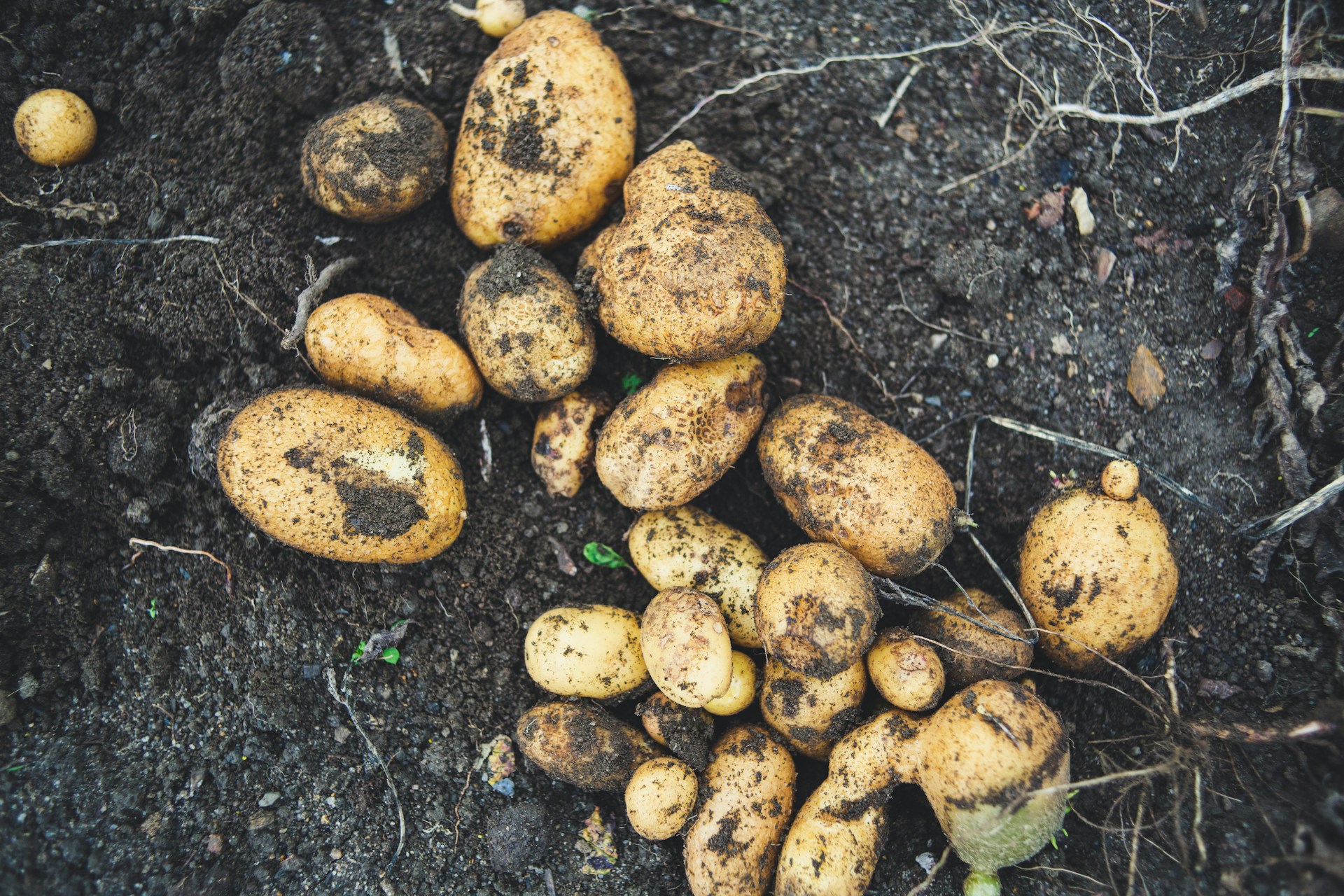
Researchers from Oregon State University have successfully grown potatoes in simulated lunar soil, demonstrating that the crop can complete its entire life cycle under conditions designed to resemble the Moon’s surface.
The experiment, published on November 20 in the journal Microgravity Science and Technology, offers an encouraging development for future lunar agriculture.
Finding ways to produce food beyond Earth is becoming an important part of space exploration. That’s what NASA is working on right now.
Potatoes may seem like an ordinary crop, but their ability to grow in a mixture of simulated lunar dust and nutrient-rich organic material could make them valuable for astronauts living far from Earth’s agricultural resources.
Establishing a permanent lunar base involves more than building habitats and developing transportation systems. Astronauts living on the Moon will need a dependable supply of food, water, and other essential resources to survive extended missions.
Transporting meals from Earth is a practical option for shorter expeditions, but maintaining a continuous supply for a larger lunar population would be expensive and logistically challenging. Producing food directly on the Moon could reduce dependence on regular resupply missions.
This is where lunar agriculture becomes important. Scientists are investigating whether plants can grow using materials available on the lunar surface, potentially turning otherwise unusable lunar dust into a resource for food production.
Among the crops being considered, potatoes offer an interesting starting point because they can produce edible underground tubers and provide a source of dietary energy.
A research team from the College of Agricultural Sciences at Oregon State University conducted an experiment to determine whether potatoes could survive and reproduce in material resembling lunar regolith.
Regolith refers to the loose layer of dust, broken rocks, and mineral fragments covering the Moon’s surface. Unlike ordinary agricultural soil, lunar regolith does not naturally contain the organic matter and biological activity that support conventional plant growth.
To recreate these conditions, the researchers used five different materials designed to represent regolith from two major lunar terrain types: lunar mare and lunar highland regions.
The experiment focused on determining how different mixtures of simulated lunar material and organic matter would affect potato development.
According to Aymeric Goyer, an associate professor in Oregon State University’s Department of Botany and Plant Pathology, the potatoes completed their entire life cycle in simulated lunar soil when organic matter was added.
The result marks an important step in understanding how food production might work in future lunar habitats.
The most significant part of the experiment was not the simulated Moon dust itself but the organic material mixed into it.
Researchers used vermicompost, a nutrient-rich material produced when earthworms decompose organic waste. It contains nutrients and organic compounds that can improve growing conditions for plants.
Researchers added different quantities of vermicompost to the simulated lunar regolith to identify a suitable growing mixture.
According to Space.com, researchers found that a combination containing 30% vermicompost performed about as well as conventional soil for growing potatoes.
This suggests that lunar regolith could potentially serve as part of a growing medium when supplemented with the right organic materials.
David Handy, a postdoctoral researcher in Goyer’s laboratory, explained that the compost may help reduce some of the toxicity associated with simulated lunar regolith by limiting plants’ exposure to harmful compounds.
The finding highlights the importance of combining locally available lunar materials with a smaller supply of nutrient-rich resources brought from Earth.
One major challenge in developing a lunar farm is that Moon dust is fundamentally different from the soil found in gardens and agricultural fields on Earth.
Terrestrial soil contains organic matter, microorganisms, and nutrients that support plant development. Lunar regolith, on the other hand, is primarily composed of mineral fragments and does not naturally provide the same biological environment.
Some of its components may also expose plants to potentially harmful substances, making direct cultivation difficult.
The Oregon State experiment suggests that adding organic material could help address some of these limitations.
However, growing potatoes in simulated lunar soil does not automatically mean crops are ready to be planted on the actual Moon. Researchers would still need to investigate how plants respond to genuine lunar regolith and the environmental conditions found on the lunar surface.
The long-term idea behind the research is relatively straightforward. Instead of transporting large quantities of agricultural soil from Earth, astronauts could bring a smaller amount of nutrient-rich organic material and combine it with lunar regolith.
This technique could potentially support food production within future lunar habitats.
For example, a lunar greenhouse could use specially prepared growing containers filled with a mixture of local regolith and organic compost. These systems would allow astronauts to cultivate crops while reducing the amount of material that must be transported from Earth.
Potatoes could become one possible food source in such an environment, although additional research is necessary before they can be considered suitable for actual lunar farming.
Back in 2017, scientists discovered that potatoes could also be grown on Mars. Other crops that could be planted on the red planet include quinoa, spinach, radish, leek, chives, tomato, pea, cress, rye, and garden rocket.
Researchers at Oregon State University successfully grew potatoes through their entire life cycle in simulated lunar soil supplemented with organic matter. However, this does not yet demonstrate successful potato farming under actual lunar conditions.
Lunar regolith is the layer of loose dust, rocks, and mineral fragments covering the Moon’s surface. Unlike Earth’s agricultural soil, it lacks the organic matter and biological characteristics needed for conventional plant cultivation.
Vermicompost is nutrient-rich organic material produced through the decomposition of waste by earthworms. Researchers added it to simulated lunar regolith to improve growing conditions and help reduce plants’ exposure to potentially harmful compounds.
The researchers found that simulated lunar regolith containing approximately 30% vermicompost performed about as well as conventional soil in the potato-growing experiment.
Potatoes produce edible tubers and provide dietary energy, making them an interesting crop for future space agriculture. Their successful growth in supplemented simulated lunar soil also makes them relevant to research on food production beyond Earth.
Growing food on the Moon is one potential component of future long-term lunar missions. Research into simulated lunar soil, organic supplements, and controlled growing environments could help make lunar agriculture more practical, although significant challenges remain.