HomeAuto C7 Adapters Ships First Leica M Mount for Blackmagic URSA Cine; Cooke SP3 and AP3 Now Compatible
C7 Adapters Ships First Leica M Mount for Blackmagic URSA Cine; Cooke SP3 and AP3 Now Compatible
November 8, 2026:
C7adapters.com
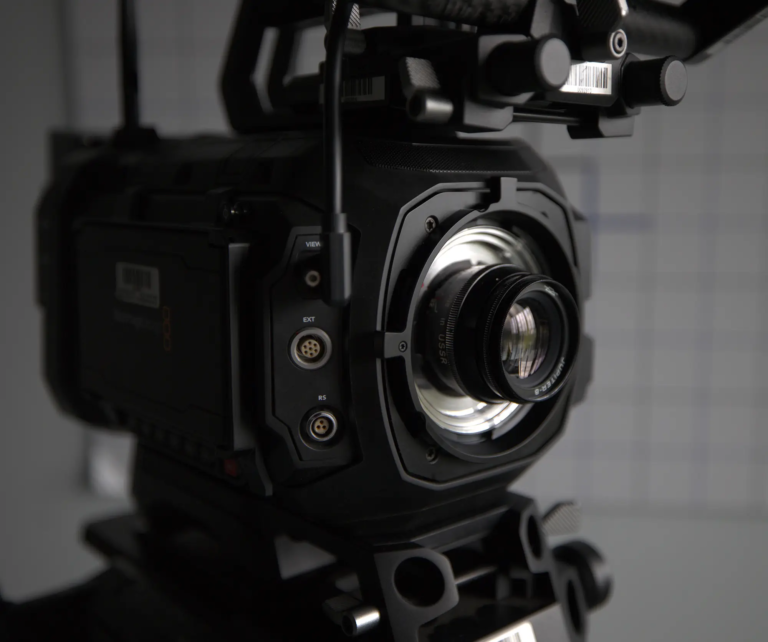
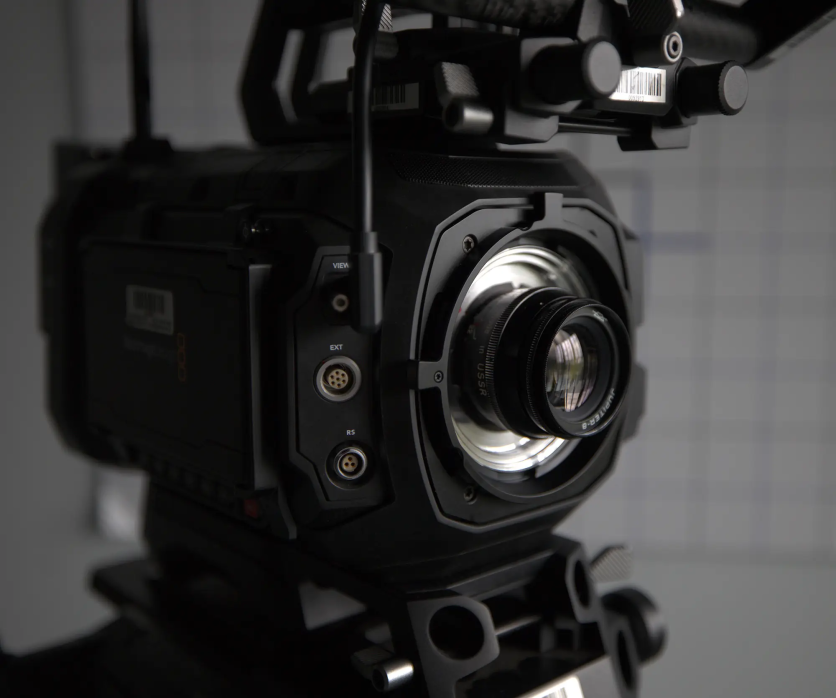
Polish adapter specialist C7 Adapters has released a Leica M lens mount for the Blackmagic URSA Cine LF and URSA Cine 65 — making it the first and currently only solution allowing cinematographers to mount Cooke SP3 and AP3 lenses on either Blackmagic large-format body. The adapter is priced at €1,000 (approximately $1,114 USD; exchange rate as of November 7, 2026, conversions are approximate) and ships from C7 Adapters’ online store.
The company says the adapter achieves a flange-distance tolerance of 0.005mm (approximately 0.0002 inches) — the standard of precision required to maintain reliable infinity focus with fast cinema prime lenses whose focus-plane sensitivity makes even fractions of a millimeter optically consequential.
Why This Matters for URSA Cine Owners
The Blackmagic URSA Cine LF and URSA Cine 65 represent two of the most capable large-format cinema platforms currently on the market. The URSA Cine LF features a 36×24mm (1.42×0.94 in) full-frame RGBW sensor delivering resolutions up to 12,288×8,040 pixels across 16 stops of dynamic range; the URSA Cine 65 pushes the envelope with a 51×24mm (2.01×0.94 in) 65mm-format RGBW sensor capable of 17,520×8,040 at the same 16-stop latitude.
Both cameras ship with interchangeable PL and LPL mounts as standard, with Blackmagic offering optional EF and Hasselblad bayonets — but until now, no Leica M–mount solution existed for either body. That gap mattered because a generation of compact, full-frame cinema primes designed around the Leica M bayonet — the Cooke SP3 and AP3 sets chief among them — had no native pathway onto Blackmagic’s large-format lineup. C7 Adapters’ mount closes that gap.
For cinematographers who have invested in Cooke SP3 or AP3 glass, this is not an incremental convenience: it is the difference between being able to use those lenses on a URSA Cine body or not. No optical adapter or workaround existed before this release.
Construction and Engineering
The C7 Adapters URSA Cine Leica M mount is built to the construction standards the company applies across its high-end cinema line: a stainless-steel Leica M mount housing set in an aircraft-grade alloy body with a black anodized finish. A positive-lock mechanism secures the mounted lens firmly, eliminating the micro-play and wobble that plague lower-cost adapters under the stress of professional production — a critical feature when the downstream sensor is capturing at resolutions above 12,000 pixels across.
The headline engineering specification is the 0.005mm (0.0002 in) flange-distance tolerance. This figure places C7 Adapters in the high end of professional cinema adapter engineering — the same range of precision used in ARRI PL mount machining itself, which has served as the professional cinema mount standard for decades.
C7 Adapters notes that shims may still be required to fine-tune the flange distance for specific lens-and-camera combinations. This is not a caveat unique to this product: it is standard practice at the professional level, because even a precisely machined adapter introduces tolerances from both the camera body’s mount face and the lens’s own mount that can accumulate to a small but optically detectable shift in focus plane. Blackmagic Design itself sells the URSA Cine Mount Shims Set separately, confirming that shimming is a standard part of the URSA Cine lens ecosystem workflow.
Understanding Flange Focal Distance: Why 0.005mm Is the Number
The engineering behind this adapter — and why the 0.005mm tolerance figure is the central specification — is rooted in one of the fundamental optical constraints of interchangeable lens systems: flange focal distance.
Flange focal distance (FFD) is the precisely calibrated gap between a camera’s lens mount flange and its sensor plane. Every lens mount standard specifies a unique FFD: the ARRI PL mount is designed around approximately 52mm; the Leica M mount around 27.8mm (1.09 in) at its inner rail contact points. When a lens is designed, its infinity focus point is calculated for a specific FFD. If the adapter that connects the lens to the camera introduces even a small error in that distance, the lens’s focus calibration is shifted — meaning what the lens marks as “infinity” on its focus ring no longer lands exactly at the sensor.
This is tolerable on slower optics. At T8 or T11, depth of focus is wide enough that a 0.01mm error disappears into the depth-of-field margin. But at T2.4 — the maximum aperture of the Cooke SP3 and AP3 — depth of focus narrows to the point where errors of even 0.01mm become critically visible on the imaging plane.
At 0.005mm tolerance, C7 Adapters is operating at half that threshold. On a 12K or 17.5K sensor, where individual photosites are small enough that any optical error registers as a focus shift rather than disappearing into pixel averaging, that level of precision is not marketing language — it is an engineering requirement.
The reason the Leica M mount has become the common denominator for user-interchangeable cinema prime systems is structural: at 27.8mm (1.09 in), the Leica M’s FFD is short enough that it can be mechanically adapted onto virtually any professional cinema or mirrorless camera body — ARRI, Blackmagic, L-mount, Sony E — without requiring optical correction elements. Cooke chose the M-mount as the interchangeable standard for SP3 and AP3 precisely because it makes those lenses portable across the full range of professional camera platforms. C7 Adapters’ mount is a physical realization of that portability on the URSA Cine.
One Critical Limitation: Protruding Rear Elements
Important warning: Leica M lenses with protruding rear elements cannot be used with this adapter. Using such lenses risks the rear glass elements physically striking the camera’s internal filter glass — potentially destroying both the lens and the camera. Users must verify rear element clearance before mounting any Leica M optic on the URSA Cine.
This restriction is a function of geometry, not a manufacturing defect. The URSA Cine cameras have an internal filter stack between the mount face and the sensor. Some Leica M lenses — typically wide-angle designs that use a retrofocal optical formula — extend their rear elements close to or beyond the mount bayonet face. When mounted on a camera with an internal filter stack, those elements can contact the glass. The damage is typically catastrophic and irreversible for both components. Any user planning to shoot with Leica M glass on this adapter should measure rear element protrusion against the camera’s internal clearance before first use.
Cooke SP3 and AP3 lenses, and the other optics confirmed compatible by C7 Adapters (see below), have been verified as safe. The warning applies primarily to legacy Leica M rangefinder glass and third-party M-mount wide-angle lenses with unusual optical designs.
The Lens Ecosystem It Opens
The commercial significance of this adapter rests on what it makes possible. Among the Leica M–mount cinema primes it enables on the URSA Cine LF and 65:
The Cooke SP3 prime series brings Cooke’s signature “Cooke Look” — the company’s characteristic soft fall-off and organic rendering — to a user-interchangeable mount format. Cooke added M-mount support to the SP3 in early 2024. The series spans 25mm through 100mm focal lengths at T2.4–T22. For cinematographers already invested in SP3 glass, C7 Adapters’ mount provides a direct path onto Blackmagic’s large-format platform without additional optical elements or adapters-within-adapters.
The Cooke AP3 anamorphic primes are Cooke’s 1.5× anamorphic prime series, launched in May 2026, covering 35mm, 50mm, and 85mm focal lengths at T2.4 with full-frame coverage. M-mount comes as a free extra alongside E, RF, and L options. For productions shooting anamorphic on URSA Cine, the AP3 via C7 Adapters is now a viable path.
The Iron Glass Helios AIR set is IronGlass’s compact mirrorless-oriented rehousing of curated Soviet Helios vintage optics, available with user-swappable Leica M mount. The Helios optical design is known for its characteristic swirly bokeh — a result of the original Petzval-derived optical formula — and organic rendering that many cinematographers use deliberately for period or stylized work.
The Thypoch Simera C lenses — the 75mm and 100mm focal lengths — belong to the Simera-C compact cinema prime family developed in partnership with DZOFilm, covering focal lengths at T1.5 (75mm) and T1.9 (100mm). The Leica M mount version is confirmed compatible with this adapter.
C7 Adapters: A Track Record in Cinema Precision
C7 Adapters is a Polish company with a long pedigree in high-tolerance cinema mount engineering. The company built its reputation primarily around ARRI Alexa Mini and Amira platform adapters — including a Nikon G camera mount that industry coverage described as approaching ARRI build quality in fit and finish — before expanding to PL-to-Canon RF mounts and, in February 2025, a C7 Adapters Leica M-ARRI mount for the Alexa 35, Alexa Mini LF, and ALEXA 265 cameras.
That ARRI Leica M adapter was priced at $969 USD, placing the new URSA Cine version at €1,000 (approximately $1,114 USD) in a comparable bracket after currency conversion. Across C7 Adapters’ product line, the company’s consistent design pillars have been shimmable flanges, aircraft-grade alloy construction, and sub-0.01mm machining tolerances. Newsshooter’s Matthew Allard ACS, who has covered C7 Adapters since 2017 and reviewed the PL-to-RF mount in 2021, described the company’s adapters as “beautifully machined and well made,” noting that “when you specialize in one thing you tend to get better at it.”
Blackmagic’s Expanding Lens Ecosystem
This adapter launches at a moment when Blackmagic Design has been actively growing the URSA Cine platform’s commercial reach. In September 2025, the company made significant price reductions: the URSA Cine 12K LF moved from $14,995 to its current $9,495, and the URSA Cine 17K 65 dropped from $29,995 to $22,995. Those price cuts — which brought large-format cinema hardware into ranges previously associated with mid-tier professional cameras — broadened the URSA Cine’s installed base considerably.
As more productions adopt the URSA Cine LF and 65, demand for more diverse lens options naturally grows with it. The Leica M mount’s growing relevance in professional cinema — driven by its adaptability to ARRI bodies via third-party mounts, and by the proliferation of compact full-frame cinema primes using the bayonet as a user-interchangeable standard — makes it an increasingly practical choice for productions mixing mirrorless-originated glass with large-format cinema bodies. C7 Adapters’ mount is the first to extend that ecosystem to Blackmagic’s large-format lineup.
Pricing and Availability
The C7 Adapters Leica M lens mount for the Blackmagic URSA Cine LF and URSA Cine 65 is available now at €1,000 (approximately $1,114 USD at current exchange rates) directly from the C7 Adapters URSA Cine product page. Shims are sold separately.
Frequently Asked Questions
What is flange focal distance, and why does 0.005mm precision matter for cinema lenses?
Flange focal distance (FFD) is the precisely calibrated distance between a camera’s lens mount flange and its sensor. When a lens is designed, its infinity focus is calibrated to a specific FFD. An adapter that introduces even a small error in that distance shifts the focus plane — meaning lenses won’t focus accurately where their markings indicate. At fast apertures like T2.4, even a 0.01mm error can show critically on the imaging plane. C7 Adapters’ 0.005mm tolerance is at the high end of professional cinema adapter engineering, keeping focus errors below the threshold where they become visible on 12K and 17.5K sensors.
Which Leica M–mount lenses are confirmed compatible with this adapter?
C7 Adapters has confirmed compatibility with the Cooke SP3 (full-frame cinema primes, M-mount added 2024), Cooke AP3 (1.5× anamorphic primes, M-mount available), Iron Glass Helios AIR Set (rehoused Soviet vintage optics with user-swappable M-mount), and Thypoch Simera C 75mm and 100mm. Additional Leica M–mount lenses with standard rear element geometry should also be compatible, but users must verify rear element clearance before use.
Why can’t all Leica M lenses be used with this adapter?
The URSA Cine cameras have an internal filter stack between the mount face and the sensor. Leica M lenses with protruding rear elements — typically some wide-angle designs that extend glass beyond the mount bayonet face — can physically contact that filter glass when mounted. The result can be catastrophic damage to both the lens and the camera. Any Leica M lens whose rear element protrudes beyond the mount bayonet face must not be used with this adapter. Compatible lenses have been verified to have adequate rear clearance.
How does the C7 Adapters URSA Cine mount compare to other professional cinema adapters?
C7 Adapters’ machining precision of 0.005mm (0.0002 in) is at the high end of the professional cinema adapter market — comparable to the tolerances used in ARRI PL mount engineering. The stainless-steel Leica M mount housing and aircraft-grade alloy body construction are consistent with the company’s other high-end cinema adapters. The shimmable flange design — allowing per-unit fine-tuning of the flange distance — is standard on professional cinema adapters because accumulated tolerances in both lens and camera body can shift focus even when the adapter itself is precisely made.
What is the C7 Adapters URSA Cine LF and 65 Leica M mount price in USD?
The adapter is priced at €1,000, which converts to approximately $1,114 USD at the mid-market exchange rate of 1 EUR = 1.11434 USD as of November 7, 2026. Exchange rates fluctuate; check current rates before budgeting. The adapter is available directly from the C7 Adapters official website.