Boox Palma 3 E-Reader Reaches Amazon: Maker Operates Under China’s National Intelligence Law

November 19, 2026:

Boox Palma 3 E-Reader Reaches Amazon: Maker Operates Under China’s National Intelligence Law
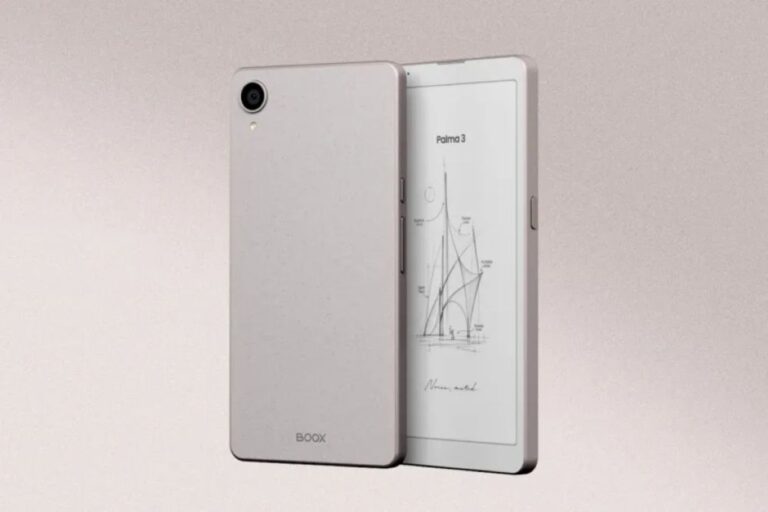
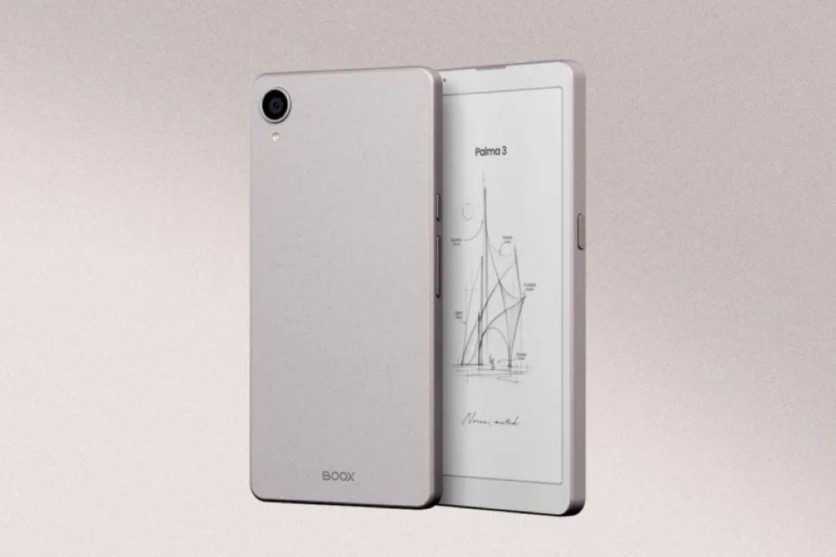
Boox Palma 3
Shop.boox.com

Boox’s pocket-sized Palma 3, an Android 16 E Ink reader made by China-based Onyx International, can now be ordered through Amazon’s U.S. site, according to a Nov. 18 Notebookcheck report. This article covers the security and privacy risks buyers should weigh before ordering, because the full Android that lets the Palma 3 run Google Play apps also means data handling and manufacturer-controlled software updates matter more than they do on a closed-ecosystem reader. Amazon offers free returns through Jan. 31, 2027, which leaves time to test the device.

Amazon lists the Palma 3 at $340 and the InkSense Plus stylus separately at about $51, which puts a fully equipped setup near $391 before tax. Boox’s own shop page now shows order buttons and lists the device from $319.99, about $20 below the Amazon price. At the mid-September announcement, Notebookcheck’s launch coverage listed the device as “available soon” with no release date. Boox’s own shop blog later described the device as available to order in a post dated Oct. 25.

Boox announced three new E Ink devices on Sept. 15: the Palma 3, the larger Note Air6 C and the Note Mini C. The phone-shaped design carries over from the Palma 2, and Gizmodo summed up the launch as “same specs, new body.” The visible changes are an aluminum frame with fiberglass back panel, plus Android 16 in place of the Palma 2’s Android 13.

E Ink Physics Caps Palma 3 Refresh Speed, Forcing Detail-for-Pace Trade-Offs

An E Ink panel forms an image by moving charged pigment particles suspended in oil: particles near the viewing surface make a pixel look white, and particles at the rear let dye absorb light so the pixel looks dark. Once the particles settle, they hold their positions without power, which is why an E Ink reader draws energy mainly when the page changes.

That same mechanism sets a speed limit. Standard E Ink panels refresh at roughly 1 to 15 Hz, and pushing refresh faster leaves particles too little time to settle, which produces ghosting. 9to5Google’s review of the original Palma said the display refreshes more slowly as detail rises and that even Ultrafast mode still needs some patience. Galaxus found video playback jerky on the Palma 2. The Palma 3 keeps the same 6.13-inch, 300 ppi panel family as the Palma 2.

Boox’s press release lists an octa-core processor at 4nm, up to 2.9 GHz, and its Oct. 25 shop blog promises a 45% CPU performance boost over the predecessor, with BOOX Super Refresh technology handling screen updates. Digital Trends names the Qualcomm Q-6690 chip, as does Gadget Review’s launch article, while Notebookcheck’s Amazon report leaves the processor unnamed. The panel is 824 × 1648 pixels, backed by 6GB of RAM, 128GB of storage and a microSD slot rated up to 2TB.

The stylus is a separate hardware bet. Boox’s InkSense Plus recognizes 4,096 pressure levels and tilt. Because an active stylus’s protocol must match the device’s digitizer, buyers should assume the Boox pen is the supported choice. The body measures 159 × 78 × 7.8 mm (6.3 × 3.1 × 0.31 in) and weighs about 185 g (6.5 oz) per Notebookcheck and Boox.

Kindle Paperwhite Brings Bigger Screen, IPX8 Waterproofing, Longer Battery at About $140 Less

Amazon’s 2026 Kindle Paperwhite starts at $199.99, a price increase from $159.99 that Amazon attributed to higher memory and storage costs on Aug. 21. It carries a 7-inch, 300 ppi display and an IPX8 rating that covers submersion to 2 meters (6.6 ft) for up to 60 minutes. Amazon rates its battery at up to 12 weeks. Against the $340 Amazon listing, that is a gap of about $140.

Amazon also sells a 6-inch Kindle that it calls its most pocket-sized Kindle ever, from $149.99, with an estimated battery life of up to six weeks. What the Palma 3 adds over either Kindle is Android: Google Play apps, a microSD slot, stylus support and a 16MP rear camera, which TechRadar says could help scan documents. Notebookcheck points readers who only want to read toward the cheaper Kobo Clara BW.

No published test of Palma 3 battery endurance had surfaced as of Nov. 19. The cell holds 3,950 mAh, and reviews of earlier Palma models give a range: 9to5Google reported days or even weeks of power from light use, while Yanko Design wrote that the battery can last two or three days with constant use.

Boox Claims 45% CPU Gain, and No Independent Test Has Confirmed It

The 45% figure comes from Boox’s Oct. 25 shop blog. Until named reviewers publish measurements, it remains the company’s own claim.

Spec sheets also disagree with one another. Boox and Notebookcheck put the weight near 185 g (6.5 oz), while TechRadar lists about 195 g (6.9 oz) and Gadget Review lists 195 g. Notebookcheck’s September report named an E Ink Carta 1200 panel, while The eBook Reader blog reported a Carta 1300 screen without citing a source in the post, and Boox’s own page names neither.

Boox Promises Three Years of Firmware Updates but Declines Security Patch Guarantee

Boox says it is committed to free firmware updates for all models for more than three years, and its support team has said Android security patches are included in major firmware releases. In an official comment on a different tablet, Boox said it does not guarantee security patches once Google’s official security updates for an Android version end. Android 16 gives the Palma 3 a newer base than Android 13, but the guarantee gap means patch timing depends on Boox’s firmware schedule.

Boox’s record on Android versions is mixed. Onyx began rolling out Android 13 to the Boox Go 6 Gen II just months after release in June 2026, and Notebookcheck says the company has rarely upgraded Boox Android versions in the past. Wikipedia’s Android history explains why this matters: outside Google’s own hardware, updates often arrived months late or never.

China’s National Intelligence Law Covers Onyx, and Palma 3 Has No Published Privacy Audit

The law. Onyx International, the company behind Boox, is based in Guangdong, China. Three Chinese laws shape what that company can be asked to do. China’s National Intelligence Law, passed in June 2017, says all organizations and citizens must “support, assist, and cooperate” with national intelligence work in accordance with law, according to a China Law Translate Article 7 translation. The Cybersecurity Law, effective June 1, 2017 and amended effective Jan. 1, 2026, requires network operators, a vaguely defined term interpreted to include technology companies, to give technical support to public security organs under Article 28. The Data Security Law, effective Sept. 1, 2021, bars organizations from giving data stored in mainland China to foreign courts or law enforcement without Chinese approval under Article 36. Lawyers disagree on whether these duties reach overseas subsidiaries or servers abroad: a 2019 Mannheimer Swartling report read the intelligence law broadly, while a 2018 Zhong Lun opinion commissioned by Huawei argued its overseas units fall outside it. Jeremy Daum, a senior fellow at Yale Law School’s Paul Tsai China Center, argues the cooperation duty carries no penalty for refusal, yet writes that the Chinese government can coerce cooperation with or without a law.

The data. The Palma 3 has no cellular modem, so no carrier or SIM data exists. It does carry a 16MP camera, microphones and fingerprint sensor, and no source cited here documents any of them sending data off the device. Documented data flows come from older Boox models: Mozilla’s 2021 review marked location tracking as present, and blogger Tyler Cipriani found Boox telemetry routed to Onyx servers even though he never opted in or logged into a Boox account, with most traffic benign. Content stored in Boox’s cloud storage and data management tools adds another category.

The evidence. Mozilla’s Privacy Not Included review, dated Nov. 8, 2021, carried a warning label, found no privacy policy covering the e-readers themselves, and could not determine whether Boox encrypts data. BGR reported on Sept. 14 that there are no known security threats and that researchers found Boox’s data use “pretty benign” in most cases, while noting that Boox’s SSL encryption claims would need more research to confirm. No independent audit of Palma 3 network traffic has surfaced; the closest evidence comes from those older models. Outside inspection is also limited because Onyx declined a 2022 request to release the source code for its modified Linux kernel, which GPLv2 requires distributors to provide or offer in writing.

What readers can do. Mozilla advised buying only from the seller “Onyx International Inc” on Amazon or from shop.boox.com, and warned about copycat devices and a likely scam reseller domain. Cipriani blocks Boox traffic with Pi-hole and a community blocklist. The Palma 3 also reads files from microSD and USB-C, so keeping Wi-Fi off for local reading limits what the device can transmit. Readers should keep banking and health credentials off a device with these update and audit gaps. None of these steps removes the structural legal exposure: data stored with Boox’s cloud services sits under Chinese law no matter how the device is configured.

Does Boox Palma 3 Replace Your Phone?

No. The Palma 3 connects over Wi-Fi and Bluetooth only, with no cellular radio, and it includes a built-in speaker and microphones. Galaxus’s Palma 2 review summed up the pocket Boox line as a top-notch e-reader, lousy mini tablet.

TechRadar’s launch coverage questioned whether a stylus suits a device this small and saw limited use for a camera on an e-reader, though it noted the camera could help with document scanning.

Buyers Must Weigh Slow Refresh, Unverified Claims, Patch Limits and Legal Exposure

The Palma 3 is the most flexible pocket E Ink reader on U.S. shelves, with Android 16, Google Play, a microSD slot, a camera and stylus support, but each of those strengths comes with a limit. On performance, E Ink physics caps refresh speed and Palma 3 battery life has no published test, while Kindles advertise weeks of battery. On verification, Boox’s 45% CPU claim and its spec sheets lack independent confirmation. On ecosystem, Boox promises three years of firmware but no security patch guarantee, and it withholds its kernel source. On law, Onyx operates under China’s National Intelligence Law, Cybersecurity Law and Data Security Law, and no audit of Palma 3 network traffic exists. The $340 Amazon price, about $140 above the 7-inch Kindle Paperwhite and about $190 above the 6-inch Kindle, is the smallest part of that decision, and the return window through Jan. 31, 2027 is the safest time to test the speed and battery claims yourself.


Frequently Asked Questions

Is the Boox Palma 3 safe to use?

Nothing published shows the Palma 3 misusing data, but nothing independent confirms it is safe either: no audit of its network traffic has surfaced, and Onyx has not released its kernel source. Onyx is a Chinese company subject to laws that require organizations to cooperate with state intelligence and security agencies, and no device setting changes that. Buy from an official seller, block telemetry at your router if you can, and keep sensitive accounts off the device. Mozilla’s review could not determine encryption status, and BGR’s own caveat is that these claims don’t make devices completely safe.

How long will the Boox Palma 3 get software updates?

Boox says it provides free firmware updates for more than three years after launch and folds Android security patches into major firmware releases, but it says it cannot guarantee security patches once Google ends official support for an Android version, according to its official help center comment. Notebookcheck’s Go 6 Gen II report says Onyx has rarely upgraded Android versions, so buyers should not count on a newer version later.

Does the Boox Palma 3 come with a stylus?

No. The InkSense Plus stylus is sold separately, at about $51 on Amazon and $46 in launch coverage of Boox’s own pricing. Gadget Review’s launch article said the device ships with the pen, which conflicts with the separate sale, so confirm the contents before checkout.

Source link