HomeAuto Boeing SPEEA Engineers Authorize Strike That Would Halt 737 MAX 10 FAA Certification
Boeing SPEEA Engineers Authorize Strike That Would Halt 737 MAX 10 FAA Certification
August 31, 2026:
Speea.org
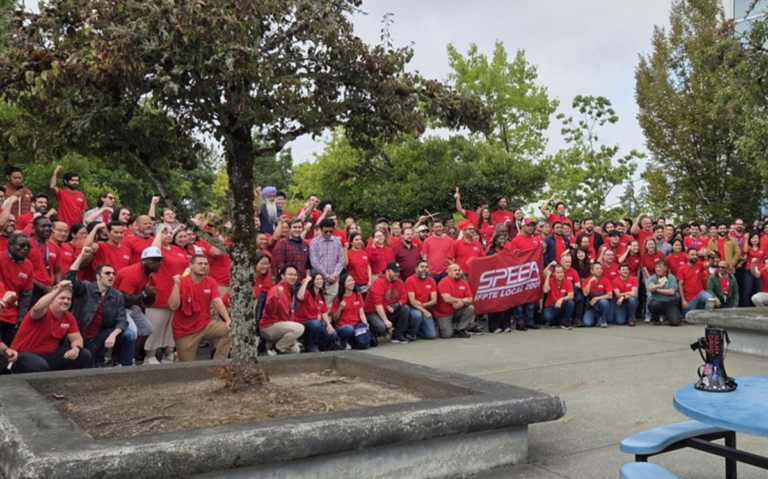
Boeing and the Society of Professional Engineering Employees in Aerospace (SPEEA) have returned to the negotiating table today, August 31 — five weeks before the October 6 contract deadline — as the company faces a labor standoff with precisely the workforce responsible for closing the safety documentation the FAA requires before it can issue a type certificate for the Boeing 737 MAX 10. As of July 28, 2026, Development Assurance Review four (DAR 4) was roughly 60% complete and System Safety Assessments were approximately 32% complete on the 737-10 program, according to Boeing’s own certification status disclosures. Those reviews are engineering documentation tasks, not flight tests. They are performed by the same 17,000 engineers and technical workers whose 87.82% strike authorization vote ten days ago now hangs over Boeing’s fastest path to a 2027 delivery schedule.
The 2026 SPEEA dispute is structurally different from the 2024 machinists’ walkout that stopped physical assembly. A SPEEA strike beginning October 7 would not necessarily halt the physical production of aircraft — it would halt the regulatory documentation process by which Boeing demonstrates to the Federal Aviation Administration that those aircraft are airworthy. That distinction matters more in 2026 than it would have at any prior point in Boeing’s recovery, because the remaining work on the 737-10 type certificate is no longer about flying the aircraft — it is about closing a paper record the FAA must accept before a single 737-10 can legally enter commercial service.
Why Certification Documentation Is Now the Chokepoint
Flight testing on the 737 MAX 10 is complete. On July 28, 2026, the program completed its 976th certification flight — the final planned test, a cabin audibility check of the lavatory smoke detector and the public-address speaker system. The three test aircraft have now logged more than 2,060 flight hours and approximately 1,040 hours of ground testing across the full certification campaign, which included validation of the redesigned Engine Anti-Ice system, the enhanced Angle of Attack system, wet-runway braking, and the 737-10’s semi-levered main landing gear.
The 737-10’s landing gear is the clearest illustration of why its certification package is more complex than other MAX variants. The aircraft’s increased length — 43.8 meters (143.7 feet) compared to the MAX 9’s 42.1 meters (138.1 feet) — creates a tail-strike risk during rotation. Boeing addressed this with a semi-levered main landing gear assembly that extends an additional 241 millimeters (9.5 inches) upon rotation. That extension required a dedicated certification path with no direct precedent among the other MAX models.
What remains after flight testing is purely documentation-based: closing Development Assurance Reviews and System Safety Assessments, then submitting final deliverables to the FAA. DARs trace every credible failure mode through the design, system by system; SSAs demonstrate that no single failure or combination of failures produces a catastrophic or hazardous outcome. Both must be submitted and accepted by the FAA before the type certificate can be issued. Boeing SVP Mike Sinnett summarized the program’s posture at a July 2026 certification roundtable: “Certainty is more important than flow. Two years ago, the path forward wasn’t as clear as we wanted it to be. It is now.”
That certainty depends on the engineers doing the work.
From Cap to Rate 47: Boeing’s Recovery Before the Labor Risk
The production ramp that gives Boeing something to protect is real and measurable. Following the January 5, 2024, in-flight blowout of a door plug aboard an Alaska Airlines 737 MAX 9, the FAA capped 737 production at 38 aircraft per month — a regulatory constraint designed to force Boeing to address what the agency described as deep-rooted quality and manufacturing process failures.
Recovery was methodical. On May 27, 2026, CEO Kelly Ortberg announced at the Bernstein Strategic Decisions Conference that Boeing had passed the FAA’s capstone review for Rate 47. “We’ve passed the capstone review for rate 47, so we are now in the process of running the line at the 47-a-month rate,” Ortberg said. “It’ll probably take us a few months of stabilization there.” The FAA’s approach also evolved: rather than imposing a numerical cap, the agency shifted to a performance-based oversight model tied to Boeing’s Product Quality Management System improvements.
Several structural changes made that approval possible. Boeing completed its acquisition of Spirit AeroSystems — its primary fuselage supplier — in December 2025 for approximately $4.7 billion, giving the company end-to-end quality control over the manufacturing process. Parked aircraft at Moses Lake, Washington were cleared, returning more than a thousand specialized mechanics to active final assembly lines. Boeing also accelerated hiring, adding more than 100 factory workers per week.
In the second quarter of 2026, Boeing delivered 129 737s — up from 104 in Q2 2025. First-half 2026 total 737 deliveries reached 243, compared with 209 in the same period of 2025. Q2 revenue reached $24.6 billion, an 8% year-over-year increase, while free cash flow turned positive at $631 million — the first positive FCF quarter in more than a year, as reported in Boeing’s Q2 earnings. Boeing’s balance sheet remains under pressure: consolidated debt stood at $45.9 billion at the end of Q2, with approximately $20 billion in cash and marketable securities. The company reported a Q2 GAAP net loss of $428 million. The commercial aircraft backlog stands at a record $597 billion for more than 6,200 aircraft, a figure that extends Boeing’s order book well into the 2030s.
Everett North Line: Building for Rate 52 and Beyond
Meeting that backlog requires factory capacity beyond Renton. On July 6, 2026, Boeing loaded the first aircraft onto its new 737 North Line at Paine Field in Everett, Washington — the first time a 737 has been built outside of Renton in more than 50 years. The Everett North Line is designed to push Boeing from Rate 47 toward Rate 52 — a target Ortberg expects to reach in early 2027. The first aircraft moving through the North Line is a 737 MAX 10 destined for WestJet, and the line replicates the Renton build sequence with one adaptation: a Wing Transport Tool moves partially completed wings from Renton to Everett for final integration.
Ortberg signaled Boeing’s ambition plainly when the North Line was confirmed: “I think the whole world’s watching to make sure we make 47 and 52.” The longer-term target is 63 aircraft per month — a figure that would require sustained supply-chain cooperation from CFM International (the LEAP-1B engine’s maker) and years of stable workforce performance.
SPEEA Votes No: What the Numbers Mean
Boeing’s production momentum now confronts its most significant white-collar labor dispute in more than two decades.
Formal bargaining between Boeing and SPEEA began in July 2026 and moved quickly by any historical standard — daily sessions through late July, sometimes stretching to 14 hours, as Boeing pushed toward an agreement well ahead of the October 6 contract expiration. Both sides’ negotiating teams endorsed a tentative agreement by late July. The offer included a 3% general wage increase retroactive to February 2026, annual salary pool adjustments starting at 7% in 2027 and settling at 5.5% thereafter, a guaranteed annual cost-of-living adjustment capped at 3%, a 40% increase in the annual incentive bonus target, and 40 units of restricted Boeing stock. Compounded over four years and factoring in promotions and out-of-sequence adjustments, the wage increase was projected to reach 31.9% — the largest wage-pool increase SPEEA had seen since 1983.
Members rejected it anyway.
On August 21, 2026, voting results were released. In the Professional Unit — covering nearly 13,000 engineers and scientists — 64.25% of ballots voted against the offer (7,238 to 4,027). In the Technical Unit, representing more than 4,000 analysts, designers, and specialists, the rejection was sharper at 71.87% (2,795 to 1,094). Voter turnout reached 95.57% of authorized ballots. Strike authorization votes were more emphatic: 87.82% of Professional Unit members and 89.71% of Technical Unit members approved authorizing a walkout.
The rejection reflected frustrations that had been building for years. SPEEA’s last major contract negotiation occurred in 2020, when Boeing was financially crippled by the MAX grounding and the pandemic — a context that tilted leverage entirely toward the company. By 2026, the balance had shifted: Boeing’s recovery was generating real revenue, Rate 47 was running, the North Line was open, and SPEEA’s members were bargaining from a position of genuine leverage for the first time in a decade. Many cited wages that had fallen behind inflation over successive contract extensions, compensation structures that lagged comparable roles at competing employers, and frustration that the contract the International Association of Machinists won after its own 53-day strike in 2024 signaled what militant action could achieve. In a post-rejection member survey closed August 26 — drawing approximately 13,000 responses — SPEEA members identified larger and more immediate guaranteed wage increases and stronger performance-based raises as the leading prerequisites for ratification.
Leeham News, which has covered Boeing labor relations extensively, characterized the outcome plainly: the rejection was “yet another legacy Ortberg inherited from Jim McNerney’s discredited 10-year tenure as CEO” — a reference to a period when Boeing’s leadership prioritized financial results over engineering excellence and methodically eroded the informal compact with its technical workforce.
Why Does a White-Collar Strike Threaten Certification Differently?
A SPEEA walkout would look different from the 2024 IAM machinist strike. Machinists physically assemble aircraft; engineers and technical workers produce the documentation, analysis, and regulatory submissions that make assembled aircraft certifiable. That distinction maps precisely onto where Boeing’s 2026 risk is concentrated.
SPEEA members are embedded throughout Boeing’s manufacturing and certification operations. They resolve in-process production anomalies, write technical dispositions for quality escapes, support supplier interfaces, and staff the engineering functions that generate the Development Assurance Reviews and System Safety Assessments the FAA requires. Engineering and technical labor at an aircraft manufacturer sits directly on certification work, which is why a stoppage carries different stakes than a production-line strike.
The 737-10 is the most acute case. DAR 4 — the fourth of four development assurance reviews — was approximately 60% complete as of July 28, 2026, according to Boeing’s certification progress page. System Safety Assessments were approximately 32% complete on the same date. Both require sustained engineering attention through fall 2026. A walkout beginning October 7 would stop that work at a point when the DAR is still 40% unfinished and the safety assessments are still more than two-thirds undone. The FAA has not set a specific certification date; there is no hard deadline Boeing can race to beat before the contract expires.
Boeing has responded by posting contractor positions for engineering and technical roles — a move SPEEA publicly criticized. Boeing’s statement to Reuters on the contingency plan noted the company’s intent to “leverage a wide range of qualified resources with a continued emphasis on safety and quality.” But engineering certification work is not straightforwardly transferable to contractors without institutional knowledge of the specific program, the accumulated design history, and the FAA’s trust in the individuals signing off on submissions.
The 777-9: A Longer Arc, the Same Dependency
The 737-10 is not the only certification program with a SPEEA dependency. Boeing’s 777-9 wide-body — the longest twin-engine commercial aircraft ever built, stretching 76.7 meters (251 feet, 9 inches) — is progressing through its own multi-phase FAA oversight process, and it too depends on engineering labor to execute flight tests, process results, and prepare documentation.
The FAA cleared the 777-9 to begin Type Inspection Authorization Phase 4B in early June 2026. Boeing Commercial Airplanes president Stephanie Pope described the milestone at the IATA Annual General Meeting in Rio de Janeiro: “This authorization unlocks the largest remaining portion of our flight test with the FAA that we can now go execute.” Phase 4B covers avionics, stability and control testing, and human factors flight testing — described by Pope as the last TIA phase with a “significant amount of work.” Phase 5, the final TIA phase, follows, along with ETOPS clearance and functionality-and-reliability testing on a delivery-ready airframe. The FAA has signaled the 777-9 type certificate will not be issued in 2026, making first delivery to launch customer Lufthansa — which has 20 on order and anticipates delivery in early Q1 2027 — contingent on completing that engineering work through the first half of next year.
Boeing has 652 orders for the 777X family, including 270 from Emirates and 124 from Qatar Airways. Every week of delay in certification is a week of revenue that a company with $45.9 billion in debt cannot book.
Boeing’s Response: Contingency Planning and a Return to Talks
Boeing moved quickly after the August 21 vote. The company activated its strike contingency plan and announced that early-ratification incentives — including the retroactive pay provision and the higher 2026 incentive plan target — were no longer on the table. “We have no choice but to implement our strike contingency plan,” Boeing said in a statement on its SPEEA page. “We have a responsibility to the rest of our workforce and our customers to build on our progress over the last two years and maintain our momentum.”
The company then posted contractor job listings for engineering and technical roles, which SPEEA spokesman Bryan Corliss framed bluntly: “It appears that both sides are preparing for the possibility of a strike.”
Both sides subsequently confirmed a return to the negotiating table for today, August 31. The first round of talks is resuming with five weeks remaining before the October 6 contract expiration.
What Does Boeing’s Engineering-Labor History Say About October?
The historical parallel that SPEEA members are invoking — intentionally or not — is the 2000 SPEEA strike. On February 9, 2000, approximately 17,000 engineers and technicians walked off the job at Boeing plants across the country in what was, at the time, the largest white-collar strike in US history. The walkout lasted 40 days. Boeing plane deliveries slowed to a trickle, research projects were suspended, and the company’s stock fell. Boeing ultimately retreated from its main demand — employee cost-sharing on health insurance — and mediators brokered a tentative agreement ratified by 70% of voting SPEEA members on March 19, 2000.
The cause of the 2000 strike was strikingly similar to today’s: management had shifted focus to financial performance over engineering excellence, engineers felt their contributions were undervalued, and a machinists’ contract had recently won benefits that engineers did not receive. The slogan engineers carried on their picket signs — “No Nerds, No Birds” — has circulated again in 2026 online discussion among SPEEA members, as documented in KNKX Public Radio’s coverage of the 2000 strike’s legacy.
Ortberg arrived at Boeing in August 2024 with explicit intent to reset the labor culture McNerney’s tenure had damaged. The quick, collaborative SPEEA negotiation through July — “lightning speed,” in Leeham News’s words — was widely described as Ortberg’s opportunity to demonstrate that the reset was real. The membership’s emphatic rejection of a unanimously recommended tentative agreement suggests the reset has not yet reached the shop floor — or more precisely, the desk floor where Boeing’s engineers work.
Both sides have said publicly they prefer a negotiated resolution before October 6. The question today’s talks will begin to answer is whether Boeing can close the gap between what its negotiating team was willing to offer and what 12,000 survey respondents said they require.
Frequently Asked Questions
What specifically do SPEEA engineers do for Boeing’s FAA certifications?
SPEEA’s Professional Unit covers Boeing engineers and scientists who perform Development Assurance Reviews (DARs) — structured analyses of how Boeing’s design assurance process has been implemented for each aircraft system — and System Safety Assessments (SSAs), which demonstrate that no credible single or combination failure can produce a catastrophic outcome. These must be submitted to and accepted by the FAA before a type certificate (which legally authorizes commercial service) can be issued. For the 737-10, DAR 4 was approximately 60% complete and SSAs were approximately 32% complete as of July 28, 2026. A strike would stop the engineering work that produces those submittals.
Why did SPEEA members reject a deal their own negotiators unanimously recommended?
The rejection reflected accumulated frustration that the offered terms — however historically large in percentage terms — did not reflect the real-wage losses SPEEA members had experienced through successive contract extensions during Boeing’s crisis years, nor did they bring compensation to what members described as market-competitive levels. The IAM machinists’ 53-day strike in 2024 produced a settlement that many SPEEA members saw as evidence that stronger action yields better outcomes. A post-rejection member survey drawing approximately 13,000 responses identified larger guaranteed wage increases and stronger performance-based raises as the primary barriers to ratification.
How is a Boeing engineers’ strike different from the 2024 machinists’ strike?
The 2024 IAM machinists’ strike halted physical aircraft production: without the workers who assemble fuselages, install systems, and complete final assembly, Boeing could not build or deliver aircraft. A SPEEA strike would not necessarily halt physical assembly. It would stop the engineering and technical work that supports FAA certification — including the regulatory documentation required to prove the 737-10 and 777-9 are safe to carry passengers. In 2026, that distinction matters acutely, because Boeing’s two most commercially critical milestones (737-10 type certificate and 777-9 first delivery) both depend on engineering documentation being completed and submitted to the FAA.
What happens to the 737-10 certification if no deal is reached before October 7?
A strike beginning October 7 would stop ongoing DAR and SSA completion work for the 737-10 program. Boeing could attempt to continue with contractors, but certification documentation requires engineers with deep institutional knowledge of the design history, the FAA’s specific questions, and the accumulated compliance record. Contractors cannot simply replicate that knowledge immediately. Delays in the final documentation phase would push the FAA’s certification review window, potentially deferring the type certificate beyond the 2026 target Boeing and the FAA have both cited — and with it, the 2027 first deliveries on which Boeing’s debt-reduction case depends.