HomeAuto Autism Gene Therapy Trial Reaches Patients as US Primate Labs Cede Ground to China
Autism Gene Therapy Trial Reaches Patients as US Primate Labs Cede Ground to China
November 2, 2026:
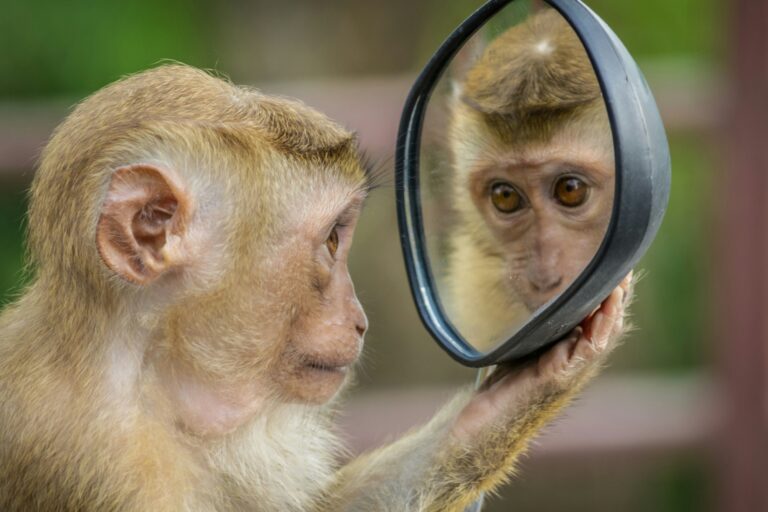
Andre Mouton/Unsplash.com
A primate-derived gene therapy for one of autism’s most well-characterized genetic forms is now enrolling children in clinical trials at three major U.S. medical centers — but the macaque research infrastructure that made that therapy possible is being systematically dismantled under pressure from the Department of Government Efficiency and Robert F. Kennedy Jr., leaving no comparable domestic substitute as China invests approximately $743 million in competing primate neuroscience.
The convergence is not coincidental. JAG201, the JAG201 gene therapy trial developed at MIT’s McGovern Institute and licensed from the Broad Institute of MIT and Harvard, was proven in CRISPR-modified macaque models that replicate the genetic architecture of human autism with a precision that no mouse model can — and that no organoid, organ chip, or computational model yet achieves. The trial is recruiting at three US medical sites — Rush University Medical Center in Chicago, Boston Children’s Hospital, and the Seaver Autism Center at Mount Sinai in New York. The first pediatric patient enrolled in the first quarter of 2025. The infrastructure that built it is now, as of this fall, formally scheduled for “substantial reduction.”
A major investigation by Diana Kwon in The Transmitter, published today, documents the full scope of what American primate autism research is losing and what those losses mean for a generation of potential therapies still in the laboratory pipeline.
Gene Therapy in Trials: What JAG201 Is and Why It Required Macaques
JAG201 targets haploinsufficiency of the SHANK3 postsynaptic scaffold gene — a protein encoded on chromosome 22q13.33 that anchors receptors, ion channels, and signaling machinery to the actin cytoskeleton of neurons. Mutations that eliminate one copy of SHANK3 cause Phelan-McDermid syndrome and account for at least 0.5 percent of spontaneous autism spectrum disorder cases in research cohorts.
The therapy uses an AAV9 vector delivering miniSHANK3 under a synapsin promoter that restricts expression to neurons. AAV9 is selected for its capacity to cross the blood-brain barrier; the miniaturized gene fits within AAV’s packaging ceiling of approximately 4.7 kilobases. The Broad Institute licensed the technology to Jaguar Gene Therapy, which is backed by Deerfield, ARCH, and Eli Lilly through a Series A financing round closed in 2024.
The FDA cleared JAG201 for trials in January 2024. The therapy targets patients with confirmed SHANK3 haploinsufficiency — a population defined enough to make a clean trial feasible and broad enough to matter: tens of thousands of children in the U.S. carry this mutation.
Why Monkeys and Not Mice? The Translation Gap No Alternative Can Close
The answer lies in a biological mismatch that took researchers years to fully understand and that the proposed replacement technologies — organoids, organ chips, iPSC-derived neural cultures — do not resolve.
Every confirmed human SHANK3 mutation that causes autism is heterozygous: the patient has one functional copy and one damaged copy of the gene. But for decades, the standard laboratory model for SHANK3 autism research was a mouse in which both copies were deleted — a homozygous knockout. That mismatch matters enormously. Mouse homozygous SHANK3 knockouts produce autism-relevant behaviors, but they model a condition that does not exist in human patients. When researchers tried to use those models to evaluate gene therapy interventions, they were testing a therapeutic in an animal that has twice the severity of the disorder they were trying to treat.
CRISPR-modified macaques, created by Guoping Feng’s laboratory at the MIT McGovern Institute beginning with a landmark 2019 SHANK3 macaque study published in Nature, solved this problem directly. Macaques could be engineered as heterozygous SHANK3 mutants — exactly one disrupted copy — matching the genetic architecture of human patients for the first time in any animal model. Feng, the Poitras Professor of Neuroscience at MIT and director of the Hock E. Tan and K. Lisa Yang Center for Autism Research, is widely credited with the insights that made JAG201’s development tractable.
A May 2026 study in Neuron examined the first generation of heterozygous offspring produced from those original CRISPR-modified macaques — animals that inherited the mutation naturally rather than receiving it through direct editing. Those animals showed autism-like behavioral phenotypes including sleep disturbances, diminished environmental exploration, atypical social interactions, altered functional connectivity on fMRI, a diminished auditory response on EEG, and impaired paired-association memory. Working memory was preserved. The study’s authors developed a multi-task behavioral array specifically designed to serve as biomarkers for testing potential therapeutics — the kind of validated outcome measures a clinical trial needs to interpret whether an intervention worked.
No organoid model can fall asleep and wake up. No organ chip learns to associate objects with locations over multiple training sessions. No computational model produces fMRI functional connectivity data that maps directly onto human autism neuroimaging findings. These are not failures of ambition in NAMs research; they are architectural constraints on what cellular and computational systems can model about a disorder whose core features are behavioral, social, and neurological.
How Did U.S. Primate Labs Lose Federal Support?
The dismantling arrived on two tracks simultaneously.
On November 21, 2025, the Centers for Disease Control and Prevention ended all macaque research programs by year’s end. The directive was communicated to CDC staff by CDC deputy chief Sam Beyda, a former DOGE employee now serving as CDC deputy chief of staff, acting on behalf of HHS Secretary Kennedy. Approximately 200 rhesus and pig-tailed macaques at the CDC’s Atlanta headquarters were affected — animals used primarily in HIV, hepatitis, and infectious disease research. Researchers described the action as unprecedented: no other U.S. federal agency had ever ended an in-house nonhuman primate research program. The fate of the animals — whether they would be transferred to research facilities or euthanized — remained unclear.
On July 27, 2026, the board of directors of Oregon Health & Science University voted unanimously to adopt Resolution No. 2026-07-27, directing OHSU’s president to develop a plan to “substantially reduce” the colony of approximately 4,500 macaques at the Oregon National Primate Research Center (ONPRC), transition the center toward becoming a national leader in New Approach Methodologies, and anticipate the potential loss of ONPRC’s federal NPRC designation and its longstanding role as a national primate supplier. The board did not specify how many animals would be affected or by what date. OHSU President Shereef Elnahal declined to offer a ballpark estimate of the reduction’s scope.
The resolution came after Oregon’s state legislature included a budget note requiring OHSU to address the center’s future — part of a broader political pressure campaign that also included a ballot initiative to close ONPRC entirely. That initiative collected approximately 104,000 validated signatures, falling short of the 142,000 needed to qualify, but signaling the political environment that OHSU’s leadership is navigating.
The federal funding picture compounds the institutional retreat. In FY2025, NIH awarded 37 percent fewer grants than the nine-year historical average, with approximately $323 million in neuroscience research and training funding quashed. The BRAIN Initiative — the flagship neuroscience funding vehicle — saw a 40 percent BRAIN Initiative cut between FY2023 and FY2024, dropping from $680 million to $402 million, followed by an additional 20% reduction in FY2025 to approximately $320 million. Congress passed FY2026 NIH appropriations with NIH receiving $47.2 billion — approximately $415 million more than FY2025, including $30 million specifically for National Primate Research Center infrastructure. But the multi-year funding approach that contributed to the FY2025 grant collapse has not been structurally addressed, and the DOGE-driven administrative disruptions at CDC remain in place.
What Does “Substantially Reduce” Actually Mean at ONPRC?
The OHSU board resolution is long on direction and short on specifics. The document calls for “substantially reducing” the colony, “continuing unique research” that cannot be conducted through alternatives, and “transitioning” to NAMs — without defining any of those terms numerically or temporally. The NIH holds a veto over changes to ONPRC through the requirements attached to its P51 program grant, which funds the center’s core operations; OHSU cannot unilaterally close or transfer the colony without NIH concurrence.
Animal welfare advocates who pushed for the resolution are pressing for more. Animal Wellness Action, one of the groups that organized the ballot initiative, said it would continue advocating until OHSU provides “the numbers and dates behind that commitment.” The ambiguity is not accidental: OHSU is managing competing pressures from state legislators, ballot activists, NIH grant requirements, and the scientific community that uses ONPRC’s animals for research that includes not just autism models but infectious disease, reproductive biology, and aging studies.
What is unambiguous is that ONPRC’s role as a national primate supplier — the function that allows research programs across the country to obtain animals without maintaining their own breeding colonies — is scheduled to end. For programs like the CHD8 macaque autism model at UC Davis, which is also housed within the NPRC network, the downstream effects of ONPRC’s reduction will ripple outward for years.
China Is Spending $743 Million to Replace What the U.S. Is Abandoning
In 2022, China announced the China Brain Project with a commitment of approximately 5 billion yuan (approximately $743 million USD; exchange rate as of November 2, 2026; conversions are approximate) directed at primate neuroscience, with a specific emphasis on macaque models for psychiatric and neurological disorders. Chinese institutions, led by groups at the Institute of Neuroscience in Shanghai and Peking University, have invested heavily in CRISPR macaque models for autism and other neurodevelopmental conditions, building on methodological precedents established in part by Feng’s MIT lab.
The competitive picture is stark. The U.S. built the foundational SHANK3 macaque models that enabled JAG201’s clinical development. Those models were refined and extended in the 2026 Neuron study using heterozygous F1 offspring — second-generation animals that demonstrate the colony’s generational value. And the U.S. is now, simultaneously, terminating federal primate programs at CDC, reducing the largest non-federal NPRC colony, and sustaining multi-year grant funding volatility that has suppressed new neuroscience awards by more than a third.
China, meanwhile, faces no equivalent political pressure against primate research. Its Brain Project timeline runs through 2030, and its primate research infrastructure is expanding rather than contracting. Researchers who need heterozygous macaque autism models in 2031 may find them more readily available from a Shanghai laboratory than from any remaining American center.
What Comes Next for JAG201 and the Patients It Cannot Yet Reach
The clinical trial is proceeding. JAG201 is enrolling patients, the three recruiting sites are operational, and Jaguar Gene Therapy has the backing to complete Phase 1/2. The therapy that the macaque models built is, for now, detached from the infrastructure disruption — it has cleared the preclinical stage and crossed into human trials.
What the disruption threatens is what comes after JAG201: the next monogenic autism target, the next behavioral biomarker battery, the next heterozygous primate model for CHD8, or CNTNAP2, or SHANK2, or any of the dozens of high-confidence autism risk genes that have not yet had their macaque moment. Each of those therapies requires the same multi-year, resource-intensive, animal-welfare-regulated process that JAG201 required. And that process requires colonies of primates capable of passing engineered mutations to the next generation — the F1 offspring whose behavioral profiles in the 2026 Neuron study were the critical validation step.
The biology does not wait. The mutations do not become easier to model. And the children who will be born with SHANK3 deletions in the next decade, or CHD8 mutations, or the dozen other monogenic autism variants still awaiting their equivalent of JAG201, will need what the dismantled pipeline was building toward.
Frequently Asked Questions
What makes macaque models irreplaceable for autism gene therapy research?
All human SHANK3 mutations that cause autism are heterozygous — one functional copy, one damaged copy. Standard mouse models of SHANK3 autism use homozygous knockouts, in which both copies are deleted, creating a condition that does not exist in human patients. CRISPR-modified macaques can be made heterozygous, matching the exact genetic architecture of the disorder being studied. Crucially, those macaques can produce heterozygous offspring that inherit the mutation naturally, allowing researchers to study the disorder across development and across generations. Organoids, organ chips, and computational models replicate cellular biology but cannot replicate the social, behavioral, and neurological features of autism that define the disorder clinically — and that a therapy like JAG201 is designed to address.
What is the JAG201 gene therapy and who is it designed for?
JAG201 is a gene therapy delivered using an adeno-associated virus serotype 9 vector carrying a miniaturized form of the SHANK3 gene. It is designed for children with confirmed SHANK3 haploinsufficiency — specifically Phelan-McDermid syndrome — caused by deletion or loss-of-function mutation of one copy of SHANK3. The therapy is currently in Phase 1/2 trial NCT06662188 recruiting at Rush University Medical Center in Chicago, Boston Children’s Hospital, and the Seaver Autism Center at Mount Sinai in New York. The Broad Institute of MIT and Harvard licensed the technology to Jaguar Gene Therapy, which has backing from Deerfield Management, ARCH Venture Partners, and Eli Lilly.
What did the OHSU board actually vote to do with the Oregon primate center?
On July 27, 2026, OHSU’s board of directors unanimously approved the July 2026 board resolution, directing OHSU leadership to develop a plan to substantially reduce the approximately 4,500-animal colony at the Oregon National Primate Research Center, transition the center toward New Approach Methodologies, and prepare for the potential loss of its federal NPRC designation and its role as a national primate supplier. The resolution provides no specific targets, percentages, or timelines. NIH holds effective veto authority over colony changes through its P51 program grant requirements. OHSU’s president declined to specify how many animals would be affected or when.
Could the autism research lost in U.S. primate labs be conducted anywhere else?
In the short term, some ongoing projects can be continued at the remaining six National Primate Research Centers and at university-affiliated colonies. In the longer term, China’s Brain Project — which committed approximately 5 billion yuan (approximately $743 million USD at current rates) to primate neuroscience through at least 2030 — represents the most well-resourced alternative pipeline globally. Chinese researchers have built heavily on methodological foundations established at MIT, UC Davis, and ONPRC, and their macaque autism model programs are expanding while U.S. programs contract. Whether Chinese research outputs would be accessible to U.S. clinical developers, given export control regimes and intellectual property considerations, remains an open question with no current answer.