Ariane 6 Launch November 23 Will Be Amazon Leo’s First Since Vulcan Rocket Lost 40 Satellites

November 21, 2026:

Ariane 6 Launch November 23 Will Be Amazon Leo’s First Since Vulcan Rocket Lost 40 Satellites
Ariane 6
Esa.int

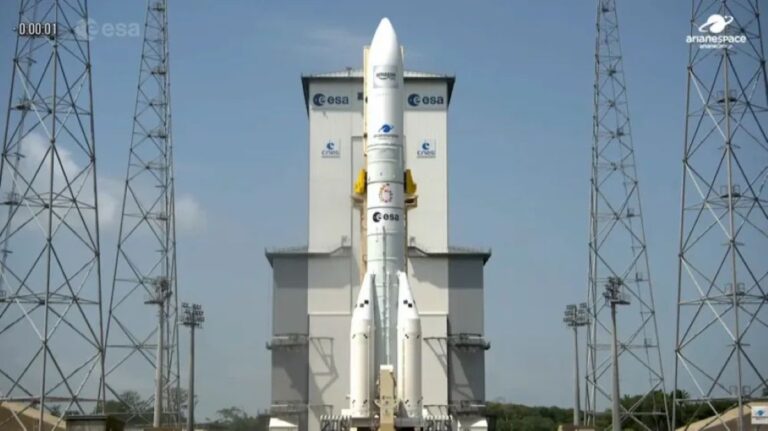
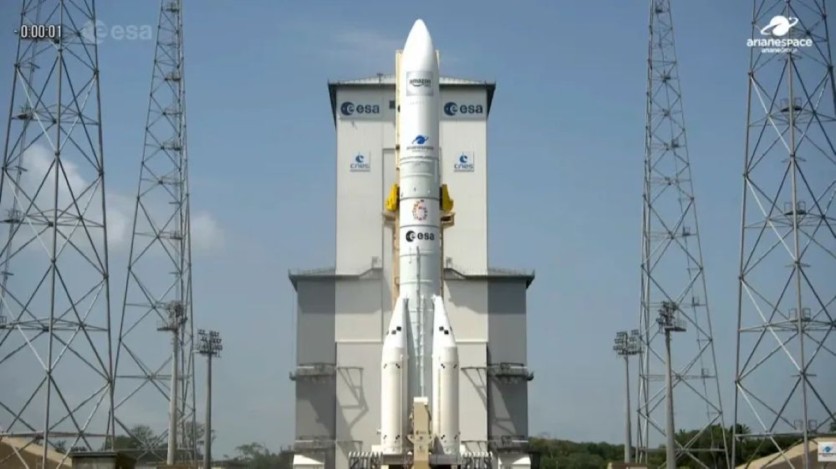
Arianespace will try to launch 36 Amazon Leo broadband satellites aboard an Ariane 64 from Europe’s Spaceport in French Guiana on Monday, Nov. 23, in a 29-minute window opening 6:09 a.m. ET and closing at 6:38 a.m. ET. The mission, designated VA271 by Arianespace and LE-04 by Amazon, will be the 10th flight of Ariane 6 and the next Leo mission on Amazon’s schedule. It follows the Nov. 15 flight on which United Launch Alliance’s Vulcan rocket lost 40 Amazon Leo satellites, which turns every successful deployment into a measure of how fast the constellation can recover.

Why Earlier Tracker Entries Listed 10:12 UTC While Arianespace Says 11:09 UTC

Some public launch trackers earlier carried a 10:12 UTC liftoff time, but Arianespace’s own window runs 11:09 to 11:38 UTC, which is 6:09 to 6:38 a.m. ET. At least one popular tracker now shows 11:09 UTC, matching Arianespace. Readers planning to watch should use the Arianespace times; its webcast starts 30 minutes before liftoff, or about 5:39 a.m. ET.

Four P160C Boosters Give Ariane 64 About 22 Metric Tons to Low Earth Orbit

The Ariane 64 configuration flies four solid boosters, where the Ariane 62 flies two. This flight will use the upgraded P160C boosters, which ESA says boost performance almost 15 percent, about two extra metric tons to low Earth orbit. ArianeGroup’s launch kit for the previous Amazon mission put Ariane 64’s capacity with P160C boosters at about 22 tons to orbit, roughly 48,500 pounds. That extra lift is why one flight can carry 36 satellites.

The core stage runs a Vulcain 2.1 engine that, ArianeGroup says, operates through a gas generator and two turbopumps, burning a small share of its propellant to drive the pumps. The upper stage is powered by Vinci, which ArianeGroup describes as an expander-cycle engine running on liquid oxygen and liquid hydrogen, meaning it uses heat from the engine itself to drive its pumps. Vinci can be reignited for precise orbit insertion.

Amazon says that after initial contact and health checks, the satellites will be raised to 630 km (392 miles) operating altitude. On the previous Ariane 64 mission, Arianespace placed satellites at about 465 km (289 miles); the sources reviewed do not state a release altitude for VA271. Each flight of this kind therefore depends on a clean upper-stage burn, not only on liftoff.

ESA Has Said the Turbopump Issue Is Transitory, but No Fix Has Been Detailed

The delay behind this flight involved an Ariane 6 turbopump. In September, ESA acknowledged awareness of delays after reports of an engine turbopump anomaly. On Oct. 22, ESA Director of Space Transportation Géraldine Naja told reporters the problem is not something ESA is worried about, Aviation Week reported, adding that the issue was delaying a launch planned for 2026 until next year.

French newspaper La Tribune reported on Oct. 13 that ArianeGroup had resolved an anomaly in a liquid-hydrogen turbopump first detected during an engine acceptance test shortly before summer. ArianeGroup declined to address the report directly and said only that the schedule is on track, and neither Arianespace nor ESA has publicly confirmed which pump was affected, what caused it, or what the repair involved. For context, ESA says Avio builds the liquid-oxygen turbopumps for both Vulcain 2.1 and Vinci. Treat any claim that the turbopump problem is fully resolved as unconfirmed until Arianespace says so at launch.

Amazon Needs Every Flight After Vulcan Lost 40 Satellites

The Vulcan failure removed 40 satellites from a constellation that the FCC requires to reach 3,232 satellites by July 30, 2029. Amazon had launched nearly 400 satellites across 14 missions before that flight, so the lost payload equaled about a tenth of what was in orbit.

The FCC’s Space Bureau also granted a conditional waiver on June 5 of Amazon’s July 30, 2026 milestone of 1,616 satellites. Under the order, Amazon Leo satellites not operational by that date lose earlier spectrum priority until March 30, 2028, or until 50 percent of the constellation is operating, with an earlier restoration possible in October 2027 if Amazon certifies that it has built and secured launches for half the constellation. Because each Ariane 64 flight adds 36 satellites against that requirement, launch slips translate directly into slower coverage.

Astronomers Are Still Studying How Bright Leo Satellites Appear

Large constellations remain contested in astronomy, where groups worry about streaks in telescope images. A preprint posted to arXiv January 12 analyzed 1,938 brightness observations of Amazon Leo satellites, reporting a mean apparent magnitude of 6.28 and finding that 92 percent of satellites in operational mode exceeded the International Astronomical Union’s recommended limit. The study has not yet been peer-reviewed, so its findings should be treated as preliminary.

What Remains Unknown Before Liftoff

Several facts are still unconfirmed: the exact turbopump root cause and repair, how many launches Ariane 6 can fly in 2027, and when ULA will name the failed Vulcan part and return that rocket to flight. Arianespace will stream the launch live from Kourou, and success would lift Arianespace’s Leo total to 136 satellites.


Frequently Asked Questions

What time will the Ariane 64 launch on Nov. 23?

Arianespace lists a 29-minute window opening at 6:09 a.m. ET and closing at 6:38 a.m. ET, which is 11:09 to 11:38 UTC. Earlier tracker entries listing 10:12 UTC do not match Arianespace’s published window.

How many Amazon Leo satellites will this flight carry?

The flight will carry 36 satellites, which Amazon says will be raised to 630 km (392 miles) after initial checks. Earlier Ariane 64 missions released satellites at about 465 km (289 miles).

Has the Ariane 6 turbopump problem been fixed?

ESA’s Naja called the issue transitory on Oct. 22, per Aviation Week’s report, and La Tribune reported that ArianeGroup resolved a liquid-hydrogen turbopump anomaly. Neither ESA nor Arianespace has published the cause or the repair, so a full fix is unconfirmed.

Why does launch cadence matter for a satellite constellation?

Coverage requires many satellites, so the number in orbit depends on how often rockets can fly. Amazon had launched nearly 400 satellites before the Vulcan loss against a 3,232-satellite FCC requirement, so each delay pushes back full commercial service.

Source link