Annovis Sets March Readout for Alzheimer’s Pill Buntanetap; Prior Trial Missed Both Main Goals

November 14, 2026:

Annovis Sets March Readout for Alzheimer’s Pill Buntanetap; Prior Trial Missed Both Main Goals
elderly person heart condition takes their medication
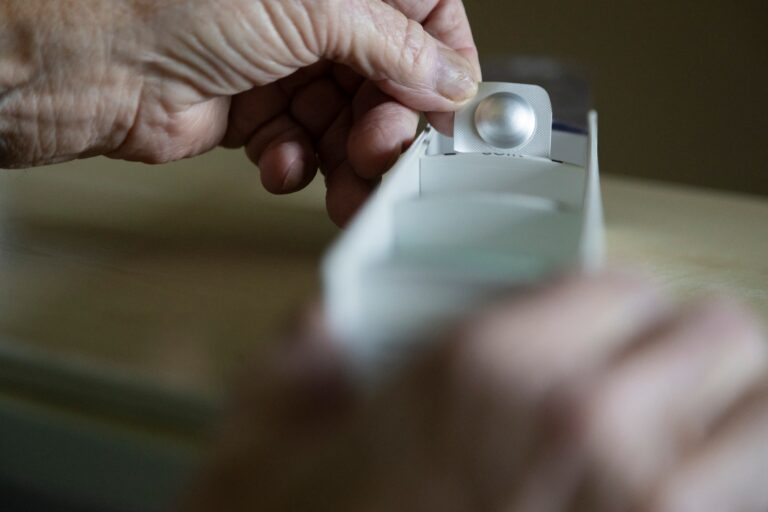
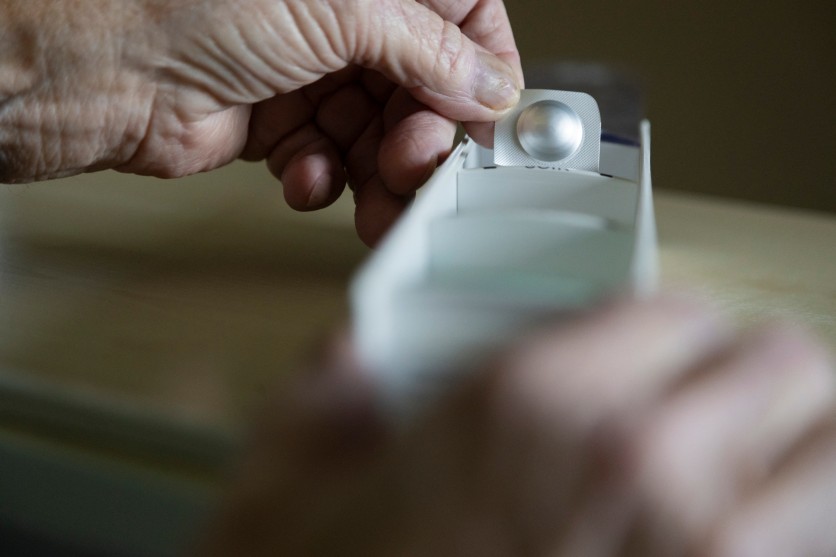
An elderly person with a heart condition takes their medication from a pill organizer. France, Isere, Echirolles, February 17, 2026. Illustrative image of South Hospital in Grenoble.Une personne agee souffrant du coeur prend ses medicaments dans un pilulier. France, Isere, Echirolles, le 17 fevrier 2026. Image d illustration de l Hopital Sud a Grenoble.
Thibaut Durand/Hans Lucas / AFP via Getty Images

Annovis Bio, a Malvern, Pennsylvania drug developer, reported third-quarter results Friday and said Phase 3 results for buntanetap, an experimental once-daily Alzheimer’s pill, are due in March 2027, after the last of 862 patients completes six months of treatment on Dec. 31, 2026. That first readout measures symptoms only, so even a clean win would not show that the drug slows the disease, and the company’s previous Alzheimer’s trial missed both of its main goals.

The database for the six-month analysis is scheduled to lock Feb. 8, 2027, and Annovis plans to present the data at the AD/PD 2027 conference in Barcelona. The update arrived with third-quarter results, a 326-patient Parkinson’s extension study and a $21.0 million financing that closed Nov. 6.

Symptom Data Arrive in March; Disease-Slowing Data Take Another Year

DUET-AD enrolled 862 patients with early Alzheimer’s, defined by a Mini-Mental State Examination score of 20 to 28 and a positive plasma pTau217 test, a blood marker of Alzheimer’s pathology, well above its original goal. Patients receive either 30 milligrams of buntanetap daily or placebo. The primary endpoints assess cognition and daily function, measured by the ADAS-Cog13 and ADCS-iADL scales.

The distinction between symptoms and disease course matters. Current symptomatic drugs such as cholinesterase inhibitors and memantine help manage symptoms, while disease-modifying trials test whether a treatment changes the underlying disease. DUET-AD has two prespecified readouts, one at six months for symptoms and one at 18 months for disease modification. The six-month readout therefore can show better memory and daily function, not that buntanetap changes the disease. Annovis’s July enrollment release placed the 18-month analysis in the first quarter of 2028, and the Nov. 13 release gives no date.

Annovis has said it is preparing separate FDA applications, one after each readout.

Earlier Trial Missed Both Main Goals; Cognitive Signal Came From 95-Patient Post Hoc Subgroup

The earlier Phase 2/3 study randomized 351 adults with mild-to-moderate Alzheimer’s to buntanetap at 7.5, 15 or 30 milligrams, or to placebo, for 12 weeks. In the full randomized population, the pooled drug and placebo groups changed similarly on both co-primary measures, so the trial missed its prespecified target. A post hoc analysis found that 38% of participants lacked amyloid pathology.

The positive signal came afterward. In a post hoc subgroup of 95 biomarker-positive patients with mild disease, scores on the ADAS-Cog11 cognitive scale improved from baseline in a dose-dependent pattern that was nominally significant, while the second co-primary measure, ADCS-CGIC, showed no treatment-related improvement. The authors describe those signals as exploratory. Running several post hoc comparisons raises the false-positive risk, which is why a signal like this needs confirmation in a new trial with a prespecified analysis.

Annovis and its critics read the same record differently. The company’s April 28, 2026 release on the paper highlighted improved cognition in pTau217-positive patients. Fierce Biotech, reviewing the April 2024 readout, called the trial another failure even though the company presented it as a success, and Annovis shares fell from $18 to $6.55 after trading resumed. In a separate article on the company’s pivotal Parkinson’s data, Fierce said Annovis focused its discussion on subpopulations rather than the primary goal.

Those Parkinson’s subgroups were patients diagnosed more than three years earlier and patients with postural instability and gait difficulty. The trial’s primary endpoint was change in MDS-UPDRS Part II. The Alzheimer’s Phase 3 responds to a gap in the earlier trial, which did not require biomarker verification at enrollment, by enrolling only pTau217 biomarker-positive patients.

Why Must DUET-AD Patients Test Positive for pTau217?

Plasma pTau217 is a blood marker of Alzheimer’s pathology, and in May 2025 the FDA cleared the first blood test used in diagnosing the disease. The earlier trial could only sort patients by biomarker after the data were in. DUET-AD makes the test an entry requirement, which turns a post hoc stratification into a prospective design. The trade-off is scope: a positive result would speak to patients whose blood tests confirm Alzheimer’s pathology, not to everyone clinically diagnosed with mild-to-moderate disease.

Buntanetap Blocks Protein Production at mRNA Stage, Unlike Amyloid-Clearing Antibodies

Buntanetap is an oral small molecule and the mirror-image form of phenserine, minus phenserine’s effect on acetylcholinesterase. Annovis-employed authors of a 2022 journal paper propose that buntanetap strengthens the bond between iron regulatory protein 1 and a sequence called the iron-responsive element in messenger RNA for amyloid precursor protein, tau and alpha-synuclein, which keeps ribosomes from reading the message so less protein is made. The approved antibodies lecanemab and donanemab are immunotherapies that target beta-amyloid and reduce amyloid plaques.

The evidence has limits. The mechanism was described by authors employed by the company that makes the drug, and DUET-AD measures clinical scores, not whether the mechanism operates in patients’ brains.

Parkinson’s Extension Study Enrolls 326 Patients but Cannot Prove Efficacy Without Placebo Group

The Parkinson’s open-label extension (OLE-PD) gives buntanetap at 30 milligrams daily for 36 months to former participants in Annovis trials and to patients who have had deep brain stimulation for at least 12 months. It has enrolled 326 patients, and enrollment is projected to be completed by Jan. 29, 2027.

The schedule has slipped. On Aug. 14 the company reported 266 patients and projected full enrollment in the fourth quarter of 2026, toward an enrollment goal of about 500 patients. The study added 60 patients in three months.

Two tools track the patients. NeuroRPM, which the companies describe as an FDA 510(k)-cleared AI platform, tracks core Parkinson’s symptoms in real time, and a skin biopsy test looks for alpha-synuclein pathology. In an open-label trial, both researchers and participants know which treatment is given, and this extension has no placebo group, so it can describe safety and durability but cannot show that buntanetap beats placebo. A companion Alzheimer’s extension, OLE-AD, a rollover study for DUET-AD participants, is expected to start by the end of November.

Financing Priced at $1.00 per Share Adds 21 Million Shares Plus Matching Warrants

Annovis priced the offering Nov. 5 at a combined $1.00 for each share and accompanying warrant: 19,000,000 shares plus pre-funded warrants for up to 2,000,000 shares. The accompanying warrants cover up to 21,000,000 shares, are exercisable immediately at $1.00 and last five years. The deal closed Nov. 6 for about $21.0 million in gross proceeds, and the board chairman supplied $5.0 million, about 24%. The company says the proceeds are expected to fund operations through the readout. In February 2025, Annovis priced a $21 million offering at $4.00 per share.

Against the 42,686,201 shares outstanding on Sept. 30, the 21,000,000 new shares and pre-funded warrants add about 49%, and the matching warrants would lift the total about 98% if exercised in full, according to a TechTimes calculation that leaves out other outstanding options and warrants. Full exercise at $1.00 would bring in about $21.0 million more.

Annovis reported third-quarter research spending of $15.78 million, up from $6.29 million a year earlier:

Metric Q3 2026 Q3 2025

R&D expenses

$15.78M

$6.29M

G&A expenses

$1.19M

$1.14M

Net loss

$9.46M

$7.26M

Net loss per share

$(0.22)

$(0.37)

R&D spending rose about 151%, a TechTimes calculation from the reported figures. A $7.46 million non-cash gain from the change in fair value of warrants cushioned the net loss, which would have been about $16.9 million without it. The per-share loss fell even as the net loss grew, which implies the weighted-average share count more than doubled, according to a TechTimes calculation. Cash at Sept. 30 was $2.82 million, down from $19.5 million at year-end 2025, and the stockholders’ deficit reached $13.2 million against an accumulated deficit of $205.6 million.

Third-quarter operating expenses of $16.97 million equal about 81% of the offering’s gross proceeds, a TechTimes calculation that includes non-cash items and is not a precise burn rate. On April 10, an earlier $10 million offering was announced as extending cash runway through Q2 2027.

NYSE Deficiency Notice Arrived Oct. 29, 15 Days Before Update

Annovis disclosed in an Oct. 30 press release that on Oct. 29 it received a NYSE continued-listing notice under Section 802.01B of the exchange’s rules. The 30-trading-day average market capitalization was about $48.4 million as of Oct. 28, below the $50 million standard, while the last reported stockholders’ deficit was about $4.3 million at June 30. Annovis must submit a plan within 45 days, roughly mid-December, and has nine months from the notice to regain compliance.

The company regained compliance on May 26 after a March 2025 notice. The Nov. 13 release does not mention the new notice.

Weave Bio Software Will Help Draft FDA Filing Before Data Arrive

In September, Annovis partnered with Weave Bio, an AI platform for regulatory content and knowledge management, to draft, review and manage New Drug Application documents, with the aim of preparing a significant part of the filing before the six-month readout. The company’s regulatory and clinical teams retain responsibility for verifying and approving material submitted to the FDA, which outlined a risk-based framework for evaluating AI models in draft guidance from January 2025. Founder and CEO Maria Maccecchini holds a biochemistry Ph.D. from the University of Basel’s Biozentrum.

CTAD Talks and Partnering Meetings Start Nov. 16 and Run Through Nov. 20

Annovis will give an oral presentation on targeting proteostasis in Alzheimer’s at the CTAD 2026 conference in Boston, which runs Nov. 16 to 19, and will present posters on DUET-AD’s design and baseline characteristics and on AI assessment of blood-brain barrier permeability. Maccecchini will join a panel at U.S. Biotech Day in Philadelphia, which runs Nov. 16 and 17, followed by a company update on Nov. 19 at the Pharma Partnering Summit in Boston, which runs Nov. 19 and 20.

Maccecchini said in the release that the team is working very hard to deliver “clean data and an on-time readout.” Readers can judge March by three checks: whether buntanetap beats placebo on both ADAS-Cog13 and ADCS-iADL in the full randomized trial population, how large the difference is, and how many patients stop treatment. A win would leave the disease-modification question for 2028, and a miss would land on a company that reported $2.82 million in cash at Sept. 30, a stockholders’ deficit and an open NYSE deficiency notice.


Frequently Asked Questions

What is buntanetap, and how does it differ from approved Alzheimer’s drugs?

Buntanetap is an investigational pill taken once daily that aims to reduce production of several proteins tied to neurodegeneration. Approved antibodies are immunotherapies that target beta-amyloid, while buntanetap acts earlier by trying to block the proteins’ manufacture from messenger RNA, according to Annovis-employed paper authors. The Phase 2/3 Alzheimer’s trial missed its prespecified efficacy target in the full randomized population.

Why did the earlier buntanetap trial miss its goals, and what is different now?

A post hoc analysis found that about 38% of participants lacked amyloid burden, a group that could dilute any effect, but the analysis does not prove that explains the miss. Safety was favorable: study-drug-related events occurred in 8.9% of buntanetap patients versus 3.4% on placebo, a difference that was not statistically significant, with no serious events attributed to the drug. DUET-AD changes the design by admitting only pTau217-positive patients, using a single 30-milligram dose and two prespecified readouts.

Would a positive March result show that buntanetap slows Alzheimer’s?

No. The six-month analysis measures symptoms, and the disease-modification claim rests on the 18-month analysis, which Annovis’s July release placed in early 2028. A symptomatic benefit would still matter to patients, but it would not show that buntanetap changes the disease course.

Can an open-label extension study show that buntanetap works?

Not on its own. Because researchers and participants know which treatment is given and there is no placebo group, the Parkinson’s extension can track safety and how patients fare over time but cannot establish benefit over placebo.

Source link