August 20, 2026:


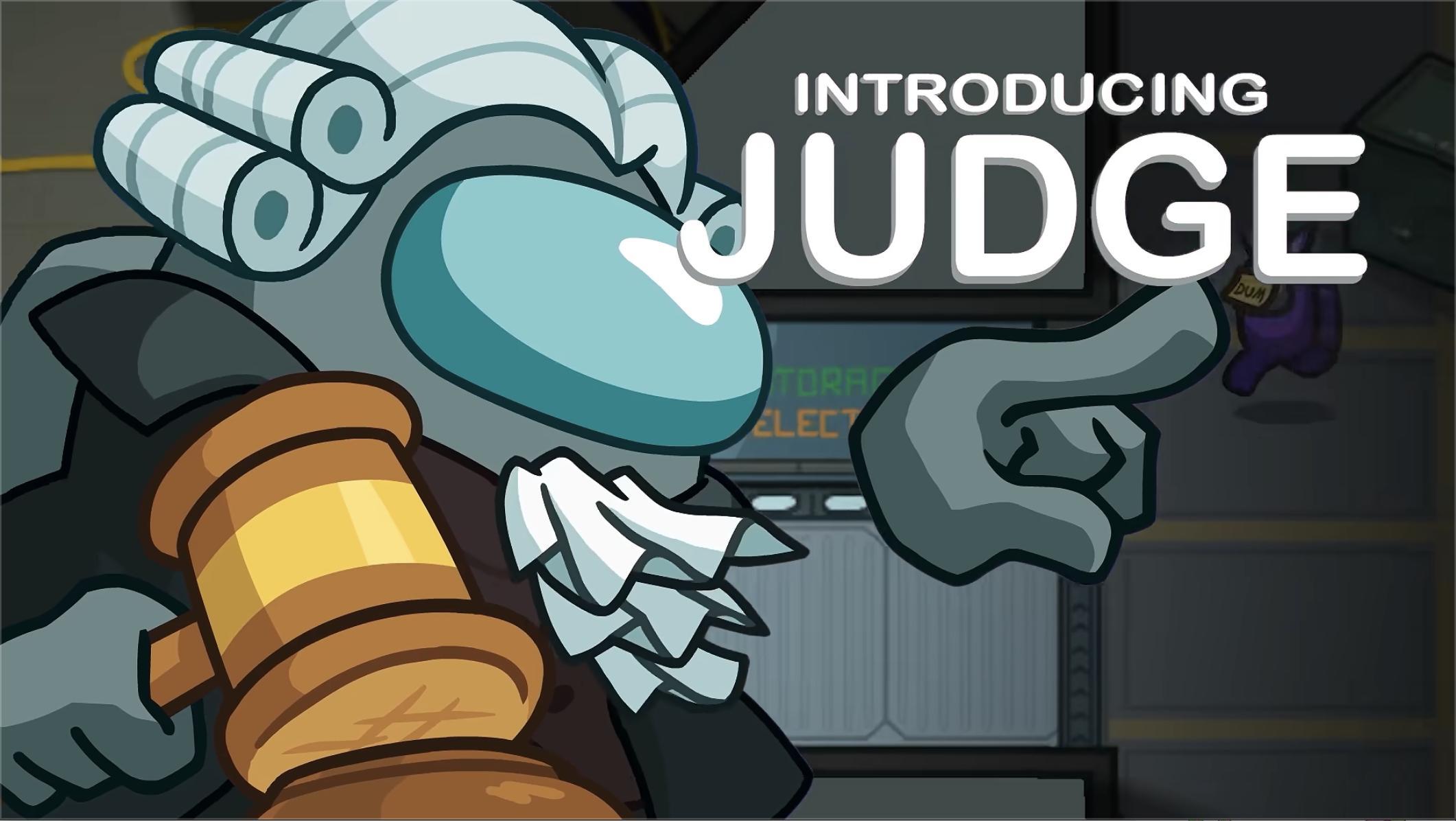
Innersloth released Among Us update v18.0.0 on Tuesday, August 18, introducing the Judge — a new Crewmate role that can unilaterally override any Emergency Meeting vote and eject a player of its choosing, regardless of what the rest of the lobby decided. The catch that keeps the power in check: target someone who turns out not to be the Impostor, and it is the Judge who gets sent into the void, not the suspect — as detailed in Innersloth’s official v18.0.0 devlog.
The update is live on all platforms: PC, mobile, Nintendo Switch, Xbox, and PlayStation.
The Judge’s core ability is called Overrule. During any Emergency Meeting, a player assigned the Judge role can tap the blue Gavel icon next to any Crewmate’s name and force an ejection — one that bypasses the vote entirely. It does not matter if the rest of the lobby clicked Skip, or if the tally went the other direction. The Judge’s call stands as final.
The ability is not available from the start of the game. Players must first complete a configurable number of tasks to unlock Overrule, giving Impostors a window in early rounds before the role becomes active. Hosts can adjust that task threshold in the Role Settings menu on the Dropship screen. Once unlocked, it can be used only once per game — Innersloth’s primary mechanism for preventing any single Judge from turning every meeting into a one-player courtroom.
If two Judges attempt to use Overrule simultaneously, the first to activate the ability wins. The others have their ability refunded and may use it in a future Emergency Meeting.
Every other role Innersloth has introduced to Among Us — the Engineer, the Scientist, the Guardian Angel, the Shapeshifter, the Detective — has modified what individual players can do within the game’s existing structure. Engineers use vents; Scientists check vitals remotely; Guardian Angels protect Crewmates from death; Detectives interrogate suspects. Each of these roles operates inside the meeting and voting system without touching it.
The Judge is different. Overrule does not give a player a new capability within the vote — it gives a player the ability to nullify the vote’s outcome after it happens. This is the first Among Us role designed to operate on the voting mechanism itself rather than within it, and it represents a structural escalation in how Innersloth is building its role roster: from roles that add capabilities to roles that can override collective decisions.
The self-ejection penalty is the constraint that makes the design work. Without it, the Judge would be a simple dominant strategy — use Overrule on whoever looks most suspicious at the time, absorb the cost of an occasional wrong call, and repeat next game. The penalty converts the ability from a low-risk power into a high-stakes commitment: the Judge must be confident enough in their read to stake their own ejection on it. Beebom’s coverage describes the brutal risk-reward design as a situation where a Judge who holds the ability until a meeting where they are certain creates a very different game-theoretic outcome than a Judge who fires it at the first opportunity.
It also creates a secondary layer of social deduction. Once players know the Judge role is active in a lobby — because the host has enabled it — every Emergency Meeting carries an undercurrent of uncertainty. The vote you see may not be the outcome that matters. Someone at the table may be about to overrule it, or may be holding that ability for a later meeting, or may have already spent it. That additional uncertainty is layered on top of the standard task of figuring out who the Impostor is.
The update also shipped two supporting changes. A new Match Info panel is now accessible during matches, letting players review active roles, the current participant list, and game settings at any point in the game — as described in Innersloth’s devlog update notes. The panel addresses a genuine usability problem that has grown as Among Us added more roles: in a lobby running six or more roles simultaneously, players frequently lose track of what roles are active, what each role can do, and how many of each role are in the game. Match Info puts that reference a tap away.
The second change affects an existing role: the Detective’s Interrogate ability now has a cooldown period that kicks in after Emergency Meetings. Previously, Interrogate could be used without any downtime between uses, giving Detectives an unusually strong information-gathering advantage in games with many meetings. Innersloth described the cooldown as intended to add tension and balance to a role that had been running ahead of others in information output.
The Judge was not the only role Innersloth telegraphed for 2026. The studio’s roadmap update published on August 1, 2026 confirmed two new roles planned for the second half of the year, described as covering roles “across the spectrum of player styles.” The Judge is the first of those two. Innersloth has not yet disclosed what the second role will be or when it will arrive.
The Judge update comes during a notably active period for the Among Us franchise. Innersloth released the Among Us animated series earlier in 2026 and launched a playable demo for Among Us Story: On Guard — its first single-player narrative spin-off — on June 15, 2026 as part of Steam Next Fest.
Yes. As with other special roles, the Judge role is optional and host-controlled. If a lobby host does not enable the Judge in Role Settings before the game starts, no player will be assigned it. The Overrule ability, the task-completion threshold, and the role percentage are all configurable. Vanilla lobbies without special roles play identically to prior versions.
If the Judge’s target turns out not to be the Impostor, the tables reverse: the Judge is the player who gets ejected, and the innocent Crewmate stays in the game. This self-ejection penalty is the primary design mechanism preventing reckless use of the ability.
No. Overrule can only be used once per game. If a lobby has multiple Judges and they activate Overrule simultaneously, only the first Judge to activate wins the ejection; the others get their ability refunded and may use it in a later meeting. After the ability is spent — by use or by that game ending — it does not reset.
Other players vote, skip, or abstain normally — the Judge role does not alter their mechanics. The difference is that after voting closes, the Judge can activate Overrule to override whatever the majority decided. Players in a lobby where the Judge role is enabled should factor this in: a majority-Skip result does not guarantee that no one will be ejected.
Yes. Innersloth confirmed the v18.0.0 update — including the Judge role, Match Info panel, and Detective cooldown change — is live on all platforms: PC (Steam), iOS, Android, Nintendo Switch, Xbox, and PlayStation.