HomeAuto Amazon Plans 500-City Drone Expansion; Every Site Still Needs Its Own FAA Clearance
Amazon Plans 500-City Drone Expansion; Every Site Still Needs Its Own FAA Clearance
August 21, 2026:
Amazon.com
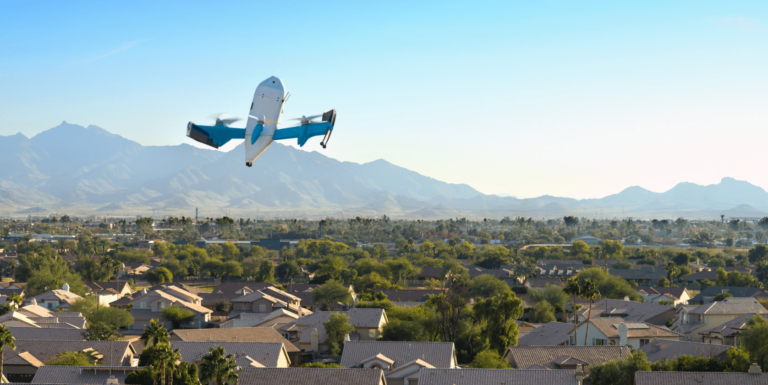
Amazon announced Wednesday its most ambitious geographic expansion yet for Prime Air, pledging to bring autonomous drone delivery to nearly 500 US cities and towns by December — a roughly sixfold jump from the 11 sites currently in service. The 500-city target is real, the demand is real, and the MK30 drone fleet is operational. What the announcement does not say is that every single new site on that list still requires its own individualized FAA regulatory clearance, and the rule that would streamline that process remains months away from taking effect.
The Federal Aviation Administration’s proposed Part 108 rule — the framework that would replace the current waiver-by-waiver approval system with a standardized pathway for beyond-visual-line-of-sight (BVLOS) drone operations — was submitted to OIRA on July 10. As of today, it remains a proposed rule; no operator can claim Part 108 authority yet. OIRA reviews of significant regulations can take up to 90 days, putting the earliest possible completion in October 2026, with industry analysts estimating the final rule will arrive in late 2026 or early 2027, followed by an implementation period of six to twelve months before the rules take effect. In the meantime, each of Amazon’s new sites must go through the same site-specific environmental review and BVLOS authorization process that has governed every expansion to date.
The gap between the announcement and the operational reality matters for anyone planning around when Prime Air might actually arrive in their neighborhood. Amazon’s plan to launch soon in the Chicago, Atlanta, Cleveland, Syracuse, and Boise metro areas is genuine — but Chicago’s environmental comment period, the mandatory public review stage in the FAA’s environmental review process, closed just six days ago, on August 14, 2026. The FAA has not yet issued a Finding of No Significant Impact for Chicago, which means commercial drone flights there remain uncleared as of this writing.
From Eleven Sites to Approximately Five Hundred: What That Number Actually Means
Amazon’s Prime Air service currently operates from 11 US locations across 10 metro areas in seven states: Arizona, Florida, Kansas, Louisiana, Michigan, Nebraska, and Texas. Each site covers approximately 175 square miles (453 sq km), with the drone operating within a 7.5-mile radius of its delivery center, according to Amazon’s expansion announcement. Amazon counts every municipality that falls within that 7.5-mile circle toward its city total, which means the 500-city figure does not represent 500 independent drone facilities, as DroneXL’s site-count analysis explains. A more precise description: roughly 500 communities within the combined service radius of a significantly larger fleet of Prime Air sites.
Five new metro areas are in the immediate pipeline — Chicago, Atlanta, Cleveland, Syracuse, and Boise — expanding the program into five new states: Georgia, Ohio, Illinois, Idaho, and New York. Amazon also confirmed 11 additional sites as either operational or in imminent pre-launch phase: Tolleson, Arizona; Ruskin, Florida; Kansas City, Kansas; Papillion, Nebraska; Baton Rouge, Louisiana; Hazel Park and Pontiac, Michigan; and Richmond, San Antonio, Richardson, and Waco, Texas.
The return to Tolleson is worth noting. In October 2025, two MK30s struck a construction crane at the Tolleson site within minutes of each other, triggering investigations by both the FAA and the National Transportation Safety Board that remain ongoing. Amazon’s decision to re-expand at a location with a documented incident history signals its confidence in the MK30’s safety record — while the federal investigations into that same incident continue in the background.
How Prime Air Actually Works — and What It Still Cannot Do
The MK30, Amazon’s current delivery drone, weighs up to 83.2 pounds (37.7 kg) at maximum takeoff and can carry packages up to 5 pounds (2.3 kg) — a threshold Amazon says covers more than 60% of the items customers order most often, including groceries, cosmetics, medications, and electronics. Orders arrive in as fast as 30 minutes, though Amazon’s own wording says most deliveries complete approximately 60 minutes after checkout.
The drone operates at between 205 and 370 feet (62 and 113 meters) above ground during most of its flight, descending to approximately 13 feet (4 meters) to execute a contactless delivery at a customer’s designated drop point. Before releasing a package, it checks for people, pets, and vehicles below before returning to the delivery center.
The technology enabling all of this at scale is Amazon’s proprietary Detect-and-Avoid (DAA) system, which uses computer vision and onboard cameras to continuously scan surrounding airspace, identify aircraft including commercial jets, helicopters, hot air balloons, and paragliders, and execute autonomous avoidance maneuvers without requiring a human observer watching a live feed. It is this DAA system — demonstrated to FAA inspectors over several years — that earned BVLOS authorization in 2024, enabling the company to expand from two sites to its current eleven.
What BVLOS authorization does not do, despite common confusion, is eliminate the site-specific approval requirement. Amazon holds a Part 135 air carrier certificate — the same framework applied to commercial airlines — which authorizes the company to operate drone deliveries. But each new location still requires its own FAA environmental review under the National Environmental Policy Act (NEPA), a process that includes a draft environmental assessment, a 30-day public comment period, and a final Finding of No Significant Impact (FONSI/ROD) before commercial operations can begin. The FAA has completed environmental reviews by state for 22 sites in Texas, six in Florida, four in the Detroit metro area, and two in the Kansas City area. For Chicago, the public comment period closed August 14, 2026 — six days before this article was published — and the final FONSI has not been issued.
What Drone Delivery Costs to Order — and What It Costs to Deliver
The consumer pricing is straightforward. Prime members with orders of $50 or more receive drone delivery free. Prime members ordering below $50 pay $2.99 per delivery. Customers without a Prime membership pay $4.99, according to Amazon’s Prime Air pricing page.
The cost to Amazon of executing each of those deliveries is a different and far more consequential number. Industry estimates place the per-delivery drone cost at $13.50, compared to roughly $2 for conventional ground delivery. That gap — $13.50 to deliver what Amazon charges $2.99 or less for — describes a program that is absorbing substantial losses per delivery to build volume and consumer familiarity with the technology.
Forrester analyst Sucharita Kodali said plainly this week that Amazon is still working out the economics: initially consumers might order because they’re curious, but it’s not clear how often they will continue to use the service. The $13.50 industry cost figure is not Amazon’s specific disclosed number — Amazon has not disclosed its per-delivery cost — but the trajectory of what it has cost every other US drone delivery operator to date makes clear that the economics of drone delivery at scale have not yet been solved by anyone. Walmart’s former drone delivery partner DroneUp disclosed it was spending $30 per delivery against a $7 target before shutting down 18 hub locations in August 2024.
The path to economic viability for drone delivery has always run through order density — driving enough deliveries per site per day to spread the fixed infrastructure and aircraft capital costs far enough that the per-unit expense falls to competitive levels. The 500-city expansion is in part a density play: more sites covering more customers means more potential orders flowing to each location.
Rivals Already Ahead on Volume — But Not on Geography
Amazon’s announcement landed days after the two biggest competitive developments the drone delivery sector has seen in months. On August 18, Uber and Zipline announced a partnership to embed aerial delivery directly into the Uber Eats platform, targeting one million drone deliveries per day by 2029 — a goal that would require Zipline to scale its current global throughput by more than 230 times. And on July 29, DoorDash received its DoorDash Air FAA Part 135 certification, becoming the eighth US operator to hold the license.
Alphabet’s Wing, which delivers via a hover-and-tether system that never brings the aircraft to ground level, operates from more than 66 Walmart stores across four states and has plans to expand to more than 270 Walmart locations by 2027. Walmart’s entire drone delivery network — including Wing and all other partners — passed one million cumulative deliveries in May 2026, a volume milestone that Amazon has not yet matched across its own program.
Amazon counters that its per-site delivery volume leads the industry: Prime Air sites execute the highest average delivery volumes in the US drone delivery market, completing thousands of deliveries daily. Its internal target, shared in a March all-hands meeting whose recording was obtained by CNBC, is to reach one million drone deliveries in the US before the end of 2026. If met, that target would position Prime Air as the volume leader in US autonomous aerial delivery.
What Communities Near New Sites Should Know
Amazon’s expansion into new metro areas is bringing an experience that existing Prime Air communities have already documented in detail. In Richardson, Texas, residents logged 122 single-day overflights above a single home in one ten-hour period, according to community tracking data compiled at the February 2026 city council meeting. The Richardson city council subsequently requested a noise study, asked Amazon to consider alternative flight routes, and called for stronger privacy measures. In Metro Detroit, where Prime Air launched in November 2025 in Hazel Park and Pontiac, Metro Detroit residents reported drone noise with divided community sentiment between those who value the service and those who find the overflights disruptive.
Amazon says the MK30’s noise level during flight at altitude is comparable to a window fan on low and is typically inaudible indoors. During the descent and delivery phase — approximately 30 seconds — the sound level is comparable to an idling delivery truck parked curbside, according to Amazon’s noise specifications.
Memphis, Tennessee, offers perhaps the clearest preview of the timeline friction ahead. Amazon had planned to launch Prime Air in Memphis by June 2026. That launch was delayed, according to a source who has attended local government briefings aimed at coordinating safety protocols, and as of this writing no new launch date has been announced, as Memphis launch delay coverage confirms.
Can Prime Air Reach 500 Cities Before December?
The self-imposed year-end deadline is ambitious. Each new Prime Air site requires Amazon to complete FAA environmental review, secure any additional airspace authorizations, build or retrofit a physical delivery facility, and coordinate with local government on safety protocols. The pace at which those processes can run in parallel — and whether Amazon has pre-positioned the environmental documentation for hundreds of additional sites — will determine how close to 500 the program actually gets by December 31, 2026.
The regulatory rule that would simplify this calculus — Part 108 — will not be a factor for any site Amazon launches this year. Even if OIRA completes its review by October 2026 and the rule is published quickly after, the implementation period means operators would not operate under Part 108 authority until well into 2027 at the earliest. Every city and town Amazon reaches in 2026 will get there the old way: one BVLOS waiver, one environmental review, one local coordination process at a time.
Amazon’s stated long-term target — 500 million drone deliveries annually by 2029 — provides the scale context for today’s announcement. Prime Air has delivered hundreds of thousands of packages in 2026 across its current eleven US sites. The distance between hundreds of thousands and 500 million is the distance between a pilot program and infrastructure. Wednesday’s announcement is the beginning of that journey — not its arrival.
Frequently Asked Questions
Is Amazon drone delivery coming to my city in 2026, and how do I check?
Amazon plans to reach nearly 500 US cities and towns by December 31, 2026 — but “coming to your city” depends on whether Amazon has a Prime Air delivery center within 7.5 miles (12 km) of your home, and whether that site has completed all FAA approvals. The five metro areas confirmed for near-term launch are Chicago, Atlanta, Cleveland, Syracuse, and Boise. Eleven additional sites across Arizona, Florida, Kansas, Nebraska, Louisiana, Michigan, and Texas are operational or in imminent pre-launch. You can check whether your specific address is in a covered zip code at amazon.com/dronedelivery, which is updated as new sites go live.
How much does Amazon drone delivery cost, and is it worth it compared to same-day delivery?
Prime members receive free drone delivery on eligible orders of $50 or more. Orders under $50 cost $2.99 per delivery; non-Prime customers pay $4.99. By comparison, Amazon’s Same-Day Delivery for Prime members costs nothing for qualifying orders, though the item selection and availability differ. Drone delivery covers items up to 5 pounds (2.3 kg) that fit in a large shoebox — more than 60% of Amazon’s most frequently purchased products. If speed is the priority, drone delivery targets a 30-minute window; Same-Day Delivery typically runs several hours. The economics underlying those prices are less comfortable: industry estimates put the actual cost to deliver by drone at roughly $13.50 per delivery, a gap that suggests Amazon is currently subsidizing the program to build volume and consumer adoption.
What is Part 108, and why does it matter for whether this expansion actually happens on schedule?
Part 108 is the FAA’s proposed rule to replace the current case-by-case BVLOS waiver system with a standardized approval framework for drone operators. Under the current rules, each new Amazon Prime Air delivery site requires its own BVLOS authorization and a full environmental review under the National Environmental Policy Act — a process that includes a public comment period and can take months to complete. Part 108 would create a more scalable pathway, reducing the per-site regulatory burden significantly. But as of August 20, 2026, Part 108 remains under review at the White House’s Office of Information and Regulatory Affairs, where it has been since July 10. Industry analysts expect the final rule sometime in late 2026 or early 2027, with a six-to-twelve-month implementation period after that. Every city Amazon reaches in 2026 will get there under the current site-by-site system — not under Part 108.
What should I expect from drone delivery in terms of noise and privacy if Prime Air comes to my neighborhood?
Amazon states the MK30’s sound at cruising altitude is comparable to a window fan on low, typically inaudible indoors. During the approximately 30-second delivery descent, noise is comparable to an idling delivery truck at the curb. Community experience in existing markets tells a more varied story: residents in Richardson, Texas, logged 122 drone overflights above one home in a single ten-hour period, and the city council formally requested an updated noise study and route alternatives. Metro Detroit residents have also documented divided reactions, with some finding the overflights disruptive enough to file formal complaints. Amazon’s onboard cameras process sensor data locally for navigation and do not maintain a live video feed monitored by human operators, the company says — though privacy advocates have raised separate questions about metadata and airspace observation that Amazon has not fully addressed publicly.