HomeAuto A Drug That Erases an Immune Protein Entirely Enters Rheumatoid Arthritis Trials Without JAK Inhibitor Safety Warnings
A Drug That Erases an Immune Protein Entirely Enters Rheumatoid Arthritis Trials Without JAK Inhibitor Safety Warnings
November 6, 2026:
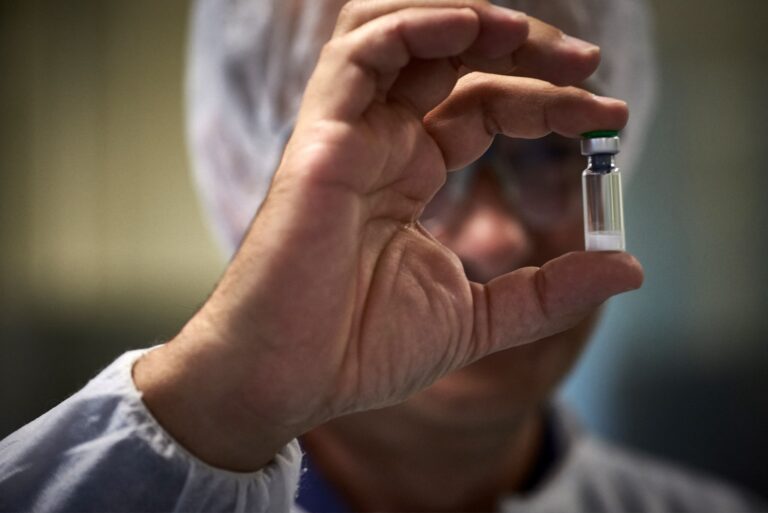
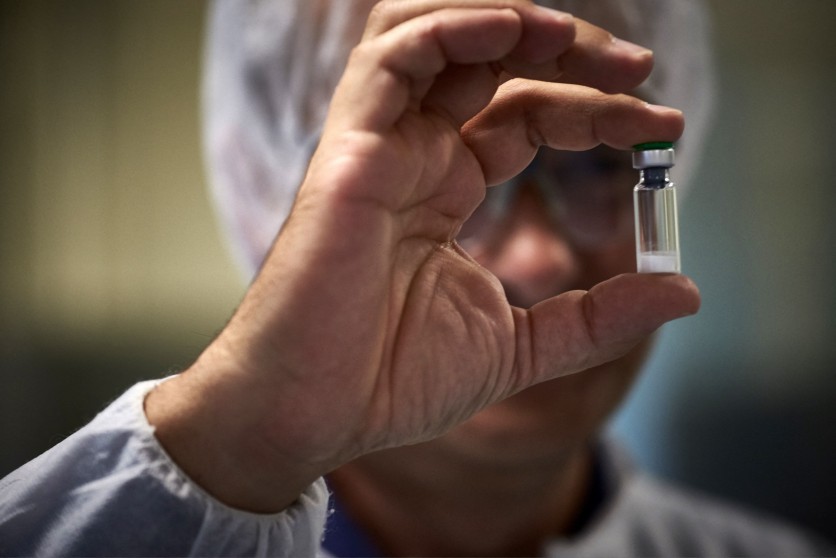
A man holds a a vial at the Sanofi Pasteur site, where they produce an hexavalent vaccine to protect children against six diseases, in Marcy-l’Etoile, near Lyon, on the biggest production, research and development site of vaccines in the world, on July 7, 2016. Five hundred million doses of twelve different vaccines are produced each year at the Marcy-l’Etoile site, which corresponds to half of the world production of French phamarceuticals group Sanofi Pasteur. (Photo by JEAN-PHILIPPE KSIAZEK / AFP) JEAN-PHILIPPE KSIAZEK/AFP via Getty Images
The pipeline-sourcing relationship between U.S. biotechs and Chinese drug developers showed no sign of slowing Thursday, as Caldera Therapeutics and Evommune each announced separate licensing agreements with Chinese biopharma partners — deals that together carry up to nearly $1.88 billion in potential milestone payments and that bring two mechanistically distinct and scientifically novel immunology programs into Western development pipelines on the same morning.
The two drugs work by entirely different principles. Caldera’s new acquisition is a bispecific antibody — a single engineered protein that simultaneously intercepts two inflammatory cytokine signals. Evommune’s new drug is a molecular glue degrader — a small oral molecule that eliminates a critical immune-cell protein entirely rather than merely inhibiting it. And yet both deals trace to the same underlying strategic logic: Chinese biotechs have spent years accumulating discovery-stage assets in therapeutic areas that Western drug companies are actively seeking, and they are now pricing those assets accordingly.
A New Drug Class Targets Oral Autoimmune’s Safety Gap
The more mechanistically novel of Thursday’s two programs is Evommune’s.
The company, which had staked its near-term story on EVO756 — an oral drug targeting a G-protein-coupled receptor — saw that bet dissolve over the spring and summer. EVO756 failed to meet its primary endpoint in a Phase 2b trial for chronic spontaneous urticaria in June. It failed again in September, in a Phase 2b trial for atopic dermatitis. Development was discontinued in both indications.
What Evommune licensed from Chengdu-based Hinova Pharmaceuticals in its place is EVO570, a drug that belongs to a class with an unusually precise mechanism of action — and an unusually promising safety rationale, as disclosed in Evommune’s November 4 SEC filing.
How Molecular Glue Degraders Work
EVO570 is a molecular glue degrader — a small molecule that works not by plugging an enzyme’s active site in the way a conventional inhibitor does, but by inducing the cell’s own waste-disposal machinery to destroy a target protein outright. The specific mechanism: EVO570 creates a novel physical contact between its target protein (VAV1) and cereblon (CRBN), a component of an E3 ubiquitin ligase complex. That contact causes cereblon to tag VAV1 with ubiquitin chains. The cell’s proteasome — a large protein-shredding complex that degrades ubiquitin-tagged proteins — then destroys VAV1 entirely. The result is not “VAV1 is blocked” but “VAV1 is gone.”
That distinction matters clinically. Enzymatic inhibitors often achieve only partial target suppression; residual protein activity can sustain disease pathways or allow cells to develop resistance. Degraders eliminate the target. Where complete removal of a protein produces a meaningfully better therapeutic outcome than partial inhibition, degraders have a mechanistic advantage. The molecular glue sub-class (as distinct from PROTAC degraders, which chemically tether the target and the ligase through a linker molecule) achieves this through a monovalent, non-covalent interaction — a design that can enable better oral bioavailability and drug-like properties for small-molecule development.
Why VAV1 Is the Target
VAV1 (Vav guanine nucleotide exchange factor 1) is a signaling protein that acts as a critical amplification hub downstream of two key lymphocyte receptors: the T-cell receptor (TCR) and the B-cell receptor (BCR). When T or B cells detect their target antigens, VAV1 is essential for the downstream signaling cascade that drives lymphocyte activation, cytokine production, and cell proliferation. In autoimmune diseases, chronically overactive T and B cells attack the body’s own tissues. Silencing VAV1 suppresses that activation.
The critical feature of VAV1 as a drug target — the characteristic that makes eliminating it in the immune system tolerable — is its restricted expression pattern. VAV1 is predominantly expressed in hematopoietic (blood and immune) cells, particularly lymphocytes. It is not broadly expressed across cell types throughout the body. This restriction means that degrading VAV1 should disproportionately affect lymphocytes while leaving most other tissues relatively unperturbed.
That selectivity is what makes the VAV1 degradation story potentially significant for the oral autoimmune therapy market. The only oral drugs currently approved for rheumatoid arthritis at scale are JAK inhibitors — tofacitinib (Xeljanz), baricitinib (Olumiant), and upadacitinib (Rinvoq) — a drug class that has acquired a substantial regulatory burden. In September 2021, the FDA issued class-wide boxed warnings for all JAK inhibitors based on data from the ORAL Surveillance cardiovascular safety trial, flagging elevated risks of serious infections, malignancies, major adverse cardiovascular events (MACE), and thrombosis. These warnings have constrained JAK inhibitor use, particularly in patients over 50 or with cardiovascular risk factors. A durable clinical gap — an oral therapy for RA without that class-wide safety concern — has remained unfilled.
If VAV1 degraders can demonstrate safety superiority over JAK inhibitors in clinical trials — a hypothesis still to be tested in humans — they could address a meaningful portion of that gap. The more restricted cellular expression of VAV1 (versus the broad cell-type expression of JAK enzymes, which are involved in cytokine signaling throughout the body) is the mechanistic rationale for expecting that advantage.
EVO570’s Deal Structure and Competitive Position
The licensing agreement grants Evommune exclusive worldwide rights outside Greater China — mainland China, Hong Kong, Macau, and Taiwan, where Hinova retains all rights — to develop, manufacture, and commercialize EVO570 (also designated HC118 by Hinova and HP570 in the Chinese market). Evommune paid $30 million upfront, structured as $20 million in cash and $10 million in pre-funded warrants convertible into approximately 1.26 million Evommune shares at $6.04 per share. Hinova is eligible for up to roughly $1.1 billion in development, regulatory, and commercial milestone payments, plus tiered royalties on net sales outside Greater China. Evommune funded the cash component through a concurrent $30 million private placement at $6.04 per share.
EVO570 is not the only VAV1 molecular glue in clinical development. Monte Rosa Therapeutics’ MRT-6160, licensed to Novartis in October 2024 for $150 million upfront and up to $2.1 billion in potential milestones, is currently in mid-stage development for psoriatic arthritis and Sjögren’s disease — further along in the clinic than EVO570. Additional VAV1 degrader programs are in development at InnoCare and Insilico Medicine. The VAV1 target class has cleared enough validation hurdles that multiple teams with independent scientific judgment are pursuing it simultaneously.
Hinova has reported that EVO570 shows approximately 20-fold greater in vitro potency compared to MRT-6160 in company-generated preclinical assays — a figure cited in an Oppenheimer analyst note published Thursday. That comparison is based on Hinova’s own laboratory data and has not been independently confirmed by a third-party auditor. Preclinical potency differences between compounds in the same target class frequently narrow or disappear when both compounds enter clinical pharmacokinetics and pharmacodynamics studies in humans; the clinical translation of that reported potency advantage remains to be demonstrated.
IND applications for EVO570 have been accepted in the United States, with a Phase 1 safety, pharmacokinetics, and target-engagement study expected to begin imminently. A Phase 2 trial in rheumatoid arthritis is planned for 2027.
Analyst reaction was broadly positive. Oppenheimer described the EVO570 transaction as a “low-cost/high-PoS [probability of success] deal” and a “major positive advancement” for Evommune, citing the near-term clinical catalyst, the potential for a first-in-class position in the RA oral market, and the possibility of extending into neurological indications where VAV1 biology may be relevant. The firm noted the rheumatoid arthritis space carries “significant commercial opportunity that can accommodate multiple players,” with more than 1.2 million patients in the United States.
BFC Group served as exclusive financial adviser to Hinova; Fangda Partners served as exclusive legal adviser.
Caldera’s Second Bet on the Same Chinese Partner
Caldera Therapeutics was founded in April 2025 on a single licensing transaction with Qyuns Therapeutics — a Jiangsu-headquartered biopharmaceutical company listed on the Hong Kong Stock Exchange (HKEX: 2509) — for the global rights to CLD-423. That molecule is a first-in-class bispecific antibody simultaneously targeting two inflammatory cytokines: IL-23p19, the validated sub-unit of the IL-23 cytokine implicated in IBD and psoriasis, and TL1A (TNF-like ligand 1A, also called TNFSF15), an emerging cytokine target with strong human genetics support and recent positive Phase 2 clinical validation from multiple programs. Caldera paid $10 million upfront and issued Qyuns approximately 16.9 million shares of Caldera common stock — an equity stake in the company it was seeding.
On Thursday, Caldera returned to the same partner for a second program. Under the new agreement, Qyuns is granting Caldera exclusive worldwide rights to develop, manufacture, and commercialize a preclinical-stage bispecific antibody targeting TL1A and the IL-17A and IL-17A/F cytokines — the pathways involved in a distinct but adjacent cluster of immune-mediated diseases including psoriatic arthritis, ankylosing spondylitis, and psoriasis. Per Caldera’s November 5 deal announcement, Qyuns will receive a $30 million non-refundable upfront payment in cash, up to $750 million in development, regulatory, and commercial milestone payments, and tiered royalties on net sales. Financial terms were disclosed in the company’s press release and in a separate Qyuns filing to the Hong Kong Stock Exchange; the milestone and royalty structure was not independently confirmed from an SEC filing reviewed for this article.
Why TL1A Appears in Both Caldera Programs
The choice to anchor a second bispecific around TL1A reflects how rapidly this cytokine has moved from genetic hypothesis to clinical reality. TL1A signals through death receptor 3 (DR3) and is expressed by dendritic cells, endothelial cells, and macrophages. Human genome-wide association studies established TL1A’s connection to IBD susceptibility; that genetic signal then provided the rationale for clinical programs. In 2023, Roche paid $7.1 billion to acquire Telavant and its TL1A inhibitor, validating the target at the highest commercial level. Positive Phase 2 data from Merck’s MK-7240 and Roche’s RVT-3101 in IBD have since reinforced that confidence.
What makes TL1A biologically different from most IBD targets is its role in both inflammation and fibrosis — the progressive scarring that develops in Crohn’s disease and that existing anti-integrin and anti-IL-12/23 therapies do not reliably address. A TL1A inhibitor might reach disease features that approved drugs miss.
Caldera’s thesis is that the second arm of a bispecific can extend TL1A’s reach by engaging a second pathway simultaneously. In CLD-423, the second arm targets IL-23p19, whose validation is primarily in IBD and psoriasis. In the new program, the second arm targets IL-17 — well-established across a broader set of inflammatory diseases, with approved drugs (secukinumab, ixekizumab, bimekizumab) already on the market in psoriatic arthritis, ankylosing spondylitis, and psoriasis. Combining TL1A inhibition with IL-17 blockade in a single molecule could provide a differentiated option in that segment of the autoimmune market, where multiple approved IL-17 blockers compete but none simultaneously inhibits TL1A.
What CLD-423’s Phase 1a Data Shows
For the original CLD-423 program, Caldera disclosed updated Phase 1a data as part of Thursday’s announcements, according to Caldera’s November 5 Form 425 filing. The study enrolled 56 healthy subjects across single- and multiple-dose cohorts. CLD-423 demonstrated a half-life greater than 40 days following intravenous administration and approximately 89 percent subcutaneous bioavailability — characteristics that support infrequent dosing (potentially every eight to twelve weeks) if the efficacy profile warrants it. TL1A was suppressed below the lower limit of quantification within two hours of dosing and remained suppressed throughout the dosing period. The tolerability profile included 8 of 42 subjects with low or moderate treatment-emergent anti-drug antibodies, which the company described as not associated with altered pharmacokinetics or pharmacodynamic effects. One Grade 2 stroke and one Grade 2 infusion reaction were each assessed as unrelated to study drug.
A half-life exceeding 40 days is clinically meaningful for a biologic: it suggests the possibility of monthly or less-frequent subcutaneous dosing, an important practical advantage for patients with chronic autoimmune conditions who would otherwise require frequent infusions or injections. The rapid and sustained TL1A suppression at all doses tested is consistent with the pharmacological hypothesis.
Caldera CEO Praveen Tipirneni described the clinical data as reinforcing the company’s strategic direction: “The emerging profile of our lead bispecific antibody CLD-423 strengthens our conviction in the potential of dual IL-23p19 and TL1A inhibition to break through the efficacy ceiling in IBD.” He added: “With the expansion of our pipeline through the addition of our IL-17 × TL1A program, we are advancing two differentiated bispecific assets with the potential to make an impact well beyond IBD.”
Tipirneni previously served as President and CEO of Morphic Therapeutics, which was acquired by Eli Lilly in 2024 for $3.2 billion, and as Senior Vice President of Corporate Development at Cubist Pharmaceuticals, which was acquired by Merck for approximately $9 billion in 2015. Caldera is a portfolio company of Atlas Venture.
The Merger Context
Caldera’s pending reverse merger with Synlogic, Inc. (Pink: SYBX), disclosed in a July 2026 8-K alongside a $278 million concurrent private placement, is expected to result in the combined company trading on the Nasdaq Capital Market under the ticker “CALD.” The company has indicated it will not detail a development timeline for the new IL-17 × TL1A program until after the merger closes and the company operates as a public entity. CLD-423 Phase 2 trials in ulcerative colitis and Crohn’s disease remain on track for early 2027.
The relationship between Caldera and Qyuns had already been validated before Thursday. In May, Qyuns received a milestone payment from Roche following the first patient dosed in a Phase 1 trial of QX031N, a separate bispecific program targeting TSLP and IL-33 — a different pair of cytokines, different licensor, confirming Qyuns’s ability to generate productive licensing partnerships with multiple major pharmaceutical players simultaneously, as reported in Qyuns’ August 2026 HKEX filing.
The China Licensing Wave Reaches Immunology
Both Thursday deals share a structural template that has become the dominant model in cross-border biopharma partnership: a Western company acquires global or ex-China rights to a Chinese-originated drug candidate; the Chinese partner retains home-market rights and receives an economically meaningful residual stream through royalties and milestones.
That template has been executed at an extraordinary frequency in 2026. Chinese biotechs accounted for approximately $110 billion in out-licensing deal value across just the first half of the year, according to SCMP’s China biotech licensing data — a record pace. Average total deal values in China-to-West licensing have risen to roughly $1.3 billion, up approximately 76 percent from 2025 levels and around six times the average observed in 2021, according to Pharmcube deal data. The upfront payment component has also risen sharply as Chinese biotechs have become more sophisticated about their programs’ market value.
What is different in both Thursday transactions is that neither is an oncology deal. The majority of China-to-West licensing volume since 2022 has been driven by antibody-drug conjugates (ADCs) and oncology biologics, where Chinese manufacturers developed early process and clinical advantages. The Caldera and Evommune deals signal that the expansion of this wave into immunology and autoimmune disease is broadening beyond its ADC-dominant origins.
Structural Considerations for Deals Involving Chinese Biotech Partners
Companies licensing assets from China-based biotechs operate within a legal framework that is worth understanding. Both Qyuns (Jiangsu Province operations) and Hinova (Chengdu, Sichuan Province) are incorporated and principally operating in the People’s Republic of China, and are therefore subject to Chinese law — including China’s National Intelligence Law (2017), which requires all organizations and citizens in China to support, assist, and cooperate with national intelligence work. China’s Data Security Law (2021) and Cybersecurity Law (2017) impose additional data-localization and government-access obligations on companies operating within China. These laws apply to the discovery-stage data and intellectual property held by both companies in China, regardless of where the licensing transaction is structured or what the companies’ stated privacy policies provide.
In the context of these deals, the primary practical risk is not direct access to U.S. patients’ clinical data — the Phase 1 and Phase 2 trials of EVO570 and CLD-423 will be conducted under U.S. FDA oversight, generating data primarily in the hands of Evommune and Caldera. The more concrete question concerns the drug discovery and preclinical data — compound libraries, formulation IP, structural biology data — generated in China and held by the Chinese partner. That discovery-stage information remains subject to Chinese legal jurisdiction and could be subject to government requests under the National Intelligence Law.
For institutions making pipeline-sourcing decisions based on Chinese-originated programs, understanding this structural legal condition is a baseline due diligence requirement. It is a fixed condition of operating under Chinese law, not a risk that can be fully mitigated by licensing structure alone.
What to Watch Next
For Caldera, the immediate priorities are the ongoing CLD-423 Phase 1a program, the Synlogic merger closing, and the eventual Phase 2 IND filing for the new IL-17 × TL1A program. The company has not yet disclosed a timeline for the new bispecific beyond indicating it remains preclinical. CLD-423 Phase 2 trials in ulcerative colitis and Crohn’s disease remain on track for early 2027; first patient data from that study will be the next significant clinical milestone.
For Evommune, the Phase 1 launch of EVO570 is the most immediate catalyst. With the IND accepted in the United States, the first-in-human study is imminent. The company will manage its balance sheet across the EVO570 upfront payment while funding EVO301 (a long-acting injectable IL-18 binding protein fusion protein with Phase 2a data in atopic dermatitis, with a Phase 2b study planned for mid-2027) and the EVO756 program, which continues in a Phase 2b migraine prophylaxis trial. According to Evommune’s Q2 2026 earnings release, the company held approximately $288 million in cash and investments as of June 30, 2026, with runway extending into 2029.
For the broader biopharma community, Thursday’s simultaneous announcements offer a data point on how the China licensing trend is evolving: the programs coming out of Chinese biotechs are no longer limited to ADC oncology platforms. TL1A bispecifics and VAV1 molecular glues represent mechanistically sophisticated programs in therapeutic areas with large and durable market needs. Whether the clinical data ultimately validate the science — particularly Hinova’s reported preclinical potency advantage for EVO570, and the efficacy of a TL1A/IL-17 bispecific in the competitive psoriatic arthritis and spondyloarthritis market — will determine how much of that deal value is eventually realized.
For investors deciding whether to follow Evommune into EVO570 or await the CALD Nasdaq listing: both programs remain at early stages, with preclinical characterization driving current valuations. The VAV1 molecular glue race includes a mid-stage Novartis-partnered competitor. The IL-17 × TL1A bispecific space has no direct clinical comparator but launches into a market already well-served by approved IL-17 inhibitors. Neither program’s cost and deal structure — however attractive relative to building an equivalent program internally — substitutes for clinical validation, which will arrive on a multi-year timeline. The deals are strategic optionality; the science will determine whether they convert into approved drugs.