CineD Lab Test Compendium Ranks DJI Osmo Pocket 4P Above ARRI ALEXA 35 on Camera Dynamic Range

November 29, 2026:

CineD Lab Test Compendium Ranks DJI Osmo Pocket 4P Above ARRI ALEXA 35 on Camera Dynamic Range
DJI Osmo Pocket 4P Lab Test
Cined.com

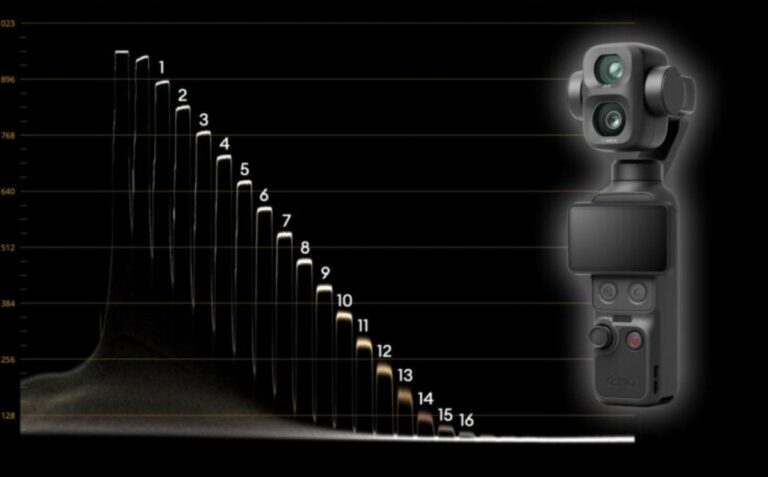
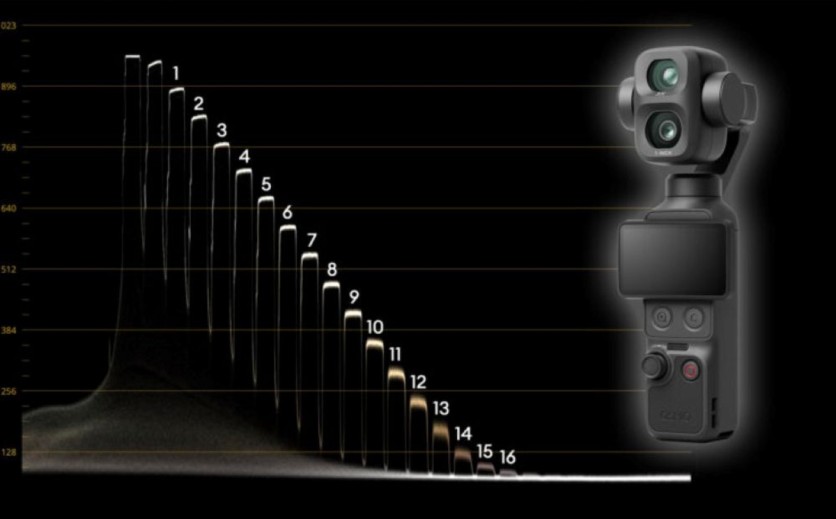
CineD published its Lab Test Compendium 2026 on Nov. 27, a $29 one-time online ebook of dynamic range, exposure latitude and rolling shutter measurements for 102 cameras from 14 brands, with data current through Nov. 20. The book’s highest clean dynamic range score, 16 stops, belongs to DJI’s Osmo Pocket 4P, ahead of the ARRI ALEXA 35 at 15.3 stops. Yet the same book rates the Pocket 4P at only 10 stops of exposure latitude, against 12 for the ALEXA 35, so the headline number overstates what a filmmaker can push in grading.

Two cautions apply before you spend money on gear based on that ranking. DJI is a Shenzhen company subject to Chinese data-access laws, covered in their own section below, and the Osmo Pocket 4P’s global launch excluded the US.

Osmo Pocket 4P Tops Dynamic Range Leaderboard but Drops to 10 Stops of Latitude

CineD’s lab measured the Pocket 4P wide camera at 16 stops of clean dynamic range at the SNR=2 threshold, and at 17.2 stops at the looser SNR=1 threshold, in D-Log 2 at ISO 1600, according to CineD’s Pocket 4P lab test. CineD lab tester Gunther Machu called it the best result CineD has seen since it began testing cameras.

Exposure latitude is a different measurement. CineD sets a base exposure, over-exposes a test scene by up to 4 stops and under-exposes it by up to 6, then pushes each frame back to base and records how far the image holds up. CineD’s article puts the Pocket 4P at a solid 10 stops, with some room toward 11. On the Compendium’s test, the Pocket 4P lands at 10 stops, tied with the ARRI ALEXA Mini LF, Panasonic LUMIX S1II and Sony BURANO 8K entries, while the ALEXA 35 reaches 12 and the Sony FX5 reaches 11, according to the latitude leaderboard of 49 cameras.

Dynamic range and latitude answer different questions. The first asks how many stops separate the noise floor from clipping in the sensor’s output. The second asks how much exposure error a recorded file can absorb. A camera can post a record on the first while a camera with a deeper recording pipeline wins the second.

What Does Clean Dynamic Range Mean in CineD Tests?

CineD photographs a DSC Labs Xyla 21 chart, which has 21 steps of known brightness, and analyzes the footage with Imatest software, as described in the CineD Compendium methodology. A step counts as usable only while its signal stays at least twice as strong as the noise, which CineD calls SNR=2 and treats as the conservative “clean” threshold. The looser SNR=1 convention counts range further down into the noise, which produces a larger number for the same camera.

That difference explains why a manufacturer claim and a lab result can both be honest. DJI claims 17 stops of dynamic range on the Pocket 4P wide camera; CineD measured 17.2 at SNR=1 and 16 at SNR=2. Stop counts are comparable across cameras only when the noise-floor threshold, recording codec and sensor mode match, which is why the Compendium lists each mode separately.

ARRI’s own wording blurs the two measurements. ARRI states 17 stops of dynamic range for the ALEXA 35 and labels it exposure latitude, while CineD measured 15.3 stops of clean dynamic range and 12 stops of latitude in two separate tests with different thresholds.

Dual Gain Lifts Sony FX5 to 14 Stops and Slows Rolling Shutter to 13.3 ms

Recording mode can change a camera’s score by several stops. According to CineD’s camera database entry, the Sony FX5 reaches 14 stops in XAVC 4096×2160 with dual gain on at ISO 800, but measures 12 stops in the same codec with dual gain off, and 10.7 stops in X-OCN LT 4992×2632 with dual gain off.

Dual gain, which combines two readouts of each pixel, comes at a cost in readout speed. On the FX5, rolling shutter measures 5.3 ms with dual gain off and 13.3 ms with it on, according to the Compendium’s rolling shutter data. The book lists the iPhone 17 Pro and ARRI’s VENICE 2 (8.6K mode) at 3 ms, the Fujifilm X-H2S crop mode at 3.9 ms and the ALEXA 35 Xtreme at 4 ms, while the 2019 Blackmagic Pocket Cinema Camera 6K measures 19.8 ms, across a readout leaderboard of 91 cameras.

Sensor pixel design also shapes these results. Some designs use a lateral overflow integration capacitor, or LOFIC, to store extra charge in each pixel and extend highlights. CineD also grays out and leaves unranked any row whose noise reduction cannot be switched off, and lists the iPhone’s dynamic range results without ranking them.

DJI Osmo Pocket 4P Is Missing From Official US Sales Under FCC Covered List

In a Covered List public notice released Dec. 22, 2025, the FCC’s Public Safety and Homeland Security Bureau added foreign-produced drones and drone components, plus equipment listed under Section 1709 of the FY2025 NDAA, to the Covered List, which bars new FCC authorizations for covered equipment. The notice does not name DJI, but Akin Gump’s analysis says the Section 1709 entry covers DJI and Autel equipment, and DJI petitioned the FCC for reconsideration of its placement on Jan. 21, 2026, and sued in the Ninth Circuit, case 26-1029, in February. DJI also filed a mandamus petition 26-7367, docketed Nov. 3, asking the court to order the FCC to rule on its petition. In a Nov. 9 filing, the FCC and Justice Department argued that the mandamus petition concedes a final Commission order is needed before judicial review, and asked for DJI’s February suit to be dismissed. DJI argues the bureau lacked the national security determination the statute requires and that the FCC has delayed unreasonably. The court has not ruled on the merits.

The Pocket 4P is a separate case from its sibling. DroneXL’s May 8 report says that the standard Osmo Pocket 4 launched April 16 without US retail availability, and that a DJI spokesperson told The Verge at that launch that its FCC authorization application was still pending. The same report says FCC filings list the Pocket 4P under ID 2ANDR PP041 with a Dec. 22, 2025 approval date. A Notebookcheck report citing leaked information said both models’ approvals were pulled from the FCC database; that claim is unconfirmed. For the 4P’s July 30 global launch, DroneXL reports the US was missing from DJI’s availability map.

China’s Intelligence and Data Laws Apply to DJI, but Their Reach Is Disputed

DJI’s privacy policy lists Shenzhen as its corporate address, so Chinese law applies to the company whatever its policy says. Under National Intelligence Law Article 7 (2017), all organizations and citizens must support, assist and cooperate with national intelligence efforts in accordance with law. The Data Security Law 2021 adds national-security-based data governance obligations. The Cybersecurity Law, amended effective Jan. 1, 2026, requires network operators to give technical support to public security and national security agencies in Article 30 and imposes domestic storage on critical information infrastructure operators in Article 39, according to a CSET translation of the amended text.

Scholars dispute how broadly these provisions reach. A China Law Translate analysis argues it is unclear that Article 7 was meant to require active information gathering, and Gu Bin of Beijing Foreign Studies University has argued that it does not authorize pre-emptive spying, as summarized on Wikipedia. DJI states it has never received requests for overseas data under China’s National Security Law or National Intelligence Law.

The data at stake depends on how the camera is used. DJI’s Mimo app lists location, contact info, user content, identifiers, usage data and diagnostics on its Mimo App Store privacy label. DJI’s Trust Center storage statement for consumer drones says data from users in China is stored on China-based servers, and that drone data users choose to share with DJI is held on ISO 27001-compliant servers in the United States.

No independent audit of the Osmo Pocket 4P or the current Mimo app was found. DJI’s Trust Center audit list cites reviews by Kivu (2018), Booz Allen Hamilton (2020), FTI Consulting (2020 and 2024) and TÜV SÜD (2022), which cover drones, drone apps and enterprise products.

Readers who buy the camera anyway can lower exposure by keeping it unlinked from personal accounts, denying location access in any companion app, and transferring footage by cable or card where the camera supports it. No setting changes which laws apply to the company.

What the $29 Ebook Includes and How CineD Is Connected to Its Bundle

The $29 price is a one-time payment, includes later updates and is read online in browser. The leaderboards rank 97 cameras on clean dynamic range, 91 on readout speed and 49 on latitude, drawn from 437 dynamic range and 341 rolling shutter measurements. CineD says most full-frame mirrorless cameras land between 11 and 13 stops, and that dual gain pushed several to 14 stops in 2025 and 2026.

MZed, CineD’s sister company, offers Pro annual members the book free and a first-year price of $199 instead of $349, plus discounts on ShotDeck, Soundsnap, Filmstro and B&H, and a timelapse guide by Drew Geraci, according to MZed’s Goodie Bag offer. Monthly members are excluded. Because CineD sells the book and promotes the MZed bundle alongside it, its figures rest on CineD’s own methodology, and no independent review of the book was found at the time of writing.

For buyers, the practical lesson is to compare cameras by latitude and readout in the exact mode you will shoot, not by the largest stop count. A pocket camera that tops the 16-stop chart but holds 10 stops of latitude, lacks a clear US sales path and is made by a company subject to Chinese data-access law is a narrower choice than its ranking suggests, while the ALEXA 35’s 12 stops of latitude and 15.3 stops of clean range show what a stricter measurement looks like.


Frequently Asked Questions

Is dynamic range the same as exposure latitude?

No. Dynamic range counts the stops between the noise floor and clipping, and the result changes with the noise threshold (SNR=2 or SNR=1), codec and sensor mode. Latitude measures how far an exposure error can be corrected in grading, as CineD’s latitude test describes.

Can I buy the DJI Osmo Pocket 4P in the US?

Not through DJI’s official launch channels, as far as reporting shows. DroneXL reports the US was missing from DJI’s availability map at the global launch, and the FCC has listed DJI equipment on its Covered List since December 2025.

Can the Chinese government get data from a DJI camera or its app?

China’s National Intelligence Law requires organizations to cooperate with state intelligence work, and DJI is a Chinese company. Scholars disagree on how often the law reaches foreign users’ data, DJI says it has received no such requests, and no independent audit of the Pocket 4P was found, so the risk can be neither confirmed nor ruled out. National Intelligence Law Article 7 sets the cooperation duty.

Why did ARRI claim 17 stops when CineD measured 15.3?

ARRI describes 17 stops of dynamic range that it also labels exposure latitude, while CineD measured 15.3 stops of clean dynamic range at SNR=2 and 12 stops of latitude. They are different tests with different thresholds.

Source link