November 29, 2026:


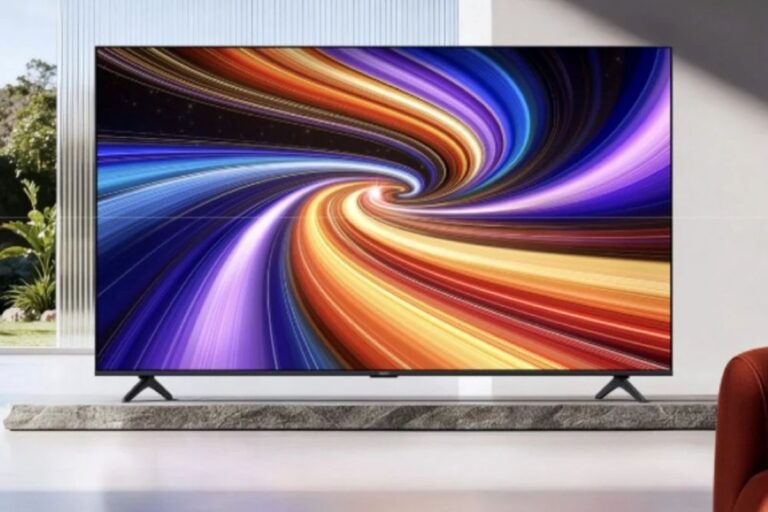
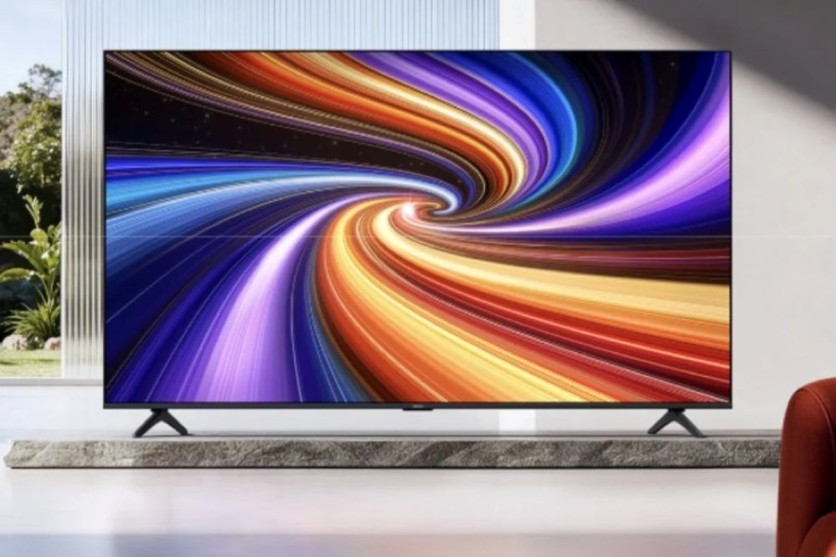
Xiaomi’s Redmi TV A55 2027 is on sale in China as of Nov. 27, 2026 with a 165Hz panel rating, but its two HDMI 2.0 ports accept 4K video at only up to 60Hz, so the rating cannot be reached with 4K video over HDMI. The 55-inch set also carries 1.5GB of RAM and a five-core Cortex-A55 processor.
The TV is on sale through Xiaomi’s Youpin platform at a launch price of 1,599 yuan (approximately $240 USD) against a regular price of 1,999 yuan (approximately $300 USD). Xiaomi has announced the set for China only and has not announced an international launch.
Xiaomi is headquartered in Beijing, so this article also covers the Chinese legal data-access obligations and privacy questions that anyone weighing an import should understand before connecting the TV to a home network.
HDMI 2.0 tops out at 18.0 Gbit/s of total bandwidth, of which 14.4 Gbit/s carries data, enough for 4K at 60Hz with 24 bits per pixel. Native 4K at 120Hz needs about 25.8 Gbit/s, which is HDMI 2.1 territory. Simple arithmetic (3,840 by 2,160 pixels, 165 frames per second, 24 bits per pixel) puts 4K at 165Hz near 32.9 Gbit/s of pixel data before any overhead, more than double what HDMI 2.0 can carry.
Xiaomi’s spec page attaches a footnote to the 165Hz figure that requires switching on a competitive mode, according to the shopping-advice site SMZDM. The page does not say what resolution the panel runs at in that mode or what the panel’s native refresh rate is, and the previous A55 used the same approach with a 144Hz competitive mode, SMZDM reports.
Xiaomi’s recent catalog offers a pattern. Gizchina’s report on the Redmi TV X 2026 says that set reaches 288Hz at lower resolutions, against a native 4K 144Hz. Whether the A55 2027 makes the same trade is undocumented. By the same arithmetic, 1080p at 165Hz needs about 8.2 Gbit/s, which fits inside HDMI 2.0, so a resolution drop would be consistent with the port limit, but that is an inference rather than a confirmed specification.
Refresh rate counts how often a display shows a new image, while frame rate counts the images a source produces, so a 165Hz panel helps only when something feeds it frames that fast. Tom’s Guide has noted that the PlayStation 5 Pro and Xbox Series X support 4K games up to 120Hz and that PC gamers benefit first from 165Hz TVs, concluding most buyers probably do not need the rate. SMZDM says the two HDMI 2.0 ports cap console output at 4K 60Hz, leaving 4K 120Hz and variable refresh rate out of reach, while a Nintendo Switch at 1080p 60Hz is fine.
The new set also trails a sibling at the same regular price. Xiaomi’s 55-inch Redmi TV A Pro 2026 went on sale April 15 at 1,999 yuan (approximately $300 USD), and IT Home lists 4K 288Hz overclocked with two HDMI 2.1 ports, 3GB of RAM and 64GB of storage. Gizmochina lists the line’s 55-inch native rate at 144Hz, with the 288Hz figure reached in a gaming mode. The A55 2027’s 165Hz therefore beats that line’s native rate but not its overclocked ceiling, and it arrives without HDMI 2.1.
The A55 2027 carries 1.5GB of RAM, down from 2GB on the current Redmi A55, alongside 32GB of storage and a five-core Cortex-A55 processor. SMZDM lists a Mali G31 MC1 graphics chip and says the entry-level silicon sets the floor for animation and video-decoding responsiveness. The A Pro 2026 pairs the same five-core Cortex-A55 with a Mali-G52 MC1. Arm launched the Cortex-A55 in 2017 as an in-order, efficiency-focused design.
Launch coverage does not explain the memory cut. In May, Xiaomi President Lu Weibing told investors that memory contract prices had risen roughly fivefold since the third quarter of 2025 and closer to tenfold for TVs, according to TechTimes’ earnings coverage. TrendForce forecast in February that first-quarter 2026 conventional DRAM contract prices would rise 90 to 95 percent from the previous quarter. Those figures are context for a cost squeeze, not a stated reason for this set’s configuration.
Xiaomi says HyperOS 4 starts video 31.50 percent faster and opens apps 40.04 percent faster than the previous version, figures measured against its own earlier software.
SMZDM reports that no third-party test of competitive-mode resolution, input lag or HDR performance has been published for the set. Launch coverage from IT Home and Notebookcheck lists no brightness, color gamut or HDR figures, and Dolby and DTS support do not appear on the spec sheet.
The panel is 3,840 by 2,160 with direct-lit backlighting and slim black bezels, and Xiaomi lists motion compensation at 4K 60Hz rather than at 165Hz. Motion compensation synthesizes in-between frames, which can add input lag and visible artifacts, particularly on cheaper TVs. Direct-lit LEDs sit behind the screen, but independent zone control comes only from local dimming, which launch coverage does not mention.
Every performance figure in launch materials, from 165Hz to the HyperOS 4 speedups, comes from Xiaomi itself.
No international sale has been announced, so buyers elsewhere would need to import it. Xiaomi’s Xiao AI assistant handles far-field voice commands and answers questions, and the set supports phone casting and a children’s mode, Notebookcheck reports. Launch coverage does not address language support or app availability outside China.
Xiaomi’s budget pricing has historically rested on software revenue. Gizmochina reported in 2023 that Xiaomi keeps TV hardware prices low and earns margin back through ads, including startup ads in China, and that users could ask customer service to switch them off by supplying the TV’s MAC address after a Jiangsu consumer-protection body pressed brands for a one-click option. Launch coverage does not say whether the A55 2027 ships with startup ads.
China’s National Intelligence Law, passed June 27, 2017, requires organizations and citizens to support, assist and cooperate with national intelligence efforts in accordance with law. Scholars disagree about its reach. Jeremy Daum of China Law Translate wrote in 2024 that Article 7 probably was not meant to require active information gathering and noted the law has no enforcement mechanism, while Murray Scot Tanner argued in Lawfare that it shifts obligations from defense toward offense. A privacy policy is a company’s promise to users and does not displace a statutory duty, as TechTimes reported in October when covering HyperOS 4. How far the duty reaches into data held outside China is disputed: a 2019 Mannheimer Swartling report examined whether it applies differently to Chinese and non-Chinese entities, while Huawei submitted a 2018 Zhong Lun opinion saying its overseas units are not subject to it. A set sold only in China by a Beijing company sits inside the law’s home territory.
Two other statutes matter. The Data Security Law, enacted June 10, 2021 and in force since Sept. 1, 2021, lets public security and national security organs obtain data for national security or criminal investigations following approval procedures and obliges organizations to cooperate in Article 35, and Article 36 bars handing data stored in mainland China to foreign law enforcement without Chinese approval. The Cybersecurity Law, passed Nov. 7, 2016 and in force since June 1, 2017, requires network operators in Article 28 to provide technical support and assistance to public security and national security organs.
Xiaomi has not published a TV-specific list of collected data in launch materials. The A55 2027 has a far-field voice assistant, phone casting and a children’s mode, and Xiaomi’s general privacy policy lists categories including account and device identifiers, browsing and playback history, viewing mode and duration, and advertising identifiers such as OAID. A 2019 Princeton and University of Chicago study found that nearly all of more than 2,000 Roku and Amazon Fire TV channels shared tracking data with advertising companies, which makes TV telemetry a general question for any smart set.
No independent security audit of the A55 2027 has surfaced publicly. Audits of other Xiaomi products show why that gap matters. Lithuania’s National Cyber Security Centre reported in September 2021 that the Xiaomi Mi 10T 5G phone downloaded a list of more than 400 terms it could censor, with filtering disabled in the EU region but the list still delivered to the phone, and Xiaomi denied that its devices censor communications. In 2020, researcher Gabi Cirlig found a Redmi Note 8 sending browsing data to remote servers, and Xiaomi said the claims were untrue and that users had consented. Both concerned phones, not this TV.
In U.S. policy, nine Republican lawmakers urged the Pentagon in December 2025 to add Xiaomi to its Section 1260H list, and Xiaomi said there is no basis for inclusion. A law-firm summary of the Pentagon’s June 2026 update does not name Xiaomi among the new parent-level listings and describes the list’s effects as federal procurement restrictions and related measures.
Readers can limit exposure, though not eliminate the legal condition. Place the TV on a guest or IoT network segment, decline ad personalization and account sign-in where menus allow, switch off the far-field voice assistant, which SMZDM, citing reviewer Lan Daxian, says raises standby power to about 12W, and block telemetry domains at the router if you run DNS filtering. None of those steps changes what a legal demand could reach in data Xiaomi already holds, and none substitutes for an independent audit.
Level 1 is the top grade on China’s energy label. Under China’s 2026 appliance trade-in scheme, televisions are among six covered categories, and only Grade 1 products qualify for a subsidy of 15 percent of the final price, capped at 1,500 yuan (approximately $225 USD) per item and limited to one item per category per consumer. On the launch price, 15 percent works out to roughly 240 yuan (approximately $36 USD). SMZDM’s energy post cited 2025 local rules at 20 percent and said 2026 terms depend on local announcements, so buyers should confirm eligibility at checkout.
Xiaomi has not published the label’s annual consumption figure. SMZDM estimates about 100W in use for a typical same-size Level 1 LCD, not a figure measured on this set, which implies electricity costs of 82 to 126 yuan a year (approximately $12 to $19 USD) at four hours of daily viewing, and it concludes the grade’s electricity savings are small. It adds that turning off far-field voice could save about 55 yuan a year (approximately $8.25 USD), which may exceed the Level 1 savings.
The Redmi TV A55 2027 is a China-only, 55-inch 4K set whose 165Hz rating depends on a competitive mode with unstated resolution, whose two HDMI 2.0 ports cap 4K input at 60Hz and rule out HDMI 2.1 console features, whose RAM falls to 1.5GB, and whose speed and input-lag claims await independent tests. It is also made by a Beijing company bound by the National Intelligence Law, Data Security Law and Cybersecurity Law, with no independent audit of this TV published. Its subsidy eligibility and launch price are clear advantages inside China, but they change none of the port limits, the memory cut, the untested claims or the legal conditions.
Exchange rate as of Nov. 27, 2026; conversions are approximate.
Xiaomi rates the panel at 165Hz, but the spec page ties that figure to competitive mode and does not state the resolution, and the HDMI 2.0 ports accept 4K only up to 60Hz. The HDMI version, not the panel rating, decides what content can reach the screen.
Yes, at up to 4K 60Hz. Console output at 4K 120Hz and variable refresh rate need HDMI 2.1, which this set lacks.
Chinese law requires Xiaomi to assist state intelligence and security agencies under the National Intelligence Law Article 7, and scholars dispute how broadly that reaches data held abroad. Data that never leaves the TV cannot be handed over by Xiaomi, and no independent audit of this TV’s data transmissions has surfaced.
Not officially. Xiaomi has announced it for China only and has not announced an international launch, so overseas buyers would have to import it.