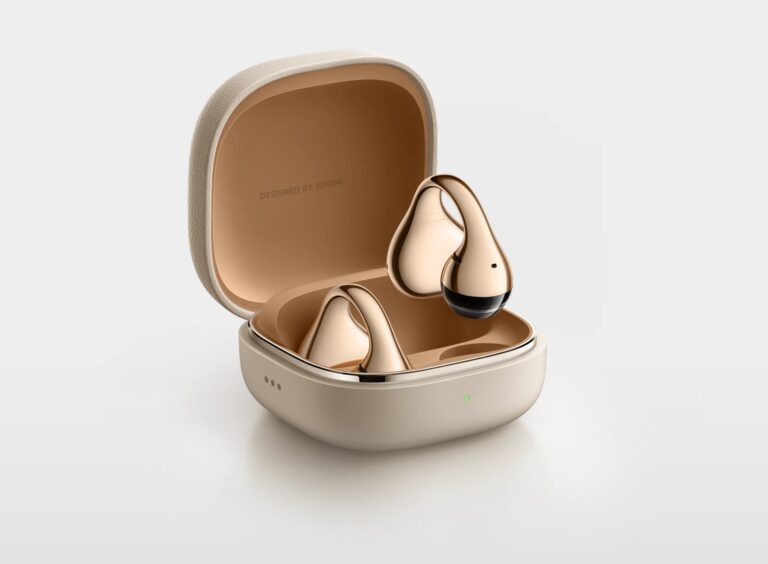
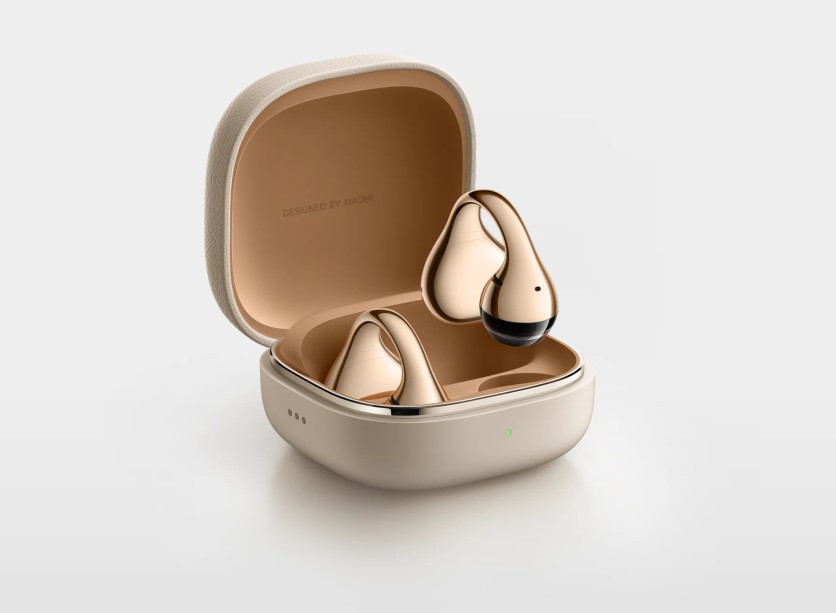
Xiaomi Clip Earbuds Go on Sale in Japan Friday With Call Recording Built Into Case Press

November 26, 2026:

Xiaomi Clip Earbuds Go on Sale in Japan Friday With Call Recording Built Into Case Press
Xiaomi Clip Earbuds
Mi.com

Xiaomi’s Clip earbuds go on sale in Japan on Friday, November 27, with a feature few open-ear earbuds advertise: pressing the charging case three times starts and stops recording, and call recording is among the supported types, according to Xiaomi’s Japan product page. Xiaomi’s own FAQ says the recordings stay on the earbuds, not the phone, a detail the Japan page and Xiaomi’s Japan privacy policy do not state.

The earbuds list at 19,800 yen (about $124), with an early-bird price of 17,800 yen ($112) through December 7, AV Watch reported early-bird pricing. Pre-orders opened November 17 on mi.com, and Gori.me lists retail channels that include Xiaomi Stores, Rakuten Ichiba, Amazon.co.jp, TikTok Shop and Yahoo! Shopping.

How the case press recording works

Xiaomi’s footnotes say the feature requires the Xiaomi Earbuds app. They also say the earbud triple-tap recording gesture is off by default and can be enabled through HyperOS Bluetooth settings or the app. The Japan page does not state the default for the case press itself.

The same page warns that recording without the other party’s consent may lead to criminal or civil liability. It also tells users to follow local laws and says Xiaomi is not responsible for how the feature is used.

Where recordings are stored

Xiaomi’s Clip FAQ for the Philippines says recordings are saved on the earbuds themselves and must be imported manually through the Xiaomi Earbuds app to be stored or played on a phone. The FAQ sets limits of 60 minutes for on-site audio and video and 120 minutes for calls, per earbud, and says transcription and translation of recordings are not supported.

Xiaomi’s Japan privacy policy, last updated May 20, 2025, does not mention voice recordings or earbuds. It lists “call records” among information generated through use of Xiaomi services, names data centers in India, the Netherlands, Russia and Singapore, and says Xiaomi may disclose data to public agencies when legally required. It also says part of Xiaomi’s Japanese customer service is outsourced to Hong Kong.

Why call audio differs from music audio

Bluetooth carries phone calls over the Hands-Free Profile, which uses a single-channel voice link, with an optional 16 kHz wideband mode in version 1.6, according to Wikipedia’s Bluetooth profiles list. Music streams over a separate profile, A2DP, which sends audio one way in up to two stereo channels.

Xiaomi’s footnotes tie the 48 kHz figure to LHDC 5.0, a music codec that is currently available only with Android 17 or later. The Japan page, as reviewed, does not state what sample rate call recordings use, so the 48 kHz figure should not be read as a call-recording specification.

What recording laws say

The federal wiretap statute allows recording when one party to the conversation consents, unless the purpose is criminal or tortious, and sets penalties of up to five years in prison for violations. The Reporters Committee for Freedom of the Press says about 11 states primarily require all parties to consent: California, Delaware, Florida, Illinois, Maryland, Massachusetts, Michigan (at least for recordings by a third party), Montana, New Hampshire, Pennsylvania and Washington. It adds that Connecticut and Nevada require all-party consent for phone calls.

In a 2006 decision, Kearney v. Salomon Smith Barney, the California Supreme Court held that the state’s all-party rule applies to a Georgia business recording calls with California clients, and allowed an injunction but not damages. In the federal case In re Otter.AI Privacy Litigation, plaintiffs allege the Otter.ai notetaker recorded conversations without proper consent; those claims are allegations, and UC Today reported in August 2026 that wiretap and California privacy claims survived a motion to dismiss. This article is not legal advice, and Xiaomi’s materials reviewed here do not address Japanese recording law.

Chinese law and security record

Xiaomi is headquartered in Beijing and listed in Hong Kong. Article 7 of National Intelligence Law says all organizations and citizens shall support and cooperate with national intelligence work. The Cybersecurity Law, as amended effective January 1, 2026, requires network operators in Article 30 to provide technical support to public and national security organs in lawful activities. Article 36 of the Data Security Law bars providing data stored in China to foreign judicial or law enforcement bodies without approval.

Whether those laws reach data held abroad is disputed. A 2018 opinion from the Chinese firm Zhong Lun argued Huawei’s overseas subsidiaries are outside the law’s territorial jurisdiction, while a 2019 report from the Swedish firm Mannheimer Swartling said overseas subsidiaries could be subject to it, based on a literal reading of the English text, as summarized in the dispute over overseas data. No source reviewed for this article reports Xiaomi handing Clip recordings to any government.

Xiaomi’s earbuds have a mixed security record. The CERT/CC advisory VU#472136 says Redmi Buds 3 Pro through 6 Pro can return up to 127 bytes of uninitialized memory per crafted packet, which can include the phone number of an active call peer. CERT/CC notified Xiaomi on September 30, 2025, listed no vendor statement and advised disabling Bluetooth when the earbuds are idle. Separately, the WhisperPair flaw CVE-2025-36911, rated critical by Google, is fixed only by manufacturer firmware updates. TechTimes did not confirm whether the Clip is affected by either issue.

Battery, noise reduction and platform limits

Battery figures conflict across Japanese coverage. Xiaomi’s Japan page and AV Watch give 9 hours on the earbuds and 38 hours with the case on AAC, citing Xiaomi internal testing, while Impress Watch and Gori.me give 11 hours and 44 hours. Xiaomi says a 10-minute charge adds up to 3.5 hours of listening when the case is at 20 percent or higher. Xiaomi’s global specifications list 6 hours and 25 hours with LHDC enabled.

Android Authority described the Clip’s noise handling as AI noise reduction in lieu of full active noise cancellation. Find My tracking requires iOS 18 or later and covers the case only, and Android Authority reported no Google Find Hub support. The IP57 water and dust rating applies only to the earbuds, not the case.

Watch S5 and Smart Band 11 launch alongside

Xiaomi’s Watch S5 41mm costs 33,800 yen ($212) in black or light blue and 36,800 yen ($231) in ceramic white, falling to 29,800 yen ($187) and 32,800 yen ($206) at early-bird pricing. The Smart Band 11 limited colors cost 7,980 yen ($50) for Moon Gold and 10,800 yen ($68) for the Lavender Purple Unibody Edition, falling to 6,980 yen ($44) and 9,980 yen ($63) through December 7.

Market backdrop and other regions

Omdia, part of Informa TechTarget, reported on September 17, 2026, that open-wearable stereo shipments rose 12 percent to 11.1 million units in the second quarter of 2026, or 13.5 percent of true wireless stereo shipments. It said clip-on designs made up 61 percent of open-wearable stereo shipments and forecast 43.9 million units in 2026 and 90.5 million in 2030.

In Europe, Notebookcheck reports €149.99 European pricing, about $165, and other outlets cite €149.90. Digital Trends reported the Clip is not officially available in the United States. In China, Xiaomi launched the Clip in May at 849 yuan ($127), with an introductory price of 799 yuan ($120).

Currency conversions in this article are approximate and based on exchange rates on November 25, 2026, of about 159 yen, 0.91 euro and 6.67 yuan per U.S. dollar.


Frequently Asked Questions

Does the Xiaomi Clip record phone calls?

Yes. Xiaomi’s Japan page lists call recording among supported recording types and says pressing the charging case three times starts or stops recording. The Xiaomi Earbuds app is required, and Xiaomi’s Philippines FAQ limits call recordings to 120 minutes per earbud.

Is it legal to record calls with the Xiaomi Clip?

It depends on where the participants are. U.S. federal law allows recording with one party’s consent, but California and about ten other states primarily require all parties to consent. Xiaomi’s Japan page warns of criminal or civil liability for recording without consent and says users must follow local laws.

Where does the Xiaomi Clip store recordings?

Xiaomi’s Philippines FAQ says recordings are saved on the earbuds and must be imported through the Xiaomi Earbuds app. Xiaomi’s Japan product page and Japan privacy policy do not state where recordings are kept.

How much does the Xiaomi Clip cost in Japan?

The Xiaomi Clip costs 19,800 yen (about $124), or 17,800 yen (about $112) during the early-bird period through December 7. Sales begin Friday, November 27.

Source link